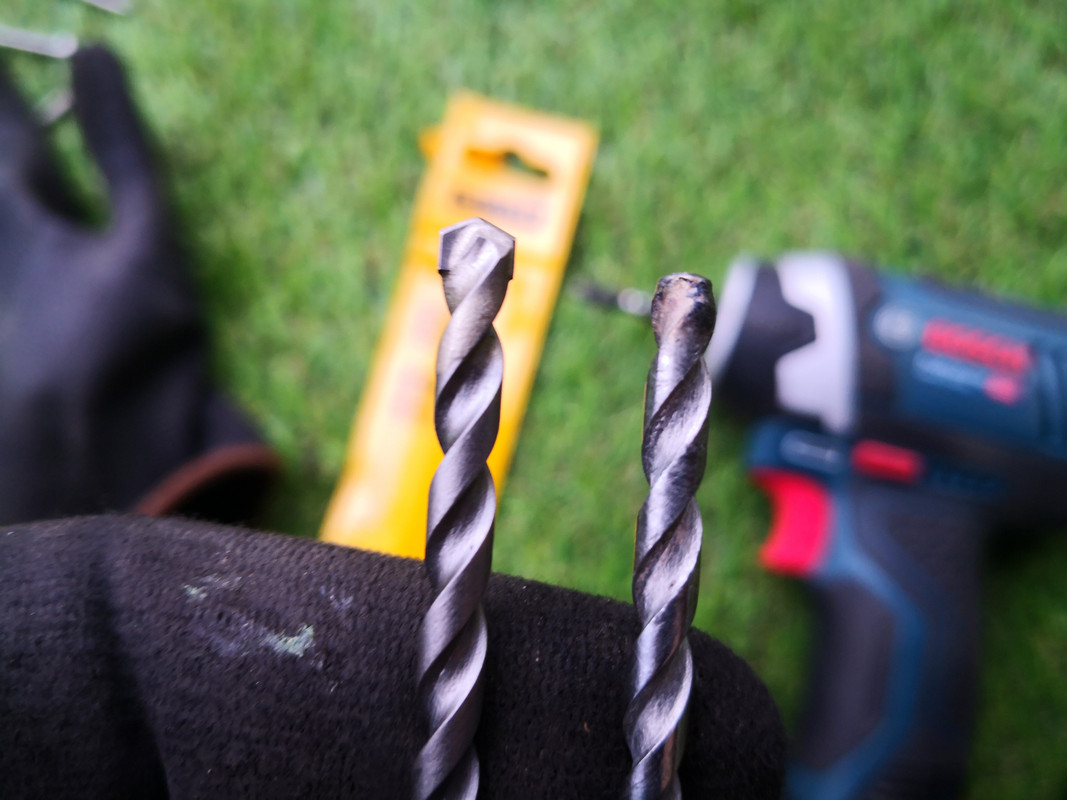
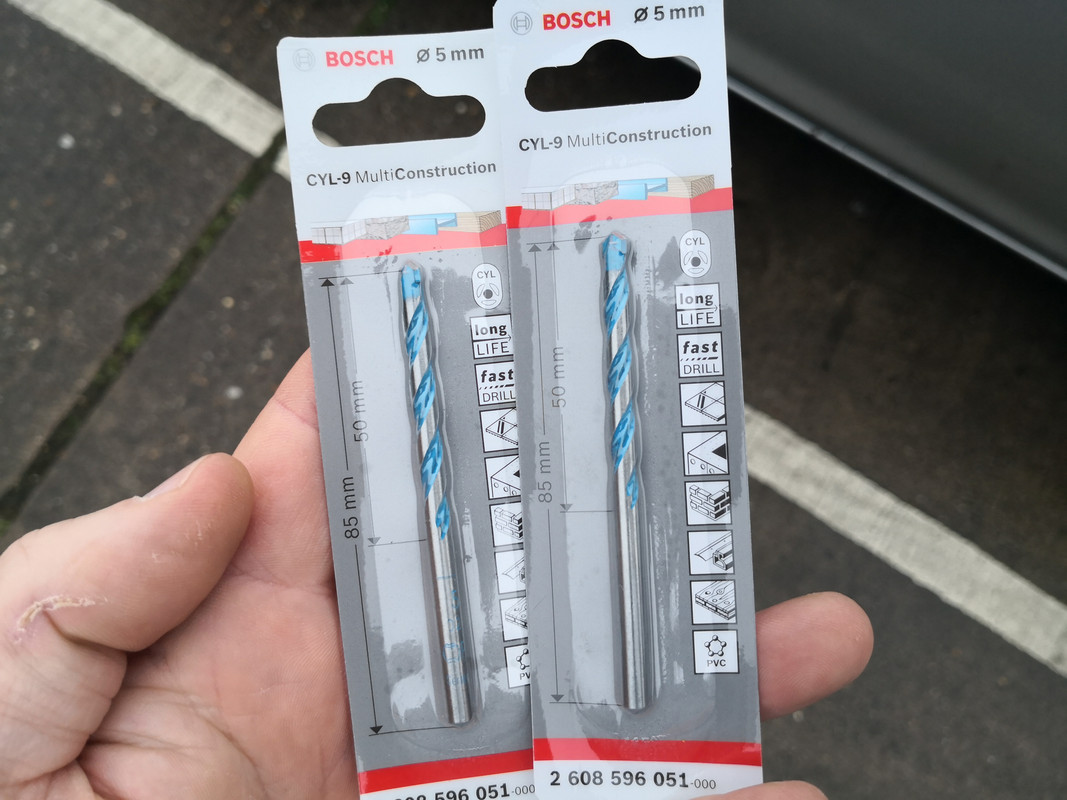
I've never used SDS. Will try and borrow one if I have to drill a lot of brick again. Hopefully only got one day of drilling left to do now. Getting very sick of bits slipping my drill. Assume this isn't a problem with SDS.
SDS hits a LOT harder than a hammer drill, but turns a fair bit slower.
If you are an old codger like me, you might remember handheld star drills and fibre rawlplugs. The star drill was basically a punch with a cruciform section. You hit it, turned it a bit, hit it again, turned it a bit, hit it again and so on, seemingly ad infinitum. It made holes pretty well to be fair, but was hard work and very slow.
Electric hammer drills are a big improvement over star drills. SDS can be at least as big an improvement over electric hammer drills, though it does depend on what you are drilling.
Where are you? Brick might seem like it's all the same at first glance, but it ain't. If you are in London, the majority of brick is made from London Clay and is soft. Get up to Staffordshire and it's made from Etruria Marl and seems a fair bit harder. Up into Lancashire and it's made from shale and is very hard (Accrington Nori brick is so hard, it was shipped across and used for the foundations of the Empire State Building). Staffordshire Blue Engineering brick is also extremely hard: made from Etruria Marl (the clay that Josiah Wedgewood used in Wedgewood pottery), but reduction-fired to get the higher hardness and blue colour.
In most cases, brick is cheap to make and expensive to move, so you get to deal with the locally-sourced stuff. The harder bricks will get used out of their local area if there is a need for a tall building, where the weight of the walls would crush the bottom courses if built from local brick.
SDS drills have tended to be specced on either weight or impact energy. For a handheld SDS used for drilling brick, between 1 and 2 Joules impact energy is a good range: the 2-3kg range. Too much impact energy and you'll be knocking the back out of bricks when only half-way through.
The cheapest, nastiest SDS will outperform the best hammer drill by a huge margin in most cases. I'm not sure about London brick, but a 7mm SDS is probably at least 5 times faster in our local brick (Lancashire).
If you've knackered a twenty quid chuck and a few two-quid bits already, you'd probably have been almost as well off getting a fifty-quid SDS drill and a few one-quid SDS bits from Screwfix, or wherever, without even factoring in the time saving (assuming you can use 240V tools on site).
Buying a good set of SDS bits makes reasonable sense, but if you have a lot of holes the same size to drill, buying several of the cheap ones in the size you need is usually better: they drill much quicker when sharp, and expensive carbide doesn't wear all that much slower than cheap carbide.
With a chuck adaptor and the hammer action disengaged, SDS drills also tend to be better for biggish holes in wood and steel than many old-school hammer drills, just because they turn slower and generate more torque.