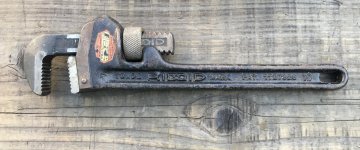
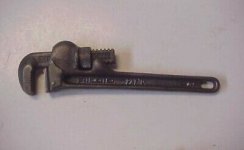
I have never seen any vintage Ridge pipe wrenches with a black enamel or japan finish, although I supposes it's possible. It was the era for that kind of finish, and I have several Billings auto wrenches with a black japan or enamel finish.
After de-rusting I use paste wax or Fluid Film, but they then go in the Lugzsonian. If you're going to use them, I would just spray them with WD-40 and wipe them down.
I would never be opposed to anyone doing more research, poll or not. Note, though, that this poll has long ago reached its saturation point in the sense that statistically, it has proven my hypotheses about the wartime date codes on the dynamic jaws, and, it has also confirmed my research and the timeline I constructed for RIDGID pipe wrench production (see post #1). In other words, I suspect you're going to get a lot of RIDGID pipe owners excited about knowing when they're pipe wrenches were generally made, but not learn anything we don't already know. Which I say not to discourage your effort, but give fair warning.
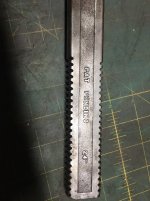
One area I have not explored is the numbers (perhaps codes, and perhaps date codes) on early dynamic jaws, such as yours. My original interest here was in WWII pipe wrenches, and constructing the production timeline was merely a necessary artefact of my research. I have not delved into any other nuances like that, because I was not that interested in that earlier era beyond being able to identify the general time periods. Given more data, you or anyone else may be able to narrow down the production within that window even more. Keep in mind that the dynamic jaws are removeable and replaceable, interchangeable for many years, and that happened often, so knowing whether they are original to the static jaw and handle is problematic.


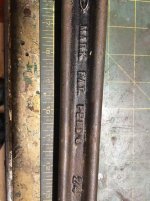
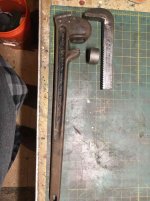
 Good deal!

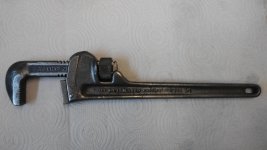
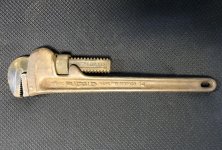


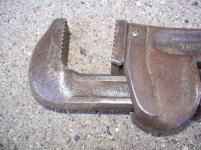
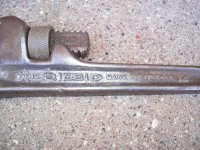
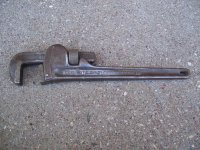
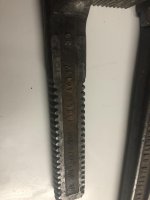
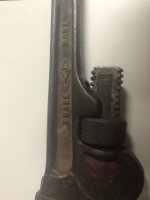

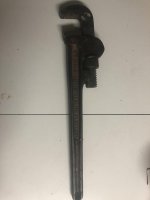
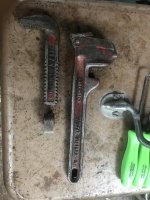


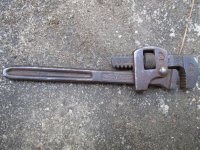
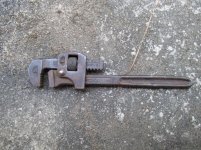

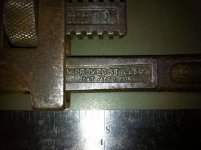
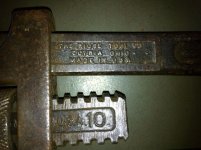
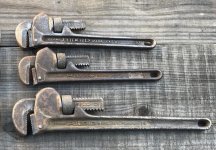

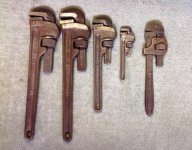

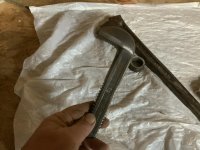


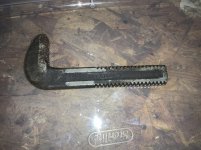

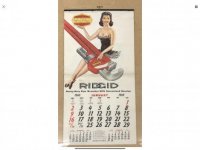


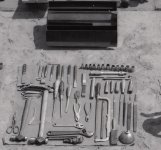

 Which is why I won't say it's not possible to find one from before the war painted black. As I said in my first reply to Nicholas - black enamel and black japan were used, and as you know, used very commonly as a finish for Auto type adjustable wrenches. But yes, IF they were painted or enameled, it sure didn't last. Whereas, MOST Auto type wrenches from that era are still enameled/japanned or showing traces of enamel/japan. And I think it's safe to say that if we have to think abut it this hard and look for them this hard, that it doesn't seem to have been a standard practice.