Chisel rehab project
"Abandon all hope, ye who enter here." I really need a sign for the plane boneyard.
Probably not what Dante had in mind, but it does provide a dramatic opening to this tutorial. It did not take long to find a candidate.
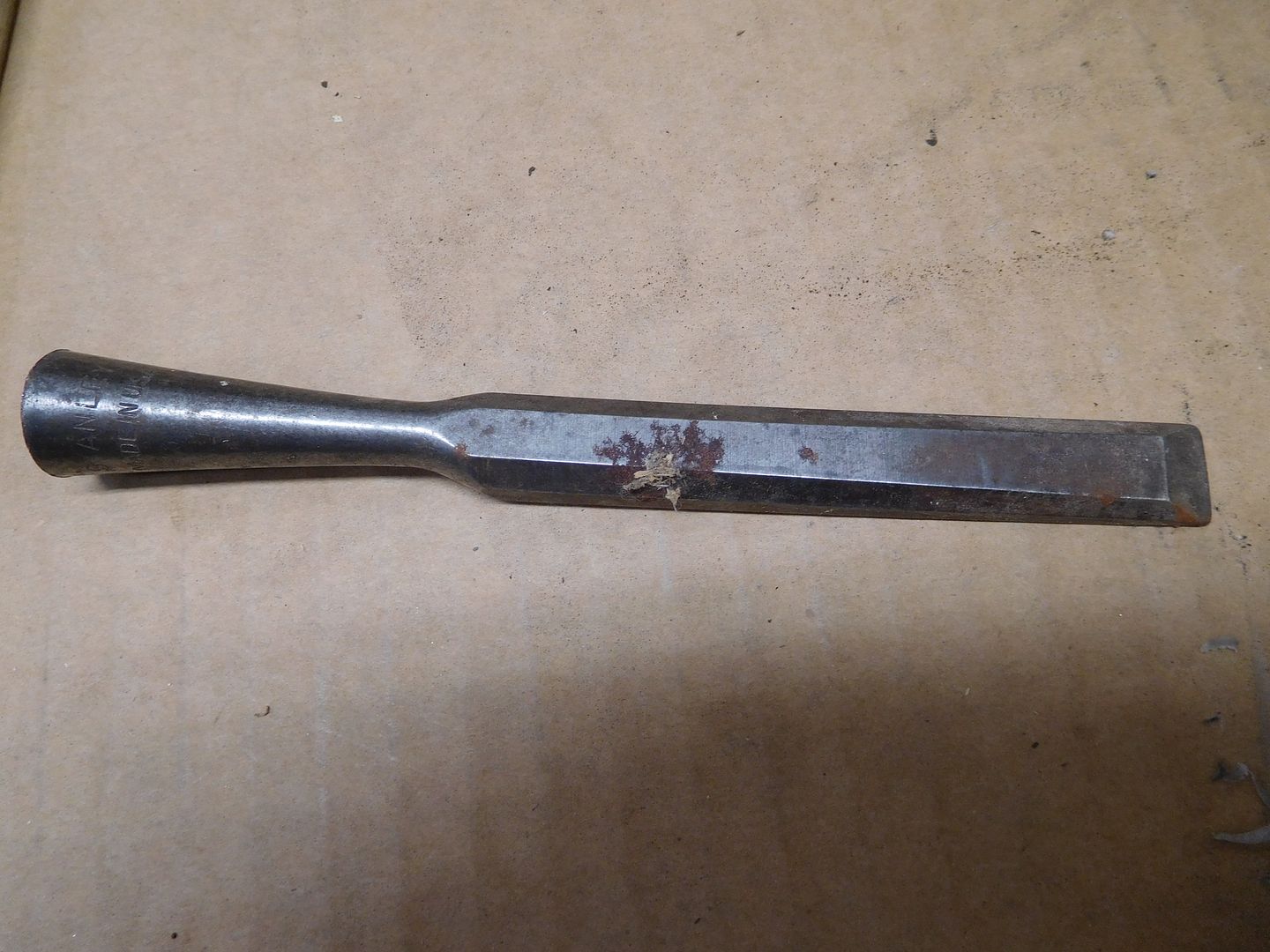
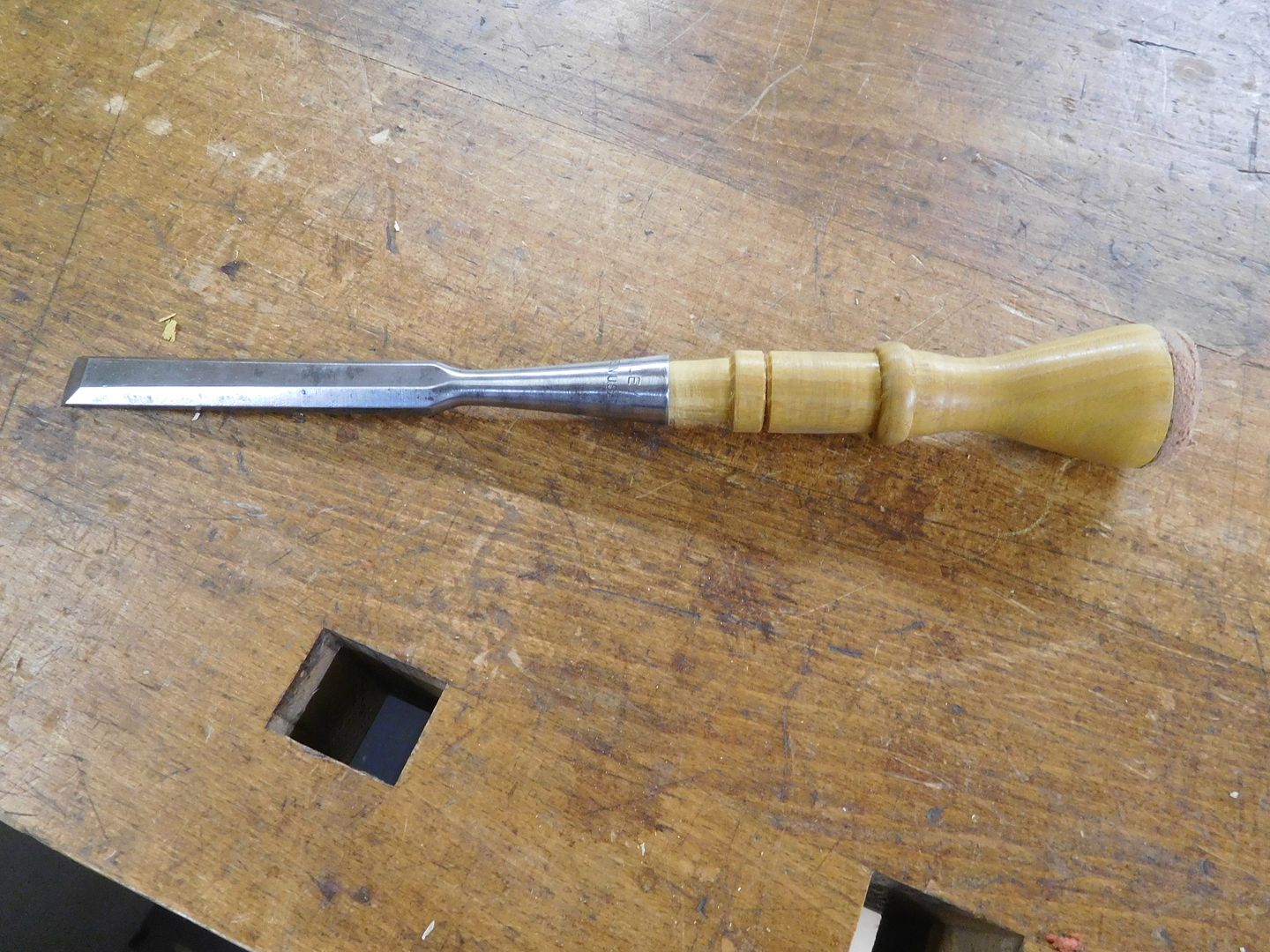
This is a vintage Stanley 1/2" socket chisel. It looks just like a collectible #750, but is only marked "Stanley, Made in USA".
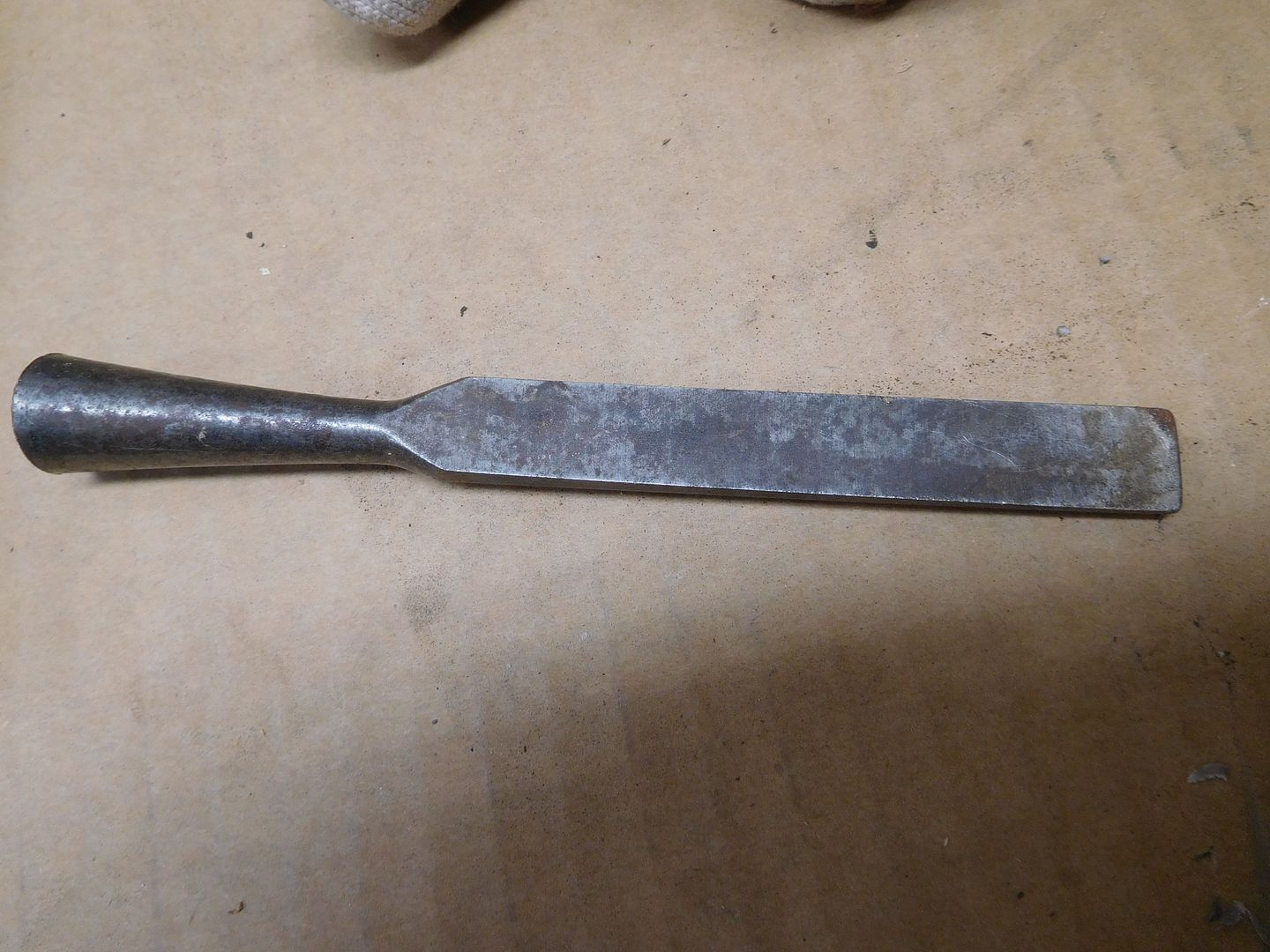
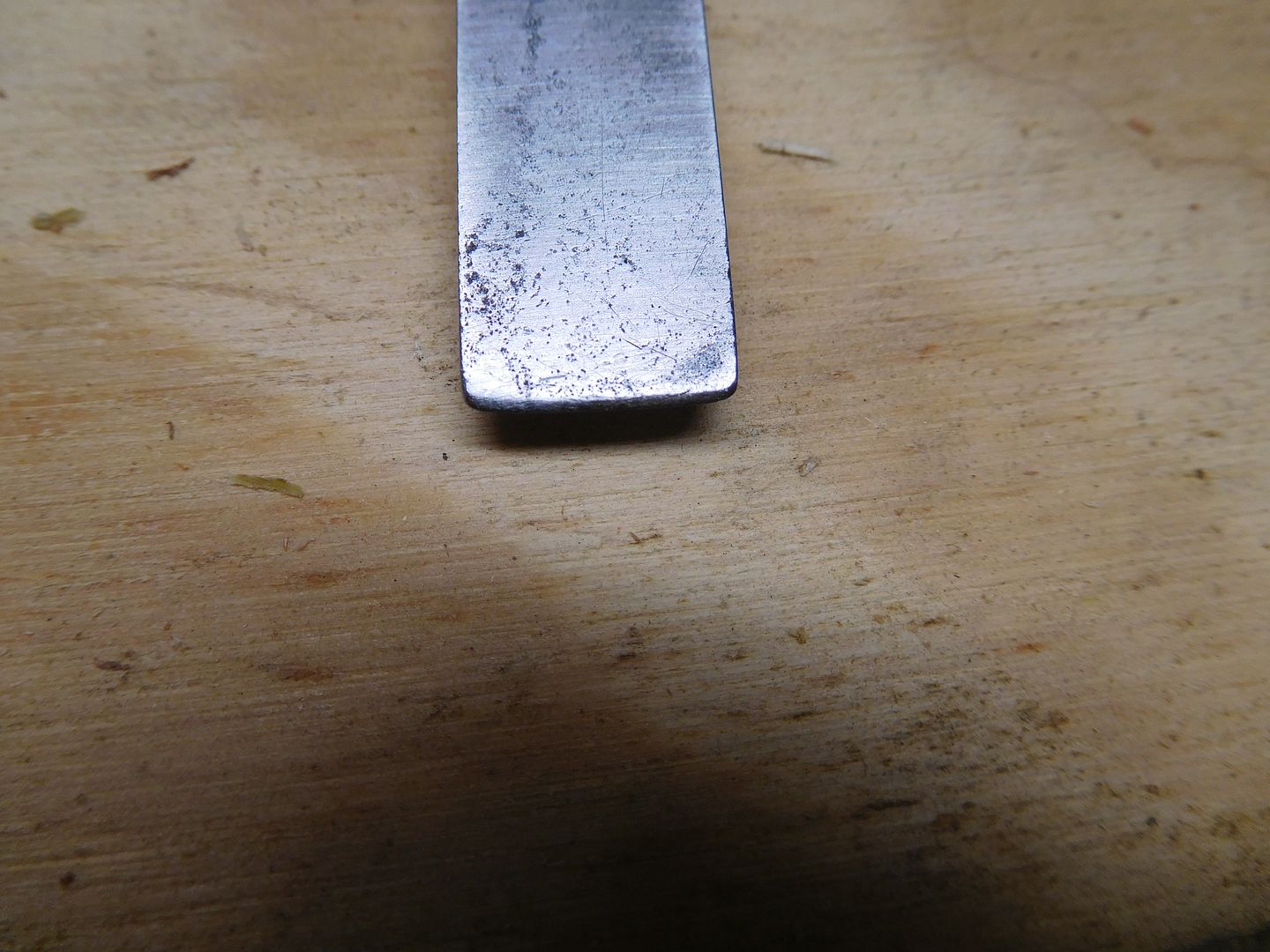
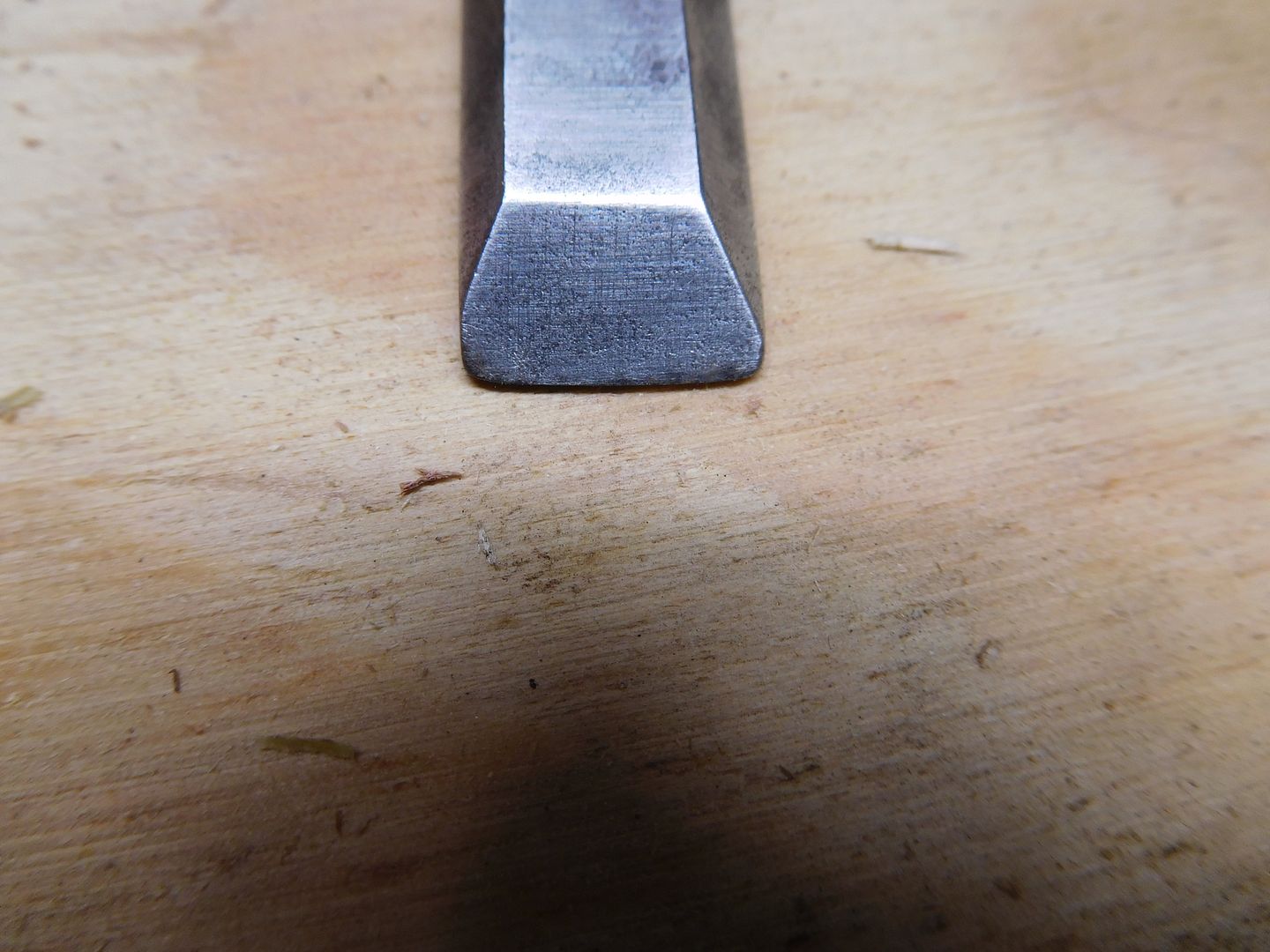
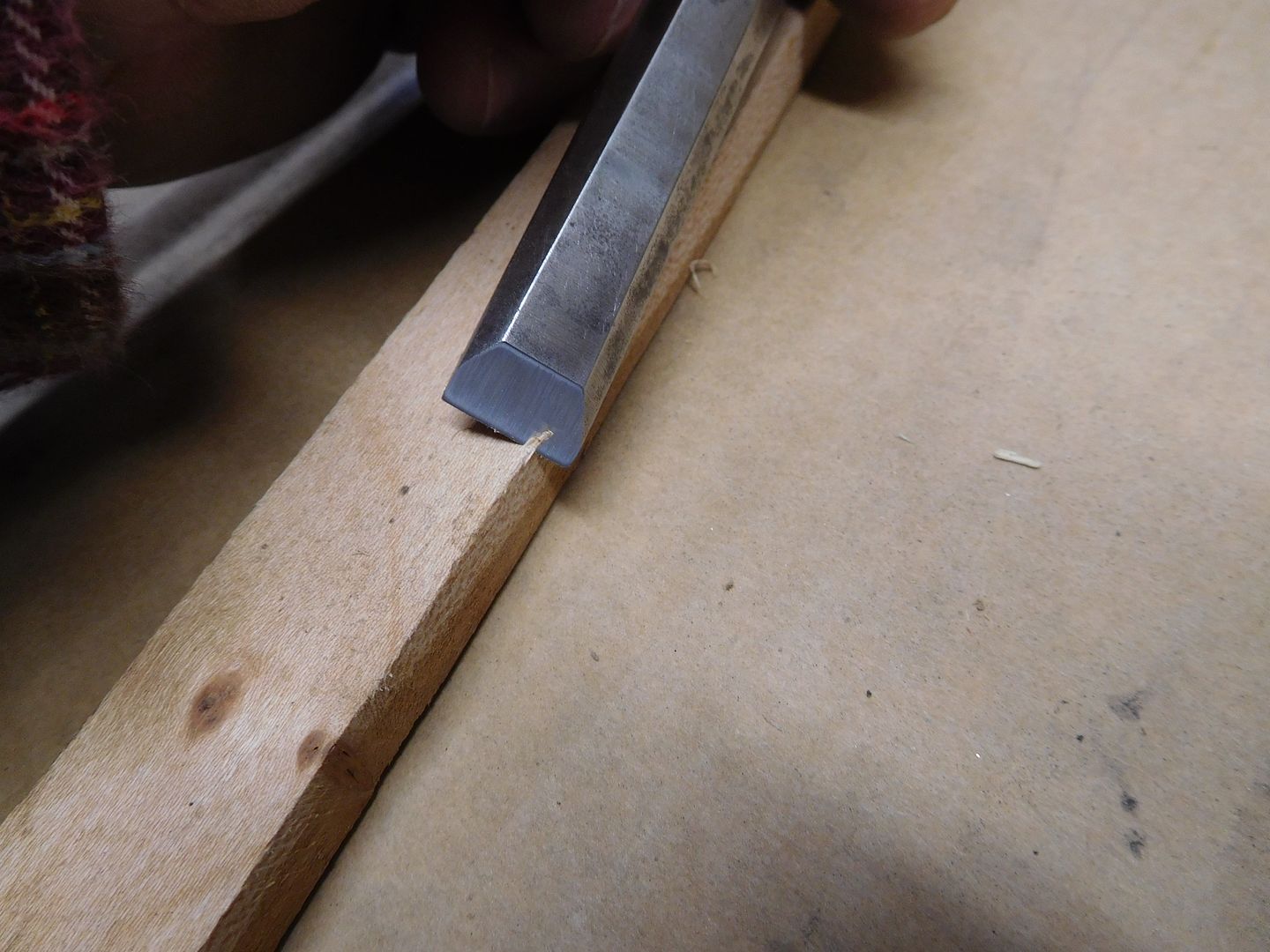
The chisel has no handle but is in nice shape otherwise. Except for a big sweat stain, it has almost no rust. The end is out of square and someone put a back bevel on the edge. Lazy? In a hurry? Who knows, but that is an easy fix. At least the socket was not abused with a hammer.
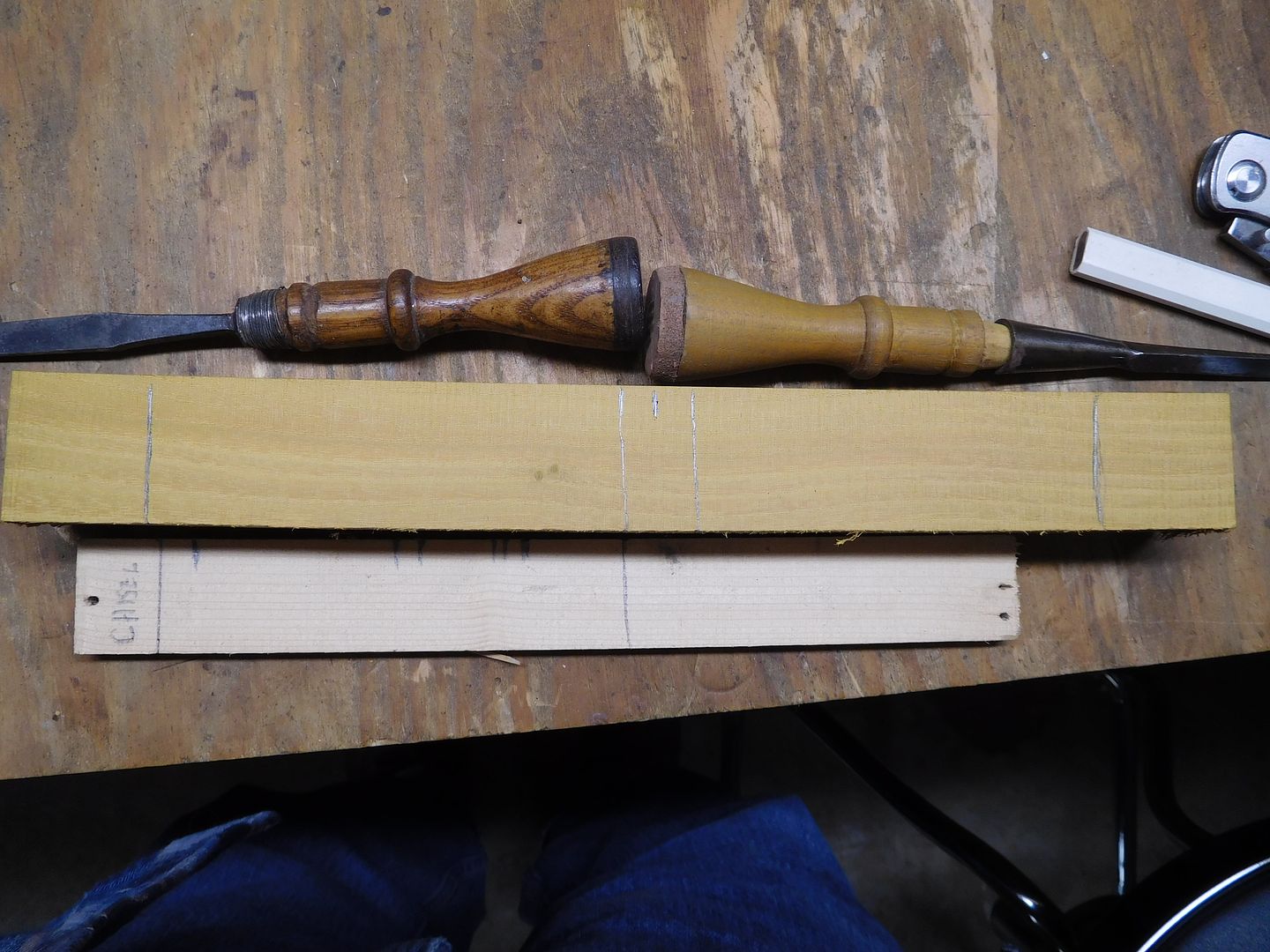
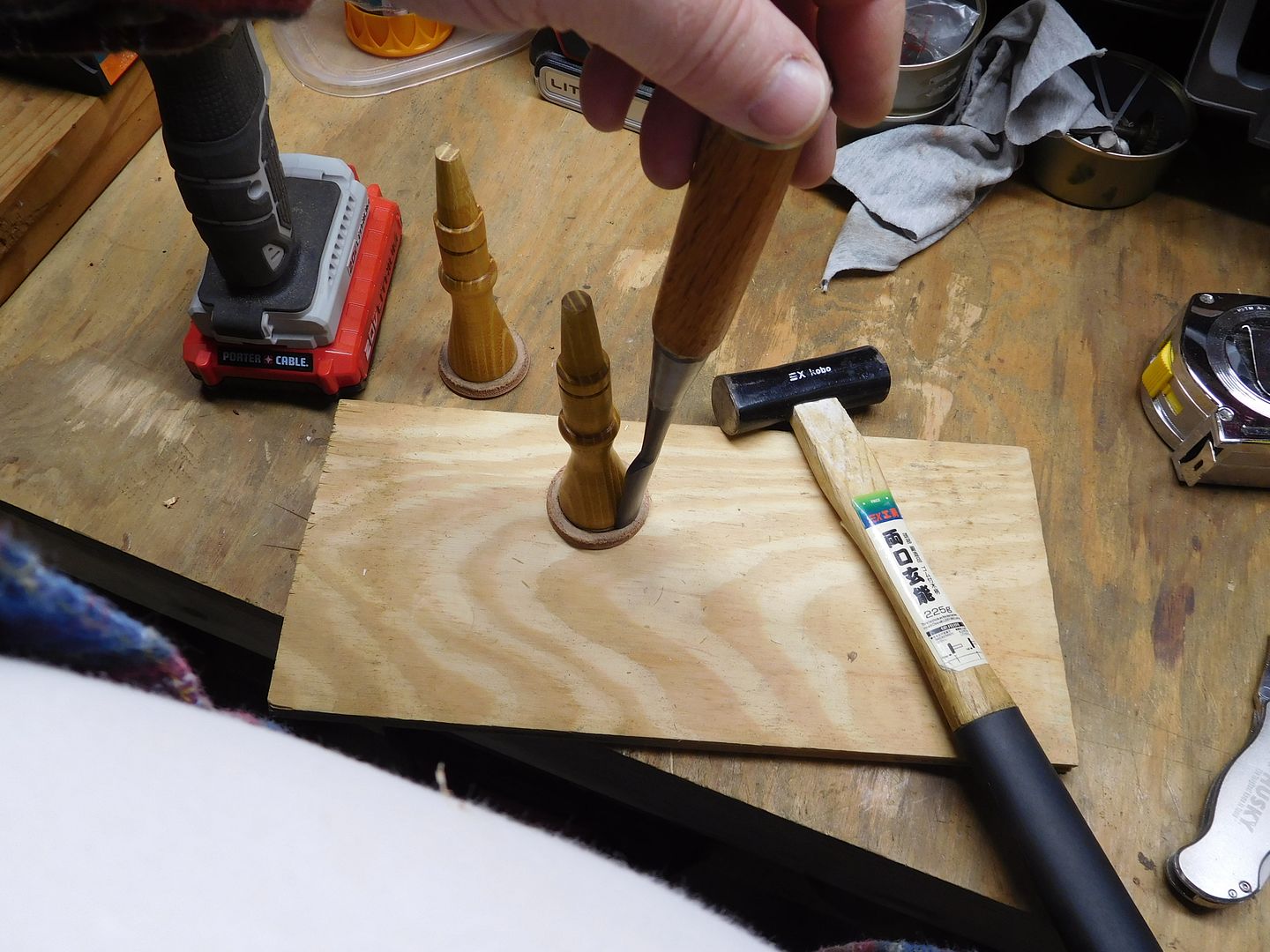
Looks like I have the makings of a three piece set. Here they are together, along with a vintage chisel that I use for a handle pattern.
Looks like I need some 5/4 stock. Sawyers cut wood using 1/4 measurements for width. 4/4 stock is milled and planed to 13/16" thickness and 5/4 stock can be finished to 1".
I used Osage Orange for the other handles and need to see if I have any left. Osage Orange is a hardy shrub with stickers that grows in the Mississippi basin. It was prized by Native Americans, who used it for bows. In fact, the French settlers called it Bois d'Arc. This stuff is a heavy 48 lbs per cubic foot and makes great tool handles.
WooHoo! Wood stash burped up a nice stick of OO for me to use.
The sawdust is bright yellow although the color did not photograph well.
This stick is exactly 12 inches long and I hate to waste the wood. It will be more economical to make two handles instead of just one.
I start with a story stick. This is where I mark the transitions in the turning. The original was made for a tang chisel so I had to modify the pattern and add the pointy end for the socket.
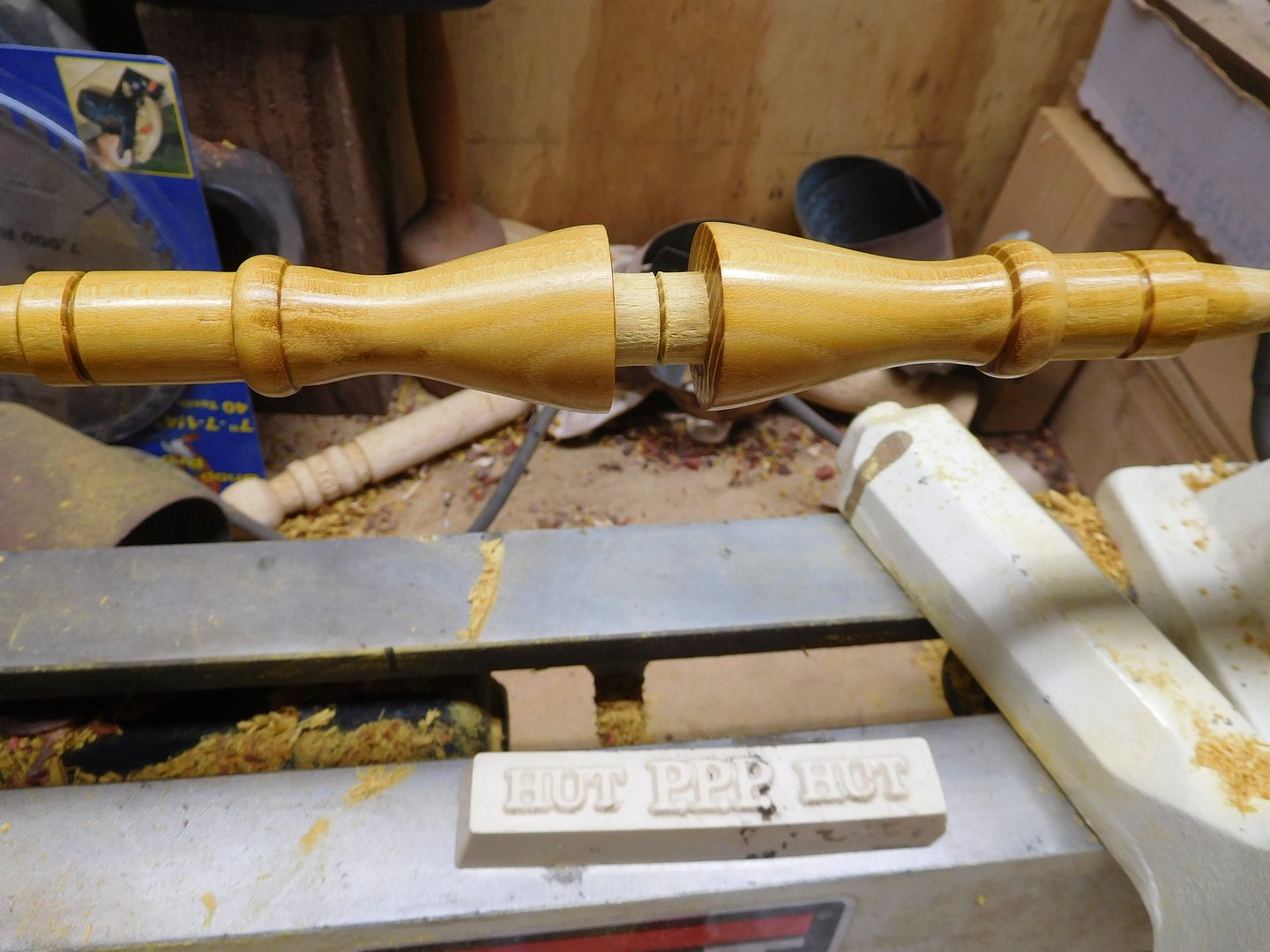
Just as I thought--this stick is perfect for a pair. Here they are laid out.
This wood is very tough, so I made saw kerfs for the headstock.
Mount up!
The first order of business is to make a cylinder. Notice how beautifully this OO turns.
I removed one of the socket chisels just to check my story stick. Ugh. Mistakes were made. No problem. I just extended the transition point on the story stick. This is a good reason to keep your patterns and story sticks. Once you get it right, you can fire for effect.
Here is the first cylinder after marking. Just hold the stick up to the cylinder while the lathe is spinning and use a pencil to make the transition marks.
Now it is time to get serious on the lathe. More to follow.


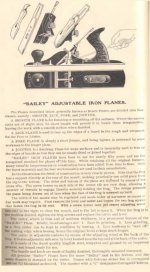


 At least a good lesson on where not to buy a plane.