Sharpening the blade
So far, I straightened out the blade, cleaned rust from it, and ground the blade bevel edge square. Now it is time for honing. Why not use it straight from the grinder, you ask? Good question. The freshly ground edge is rough. Under magnification it would look like a serrated knife edge. Yes it would work in the plane, but it would leave marks and the resulting finish would be rough. In addition, we need to correct some defects on the flat side.
For honing, I use Aluminum Oxide (AO) sandpaper on a marble floor tile. The coarse grit I most frequently use is 220. Fine grit varies from 400 to 600 and even 800. It really depends on what I pull off the stack. I reuse paper until it is pretty far gone and then I refresh. I like to use the used up paper for rust removal. So there is always plenty of used paper in the box. For a blade like this, I grabbed some relatively new 220 paper.
I hold the blade freehand at 30 degrees and drag it across the plate while applying pressure.
Number of strokes depends on how well I did the grinding and how fresh the paper is. I think I drug this blade about 50 strokes. I mostly concentrated on the last 1/16" of the bevel. Then I drug it across the 600 paper for about 10 strokes. The result was a nice and shiny even cutting edge.
Next I started working on the back. Remember that we need to remove those circular marks from the previous owner's attempt of making a flat back. For this operation, I move the marble tile to the edge of the bench and rub the blade back and forth sideways on the coarse (220) sandpaper. I use short and quick strokes. It took about a minute of stroking and checking to remove the marks near the cutting edge. No need to remove them all.
This blade had some deep scratches near the cutting edge so I used a trick to save some time. I elevated the blade about 2-3 degrees and honed for a few seconds to put a slight back bevel on the blade. This is a trick that works to salvage damaged plane blades. This picture shows what we are working with.

The back bevel works on plane blades but is not so good for chisels. Most ww use the flat back of a chisel to register on the project and help guide the cut. A back bevel throws this operation off. But a back bevel can be effective on a bevel down bench plane blade. Remember that the angle of the cut is determined by the angle of the frog. On a bench plane, this angle is 45 degrees. When you install the blade bevel down, that 45 degree angle is replicated on the flat side and your plane cuts at 45 degrees. BUT when you put a slight back bevel on the blade, the cutting angle is increased. In my case, the increase was 2-3 degrees and that meant the effective cutting angle of the blade was increased to 47-48 degrees. A higher cutting angle usually leaves a smoother cut but can make the plane harder to push. I have found that the difference is so slight that I cannot tell. So that is a bonus. When a blade has defects like poor sharpening or rust pitting, it can be saved by a backbevel. Remember this tip when you are restoring vintage planes.
After I honed the back and put on the backbevel, I polished it with the 600 paper. Here is the after shot of the back.
Here is the front bevel after polishing at 600.
If you do your honing correctly, you will notice a wire edge forming. Just keep honing each side until that wire edge breaks off.
After the blade is done, I like to check the chipbreaker. They usually need some attention. Unfortunately the previous owner ground this one sharp on the end. I am sure he meant well. BUT no cigar for him. The chipbreaker needs to stay flat against the flat side of the blade. It stiffens the blade to prevent chatter and also deflects shavings to the outside. If it does not fit tightly, it will not do its chatter mission well and it may also let shavings get stuck under it. The fix is simple. Just swipe it across the coarse paper.
And make a good mating surface.
I like to marry the chipbreaker and blade so the chipbreaker is about 1/16" from the cutting edge. It seems to perform better that way.
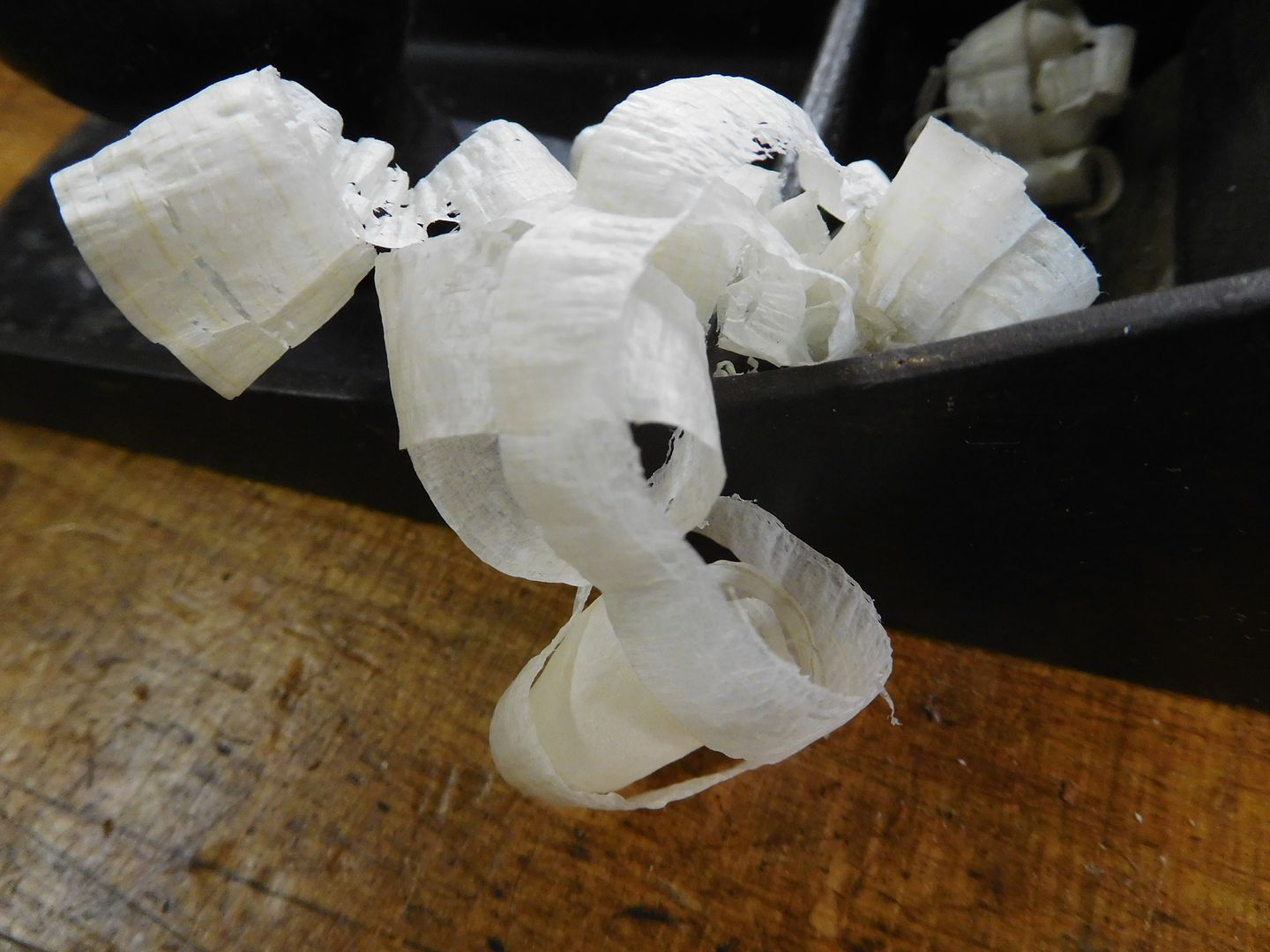
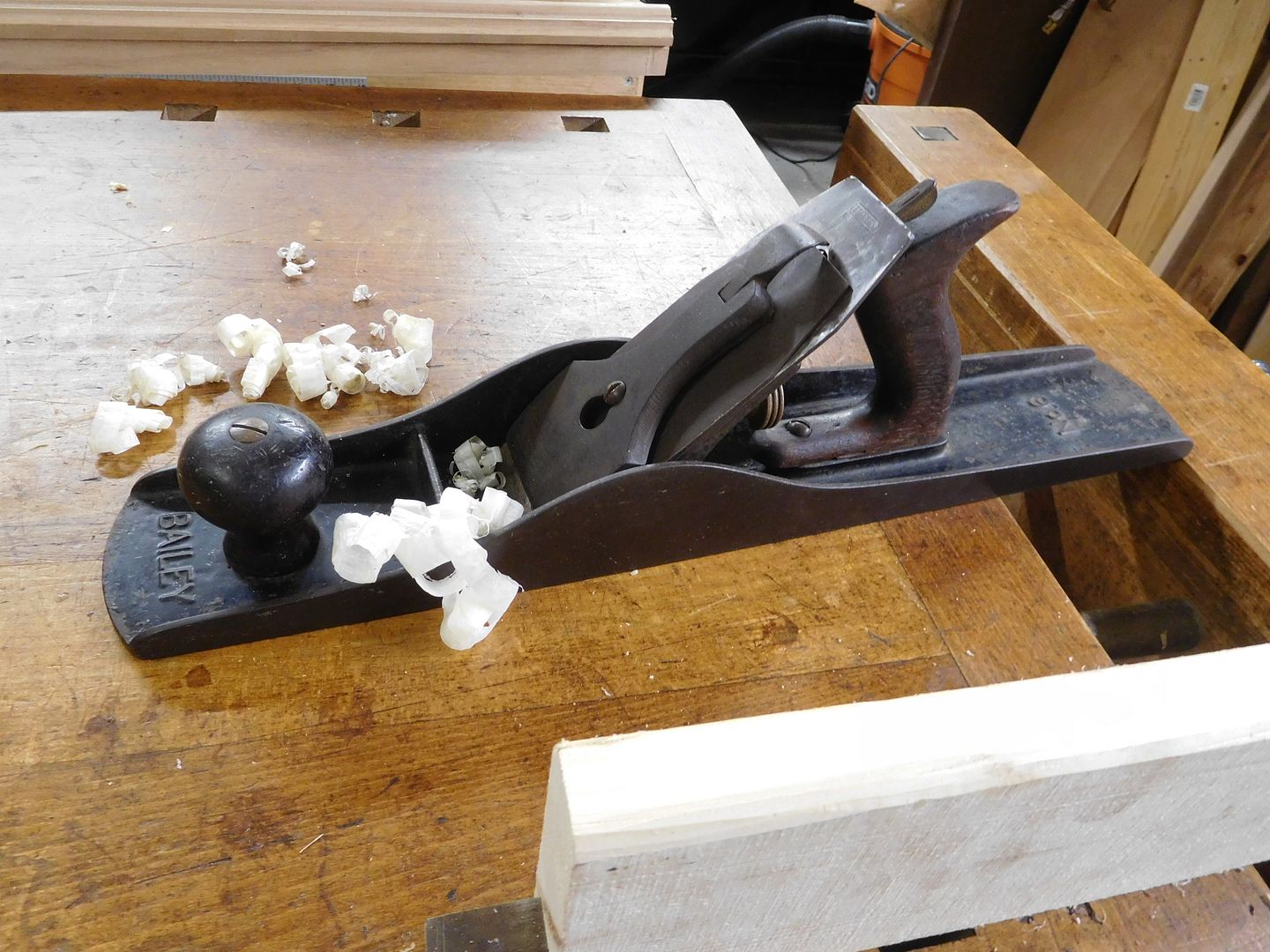
Of course, the proof is in the shavings.
Now the plane is clean and the blade is sharp.
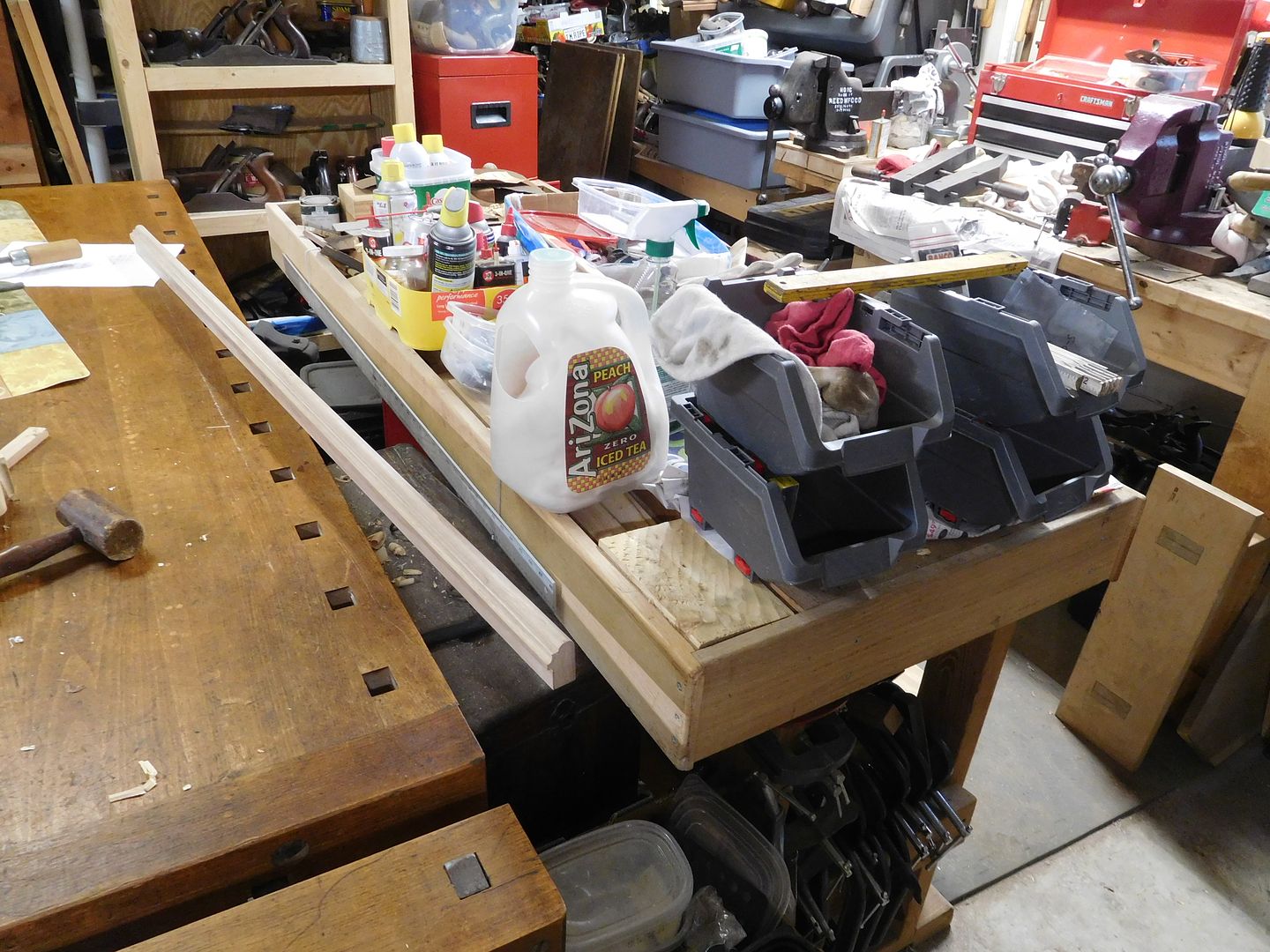
Time to put it back to work. Thanks for watching.