Jim: until you started this thread i thought i had a fair amount of wood planes and now i see i'm just a rookie. any idea how many you might have and i'm sure it's a moving target/number with you restoring/repairing/selling and buying them all the time. thanks again for sharing all your knowledge as you have time too.

just one question before i leave. have you went to a sale where there are planes for sale for really good prices and just left them sit cause you didn't like them? cause it looks like you pick up some wounded ones to bring back to life often. or are some too far gone or not good enough quality to mess with? any tips on ones NOT TO BUY would be good for us ROOKIES if you have some advice to share.
cheers
Thanks for your kind words. I think everyone should have a few handplanes. They are plentiful, mostly inexpensive, and handy.
I will share some of my buying tips, but they may not help the casual user because I follow a system. My original plan was to buy low and sell high. Buying low means buying "issue" planes. BUT if you buy a planes with different issues, then you can rearrange the parts and kick out a good user. It also meant that I needed to focus on a single manufacturer (Stanley) and a few different products (bench planes, combo planes, etc). And then it got out of control. I was having so much fun, I forgot to turn off the spigot and now have a large plane overflow in my garage boneyard.
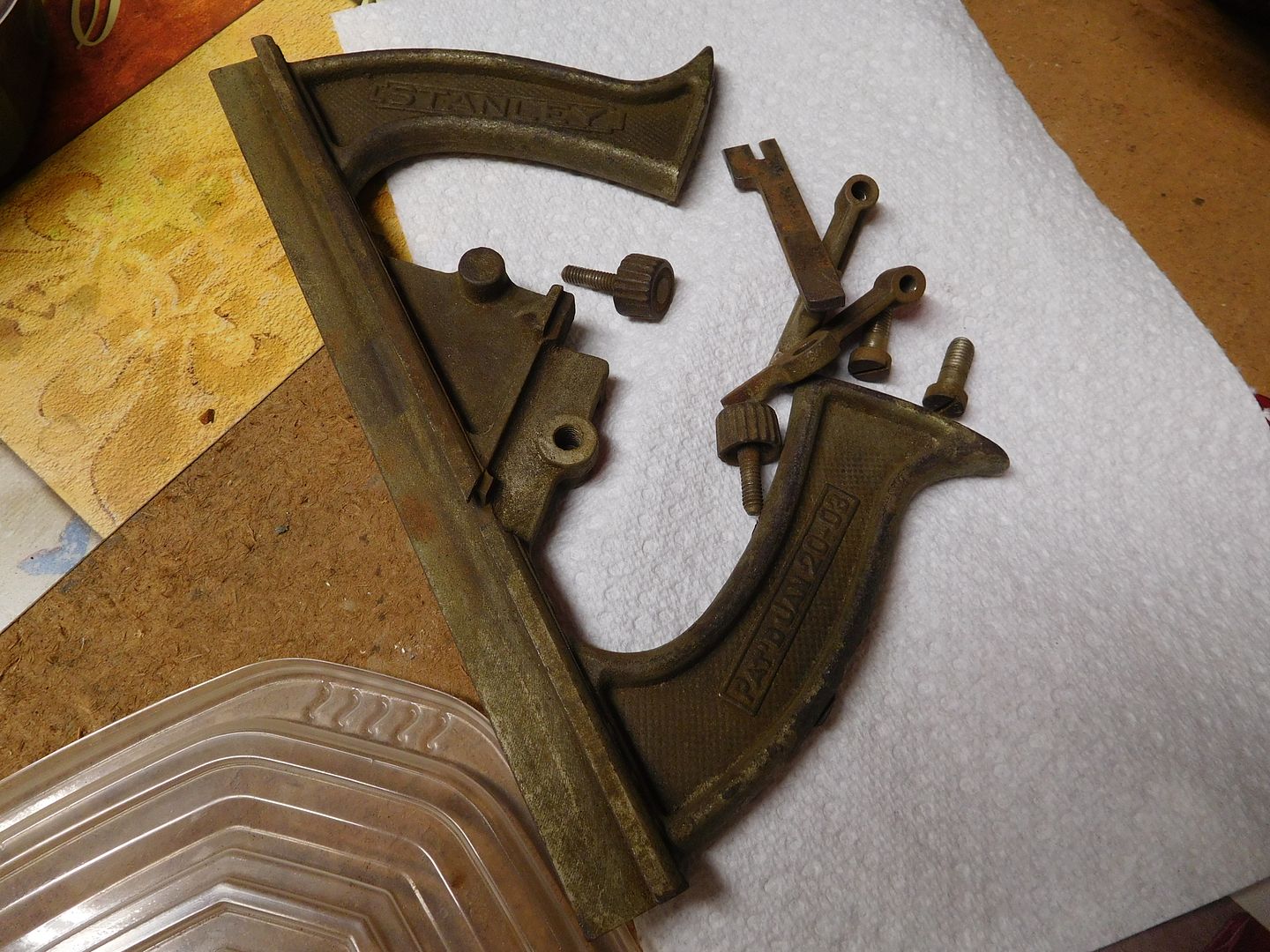
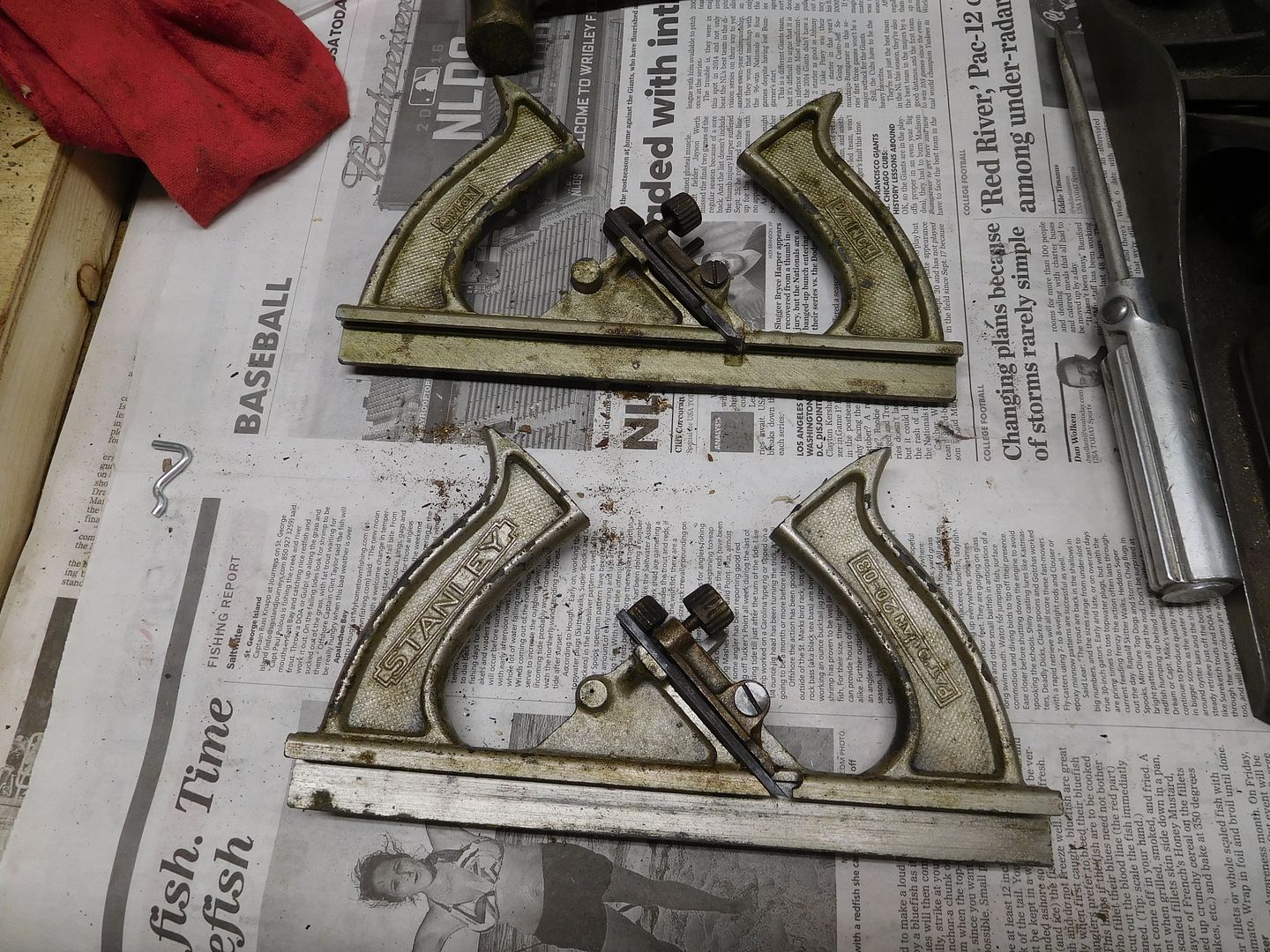
Plane afficianados often refer to "Frankenplanes". Most Stanley planes were made over time and model changes (improvements) were made just like in automobiles. Collectors study catalogs and other documents and develop type charts to show how planes looked when they originally left the factory. Using improper parts makes a plane a "frankenplane". Kinda like using wheel covers from a 1940 Chevy truck on a 1950 Ford truck. It can be unsettling to those in the know.
Many of the planes in my user stable are of the Franken persuasion. When it comes to use, parts are parts. But collector planes command a premium and the parts have to match.
So I purchase planes to use and to resell to other users and to collectors. It means that I buy all over the board. I also have tons of parts and can replace or repair most defects. The key to making the hobby pay for itself is to buy properly and that usually means buy on the bottom.
But I also purchased lots of planes as education. Nothing educates like having lots of examples around.
I will buy ratty parts and pieces if I need something hard to find. I will pass up pristine examples if the price is too high.
Anyone who wants to learn handplanes can purchase on the bottom like I did and learn. It is a hard road and one way to move to the front of the line is to purchase a Lie Nielsen or Lee Valley plane. Or even some of the middle of the road stuff like modern Stanley and Woodriver. Or one can purchase vintage refurb planes like the ones I work up. There are many of us out there. I have been doing it for 20 years and expect to break even one day.
What I avoid
Heavy corrosion
Flood damaged or big corroded lumps should be avoided. At some point, the screws seize and the plane cannot be adjusted. Blades have to be replaced. Most lumps of red iron are not worth shipping. Light rust can be easily cleaned but heavily pitted planes rarely turn into good users. What is the difference between light and heavy? If the rust hurts your hand when you rub the plane, it has probably won the corrosion race.
Cracked castings
I know any metal can be repaired. Even cast iron can be welded. But I have never seen a welded plane that is worth a flip as a user. Heck, some non-welded planes are not good users. Any plane with a cracked casting (sole or frog) is a donor plane for me.
Visual damage
Stanley bench planes are heavy and tend to take dives off the bench. Sometimes this results in a casting break that is visual. Examples are broken shoulders, broken sides on front or rear, and even broken frog tops. I have used many of these planes because they work well. But I no longer buy them (except as donors) because they are impossible to sell. Ditto with hang holes. Often school planes have a hole drilled in the sole so the plane will hang easily. It does not affect the use, but it kills the market value. Buyers are picky and do not like hang holes. (Hint: Hang hole planes at a discount can be a great bargain if you want a user plane.)
Frankenplanes
I do not like to purchase FP unless the seller is honest and explains the differences. My experience is that most of them have hidden defects. Sometimes the parts are from a different manufacturer and do not even fit correctly. The worst examples are "goats" which have been cobbled up with broken and defective parts.
Painted planes
Most vintage Stanley planes have a black japan finish. Repainting is OK for a user but it destroys collector value. Painted planes are hard to sell and I avoid them.
I could go on for hours about buying and selling. But this seems like a good place to stop.