Ducky
Well-known member
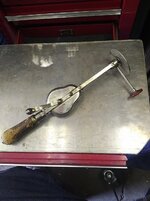
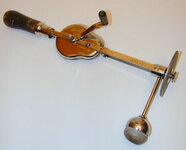
Reed & Prince driver. I have not seen that type of screwhead in 30+ years.


That's a far cry from caling it obsolete. Plus, does fcaw penetrate better than stick welding? Probably not. Can you get the same variety of special electrodes and swap them as easily as with stick welding? Certainly much harder to find and takes way more time with a wire feed machine.Big and heavy weldments are pretty much the domain of fcaw and dual shield. If you are welding 1"+ with stick for anything more than field fixes or a small joints then most welders are wasting a lot of time as compared to wire. We lined a mill trunnion recently, did half stick and half FCAW (about 20 lbs of electrode total) and the wire feed was almost 3 hours faster as compared to stick welding.
That's a far cry from caling it obsolete. Plus, does fcaw penetrate better than stick welding? Probably not. Can you get the same variety of special electrodes and swap them as easily as with stick welding? Certainly much harder to find and takes way more time with a wire feed machine.
The Amish might still use thoseMy friend's Mom gave this hand-crank ******** to me. This included a graphic description. She said the tool was meant to massage and get blood flowing. The wheel on the end can be adjusted off center to increase the intensity of the vibe. I asked for a demonstration, she refused, suggesting, "You might go blind."
At maximum offset of the wheel this tool could drive nails. So, as you suggest, it might replace power tools.The Amish might still use those
*Shops* Not ships hahaI buy pallets of stuff from time to time because ships have antique tools on display etc and restoration of old tools/fixtures/machines is my hobby. I try to make it pay for itself when I can, but:
•I've been coming across BUCKETS of Dayton Lamina/Progress/Moeller ball lock and shoulder punches and blanks. Receivers too. Some Brand new. So I'm assuming they are becoming obsolete?
•Same with the swiss die files.
•Just basically gave away a medium sized box of brand new gesswien stones.
• Have a box of rotary burrs the size of a shoebox. Diamond, Carbide, Boron bonded, stone etc
•Cant get rid of deep hole bits, or their sharpening fixture for anything close to what they're worth.
•Socket cap bolt/screws in general, of every size. They're everywhere here. From 8.8-Titanium. I could start a hardware store. Been cataloging and trying to get to a point where I can dump a bunch on to eBay with some other stuff.
•Bought a lot of Pneumatic miniature CNC components thinking I was getting a deal because I needed a bench anvil and there was one in the lot. Nah.
•Literally had to scrap 500lbs of tool holders/chucks/spindles/heads because I couldn't give them away locally, and they would be too costly to ship.
It hurts my soul to think of you throwing that stuff away.I buy pallets of stuff from time to time because ships have antique tools on display etc and restoration of old tools/fixtures/machines is my hobby. I try to make it pay for itself when I can, but:
•I've been coming across BUCKETS of Dayton Lamina/Progress/Moeller ball lock and shoulder punches and blanks. Receivers too. Some Brand new. So I'm assuming they are becoming obsolete?
•Same with the swiss die files.
•Just basically gave away a medium sized box of brand new gesswien stones.
• Have a box of rotary burrs the size of a shoebox. Diamond, Carbide, Boron bonded, stone etc
•Cant get rid of deep hole bits, or their sharpening fixture for anything close to what they're worth.
•Socket cap bolt/screws in general, of every size. They're everywhere here. From 8.8-Titanium. I could start a hardware store. Been cataloging and trying to get to a point where I can dump a bunch on to eBay with some other stuff.
•Bought a lot of Pneumatic miniature CNC components thinking I was getting a deal because I needed a bench anvil and there was one in the lot. Nah.
•Literally had to scrap 500lbs of tool holders/chucks/spindles/heads because I couldn't give them away locally, and they would be too costly to ship.
That's surprising news. Distributor testers used to go for thousands of dollars in working condition. Is that no longer true? Are the old farts dying off?
Not all of it, just the biggest stuff really. I just don't have storage right now for it unfortunately.It hurts my soul to think of you throwing that stuff away.
It's a dying art. Changing a distributor timing curve, tuning a carburetor? What's hourly labor rate worth now? There are sub $1000 aftermarket EFI setups that are ridiculously simple to install / setup and fine tune.
Thanks, but talk about shipping costs..lol Michigan to Florida.Not all of it, just the biggest stuff really. I just don't have storage right now for it unfortunately.
My divorce resulted in me combining my possessions with my also divorcing girlfriend. And then moving her from an 80 acre farm. It's a near three car garage situation and a large shed, but space has to be made.
The house itself needed work (one man rewire wasn't fun) so there's quite a bit from that too.
I don't tolerate "mess" well haha. Disorder is fine, but clutter I'm not using is not great.
That said, if you want something specific, I can look out for it.
LOL...I used to work with some guys that could whip out answers via their slip sticks faster than you could key in the data on a calculator......Slide Rule

These are still sold to the aviation industry, or were up until recently, and Apex still manufactures bits for them.I've had a number of "Yankee" spiral screwdrivers, and currently have the long handled one in the bottom pic. Haven't used it in decades.

If you don't, I do. I've got a treadle Seneca Falls like it that was converted to a motor drive. In 15 years, I have yet to locate all the parts to restore it.So I probably don't want to buy this then?

We built the atomic bomb and got to the moon with slide rules.Slide Rule
Correct. The home shop is just taking advantage of the availability of inexpensive obsolete machines that aren’t efficient enough to operate for profit In a commercial environment.I'm not sure I'd use a home shop as the yardstick for obsolescence.
The distributor machines still have some value as novelty or collectors items, so there’s a market, albeit a limited one.That's surprising news. Distributor testers used to go for thousands of dollars in working condition. Is that no longer true? Are the old farts dying off?
They aren't obsolete for older cars, but it is a limited market, finding a capable user is a challenge, and it's labor intensive ($$$).That doesn’t negate the fact that they’re obsolete.
My $300 HP-35 purchased in 1973 would be about the same price as a $2000 laptop today. It still works.When I started in engineering in 1963, slide rules were still the thing and in the 1970s the Hewlett Packard HP-35 and the Texas Instrument SR-10 scientific calculators were more expensive than computers are today.
I've had a number of "Yankee" spiral screwdrivers, and currently have the long handled one in the bottom pic. Haven't used it in decades.
You cant make two faces perpendicular to each other with a planer, only a jointerThe jointer. With planers being way more available than they were back in the 70s, the jointer became pretty much obsolete.
I still use mine once in a while though. If I just need to smooth up a saw cut and width isn't critical, the jointer is way faster than the planer.
Radial arm saws are becoming obsolete too. Too bad, they could do a lot of stuff and do it well. I still use mine quite often.
Block planes, jack planes or any sort of a hand plane. I haven't used any of mine in years.
Saw sharpening equipment. With nearly all circular saw blades being carbide these days and often less expensive to replace rather than sharpen, I don't use my sharpening stuff much anymore. Occasionally I'll sharpen a handsaw though.
When I started in engineering in 1963, slide rules were still the thing and in the 1970s the Hewlett Packard HP-35 and the Texas Instrument SR-10 scientific calculators were more expensive than computers are today.
jack vines
I have an 1899 Rockford lathe that was upgraded to electric motor in 1914. It was originally powered by a water wheel in a factory in New Hampshire. The motor still works, but I took it off so not to wear it out. I use an old 1990’s motor for it now.If you don't, I do. I've got a treadle Seneca Falls like it that was converted to a motor drive. In 15 years, I have yet to locate all the parts to restore it.
Jointers are used for flattening a board.The jointer. With planers being way more available than they were back in the 70s, the jointer became pretty much obsolete.
I still use mine once in a while though. If I just need to smooth up a saw cut and width isn't critical, the jointer is way faster than the planer.
Radial arm saws are becoming obsolete too. Too bad, they could do a lot of stuff and do it well. I still use mine quite often.
Block planes, jack planes or any sort of a hand plane. I haven't used any of mine in years.
Saw sharpening equipment. With nearly all circular saw blades being carbide these days and often less expensive to replace rather than sharpen, I don't use my sharpening stuff much anymore. Occasionally I'll sharpen a handsaw though.
Smaller 10" or 12" radial arm saws - they're pretty much a giveaway on Craigslist because they've been replaced by sliding compound mitre-bevel saws, which are much better on accuracy and stability. They're also more efficient with floor space.
But hardwood dealers will still always have a big commercial one around for cutting 12/4 and 16/4 stock, though. At my local dealer, there's a big 14" OMGA saw that's a monster.

Micromind, you're just around the corner, kinda, from me. Good to see someone else from the eastside/Great Basin.Block planes, jack planes or any sort of a hand plane. I haven't used any of mine in years.
Micromind, you're just around the corner, kinda, from me. Good to see someone else from the eastside/Great Basin.
I use a lot of hand planes still, particularly block planes-- hard to beat for some quick touch up.
I agree with the comments re a planer not being a replacement for a jointer, as they serve different functions. It is possible to do some jointer-adjacent things on a planer though: https://www.jpthien.com/ps.htm. Pretty neat, and I do this when I need to joint a face wider than my 6" jointer can handle.
Good luck welding in rain/mud/snow with a mig welder,or some rusty old piece of scrap in a field.Obsolescence doesn’t factor in hobbies.
Just because you have one and use one doesn’t mean it isn’t obsolete.
The industry something was designed for and used in defines its relevance. And even then, it’s a sliding scale.
Welding is a good example of this. Let’s use stick welding for instance. 100% obsolete in certain sections of welding, used occasionally in most and every day in a few.
I would argue something is obsolete when 60%+ of industry has moved on. Some people hang on to obsolete stuff for decades.
I would also point out that just because something is obsolete doesn’t mean it isn’t still useful. I know my 1991 CNC Hurco is obsolete. It still gets used every day and still makes money. A new mill would be better in every measurable way but I’m looking at 150k+ for a machine that the ROI isn’t there on yet. I’ll keep using my obsolete mill until I can justify upgrading.