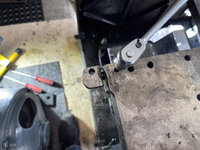
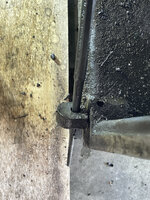
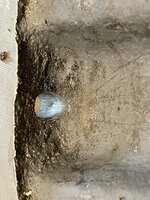
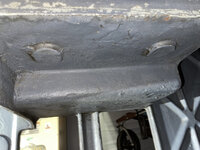
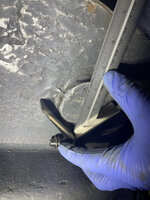
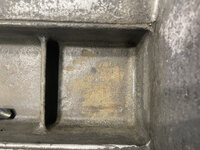
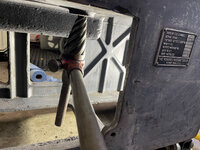
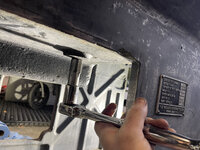
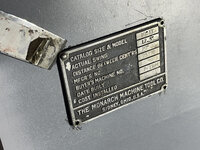
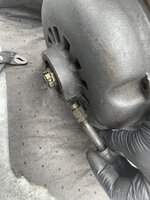
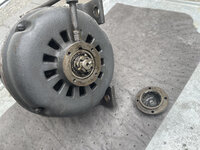
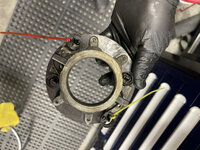
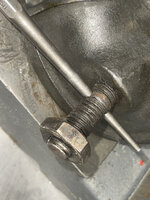
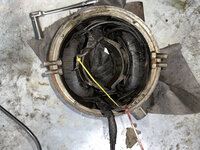
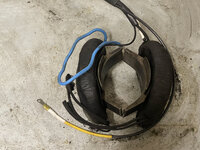
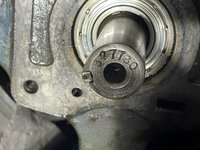
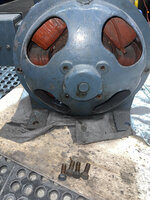
Many times there's a through hole for those drive screws and you can drive them out from the back side. But on the other hand, they're not always accessible.
I've seen people struggle to figure out how pull them from the front side, not realizing they could push them from the back side, or at least get them started. I'm included in that list of people.
In all of the drive screws I have had to remove, I have unfortunatly only been lucky enough one, time for them to have access from the back side. The first time I came across them on my Bridgeport, they had me quite stumped.
I have had luck using a cut off wheel to cut a small groove across the head of the rivet, then use a flathead screwdriver and back them out.
That was going to be my next option, I like starting with the less destructive and less likely to damaged the plaque option first.
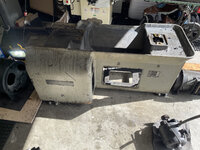
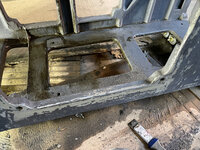
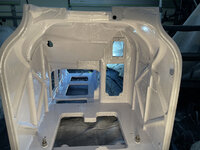
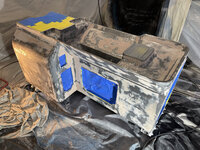
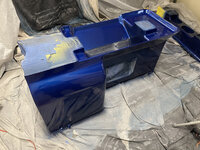
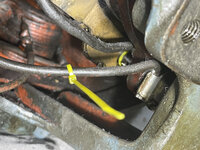
I spent a big chuck of time today, tapping off the inside of the casting. I used the yellow 3M automotive tape first around all of the edges. I then, taped painters paper behind each opening.

Next, I went back and used blue painters tape between the yellow 3M tape and the paper. Its probably overkill, but I dont want to take any chances with over spray on the freshly painted interior.

In hindsight, it may have been easier to paint the interior of the lathe last, but too late for that now.
When working on smoothing out the casting, light is critical. I learned a long time ago when I got into shooting a lot of flash images, things becomes way more dramatic, when you can place light at perpendicular angles to what your are viewing, or better yet, fully back lit.

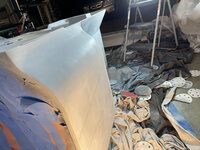
So in order to better see what I am working with, I positioned my work lights to my left and right at either end of the lathe. This allows the light to rake across the surface, highlighting any areas that will need attention.

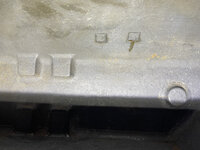
When viewed without the raking light, those imperfections are really hard to see.

I then went to work, using very small amounts of Bondo at a time, only focusing on the deepest areas first.
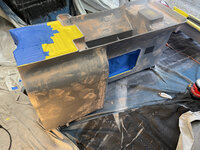
I back scraped as much of the excess off as possible, and stoped as soon as I could feel it start to kick. I learned on the Bridgeport, less is more with the filler. Its seems more efficient to do multiple very thin coats slowly building up the low spots, as aposed to trying to sand down a ton of filler at once. I'm not an auto body guy, so no clue if thats the best approach, but it seems to work for me.
For the sanding I used my small, Festool detail sander with 80 grit paper. It's really nice having the dust collection to help with the particles form the Bondo.
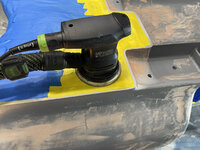
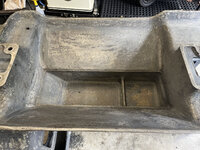
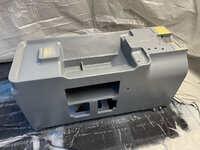
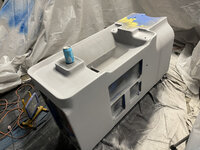
Here is what it looked like after the first pass.
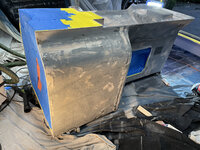
I then did a second coat of Bondo, once again only focusing on the lowest areas. I would have sanded that today, as well, but ran out of paper. Tomorrow I will probably do one more pass once again focusing on the lowest areas, before attempting to do a skim coat and starting to work on correcting the panels for flatness with the longer elbow grease Mirka sanding block I ordered. The Mirka is 2.75x7.75 inches, so I hope its long enough to get consistent flat results. I thought about ordering the 16" one, but figured that would probably be too long to be useful on a lot of the lathe. I guess we will see.