To avoid these ads, REGISTER NOW!

Bought Bridgeport Clone - Now Getting it Set Up for Basic Machining

OP
B

bulletpruf

Well-known member
Joined
Nov 28, 2013
Messages
10,926
Location
San Antonio
Yes one of those.
What you do is you chuck up on the main body part (collet or drill chuck) and the ends are attached with a spring so they flop about, you run at say 600 rpm and bring it towards the edge you are trying to locate, as you start touching it will run more and more concentric to its body, but you get to a point where it suddenly kicks of sideways a little, which if you are careful with the table movement will be a very consistent location, then you move over 1/2 the probe diameter and you should be centred over the edge of the work piece.

They work great if you also have a DRO as you can do all 4 sides of a part, hit the half function on the dro on X and Y, move until X and Y are on zero and you will be in the centre of the surface.

Thanks for the detailed response. I ordered a few and I'll watch a video or two so I can see exactly how that works.

Scott
 
To avoid these ads, REGISTER NOW!

Firstram

Well-known member
Joined
May 16, 2017
Messages
1,390
Before you spend any more money, watch all of the rebuild videos from H&W machine. You really need to tear down the table, cross slide and knee. flush out the oil passages and replace any oil meters that don’t work. You really need to learn how and why everything does what it does and go from there!

Your mill might be so beat it’s not worth fixing! A sweat equity tear down and cleaning will show you what’s needed and teach you how to evaluate a future purchase. If this mill isn’t worth the investment to make it right, sell it and move on!

None of this is magic or difficult!
 
OP
B

bulletpruf

Well-known member
Joined
Nov 28, 2013
Messages
10,926
Location
San Antonio
Before you spend any more money, watch all of the rebuild videos from H&W machine. You really need to tear down the table, cross slide and knee. flush out the oil passages and replace any oil meters that don’t work. You really need to learn how and why everything does what it does and go from there!

Your mill might be so beat it’s not worth fixing! A sweat equity tear down and cleaning will show you what’s needed and teach you how to evaluate a future purchase. If this mill isn’t worth the investment to make it right, sell it and move on!

None of this is magic or difficult!

Thanks. I'll check them out.
 

StormcrowAz

Well-known member
Joined
Nov 3, 2011
Messages
750
Location
Phoenix, AZ
-VFD. Any recommendations?

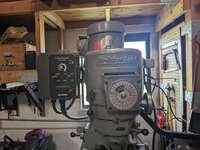
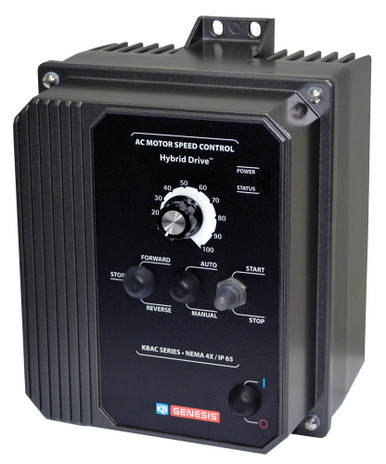
I went with a KBAC-27D for the VFD. Been using one on my DIY belt sander for several years with much success. I like that they are simple and more solid state than digital. It’s fully enclosed so you don’t have to worry about grinding dust and such getting into the electronics. It is a bit more expensive, though. Pulled the factory drum switch and wired it in its place.
53510898285_0841670237_b.jpg

53567399194_c1a79ebd60_b.jpg

53567078241_e50ed243bf_b.jpg
 
OP
B

bulletpruf

Well-known member
Joined
Nov 28, 2013
Messages
10,926
Location
San Antonio
I went with a KBAC-27D for the VFD. Been using one on my DIY belt sander for several years with much success. I like that they are simple and more solid state than digital. It’s fully enclosed so you don’t have to worry about grinding dust and such getting into the electronics. It is a bit more expensive, though. Pulled the factory drum switch and wired it in its place.

Nice looking mill.

On the VFD, looks like the KBAC-27D is highly rated and retails for about $400. I still need to spend more time researching this, but that looks like a great candidate.

Thanks for the input.

Scott
 

Riverrat

Well-known member
Joined
Jun 26, 2021
Messages
82
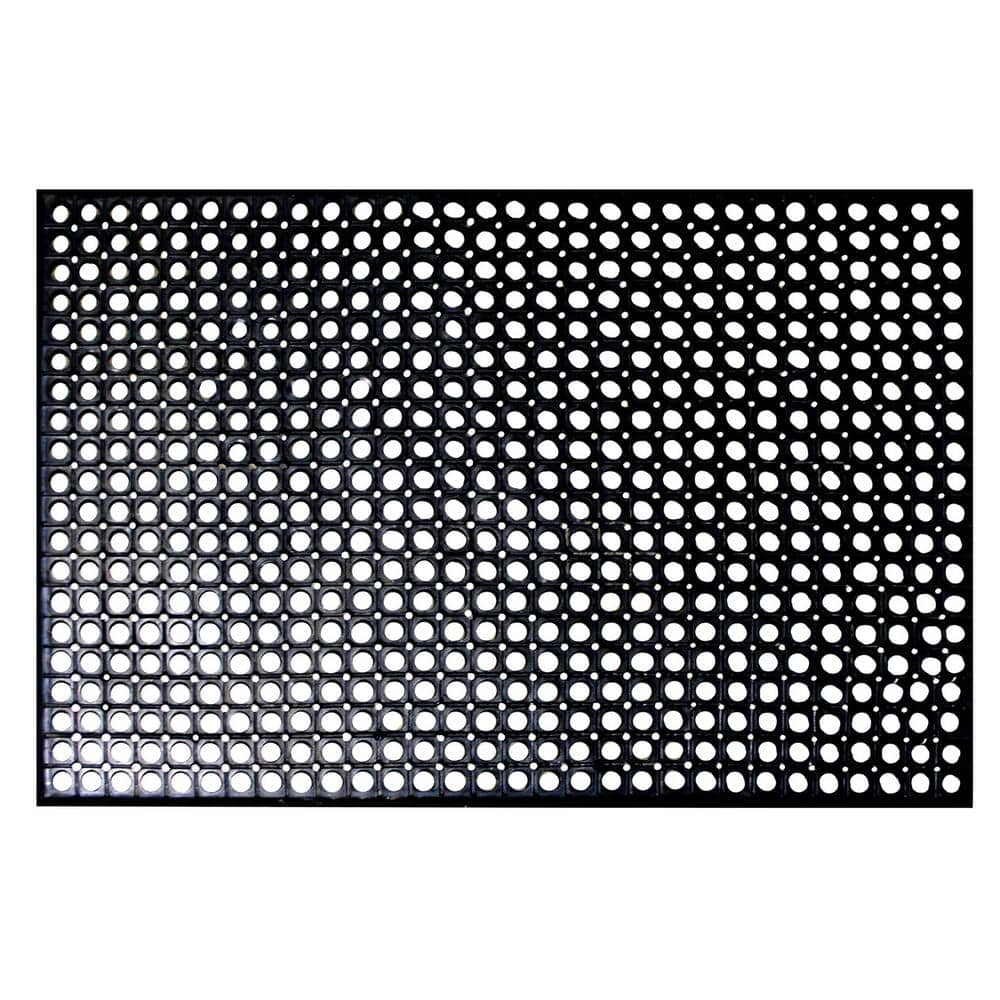
When you get there, pick you up one of these mats. Anti fatigue and the chips fall into the pockets.

An alternative is to buy a stall mat at Tractor Supply and cut it in half and you have two mats. There aren't any holes for the chips to fall into but I either sweep them off with a broom or compressed air.
 

Firebrick43

Well-known member
Joined
May 12, 2015
Messages
13,992
Location
West central Indiana
Ok, can we start the shopping list for a basic setup?

-VFD. Any recommendations?
-Vise - I started searching and I'm finding options from $60 - $1,000+. Is there a particular configuration and size that folks generally use? Any recommendations on a budget friendly option?
-I believe the mill has an R8 collet, but how would I verify this?
-Drill chuck - Made in the USA Jacobs, lightly used? https://www.ebay.com/itm/356004832936?_nkw=jacobs+drill+chuck+r8&itmmeta=01J74NQNEG94M1F030Q0RAXD2X&hash=item52e38aa6a8:g:XykAAOSw6FRm1PK~&itmprp=enc:AQAJAAAA8HoV3kP08IDx+KZ9MfhVJKkxWFMld3InMoCEsrE02bHNFdfaj11vNk1iOEUsXpSMMmEr2hD9/I2oEjTfN+yzV5H+SZTgKKJBu3z6s+zeoQ9qoSTQmrYxq8SnCubDq6nOUHpJQ5NCcpZ5V4/0Imag52KfXl0kQZ4dzzw2IXb1Ss9HyNPjnsTOceCs/a5Ed7QJTuFK/TkVmgQ3d9ad4RzwUmkXxGnojUPD0brbqcouaDQDuYjljHq9+YQ2V6TOKL2nUSn4kX3lIr1NQrKPgwfUfbX9r+lyg1yOIeOlMQTWJygPd8dHyDo132wUkM+9sQrZPg==|tkp:Bk9SR7TX3pW5ZA&edge=0
-Collets? Sets of R8 collets aren't that expensive.
-Face mills and end mills?

Thanks,

Scott
You first need to decide what exactly you want to do with the controls on your mill before deciding on what vfd.

Easy is a KBAC vfd. I have one on my drill press and have installed half a dozen on other pieces of industrial equipment. They are the easiest vfds to install but very basic on what you can do with them and one of the more expensive choice, at least a 150$ over a basic teco drive.

Nearly all the vfds with digital displays can be programmed with hundreds of parameters you can change to do all kinds of neat features.

You can use the mills original controls or any type of switch you desire, even the switch type (NO or NC) can be switched via a quick program change.

For example I imagine your machine has a low gear. Bridgeport and the clones I have been around reverse the direction of spindle when in low gear and the operator has to realize that forward is reverse and reverse is forward. A small sensor added to the high/low shift lever can be hooked up to the vfd and it will automatically turn on the spindle so it’s rotating forward no matter which gear it’s in.

Another thing you can do is have a power tapping button that when you flip a tap switch makes the spindle turn in reverse. Next to it will be a momentary switch you hold with your left hand and makes the spindle turn forward as you lower the quill with your right. Then when you let off the momentary switch the spindle instantly reverses the tap out of the hole.


As far as vises, I have witnessed Precision Mathew’s a pretty good value for a home shop. It’s no Kurt but no where near the price either. Their keyless drill chucks are pretty decent as well.


I went with a KBAC-27D for the VFD. Been using one on my DIY belt sander for several years with much success. I like that they are simple and more solid state than digital.
Um, Unless your vfd is ancient and using nixie tubes, you can’t get more solid state than digital displays and digital IC controls? :headscrat
 
OP
B

bulletpruf

Well-known member
Joined
Nov 28, 2013
Messages
10,926
Location
San Antonio
An alternative is to buy a stall mat at Tractor Supply and cut it in half and you have two mats. There aren't any holes for the chips to fall into but I either sweep them off with a broom or compressed air.

You don't sit the mill down on the stall mat, do you? I'm guessing it rests on the concrete and the mat is cut to fit around it.
 
OP
B

bulletpruf

Well-known member
Joined
Nov 28, 2013
Messages
10,926
Location
San Antonio
You first need to decide what exactly you want to do with the controls on your mill before deciding on what vfd.

Easy is a KBAC vfd. I have one on my drill press and have installed half a dozen on other pieces of industrial equipment. They are the easiest vfds to install but very basic on what you can do with them and one of the more expensive choice, at least a 150$ over a basic teco drive.

Nearly all the vfds with digital displays can be programmed with hundreds of parameters you can change to do all kinds of neat features.

You can use the mills original controls or any type of switch you desire, even the switch type (NO or NC) can be switched via a quick program change.

For example I imagine your machine has a low gear. Bridgeport and the clones I have been around reverse the direction of spindle when in low gear and the operator has to realize that forward is reverse and reverse is forward. A small sensor added to the high/low shift lever can be hooked up to the vfd and it will automatically turn on the spindle so it’s rotating forward no matter which gear it’s in.

Another thing you can do is have a power tapping button that when you flip a tap switch makes the spindle turn in reverse. Next to it will be a momentary switch you hold with your left hand and makes the spindle turn forward as you lower the quill with your right. Then when you let off the momentary switch the spindle instantly reverses the tap out of the hole.


As far as vises, I have witnessed Precision Mathew’s a pretty good value for a home shop. It’s no Kurt but no where near the price either. Their keyless drill chucks are pretty decent as well.


Um, Unless your vfd is ancient and using nixie tubes, you can’t get more solid state than digital displays and digital IC controls? :headscrat

On the VFD, I'm hoping for the simplest solution - simple to install and set up, simple to use, etc.

I ordered a lightly used Kurt 5" vise on eBay yesterday.

Chuck looks nice, but it's backordered, and I'm supposed to be picking one up from a member here.

Thanks for the input.

Scott
 

slowtwitch73

Well-known member
Joined
Apr 18, 2019
Messages
5,876
Location
Hellgate
Yeah, mill on the concrete.

From the pictures, I would wager that will be a sweat heart mill. Nothing obviously fubar'ed, table looks really clean, one shot pump. You never know what's hiding but going from pics, looks good.
 
OP
B

bulletpruf

Well-known member
Joined
Nov 28, 2013
Messages
10,926
Location
San Antonio
Yeah, mill on the concrete.

From the pictures, I would wager that will be a sweat heart mill. Nothing obviously fubar'ed, table looks really clean, one shot pump. You never know what's hiding but going from pics, looks good.

Thanks for the vote of confidence!
 

Riverrat

Well-known member
Joined
Jun 26, 2021
Messages
82
Here is my take on various topics that might be of benefit to you.

IMG_8727 Collet Rack.jpg
I have attached a collet rack by the digital readout for convenience. It holds collets and my drill chucks. I recommend Jacobs ball bearing chucks if you don't get keyless. I have Moffett lights on each side of the head of the mill. I also use an adjustable quill feed handle (H&W).

IMG_8363 Face Mills and Fly Cutter.jpg
My face mills are in a rack on the bench with card board surrounding them so I don't cut myself by accident.


IMG_8731 Fly Cutter.jpg
Fly cutters are very affordable and are a must in my opinion.

IMG_8748 Draw Bar Wrench.jpg
The draw bar wrench I got from H&W. It has a brass end which you can use to tap down on the draw bar.

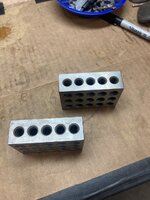
IMG_8732   1-2-3 Blocks.jpg

1-2-3 blocks are a must have.

IMG_8734 Test Indicator.jpg
If you want to tram the table on the mill or indicate the vise a test indicator is the way to go.

IMG_8749 Parallel Spreader.jpg
I'm sure everyone else knows this but you may not. Parallel spreaders can be made out metal banding.

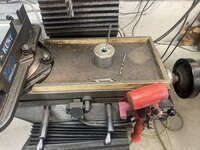
Table Protector.jpg

I made some table protectors that are keyed to the slots in the table. They protect the table and give you a place to set tooling. It also makes it easier to clean the mill.


I would suggest you buy a copy of the Machinery's Handbook. I bought my copy when I went through tool and die apprenticeship training in the mid 70's and it is the 19th addition. It even has a section on how to use a slide rule! You don't need a current addition. Look on ebay and you will find them reasonably priced. I would also suggest you purchase some center drills. At the very least get #6's and #4's.

I have a swivel base under my six inch Kurt vise. It has keys on the underneath side, and when I take the vise and swivel base off as a unit and reinstall it I find it is within .0005 of being true.

You can download Bridgeport manuals for free and they might help you with your import.

I don't expect everyone to agree or disagree with me, but I post this as food for thought.
 

whateg01

Well-known member
Joined
Mar 13, 2006
Messages
11,198
Location
doo dah, kansas, usa
Looking at the pictures you posted, it seems like the horizontal piece that your mill head attaches to has a machined feature on the opposite side. I’ve seen some Bridgeport mills set up with another milling head on the backside and to use it you just swiveled the whole assembly 180 degrees. Just thinking out loud, but I wonder if you couldn’t somehow attach a nice drill press head to that area, and then when you really need a drill press, just rotate it into position? You are shop space challenged, so maybe two tools in one space might be a plus?
Seems like a nice idea. I question how often it would actually get used. It's not trivial to spin the turret around and then have to re-tram when you spin it back. I've seen a couple of machines (pictures actually) with shaper attachments on the back but I've no idea how often that feature would get used by most of us.
 

Firebrick43

Well-known member
Joined
May 12, 2015
Messages
13,992
Location
West central Indiana
On the VFD, I'm hoping for the simplest solution - simple to install and set up, simple to use, etc.

I ordered a lightly used Kurt 5" vise on eBay yesterday.

Chuck looks nice, but it's backordered, and I'm supposed to be picking one up from a member here.

Thanks for the input.

Scott
Then the KBAC-27d will be your easiest solution.


And you will want the FWD reverse switch kit

https://kb-controls.com/9480-forward-stop-reverse-switch/

And the on/off switch kit.

https://kb-controls.com/9523-kbac-kbda-27d-power-on-off-switch-kit/

It’s a good idea to use shielded vfd wire between the vfd and motor
https://www.automationdirect.com/ad...ire_-a-_cable/motor_supply_cable/vfdc-14-4b-1

and some cable glands.
Probably just 3/4” but it depends on the lines cable you use.

https://www.automationdirect.com/ad..._glands/national_pipe_thread_(npt)/bspdx-13-w

Of course you will need a lines cable and suitable plug or a disconnect box.
 
OP
B

bulletpruf

Well-known member
Joined
Nov 28, 2013
Messages
10,926
Location
San Antonio
I have attached a collet rack by the digital readout for convenience. It holds collets and my drill chucks. I recommend Jacobs ball bearing chucks if you don't get keyless. I have Moffett lights on each side of the head of the mill. I also use an adjustable quill feed handle (H&W).

I do like the collet rack.

I am picking up a Jacobs ball bearing chuck.
My face mills are in a rack on the bench with card board surrounding them so I don't cut myself by accident.

I will start off with 1 face mill; will be a while before I need a rack, I think.

Fly cutters are very affordable and are a must in my opinion.

You're not the first one who mentioned these. How about this one with a 5/16" HSS tool bit? https://www.amazon.com/Cutter-Shank-Bridgeport-Milling-Machine/dp/B07NCTK8XB/?tag=atomicindus08-20

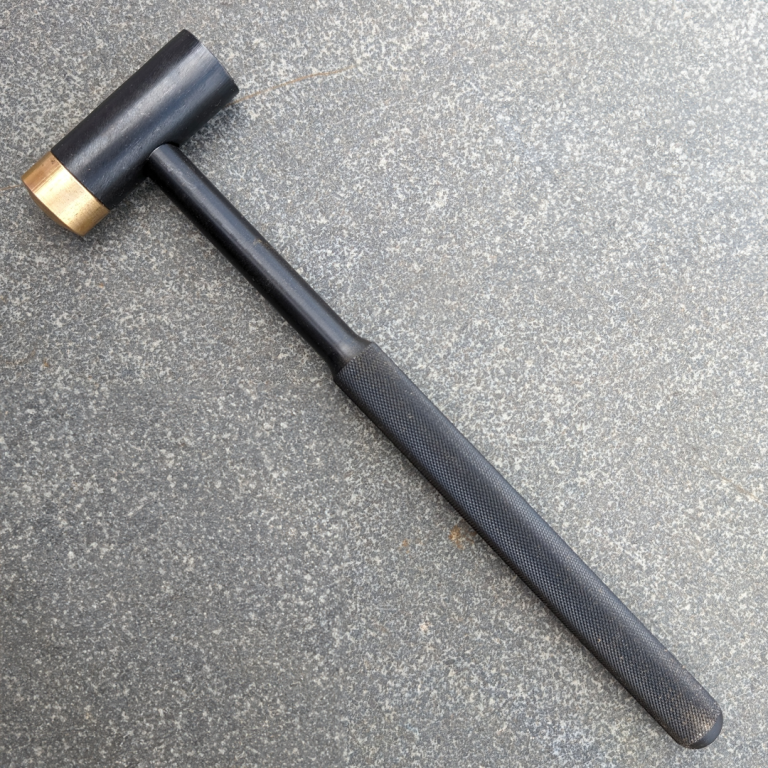
The draw bar wrench I got from H&W. It has a brass end which you can use to tap down on the draw bar.

Nice piece of gear. Did a quick search on their site and didn't see one. Found this on eBay: https://www.ebay.com/itm/4032484373...nOBYrh7ULTAaA6jTIQ=|tkp:Bk9SR8iQ0eK7ZA&edge=0

1-2-3 blocks are a must have.

Ordered a pair.

If you want to tram the table on the mill or indicate the vise a test indicator is the way to go.

Added to the shopping list.

I'm sure everyone else knows this but you may not. Parallel spreaders can be made out metal banding.

Thanks

I made some table protectors that are keyed to the slots in the table. They protect the table and give you a place to set tooling. It also makes it easier to clean the mill.

Looks like a good idea.

I would suggest you buy a copy of the Machinery's Handbook. I bought my copy when I went through tool and die apprenticeship training in the mid 70's and it is the 19th addition. It even has a section on how to use a slide rule! You don't need a current addition. Look on ebay and you will find them reasonably priced.

Added to shopping list.

I would also suggest you purchase some center drills. At the very least get #6's and #4's.

Added to shopping list.

I have a swivel base under my six inch Kurt vise. It has keys on the underneath side, and when I take the vise and swivel base off as a unit and reinstall it I find it is within .0005 of being true.

You can download Bridgeport manuals for free and they might help you with your import.

I'll download some.

I don't expect everyone to agree or disagree with me, but I post this as food for thought.

Thanks for the detailed input.

Scott
 

alfadan

Well-known member
Joined
Mar 9, 2007
Messages
2,103
Location
Augusta, ks
Seems like a nice idea. I question how often it would actually get used. It's not trivial to spin the turret around and then have to re-tram when you spin it back. I've seen a couple of machines (pictures actually) with shaper attachments on the back but I've no idea how often that feature would get used by most of us.
It would be a fun thing to have. I've seen Max Grant using an asian made slotter on the back of his.
 

whateg01

Well-known member
Joined
Mar 13, 2006
Messages
11,198
Location
doo dah, kansas, usa
I would get a fly cutter before I got a face mill. Everything the face mill can do a fly cutter can do, just more slowly.

A rack to put all of your tooling in is useful even if you don't have much tooling. Once you start accumulating some, it's pretty amazing how fast it can fill up.

I know you already bought one two three blocks, but I find myself using solid 1 2 3 blocks almost all the time now rather than the ones that are drilled and tapped. Originally 1 2 3 blocks were drilled and tapped so that you could assemble them into different shapes if you needed to. You'll notice that half the holes are drilled and tapped, and the other half are just drilled. The idea being that you can stick a bolt through one of the drilled holes into one of the tapped holes on the other one two three block to bolt them together. However you'll also notice that the drilled holes that are not tapped are not big enough to put a bolt through that will fit the threaded holes. So it's pretty pointless in that regard. In the end what happens most the time is you get a bunch of swarf inside of the 123 block that has to be blown out all the time. I find that to be a pain.

ETA: a fly cutter can also be used as a (really poor) boring head for cutting inside radii. But if you'll be cutting holes for bearings or pins, a boring head ought to be on your wish list.
 
Last edited:

Firebrick43

Well-known member
Joined
May 12, 2015
Messages
13,992
Location
West central Indiana
I would get a fly cutter before I got a face mill. Everything the face mill can do a fly cutter can do, just more slowly.
+1
I agree with @whateg01

A fly cutter also is easier to get a much nicer finish than a multi insert cutter
With fly cutters you also have to decide if you want to learn to grind HSS bits correctly which is a rabbit hole in itself.

They make excellent insert fly cutters that you don't have to grind. The flip side is it cost more
 
To avoid these ads, REGISTER NOW!
OP
B

bulletpruf

Well-known member
Joined
Nov 28, 2013
Messages
10,926
Location
San Antonio
Then the KBAC-27d will be your easiest solution.


And you will want the FWD reverse switch kit

https://kb-controls.com/9480-forward-stop-reverse-switch/

And the on/off switch kit.

https://kb-controls.com/9523-kbac-kbda-27d-power-on-off-switch-kit/

It’s a good idea to use shielded vfd wire between the vfd and motor
https://www.automationdirect.com/ad...ire_-a-_cable/motor_supply_cable/vfdc-14-4b-1

and some cable glands.
Probably just 3/4” but it depends on the lines cable you use.

https://www.automationdirect.com/ad..._glands/national_pipe_thread_(npt)/bspdx-13-w

Of course you will need a lines cable and suitable plug or a disconnect box.

Thanks for the detailed shopping list - much appreciated!

Scott
 

Riverrat

Well-known member
Joined
Jun 26, 2021
Messages
82
I do like the collet rack.

I am picking up a Jacobs ball bearing chuck.


I will start off with 1 face mill; will be a while before I need a rack, I think.


You're not the first one who mentioned these. How about this one with a 5/16" HSS tool bit? https://www.amazon.com/Cutter-Shank-Bridgeport-Milling-Machine/dp/B07NCTK8XB/?tag=atomicindus08-20


Nice piece of gear. Did a quick search on their site and didn't see one. Found this on eBay: https://www.ebay.com/itm/403248437332?_nkw=H&W+Drawbar+wrench&itmmeta=01J7F2M90QBSC3M1385JDMT8RC&hash=item5de37ad854:g:pg0AAOxy9X5TY-CA&itmprp=enc:AQAJAAAA0HoV3kP08IDx+KZ9MfhVJKllrpdZ1vTmeCZgXQrarMcU2F+jm6FcEv4cVQkXNuFIu7Tjj6438++nS6uLW/G5VYie1IQ1O1ub/avFg7udG5mjV9hW6ajyJdCXE4ip8A/JU5rBqxixkVzn79lUEcDFh027D6A/cMprHbPwVDev/G1oYiZYFiB/tZxybhVuk8PW9T0fYRMZSXncKsylVQmkfI2k8jWFNsD08p9O0GJjQuKzd3ACirdfTUSIWxfayUCkSu3UinOBYrh7ULTAaA6jTIQ=|tkp:Bk9SR8iQ0eK7ZA&edge=0

Ordered a pair.


Added to the shopping list.


Thanks


Looks like a good idea.


Added to shopping list.


Added to shopping list.


I'll download some.


Thanks for the detailed input.

Scott
Get at least four 1-2-3 blocks. When you take the vise off and want to machine a plate you will need at least four to keep from damaging the table.

I know that you are trying to save money but I cannot emphasize enough "Buy nice or buy twice". I caught a lot of flak over recommending a Bridgeport but I will never regret spending $3000.00 dollars for the one I have. I bought it off Craigslist and I was the first one to call and there were a dozen after me. I would buy a semi truck full of them for that price if I could. I have traveled out of state to get lathes and other equipment that I needed. If mileage is a problem, you don't need it bad enough. A tank of gas and a motel room are nothing in the scheme of things. I have slept in the back of my Hotel Ford and never had a problem.
I will stop now.
 
OP
B

bulletpruf

Well-known member
Joined
Nov 28, 2013
Messages
10,926
Location
San Antonio
Before you spend any more money, watch all of the rebuild videos from H&W machine. You really need to tear down the table, cross slide and knee. flush out the oil passages and replace any oil meters that don’t work. You really need to learn how and why everything does what it does and go from there!

Your mill might be so beat it’s not worth fixing! A sweat equity tear down and cleaning will show you what’s needed and teach you how to evaluate a future purchase. If this mill isn’t worth the investment to make it right, sell it and move on!

None of this is magic or difficult!

Just watched this video - learned a lot.
 

no704

Well-known member
Joined
Apr 27, 2016
Messages
5,208
For a draw bar wrench, I use some orphan 3/4” box end that I cut off the open end and welded on a like 3/4 x 2” hunk of some drop that was laying around. Works good for a draw bar tap tap. And keeps the wrench happily leaning over in the table end gullets.
 

Riverrat

Well-known member
Joined
Jun 26, 2021
Messages
82
+1
I agree with @whateg01

A fly cutter also is easier to get a much nicer finish than a multi insert cutter
With fly cutters you also have to decide if you want to learn to grind HSS bits correctly which is a rabbit hole in itself.

They make excellent insert fly cutters that you don't have to grind. The flip side is it cost more
You need to learn how to sharpen drill bits and tool bits if you plan to do any machining. These are the basics of the trade. You are in preschool right now, and need to crawl before you can walk. I have been at it a long time and I don't pretend to know the half of it. You need to ask yourself how committed you are before you invest more of yourself and your money. My two cents.
 

Firebrick43

Well-known member
Joined
May 12, 2015
Messages
13,992
Location
West central Indiana
You need to learn how to sharpen drill bits and tool bits if you plan to do any machining. These are the basics of the trade. You are in preschool right now, and need to crawl before you can walk. I have been at it a long time and I don't pretend to know the half of it. You need to ask yourself how committed you are before you invest more of yourself and your money. My two cents.
By "you" I assume you mean "he"?

I assure you, I can sharpen lathe bits, split point drills, gun drills, scrapers, ect nicely by hand or by cnc cutter grinders. Its helpful skill if your machining odd one off jobs and it can also help save money.

I would however disagree with you. I know multiple machinist including some fine tool makers that can do a wonderful job armed with just some kennemetal, iscar, sandvik, and mitsubishi catologs. And for anything special have lovejoy's contact on outlook.

Even 30 years ago when I started one could do alright if they used insert tooling. And its only gotten cheaper and more shapes/geometries/coatings to match more jobs.

Even when hand scraping in ways, except for some small specialty self made scrapers to do the underside of dovetail ways, I will blissfully use my sandvik scraper and just turn and flip the insert as I work because standing in front of the diamond lap *****.
 

whateg01

Well-known member
Joined
Mar 13, 2006
Messages
11,198
Location
doo dah, kansas, usa
I would say that being able to sharpen hss tooling is a wonderful skill to have. I would also agree that insert tooling has gotten to be very reasonably priced. A guy absolutely doesn't need to use hss. I do use hss endmills from time to time, usually in larger sizes that would cost a fortune in carbide. But it's (carbide, that is) far too inexpensive to spend money and or time on small hss endmills. I've used insert tooling on the lathe for almost the entire time I've had one. I do have hss tooling that I use from time to time, especially for special shapes. But you really don't have to use hss to get started.

Funny enough, I do still sharpen 1/8" drills rather than toss them. It's too fast to do so to just waste them.
 
Last edited:

Riverrat

Well-known member
Joined
Jun 26, 2021
Messages
82
I do like the collet rack.

I am picking up a Jacobs ball bearing chuck.


I will start off with 1 face mill; will be a while before I need a rack, I think.


You're not the first one who mentioned these. How about this one with a 5/16" HSS tool bit? https://www.amazon.com/Cutter-Shank-Bridgeport-Milling-Machine/dp/B07NCTK8XB/?tag=atomicindus08-20


Nice piece of gear. Did a quick search on their site and didn't see one. Found this on eBay: https://www.ebay.com/itm/403248437332?_nkw=H&W+Drawbar+wrench&itmmeta=01J7F2M90QBSC3M1385JDMT8RC&hash=item5de37ad854:g:pg0AAOxy9X5TY-CA&itmprp=enc:AQAJAAAA0HoV3kP08IDx+KZ9MfhVJKllrpdZ1vTmeCZgXQrarMcU2F+jm6FcEv4cVQkXNuFIu7Tjj6438++nS6uLW/G5VYie1IQ1O1ub/avFg7udG5mjV9hW6ajyJdCXE4ip8A/JU5rBqxixkVzn79lUEcDFh027D6A/cMprHbPwVDev/G1oYiZYFiB/tZxybhVuk8PW9T0fYRMZSXncKsylVQmkfI2k8jWFNsD08p9O0GJjQuKzd3ACirdfTUSIWxfayUCkSu3UinOBYrh7ULTAaA6jTIQ=|tkp:Bk9SR8iQ0eK7ZA&edge=0


Ordered a pair.


Added to the shopping list.


Thanks


Looks like a good idea.


Added to shopping list.


Added to shopping list.


I'll download some.


Thanks for the detailed input.

Scott

This is the wrench I bought. Save your coin and wait until they are back in stock. It will be worth the wait if you want quality.
 

Riverrat

Well-known member
Joined
Jun 26, 2021
Messages
82
I don't know if this has been touched on so I will go ahead with my experience. Typically most end mills will be four flute or two flute. So what are the advantages of both. My experience is that four flute end mills are better suited for steel and two flute for aluminum. The two flute allow for more chip buildup in the flutes but don't work as well for steel. Another thing that has not been addressed as far as I know is conventional milling versus climb milling. Climb milling works well to get a good finish on aluminum for a finish cut because the material does not resist the cutter as much as steel would. I seldom use climb milling on steel. I like using WD 40 on aluminum and Tapmatic for steel as my lubricants. I have dedicated containers for each with acid brushes to apply as necessary. I would also recommend using the shortest end mill you have to do the job to avoid deflection and spring back.

A few more things for your consideration
 

Attachments

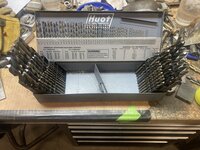
  • Drill Index.jpg
    Drill Index.jpg
    316.3 KB · Views: 9

Riverrat

Well-known member
Joined
Jun 26, 2021
Messages
82
I would say that being able to sharpen hss tooling is a wonderful skill to have. I would also agree that insert tooling has gotten to be very reasonably priced. A guy absolutely doesn't need to use hss. I do use hss endmills from time to time, usually in larger sizes that would cost a fortune in carbide. But it's far too inexpensive to spend money and or time on small hss endmills. I've used insert tooling on the lathe for almost three entire time I've had one. I do have hss tooling that I use from time to time, especially for special shapes. But you really don't have to use hss to get started.

Funny enough, I do still sharpen 1/8" drills rather than toss them. It's too fast to do so to just waste them.
I have a drawer full of form tools that I have ground out of HSS for my lathes that I could not get after I retired from the Aerospace Industry. I learned to make HSS tool bits at an early age and I think that is a skill that is worthwhile to have and is transferable to other parts of the trade. Thank you for your comments!!
 

whateg01

Well-known member
Joined
Mar 13, 2006
Messages
11,198
Location
doo dah, kansas, usa
... Another thing that has not been addressed as far as I know is conventional milling versus climb milling. Climb milling works well to get a good finish on aluminum for a finish cut because the material does not resist the cutter as much as steel would. I seldom use climb milling on steel. ...
Climb milling leaves a nicer finish because there is little recutting. Works fine in steel as well for that reason.

The danger in climb milling on a manual machine is that depending on how heavy of a cut you're taking, the endmill can pull itself into the work because of backlash in the screws. This can be overcome by taking a light finish pass and by riding the brakes, so to speak. IOW, lock the axis down to a large degree so you actual have to overcome the friction in the gibs to pull the work into the cutter.
 

Riverrat

Well-known member
Joined
Jun 26, 2021
Messages
82
Here is a little more food for thought. Drill Index.jpg

You should have a complete drill index Letter, Number, and fractional up to 1/2 inch.

Additional Drills.jpg

I have storage for more drill bits that you absolutely don't need. I would recommend that you have more of the sizes that you use the most, in my case .125, .250, .3125, .375, .500. You will find out for yourself and can decide.


Large Drills.jpg

I have some home made storage for my drills larger than .500 and think it is worthwhile to organize them - better than I have done.

Silver and Deming Drill.jpg

I have a selection of Silver and Deming drills that I really like. They are shorter in length than a standard drill and have flats ground on them to keep them from spinning in the drill chuck. This bit I salvaged from a previous employer that was being trashed because someone (not me) did not chuck it up correctly.

Tap Drill Stand.jpg

This is a Tap/Drill stand I made probably 40 years ago that has served me well and you might benefit from by making something much nicer. You get the idea.
File Rack.jpg

Files are overlooked and are abused unnecessarily. They are necessary for what we do and deserve respect. If you look at the center of the photo to the left of the squirt bottle my needle files are stored in a small can that I stuffed with foam to protect them.

Kennedy Tool Box.jpg

Keep your eye out for Kennedy tool boxes. They are the industry standard and are reasonably priced second hand. The center drawer is made for holding the Machinery's Handbook. All of their latest tool boxes make the same accomodation for the book.


Tap Drill Chart.jpg

Get a good tap/drill chart. I think Starrett makes the best. If you contact them they will send you a wall chart and ones you can keep in your pocket. They are very generous. My wall chart is between the Bridgeport and my Clausing lathe and I rely on it all the time. I have contacted them for handouts for when I have had High School tours in my shop and before I retired to educate engineers. They don't support me in anyway, but their tools are top notch. I also like Brown and Sharpe and Mitutoyo. It's like Ford or Chevy.


I hope this is beneficial to someone. I would like to learn what others would recommend, or if they disagree with me I am welcome to that as well.
Climb milling leaves a nicer finish because there is little recutting. Works fine in steel as well for that reason.

The danger in climb milling on a manual machine is that depending on how heavy of a cut you're taking, the endmill can pull itself into the work because of backlash in the screws. This can be overcome by taking a light finish pass and by riding the brakes, so to speak. IOW, lock the axis down to a large degree so you actual have to overcome the friction in the gibs to pull the work into the cutter.
 

DocsMachine

Well-known member
Joined
Sep 16, 2006
Messages
1,848
This thread is a perfect illustration of the hidden aspect of machine tools, the part no one tells you 'til you've already bought the machine. :)

The idea that you have to have tooling roughly equal to the weight of, and around twice the value of, the machine itself.... just so you can use it. :D

And I don't say that as a skeptic, I say that as a victim. :) Just the newest lathe in my collection, I nearly tripled the purchase cost just in tooling...

Doc.
 

Riverrat

Well-known member
Joined
Jun 26, 2021
Messages
82
This thread is a perfect illustration of the hidden aspect of machine tools, the part no one tells you 'til you've already bought the machine. :)

The idea that you have to have tooling roughly equal to the weight of, and around twice the value of, the machine itself.... just so you can use it. :D

And I don't say that as a skeptic, I say that as a victim. :) Just the newest lathe in my collection, I nearly tripled the purchase cost just in tooling...

Doc.
I'm with you there Doc. I bought my Clausing as a bare lathe. The Aloris tool post and holders cost as much as the lathe. It makes a drug habit look affordable. Guilty as charged.
 

Riverrat

Well-known member
Joined
Jun 26, 2021
Messages
82
Climb milling leaves a nicer finish because there is little recutting. Works fine in steel as well for that reason.

The danger in climb milling on a manual machine is that depending on how heavy of a cut you're taking, the endmill can pull itself into the work because of backlash in the screws. This can be overcome by taking a light finish pass and by riding the brakes, so to speak. IOW, lock the axis down to a large degree so you actual have to overcome the friction in the gibs to pull the work into the cutter.
I didn't clarify myself. I climb mill on aluminum on a light finish cut - say around .005.
 

rdoty

ALLIANCE MEMBER
Joined
Feb 7, 2018
Messages
637
Location
Massachusetts
I have a somewhat different view: The most critical thing for getting started is a part you need to make. Ideally something simple enough for you to actually make.

Starting with that part (end goal), figure out what steps are needed to make the part. Then figure out how to execute each of these steps. Part of this will be figuring out what tools and cutters you need for each step. Get these tools and cutters. Debate with yourself whether to get inexpensive ones (because you will probably break them) or good ones (because the cheap ones ****).

Make the part. Determine if is acceptable or if you need to make another one. Repeat until you have a good enough part.

Now - take a step back. Look at everything that happened. Think about how it could be better. Realize that there are certain basic techniques you need to improve and start to work on improving them.

Remember that skill and expertise are a result of practice and learning. Skill is something you learn from practice, not something you start with. There are only two things to fear: 1. Not doing anything. 2. Making mistakes that get you hurt. Your main consideration is to keep your blood inside your body!

Most people are goal oriented - they learn better while working toward a defined goal as opposed to learning all of the fundamentals first and then working toward a specific goal. As an example, grinding your own HSS bits is a valuable skill - but it isn't one you need to master before making your first part. Wait until you need a custom ground bit for making a part and then learn how to grind a bit.

You are at the beginning of a long and interesting journey. Make sure you enjoy the ongoing journey and don't get turned off or overwhelmed on your first steps.
 

alfadan

Well-known member
Joined
Mar 9, 2007
Messages
2,103
Location
Augusta, ks
Just one more thing...
Please be super careful. This machine can rip the skin and fingers right off your arm in a split second and not even slow down. Even if you have a mentor, watch all the videos you can. Even if the experts are doing things you can't imagine doing, there's always something you can take away from them.
Oxtoolco
Topper Machine
Max Grant Swan Valley Machine shop
The older Abom79 videos
These are are the channels I watch as they are 99% manual machine guys. Unfortunately I don't have someone to mentor me so these resources are great.
 
To avoid these ads, REGISTER NOW!
Top Bottom