And this project is way over budget. [emoji30]
Aren't they all?

And this project is way over budget. [emoji30]
maximus5403 - First 2 links don't work for me.
Comment on 2nd link after fixed: Second link appears to be a collection of mismatched data. A link to the actual product purchased would be better.
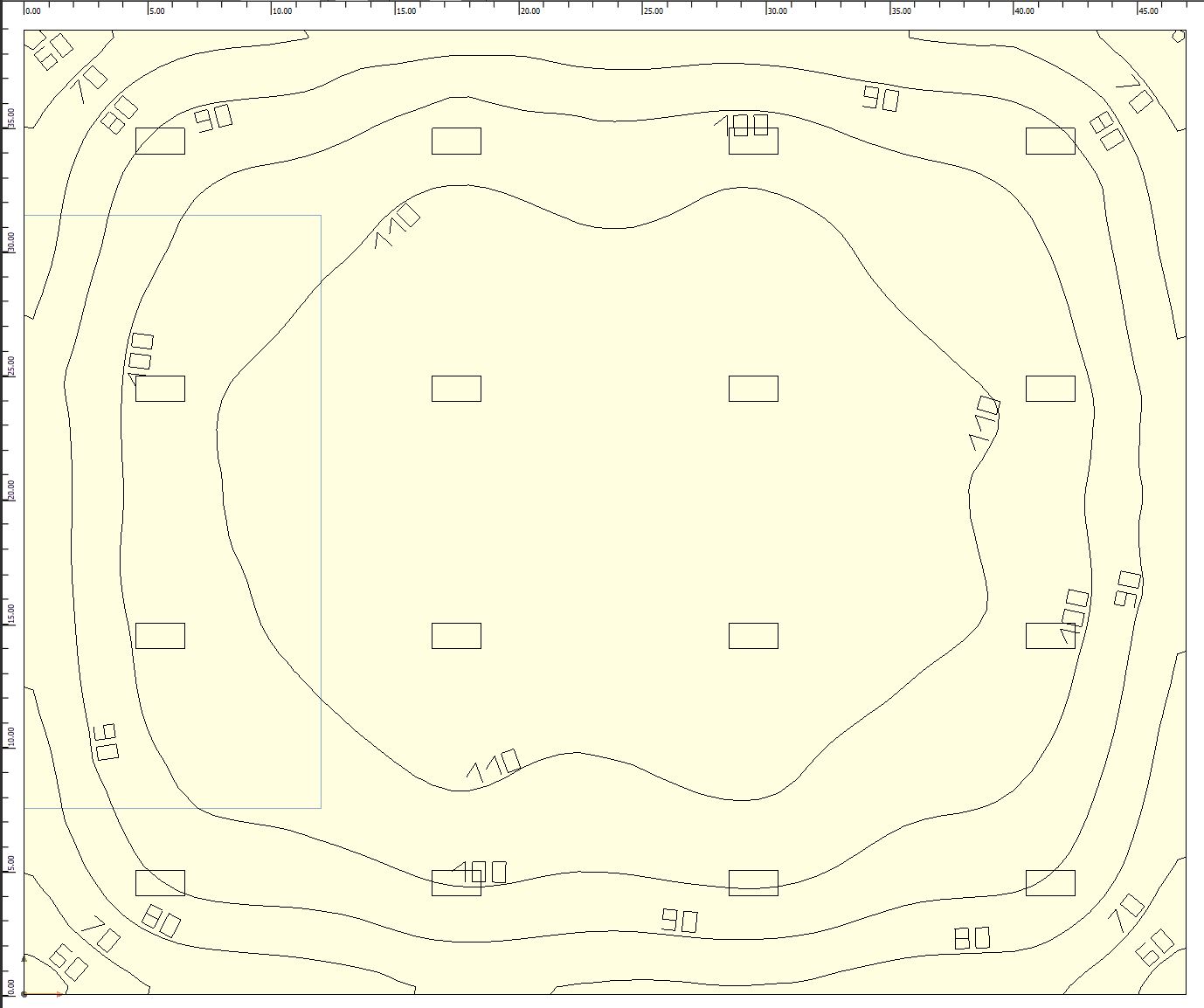
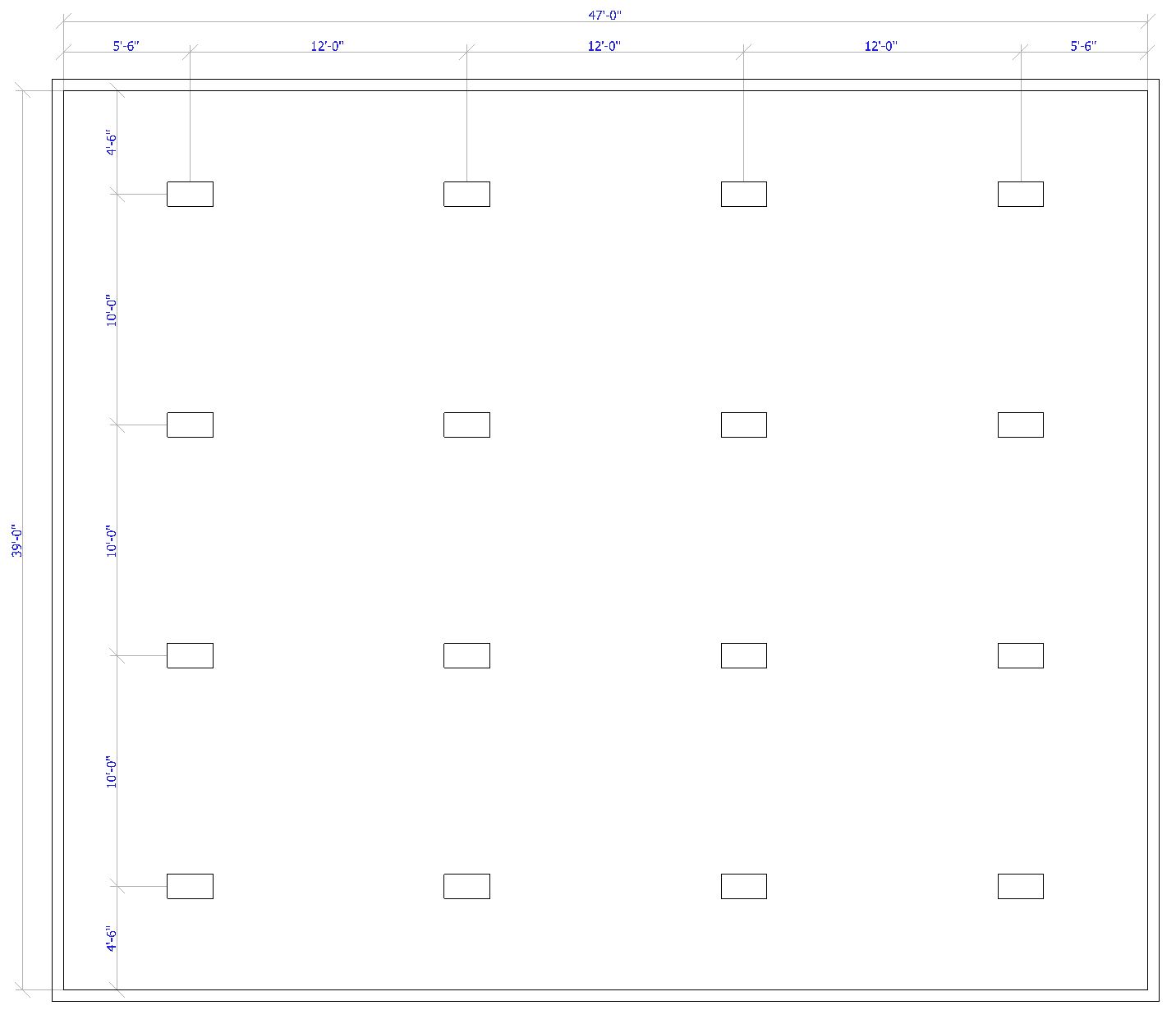
Qty.16 GreenTek GT-H2-110W 16,400 Lumen sold by greenlightdepot for $85 (link) = $1360.
It does not have surface mounting brackets available, but does come with “V” hooks and chains.
GreenTek is a relabeled James ZY-H2-110W fixture also sold by ledlightingwholesaleinc for $95 (link)
Dialux PDF Report (link)
Avg yield @ 30” workplane = 101fc
Total Lumen output: 262,528 lm
Total Wattage: 1760W (14.67 Amps @ 120VAC)
images linked to larger pics
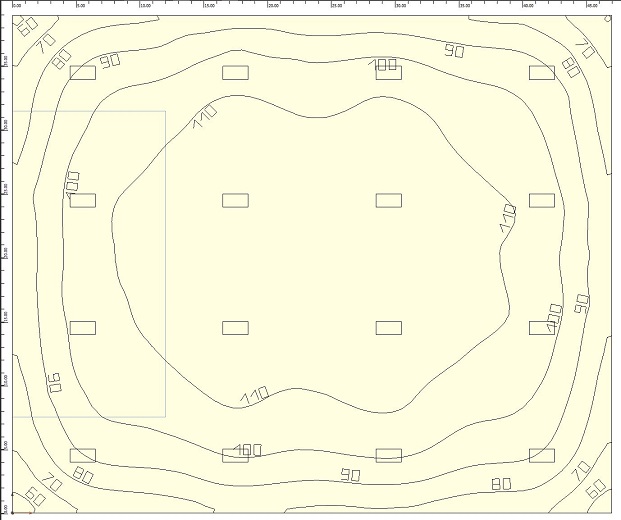
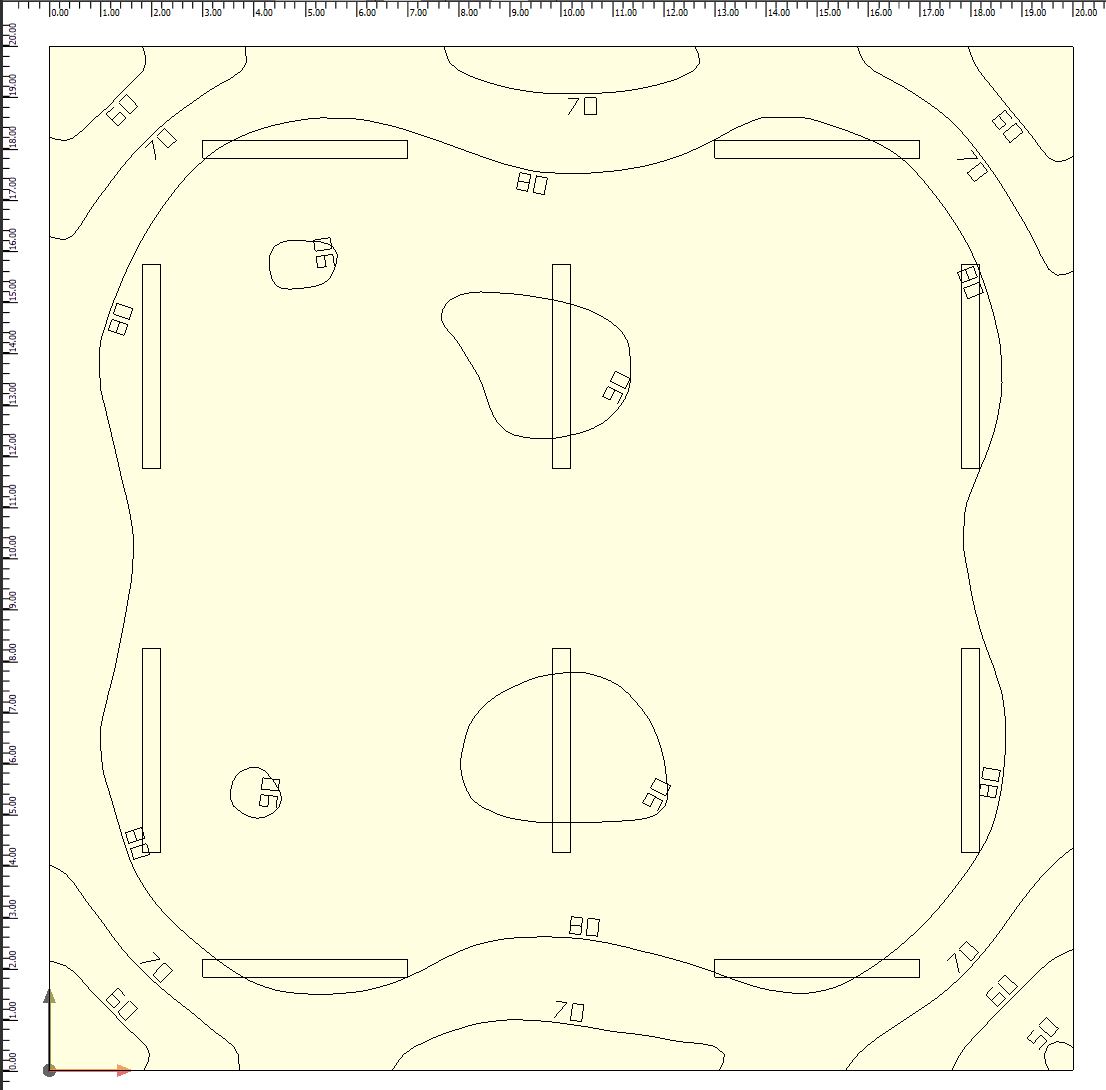
Here's a layout based on 4ft strip lights from post 1 of best light fixture thread.
Space is assumed to be 20ft square, 9ft ceiling. Click on image for larger view.
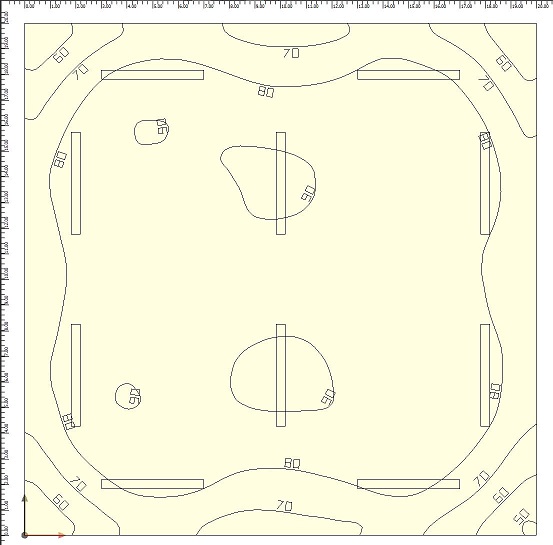
Here's the Dialux report (link).
Options:Platonic. I seem to have a problem understanding when to go from 4’ led to high bays
As mentioned in your light fixture sticky
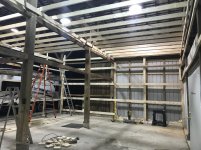
I am building a 27x35x13 shop
All white steel sided walls and ceiling .
Shop will be used for general use , welding and work and recreation
And input and advice would be appreciated.
I used the layout calculator you suggested but I was still confused on what bulb to use
Thank again. If you could just advise me what to buy and how many. I want it BRIGHT
Options:
Qty. 12 3x4 arrangement 9'x9' center to center spacing:
2ft. LED Linear High Bay - 80 Watt - 150W Equiv - Dimmable - 10,400 Lumens - LumeGen $70 ea. (link)($840 total) = 94fc @ 30" workplane.
2ft LED Linear High Bay - 110W - 16400 lm GreenTek $85 ea. (link)($1020 total) = 149fc ... (I wouldn't do this without using the 0-10VDC dimming feature) Fewer than 12 fixtures will lead to shadow issues (assuming this is a 3 bay garage).
Recommended footcandles @ 30" workplane for automotive mechanical work = 93fc
I forgot to add I have beams running lengthwise that may throw off the light
Does a 3x4 9'x9' arrangement fit such that the lights are approximately centered between the beams?
Check out my Hi-Bay install with dimming in my signature. Turned out amazing! Definitely worth the higher lumens to be able to control. Also, look at the scalloping on the wall, you likely wont have issues with your transverse beams because the lights will hand down a little unless you find flush mount fixtures... even then, you will have so much light it wont shadow
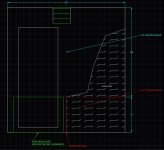
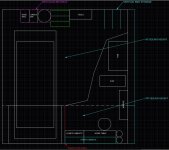
Platonic, I am in the process of this same approximate size building. 32w x 28d x 10. 2-10w x 8t overhead doors. Walls and ceiling will be white plywood, floor bare concrete. Will be used for working on project mustang and motorcycle work-that is the lift on the left center. Work bench in front of that. Shelving units along the sides of building. Would this same layout work ok?panchohughes - That's an inefficient cord mounted hanging shop light intended for task lighting over a workbench. It is not surface mountable and as your diagram shows you'd need a rediculous amount of outlets. Not to overlook the rats nest of cords will look rediculous. At the cost of installing all those outlets you may as well get real fixtures.
Qty.9 of these will give you 82fc @ 30" workplane:
2ft. LED Linear High Bay - 80 Watt - 150W Equiv - Dimmable - 10,400 Lumens - LumeGen - $70 (link)

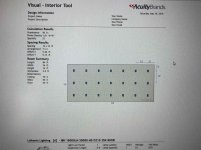
whitemamba - Looks good to me. Since these fixtures don't have surface mounting brackets = you'll be hanging from chains, you can put 1ft into the "suspension length" category. Whether this is an ideal layout depends where your garage doors are located. If possible, try avoiding having fixtures covered by open garage doors. This is not always possible.
Edit: Apparently garage door interference isn't an issue for you as I see in this post that you are using the roll-up style garage doors.
Hello,
It's come time for me to figure out lighting for my new garage and I'm in full paralysis mode. Looking at this and the "Best Fixture" threads has been an information overload, especially since threads go back so long and technology is now different. Perhaps someone can direct me?
I have an unfinished interior and need to insulate and drywall before the summer is done, but I need to know lighting electrical first so I can have an electrician wire before I cover everything up. I'm not clear on how fixtures wire. Some lights can be chained in a row, so does that mean I just need electrical at one end of the ceiling? I see some have standard electrical plugs, meaning I should have electrical sockets on the ceiling for them to plug into. When I look at the "Best Fixture" options they seem to have plain power wires on only one side of the fixture, how do those connect? Do I need electrical boxes all over the ceiling for each light?
Without knowing my fixture I don't know what my electrical needs will be. And should I mount lights right on the ceiling or have them hanging down to avoid garage door opener shadows?
Details:
Garage is 24'x24' with just under 10' ceilings.
Walls and ceiling will by drywalled and painted white.
Eventually I'll epoxy the floor in a light color, but I'm not there yet.
I'd like bright even lighting with minimal shadows for car detailing and mechanics.
Higher CRI would be nice, perhaps.
I'm in Canada.
That last one is a consideration, it's expensive to bring stuff over the border so I'm not sure that I can order the "Best" fixtures. Does anyone know of Canadian options, such as the one HellaFab posted?
Thanks.

Based on your explanation; and the fact that you are going to hire out the work... you really need to select a contractor immediately and get them out there talking you through this. If your plan is to cover by the end of summer, you have a lot of work to do and with the industry wait times right now... you better get someone you can trust out there soon.
If you are paying for an electrician, they will walk you through it all and it wont cost you more to have them plan it as well. Unless you are going to slam your boxes and panels, and drill and wire yourself; there is really no reason to concern yourself with the circuits... focus on the basics like where you want your outlets, where you want your panels and switches, and what equipment you plan on using and where. That will also be important to establish load calculations. Consider all future opportunities, i.e., it only costs $8 a breaker and less that $1 a foot to run additional 220 drops for the ability to plug in an RV, move a welder and use it in several locations, back feed a generator, etc. Just have a rough drawing with the ideal locations of your outlets and how many 220 drops you are looking for.
The rest the electrician can do with his eyes closed!
Then get insulated (go with more R), then rocked/finished (don't ever think you can skip this and do it later... you won't)!
revamped