To avoid these ads, REGISTER NOW!

Motorcycle Build

cannuck

Well-known member
Joined
Nov 30, 2021
Messages
4,592
Location
Rural SK
You already know that welds are going to distort whatever you are welding upon, just not sure you appreciate how to minimize and how to do final finishing. Also: some of your wall thicknesses seem awfully excessive for such a small, light structure. Where did you get the values from?

When I see people doing tube-to-tube fitups they are mostly cutting and fitting zero clearance joints. If you want really good welds, don't do that. EVERY weld shrinks as the bead cools, and a zero fit will pull the tube off square or angle as it cools. The ideal fitup on very thin tubing is closer to 1/2 wall thickness and on really thin 1x. That is easy to do in an assembly jig but as you know by now really difficult when positioning in 3D space. I suspect some of your thick walls exist to allow for machined counterbores for bearing fits, so something you might consider for high angle joints with smaller dia, thinner wall intersecting tubes is to use annular cutter of right size to get target gap and instead of coping the small tube to fit on outer surface let it penetrate a half dia or so into the larger tube. That will stop burnback at end of small tube by providing more heat sink. (look into tail boom welding procedures for Bell 47 to see what I mean).

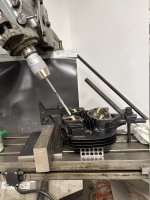
The bearing counterbores for swingarm and at frame head are another thing. You have a lot of weld near them so your carefully machined round holes are not longer very round. The solution involves a bit of tooling. Rough bore your big counterbores leaving enough cleanup to accomodate weld distortion. Finish your welding and if you can head to a boiler shop or wherever you can stress relieve the weldment. To finish the counterbores you will need shell reamers to fit over a mandrel that will have an alignment taper on one end and reamer on the other. Spin it around and do each from opposite side. Then your finish diameter will be spot on and round.

fitting up without jigging goes back to the weld gap thing. Put in place with gap shims (I use wire) and put in one tack, pull out shims and re-measure closing side opposite tack to just shy of correct location and throw on tack #2. Now measure angle 90 degrees radially to get axial location right and put #3 tack down, then measure that angle again, and if not in tolerance remove and correct (slightly over allowing for the inevitable shrinkage of the tack) then stick on #4 and measure again. You will still get distortion from the final structural weld, but it will be one hell of a lot less than just buzzing a zero fitup in place then wondering why things aren't where you thought/hoped they will be.
 
To avoid these ads, REGISTER NOW!

jake28

Well-known member
Joined
Aug 28, 2018
Messages
481
Location
SF, CA
@cannuck any chance you have some recommended videos describing the tube-to-tube set ups and offsets? Color me very interested and not even sure what to search YouTube for. Great info, thanks for sharing.
 

cannuck

Well-known member
Joined
Nov 30, 2021
Messages
4,592
Location
Rural SK
@cannuck any chance you have some recommended videos describing the tube-to-tube set ups and offsets? Color me very interested and not even sure what to search YouTube for. Great info, thanks for sharing.
sorry, have never looked for such things on the interwebs.
 

cannuck

Well-known member
Joined
Nov 30, 2021
Messages
4,592
Location
Rural SK
British motorbikes from "back-in-the-day" were indeed brazed (IIRC with Cu Ni alloys such as Castolin 16) but not with hand held torches. I have not worked with Cu Mn alloys but the whole purpose and design of a brazed joint is a very different thing. Brazed joints need extremely small clearances (essentially none as irregularities leave a tiny gap) and are done with pre-placed filler material heated in an oven. Furnace brazing gives not only fast and consistent brazed joints, it also heats the entire structure evenly and allowing controlled cooling to stress relieve the formed steel members and minimize to the point of making distortion well within manufacturing/assembly tolerances. One key is of course very robust welded jigging. The strength of such joints is far more than adequate for a properly designed frame. Your takeaway for brazed joint design should be that they depend the alloy's ability to thoroughly penetrate even the most seemingly insignificant gap. A visible bead accomplishes nothing but to look pretty and might well cost the joint the time at temp it needed to properly wet on joint interfaces. Another concern with almost any brazing alloy is their Zn content: furnace controled temps and atmosphere can prevent zinc from fuming but that is extremely difficult to prevent with held external heat applied to large beads (essentially you overheat the brazing material by using it as a thermally conductive path to adequately heat the substrate). Zn overheats give porous and off-spec composition to such welds. Again: I say this with zero experience with Cu Mn fillers. I would have to cut joints apart to say if the process had or had not produced a good joint.
 
Last edited:

slowtwitch73

Well-known member
Joined
Apr 18, 2019
Messages
5,876
Location
Hellgate
Harris frame.

Manganese bronze filler material. I think they still use a TIG torch for the heat source.

That ****'s pretty.
I know Brian Curtis used gas on his moto frames and still does on bike frames... but yeah tig is a good guess too. Either way..tasty.
 

RoninB4

Well-known member
Joined
Jul 22, 2020
Messages
3,479
Location
Under My House
To finish the counterbores you will need shell reamers to fit over a mandrel that will have an alignment taper on one end and reamer on the other. Spin it around and do each from opposite side. Then your finish diameter will be spot on and round.
-I won't disagree with your assessment of proper welding procedures but don't really agree with finishing the bores for bearings with a shell reamer. Shell reamers of that size are rather expensive and may have an excessive lead-in for this application which might cause the bearing to seat on the lead-in angle/radius. Regardless of whether the lead-in accommodates the bearing race radius the expense of the shell(s), and the mandrel will be expensive for a one-off/prototype project like the OP is doing. This is especially true considering he has a boring rig already. It's not a very good one but it will get the job done if he's careful. All that's required is to indicate the center of both sides and cut the final .010-.020 with the boring bars. Reamers are ok for production work but they do get dull, cut oversize (runout), and need periodic re-sharpening services. Add to that every different size bearing and the costs just multiply. Boring heads accommodate different sizes, boring bars can be sharpened at home (especially HSS) and will (unlike many CNC machines) make a truly round hole if the bar is cutting properly.

He's already got the tooling, just needs some procedure adjustment. Your advice for welding should help.
 

cannuck

Well-known member
Joined
Nov 30, 2021
Messages
4,592
Location
Rural SK
-I won't disagree with your assessment of proper welding procedures but don't really agree with finishing the bores for bearings with a shell reamer. Shell reamers of that size are rather expensive and may have an excessive lead-in for this application which might cause the bearing to seat on the lead-in angle/radius. Regardless of whether the lead-in accommodates the bearing race radius the expense of the shell(s), and the mandrel will be expensive for a one-off/prototype project like the OP is doing. This is especially true considering he has a boring rig already. It's not a very good one but it will get the job done if he's careful. All that's required is to indicate the center of both sides and cut the final .010-.020 with the boring bars. Reamers are ok for production work but they do get dull, cut oversize (runout), and need periodic re-sharpening services. Add to that every different size bearing and the costs just multiply. Boring heads accommodate different sizes, boring bars can be sharpened at home (especially HSS) and will (unlike many CNC machines) make a truly round hole if the bar is cutting properly.

He's already got the tooling, just needs some procedure adjustment. Your advice for welding should help.
My bad, I thought there might be some intentions of duplicating. On shell reamers: you need 2; one with a lead to cut gross amount and a second "bottoming" at something less than bearing race corner radius - but I agree, these things tend to be pricey. Boring bar would be nice, but not sure of how to clamp onto table/angle plates/eetc. as I haven't got a lot of milling experience. Most of my boring bar work has been manual reamers for VW main and cam bearings, thus my comfort with piloted shell reamers.
 

cannuck

Well-known member
Joined
Nov 30, 2021
Messages
4,592
Location
Rural SK
The correct way to do it is to fixture the welded frame in the mill and use a boring head to produce the finished size only after all welding and normalizing has been completed.
saying that is a whole lot easier than doing that! This is why I would vastly prefer to do with piloted mandrels as you need to be pretty much bang nuts in 3 dimensions PLUS axially centered. Well beyond my self-taught milling skills at this stage.
 

ez-duzit

Well-known member
Joined
Jun 24, 2013
Messages
5,094
Location
Marina del Rey
saying that is a whole lot easier than doing that!...
Oh come on. It really is that easy. :)

I am also self-taught. And, with no machining experience whatsoever, didn't get my first lathe and mill until my 70's (I'm 81). Here is the very first part I ever made on a mill, a boom-end fitting, of my own design, for a client's 30' sailboat. OP--sorry to get off-track a bit. But it can be done, with determination.

boom-end-1.jpg
boom-end-2.jpg
 

cannuck

Well-known member
Joined
Nov 30, 2021
Messages
4,592
Location
Rural SK
I am sure the OP and everyone else reading this thread is just as thrilled as I am to see such a beautiful part.
 

RoninB4

Well-known member
Joined
Jul 22, 2020
Messages
3,479
Location
Under My House
Boring bar would be nice, but not sure of how to clamp onto table/angle plates/eetc. as I haven't got a lot of milling experience.
-Your professed lack of milling experience shouldn't be regarded (by anyone) as a strike against you. Which process for cutting the metal is often less daunting a decision than HOW you're going to hold the piece in proper alignment to get at it. It's either rotate the cutting tool or rotate the workpiece ( conventional EDM electrode is a different discussion). So when the piece is too large for the lathe it's a milling machine. That leaves you with either boring or an end mill (unless you have the reamer...). When considering a cut/feature I'll often start with "What machine is going to guarantee the dimension/finish?" From there it's "How am I going to hold it solidly?". This is often challenging working with what's on hand and why witness marks, tooling holes, and reference surfaces are employed. I've lost count of how many one-time-use fixtures I've had to make in order to achieve specifications, which adds to the cost of the job. It's also why there are so many weird looking unidentifiable assemblies out there in the world ending up as doorstops and boat anchors. It may have been vital to some job long ago but is now relegated to "What have you done for me lately?" status. Time-in-quote for setup is often far more than actual metal removal. This is also part of why a lot of "civilians" think shop quotes are too high for machining, they simply don't know what's involved removing that pesky .010" of metal.
Most of my boring bar work has been manual reamers for VW main and cam bearings, thus my comfort with piloted shell reamers.
-Your advice was based upon your experience, nothing wrong with that either. I have a few decades in machining so I certainly hope I can offer valid advice now and then despite being somewhat unaware of the evolution of manufacturing. (retired now). I read your posts looking for what I can learn from and your advice on welding was one of those areas. Thank you for contributing to this site and your reply.
 
OP
I

indisguise

Well-known member
Joined
Sep 15, 2019
Messages
103
Location
Rust Belt....
OK folks, I did warn you that the "German Barge" may consume time and it certainly has! The next few posts will play catchup to present day.....

Disclaimer: Those expecting a perfect restoration should promptly click away. Functional repairing follows.

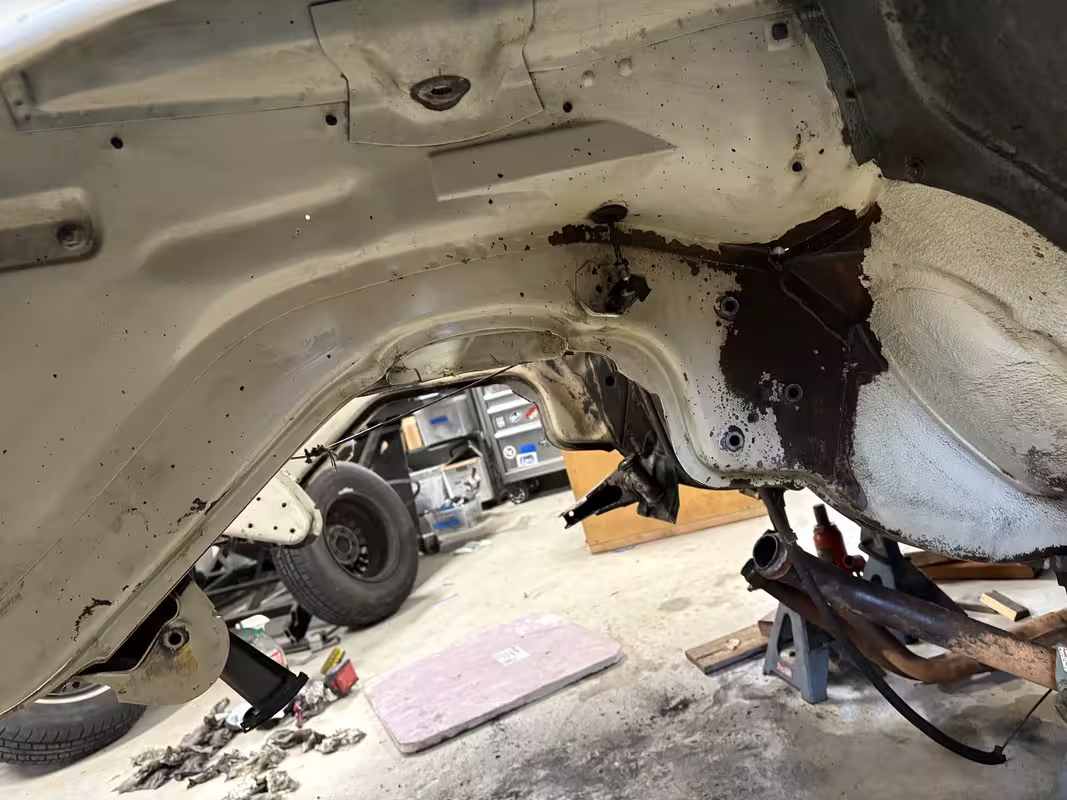
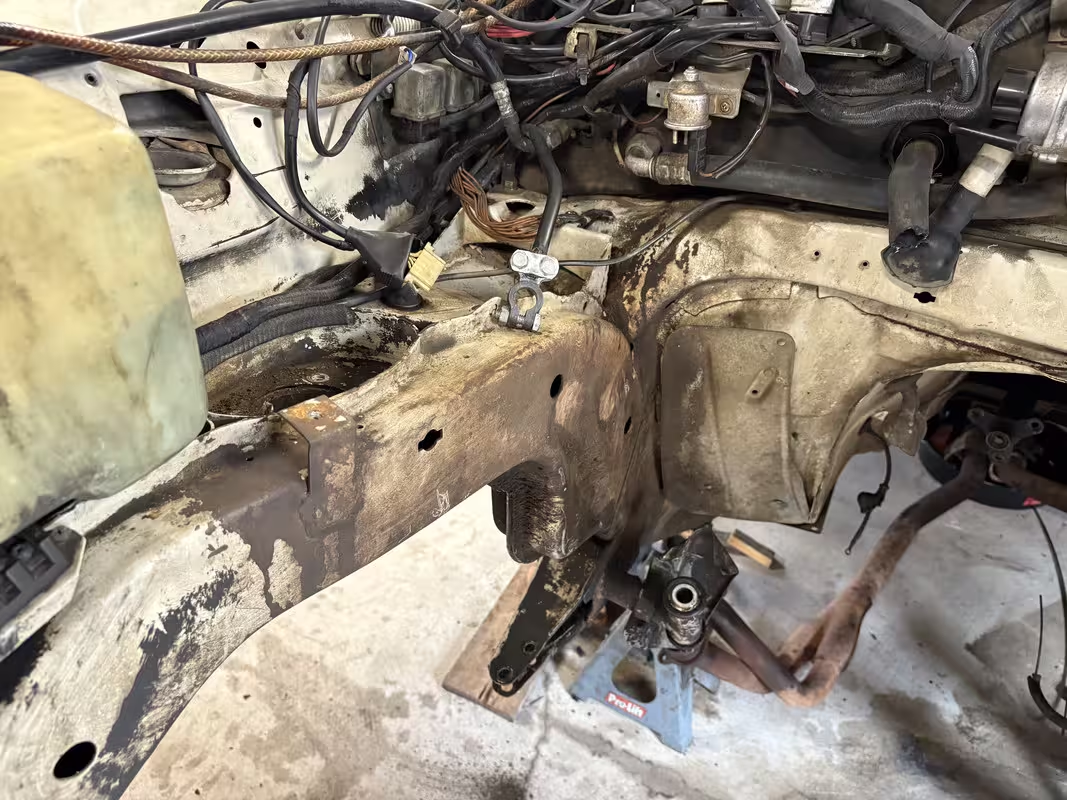
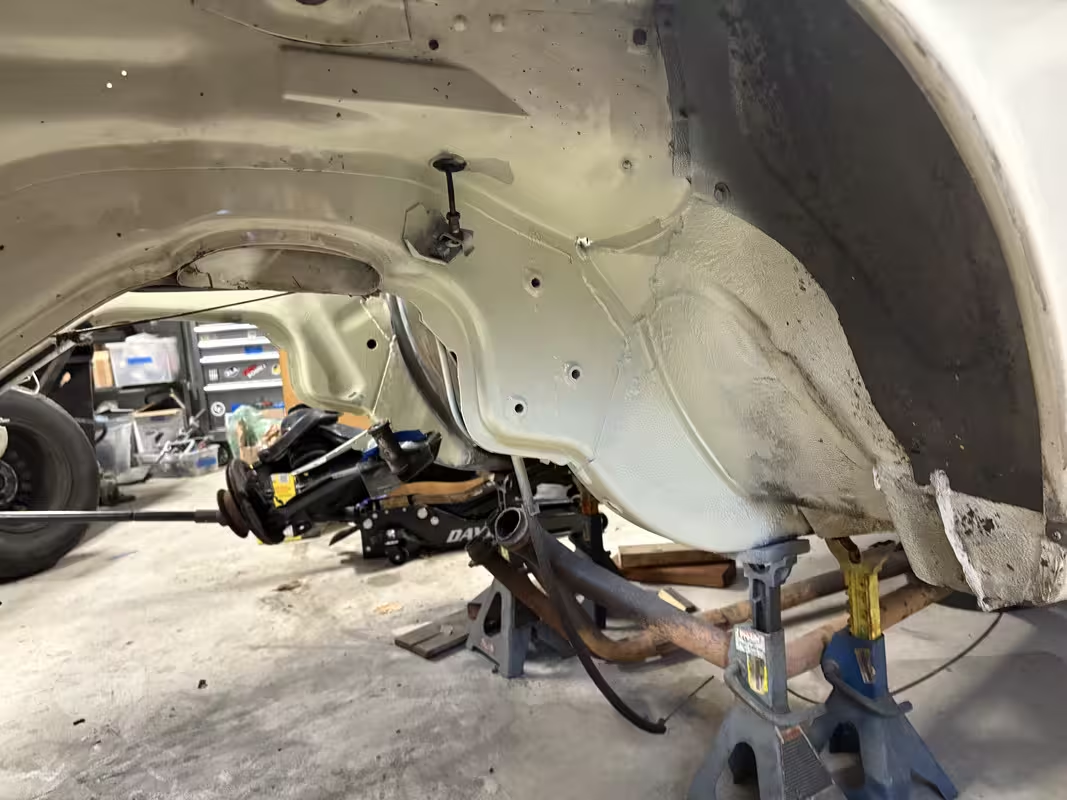
My previous post talked to removing the engine, along with cleaning the wheel arches. This exposed some surface rust. Probably from leaking brake fluid etc... The two main areas effected were the engine bay and wheel arches (under the booster).
temp-Image30s-AR7.avif


temp-Image-Xtd-P81.avif


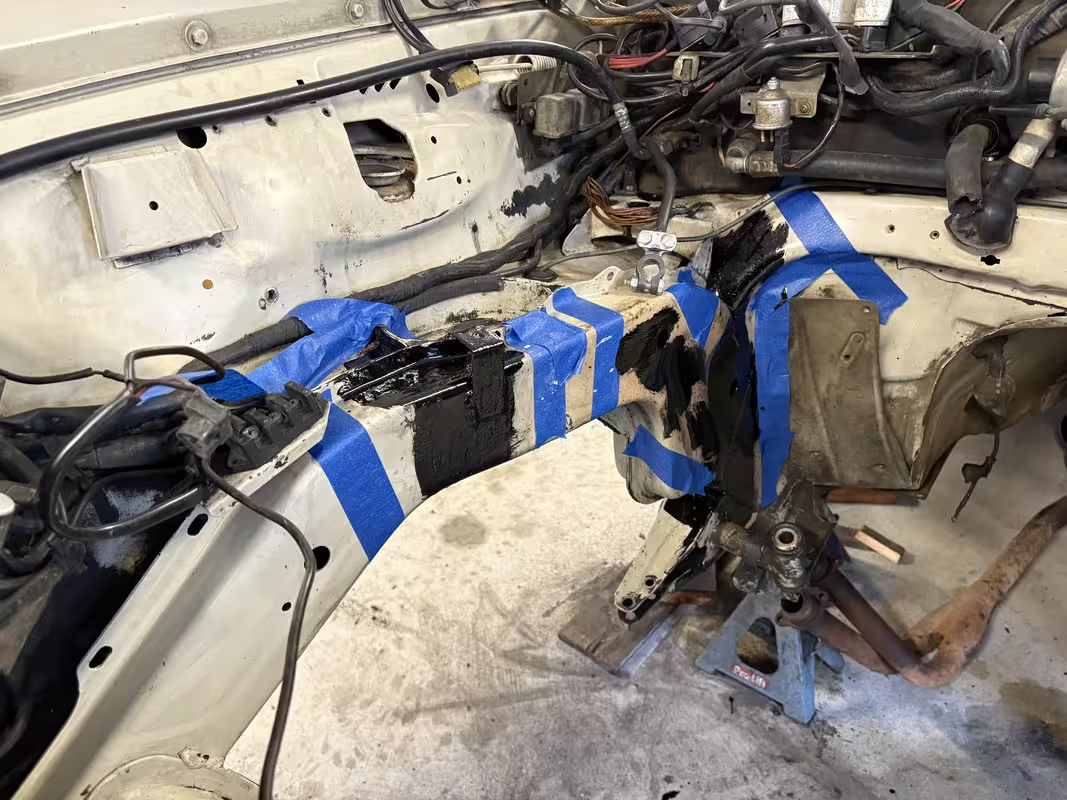
both were promptly treated with rust converter and then hit with Rust Bullet..
temp-Image9-Pq-Ru9.avif


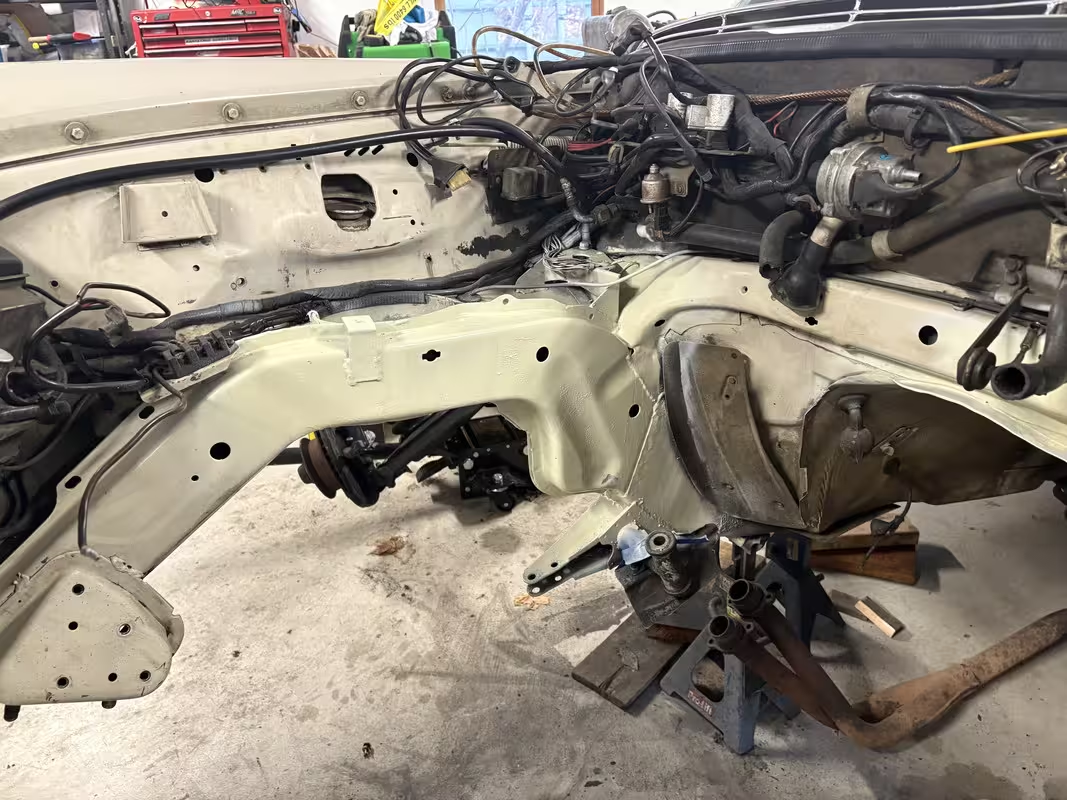
Color matching this was never going to happen, however I purchased the same paint code and would accept the difference. Luckily these areas are pretty well hidden.
temp-Image-H93i3-M.avif

temp-Imagev2jwxg.avif

Clearly 53 years and a lot of road grime/grease and wear has made this visually jarring. Therefore I have committed to wiping my greasy hands all of the fresh paint at any chance I get in an effort to hide the cleanly-ness!

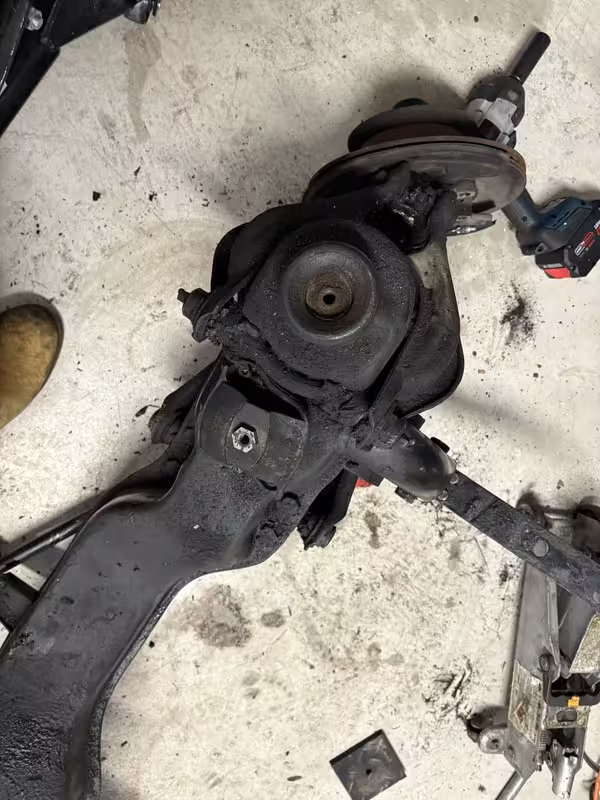
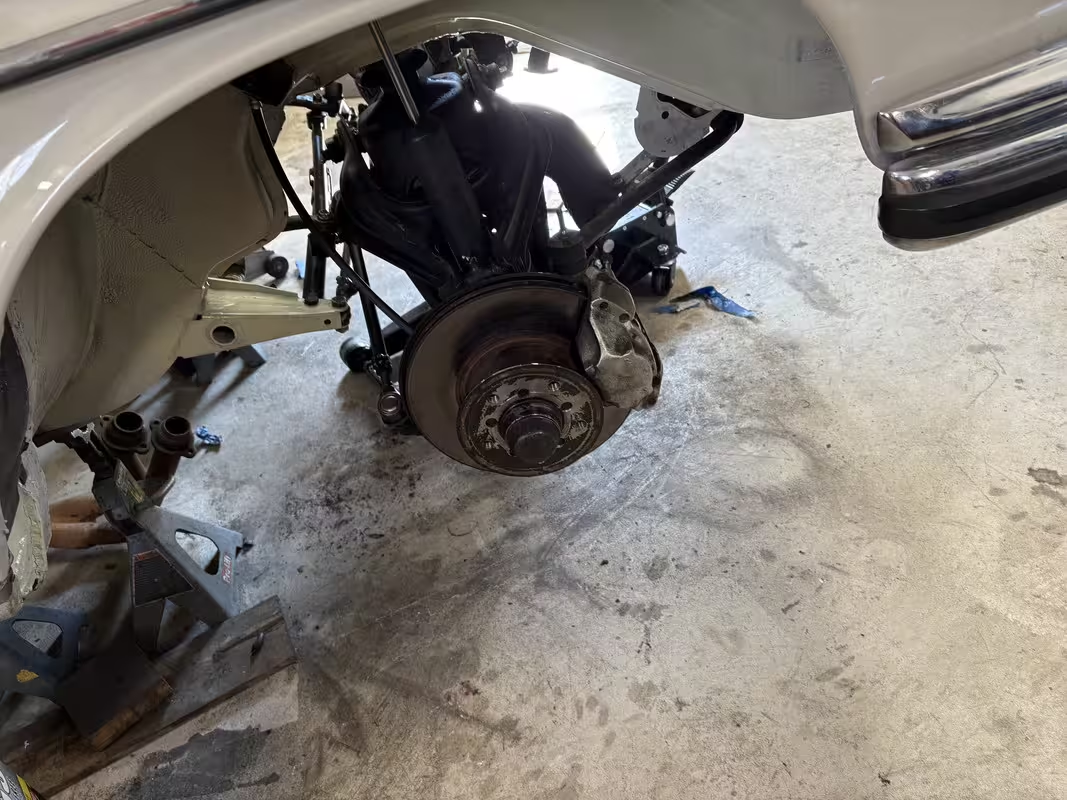
The garage was getting very full and this point, and therefore I needed to concentrate on refitting the subframe. If you remember I removed the engine from below with the subframe attached. I was informed this was easy.... I honestly don't agree. Those with car lifts would find the method simple, however those dealing with basic tool should just remove it through the bay with gearbox attached (45 degrees)

Dirty subframe with perished mounts..

temp-Imagep-I4-Ef-Z.avif


Cleaned, new brake lines, mounts, shocks, wheel bearings, tie rods, drop links etc... I won't paste details, since the repairs are fairly basic. The only painful part was the cost... and yes I went with Bilstiens.

temp-Image-Ctt-Hh-O.avif


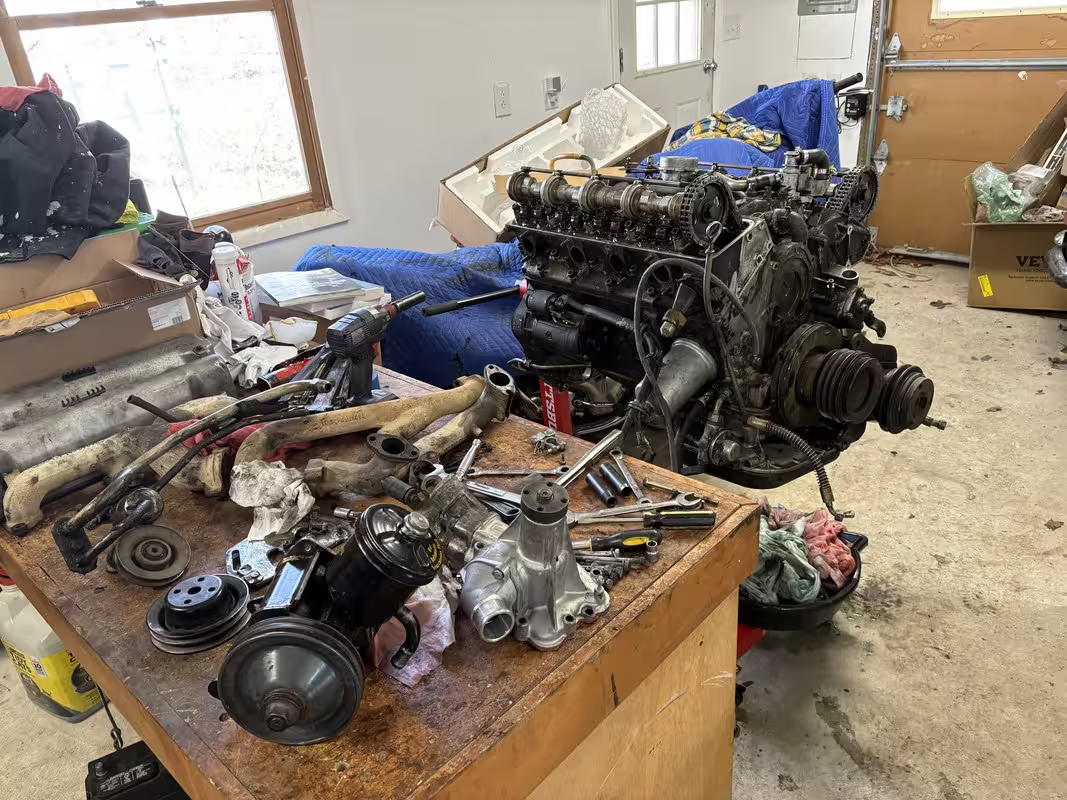
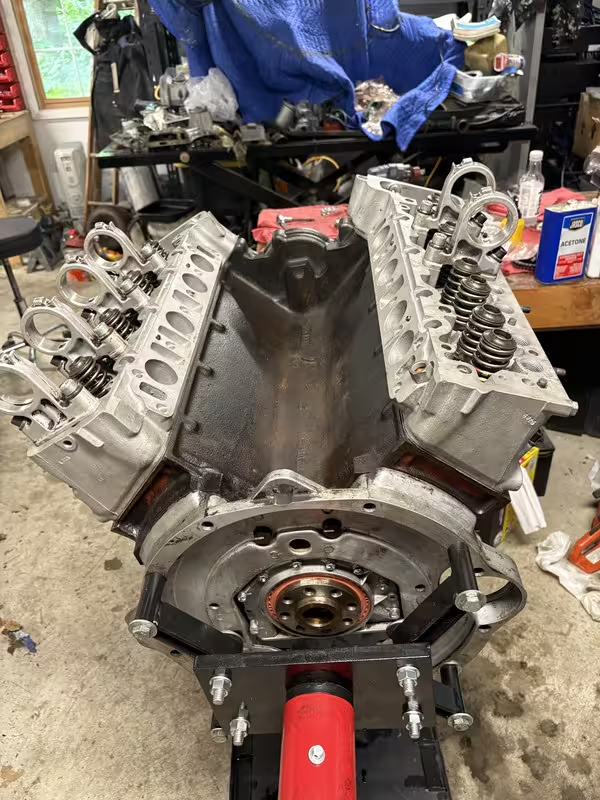
Next I tackled the engine. The bottom end on the M117 are known to be "bullet proof" and most of the issues happen with the heads. I was crossing my fingers this was the case here since the cost escalates rapidly with these engines. Most people advise against opening these engines since the pistons alone are 2k and things spiral out of control quickly....

Personally I have never worked on a V8 and this was a first, therefore the adventure will be full of lessons....

temp-Imagebvkd-RT.avif


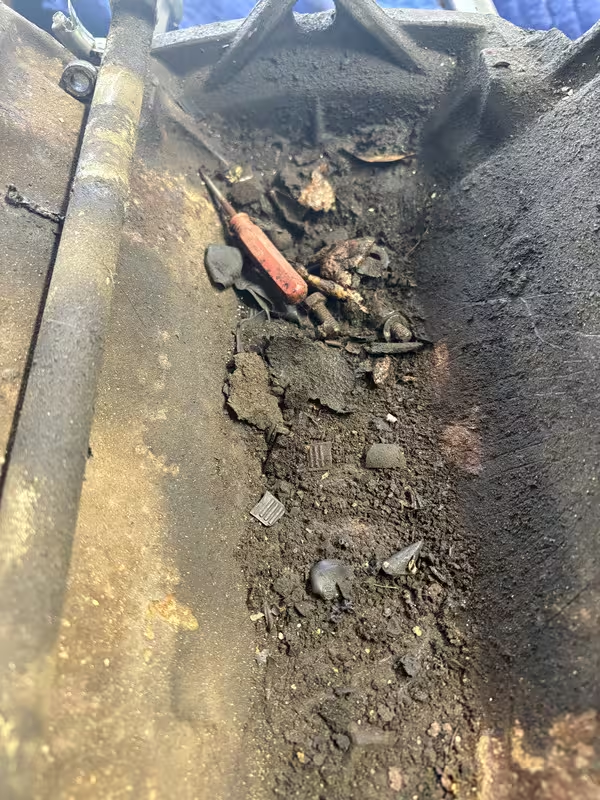
It seems the "V" of this particular engine was used for tool storage.... Mercedes thought of everything...
temp-Imagep-YVq-EB.avif


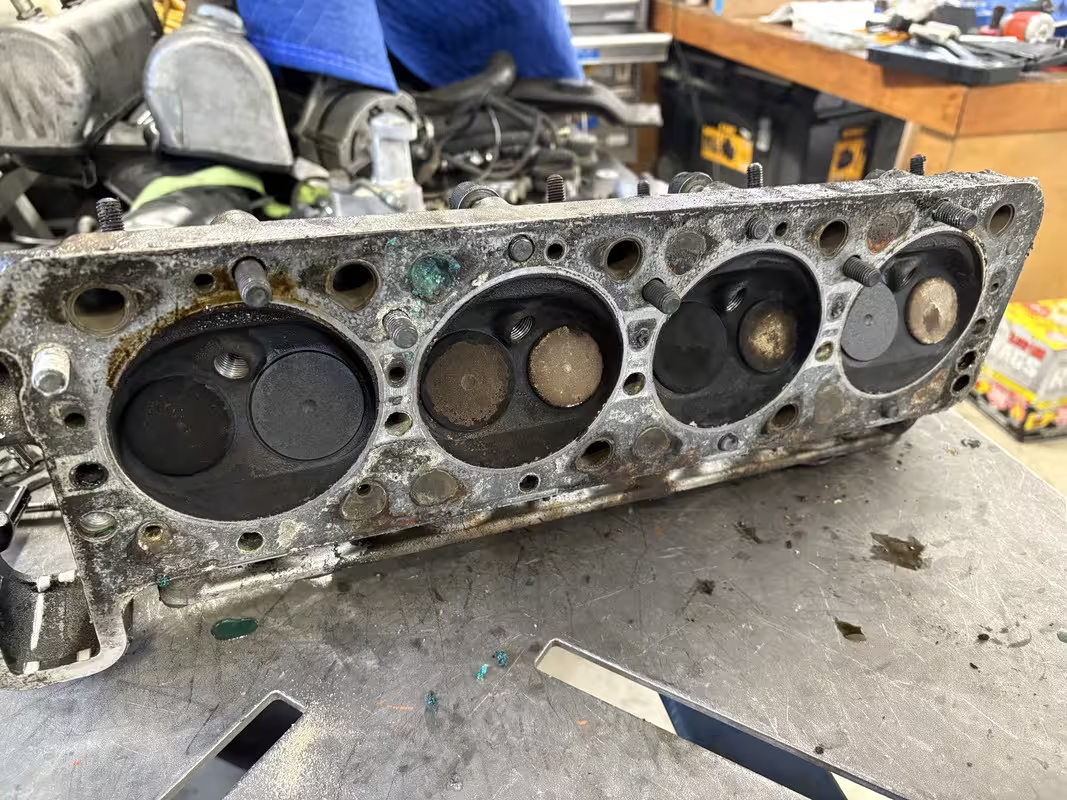
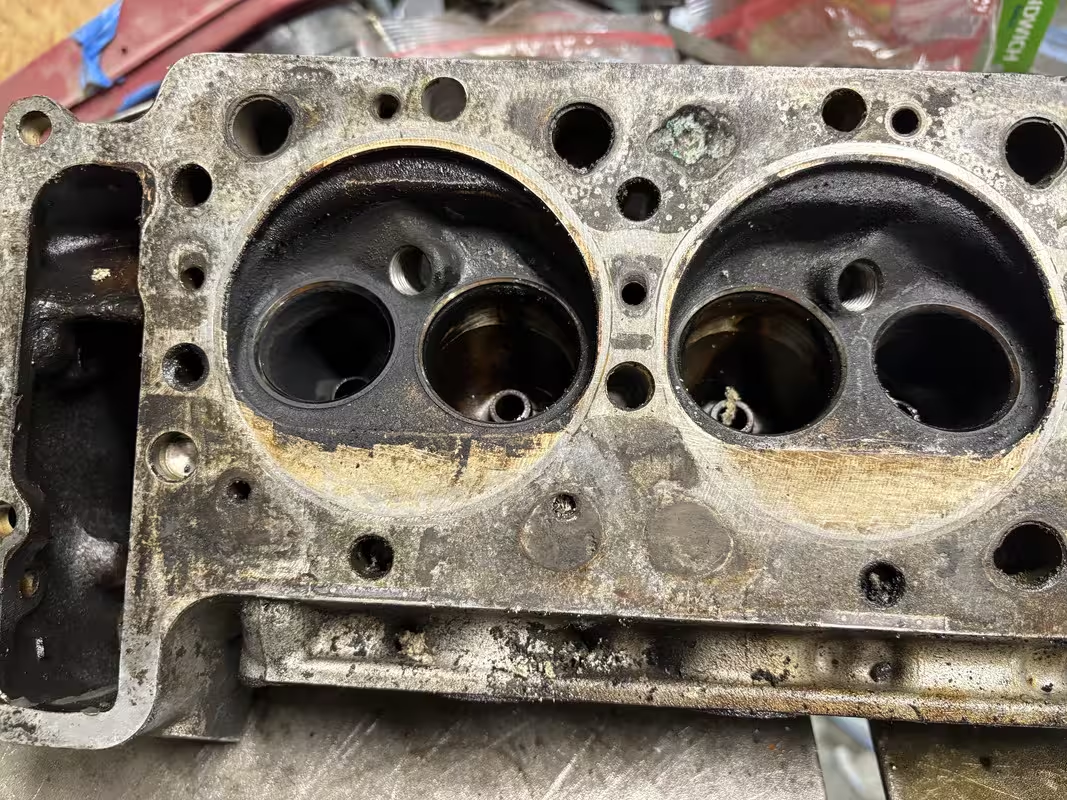
The heads were a complete disaster. Blocked coolant passages... you can see where someone drilled holes in the blockage to aid cooling. I'm sure these will require skimming, however I'm concerned that these may be complete trash...we will see. I'm really hoping that someone was not trying to seal a cracked head with some nasty "instant fix".

temp-Imagejk-Tu-Lt.avif


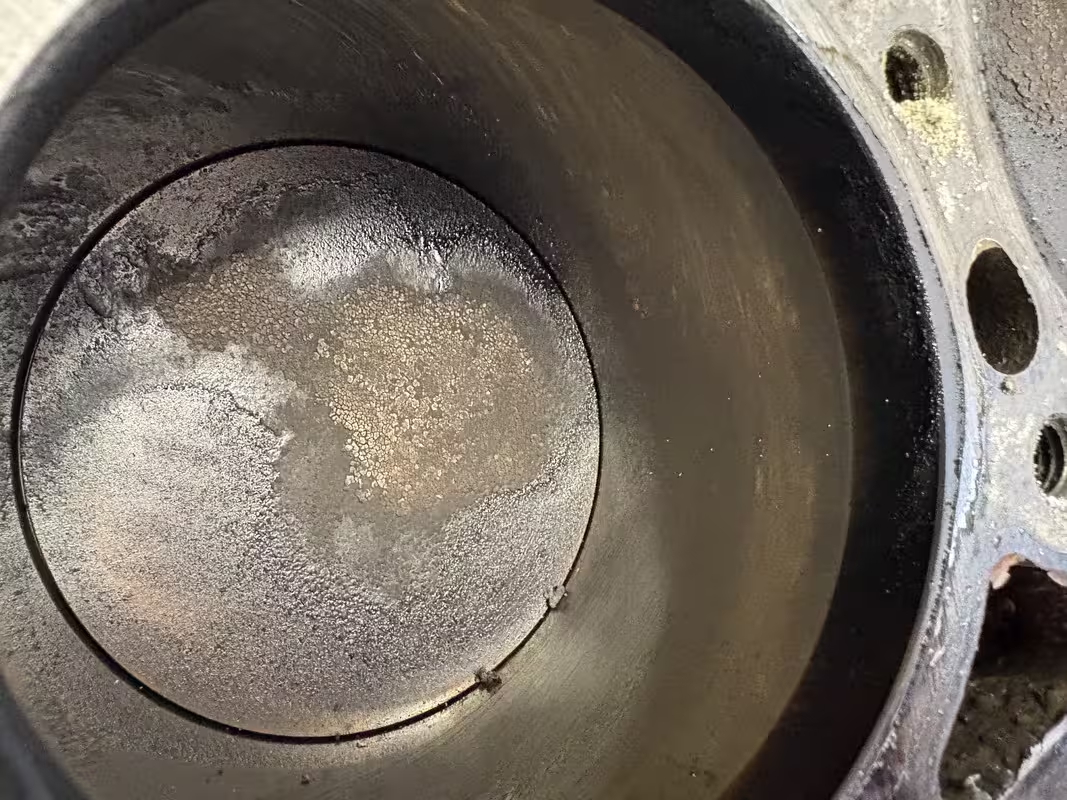
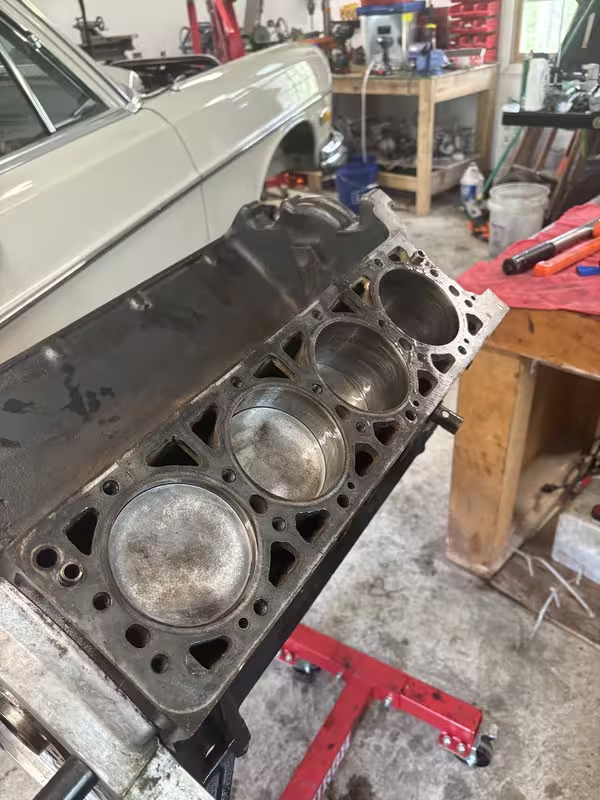
The bores and pistons were in fantastic condition. Hopefully a quick hone and these will be salvageable. The bore gauge will confirm....
temp-Image8-Ji-M0-G.avif


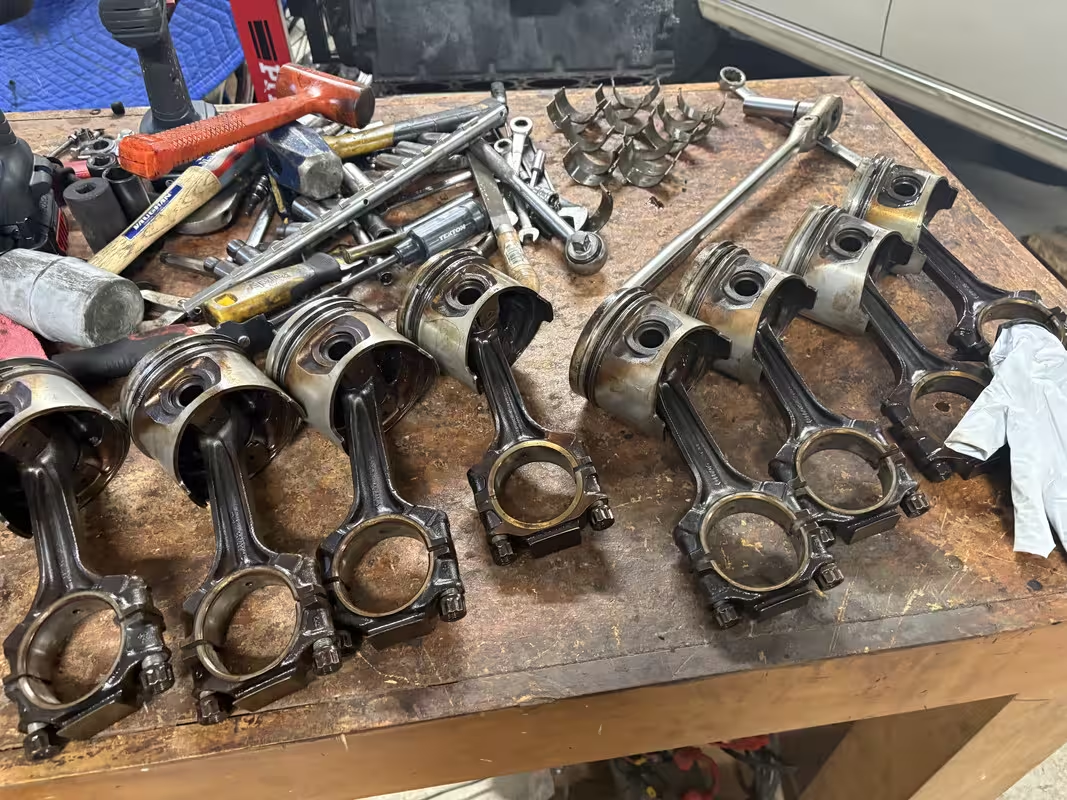
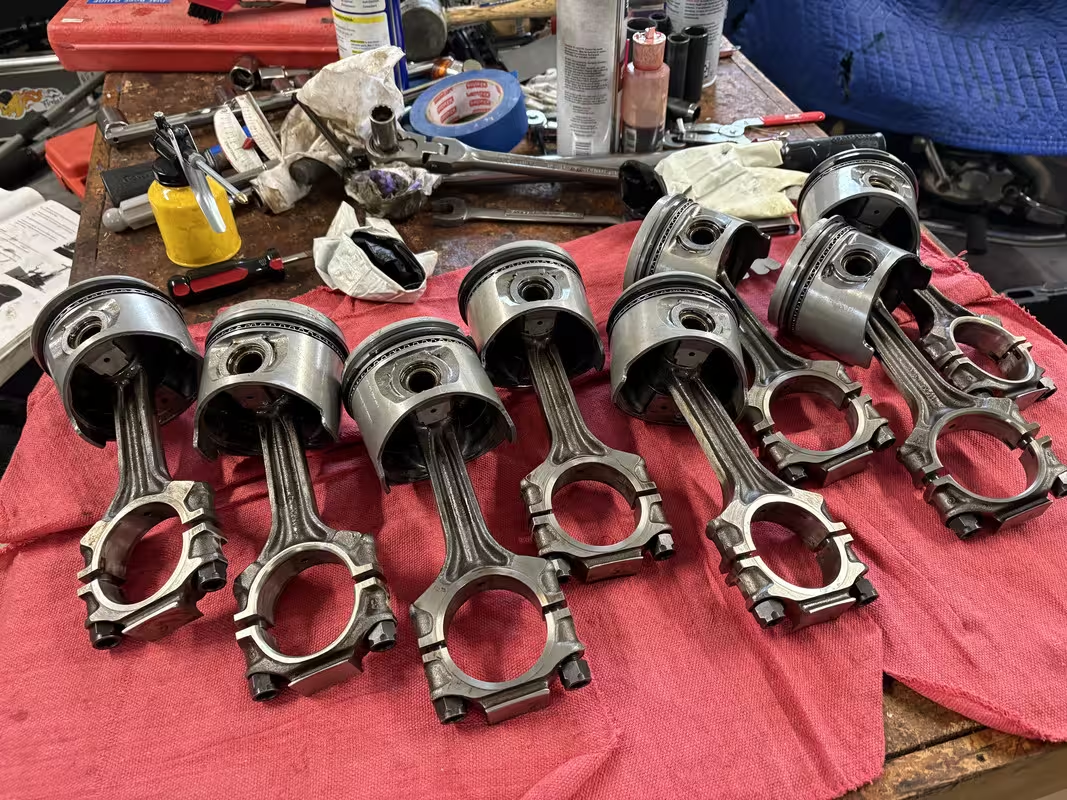
The pistons, main bearings and connecting rod shells were remarkably unscathed. They will be replaced along with the rings, assuming the bore gauge confirms tolerances... Lots of cleaning needed here though!
temp-Imagel-Br-BHd.avif


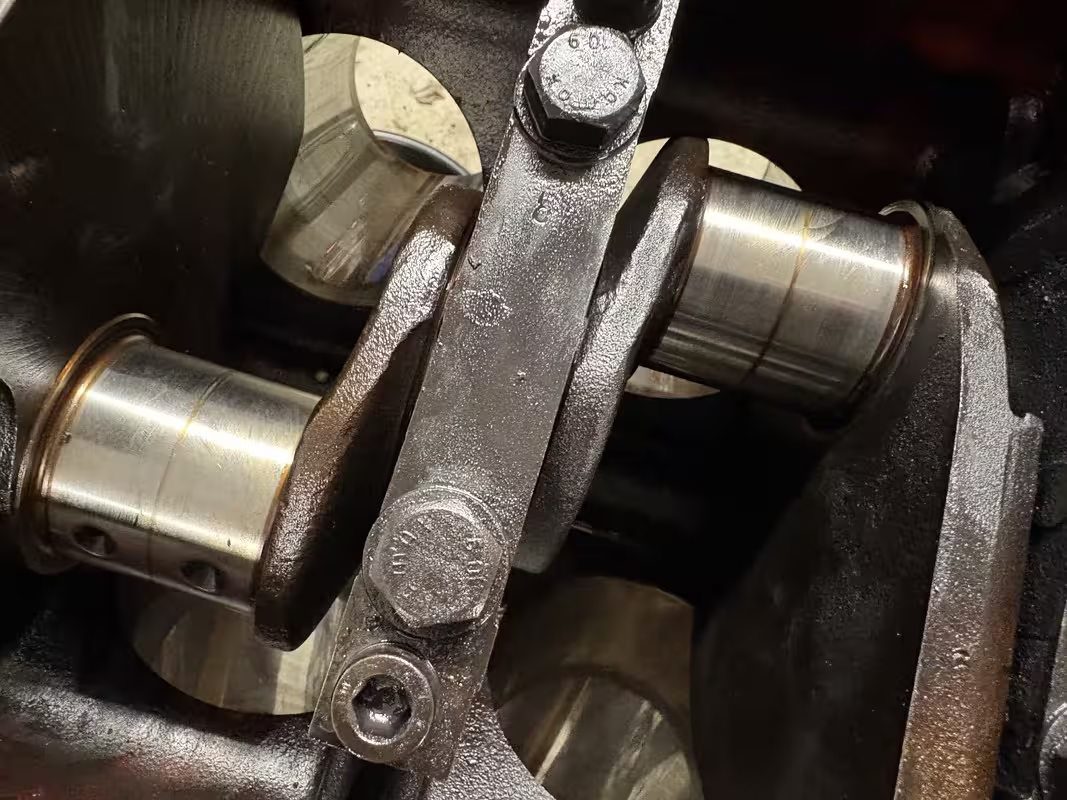
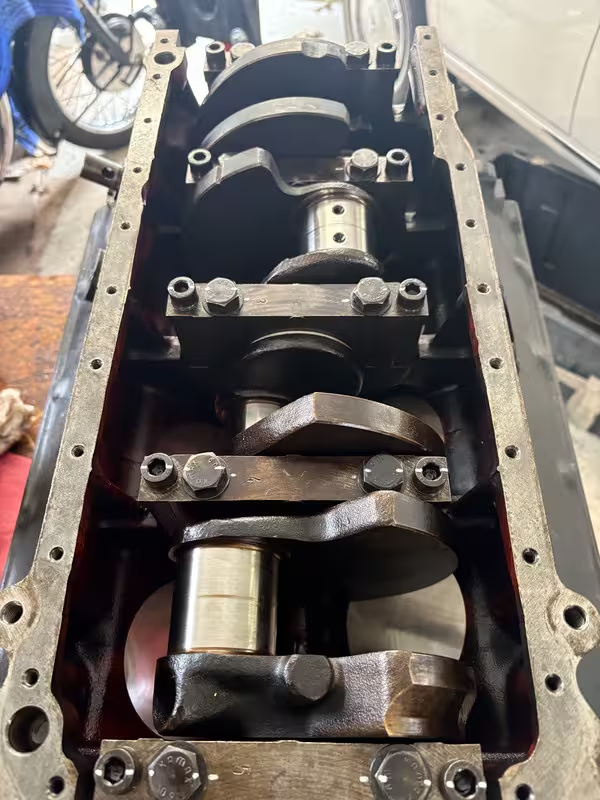
The crank was removed (picture prior to removal) and I checked the mains and journals, both are within spec and are both STD. Pretty amazing really.
temp-Image-R4a95-N.avif


I also noticed the pistons are Std too.

More to follow......
 

RoninB4

Well-known member
Joined
Jul 22, 2020
Messages
3,479
Location
Under My House
-Still following with great interest. You're doing great, the car is a beauty. Wishing you and your project continued good luck.
 
To avoid these ads, REGISTER NOW!

ArcIndWeld

Active member
Joined
Mar 2, 2025
Messages
28
Location
Bay Area ,CA
Harris frame.

Manganese bronze filler material. I think they still use a TIG torch for the heat source.

That ****'s pretty.
These are generally done with oxy acetylene using an inline gas fluxer. Theres a few shops still doing it.
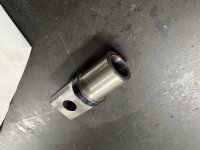
That being said If you plan on making another run consider making yourself an expanding heat sink like they use in bicycle building for the warpage of the head tube. https://cobraframebuilding.com/product/head-tube-welding-heat-sink/ Otherwise sweet build. Good choice on the Docol tubing though that's good stuff.
 
Last edited:
OP
I

indisguise

Well-known member
Joined
Sep 15, 2019
Messages
103
Location
Rust Belt....
OK folks let's continue on with the catch up on the "German Barge"...

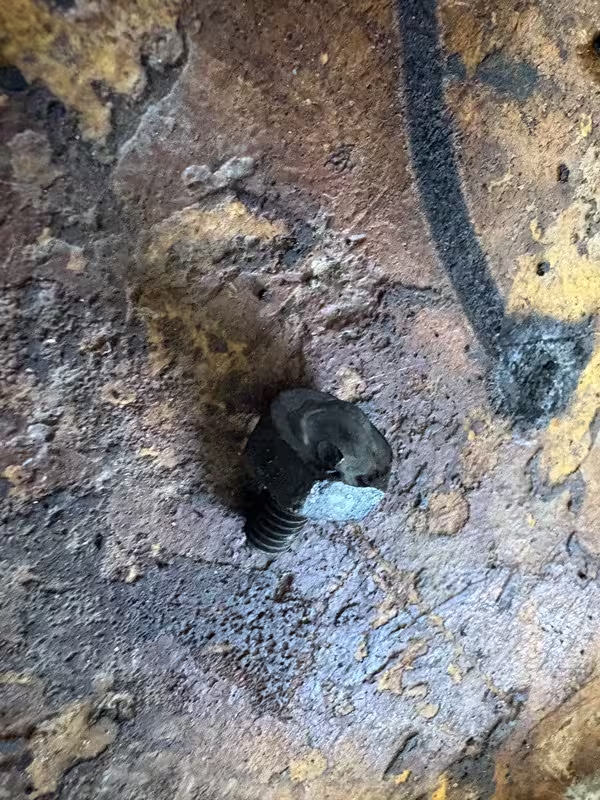
Inevitably I found a few broken bolts when tearing down the engine. Welding a nut on the end of the broken stud and slowly working it out was the quickest way to deal with these.....
Here's one after being extracted. Not overly difficult...

temp-Imagelrc-LYW.avif


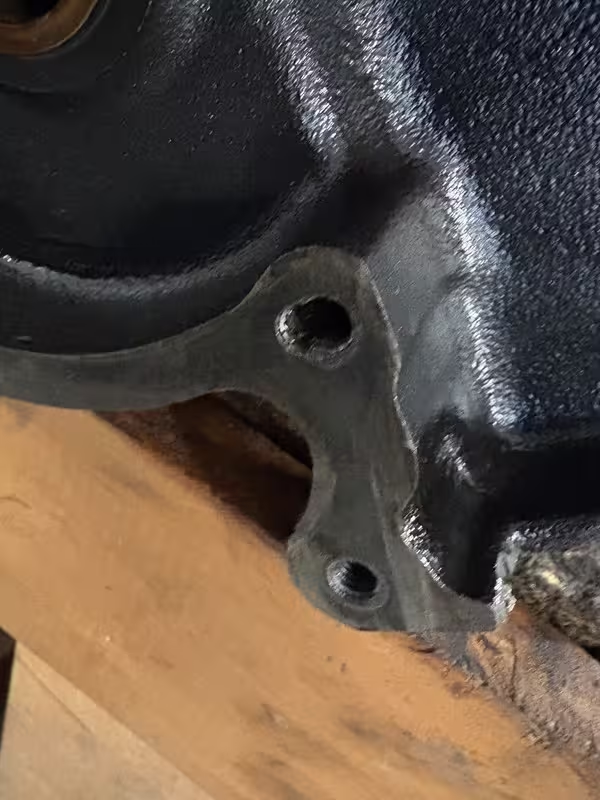
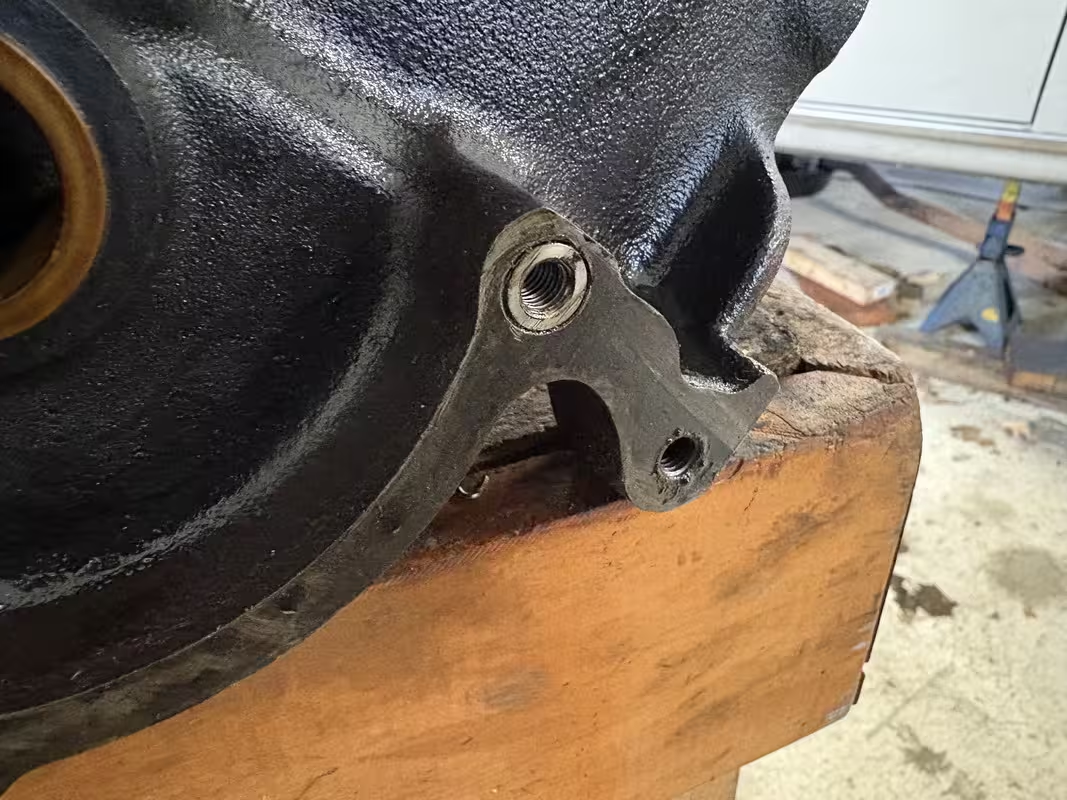
You may remember that I broke a water pump stud when previously attempting to change the valve stem seals. I tried to delicately remove the stud with limited access..... well surprise!....I had enlarged the hole...

Notice the enlarged hole to the left... FAIL!

temp-Imagek-Cp-PAx.avif

This was clearly going to cause issues with a Helicoil insert, however I still tried.
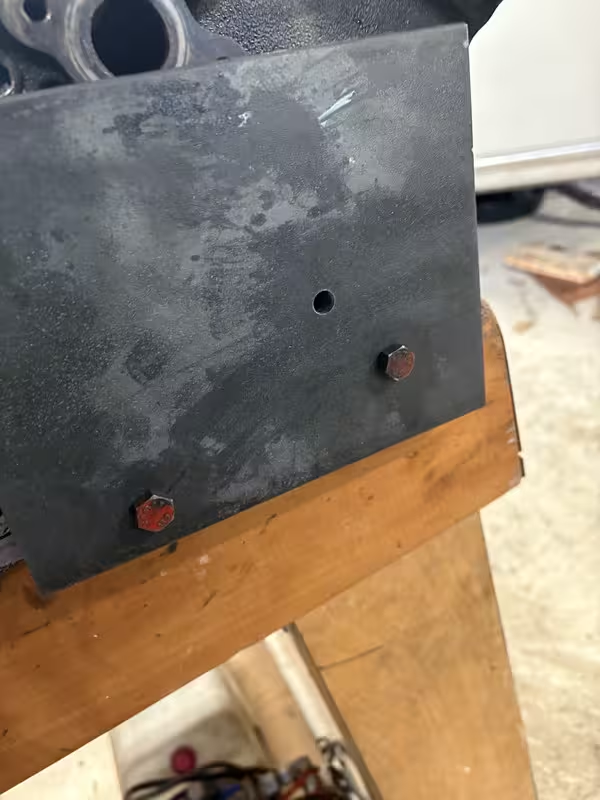
I created a quick jig to help with centering the drill/tap. This leveraged two existing mounting points to accurately center the drill and tap.

temp-Image-LHJ1bp.avif


Upon inserting the Helicoil I noticed the enlarged hole was causing centering issues. Therefore I need to use something that bored the original hole out further...

Enter the time cert... Not as strong as the first option but very neat and just fine for this...

temp-Image-DMCho-F.avif


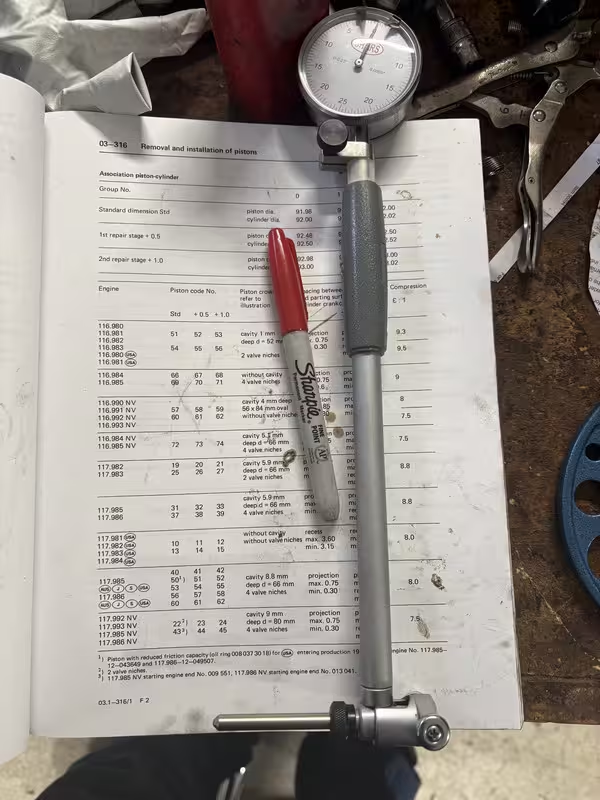
With this done, it was time to measure the bores and the connecting rod ovality. First consult the trusty manual...then grab the appropriate cheap measuring tools.... yes, this is common thread in this long adventure...

temp-Imageiz-US9-X.avif


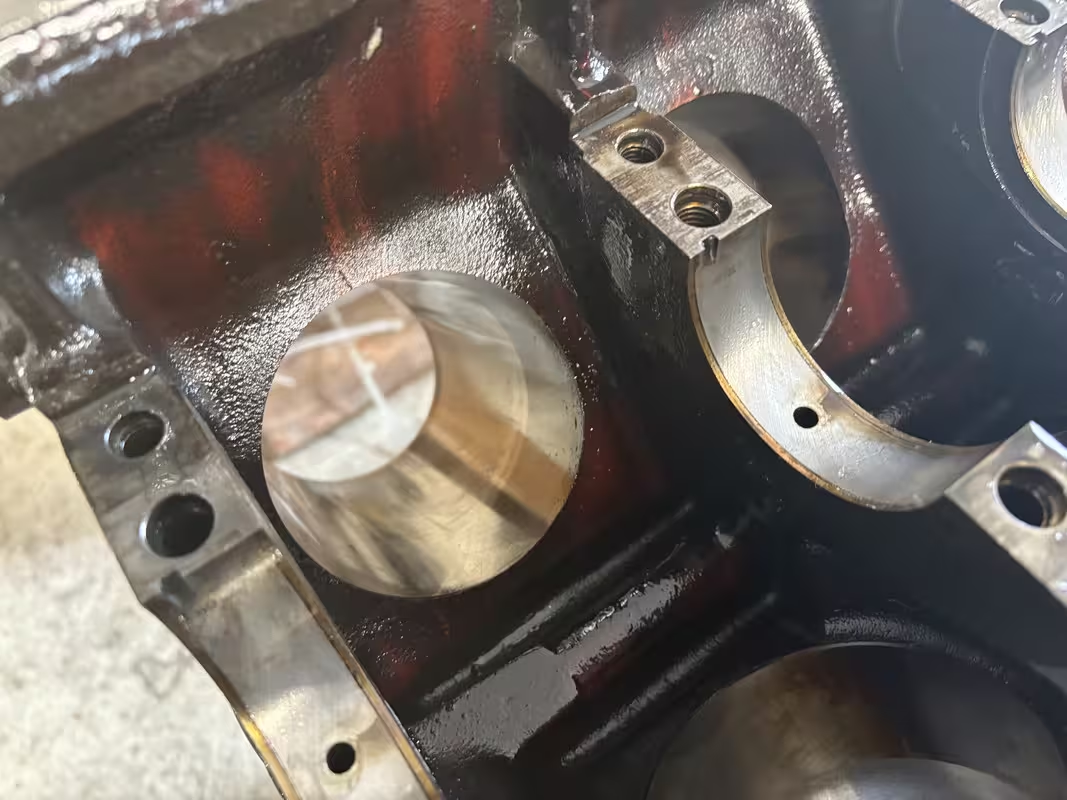
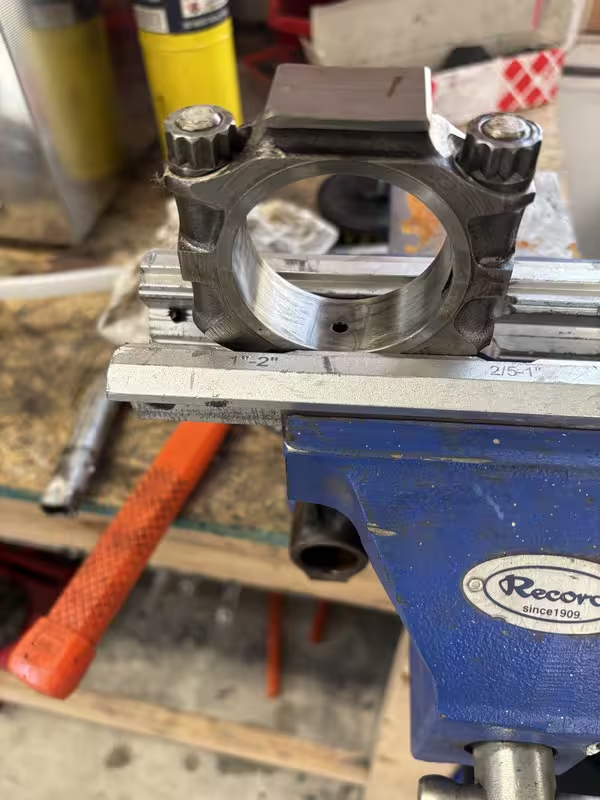
The bores on both the block and the connecting rod still had honing marks...this is promising...
temp-Image-OHNRPJ.avif
temp-Imagegnmeod.avif


Luckily this was all in tolerance after measuring at 3 heights within the bore along with checking the ovality on the rods.


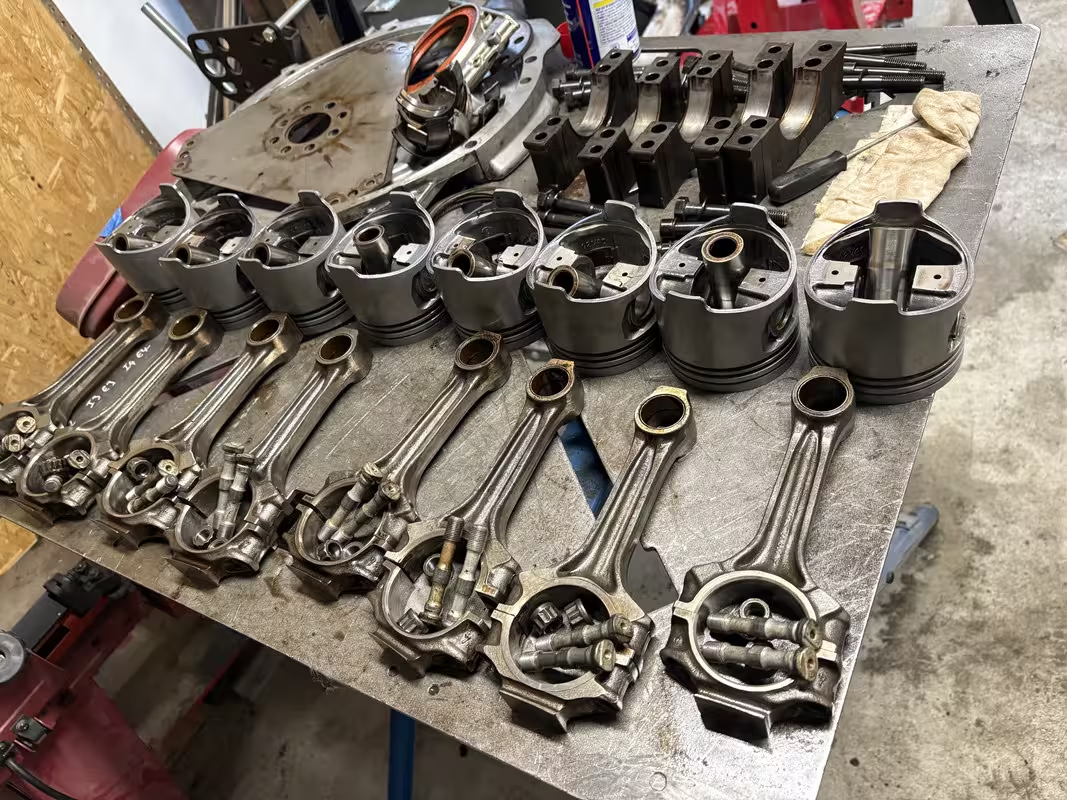
The next task was to strip and clean the pistons/rods..

temp-Imageab-APa3.avif

Much better!

The connecting bolts were a little worse for wear. I measured the stretch and it was right on the limit, therefore I decided to replace them. I foolishly assumed this would be reasonable....mistake! All those bolts came to $641! In many cars that would replace the rods with new bolts!!!!

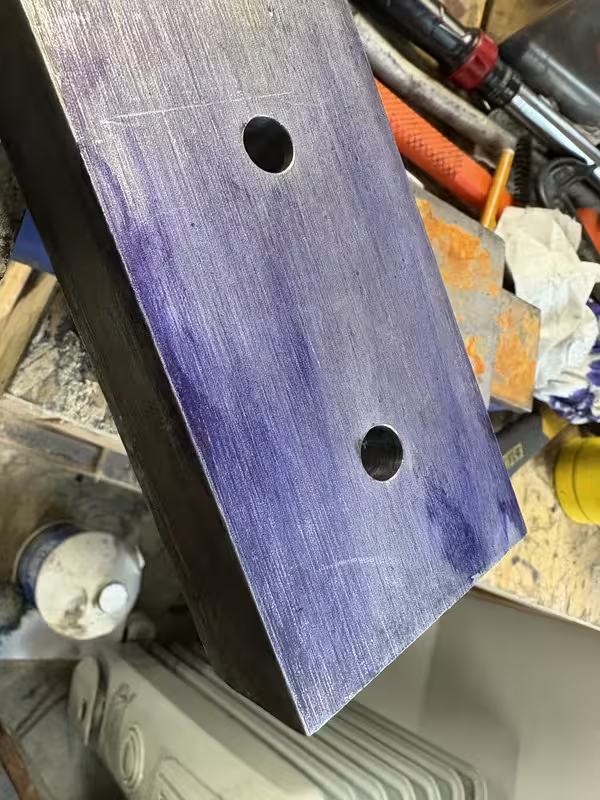
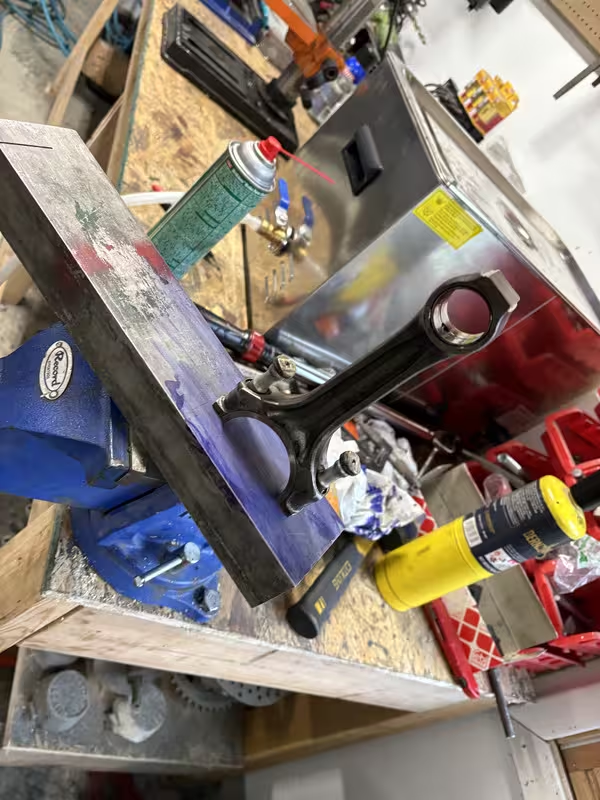
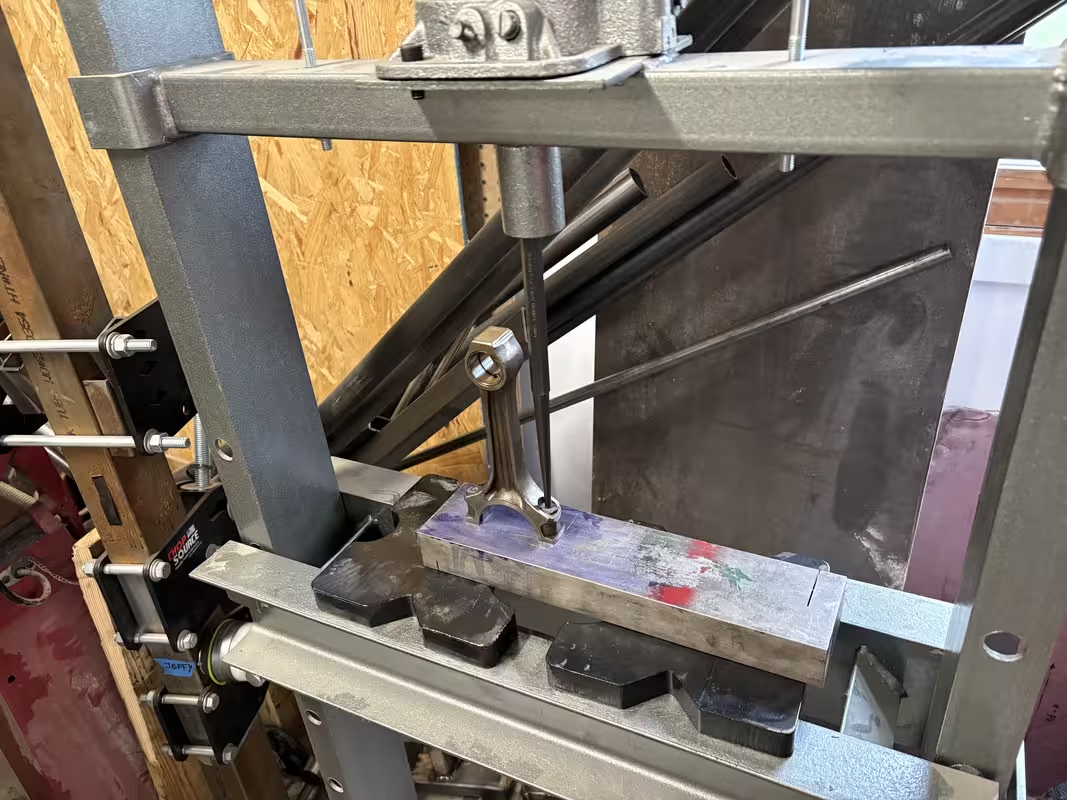
Anyway now to insert them...Again a jig was made.

temp-Image-LR2a86.avif


This allows the bolt to be pressed in without damaging the mating surfaces..


temp-Image-Pp-OSQY.avif


Quick action shot.....

temp-Imagetb-DJXw.avif


I continued to clean the block/crankshaft in preparation for reinstallation. This was incredibly dull and hence not worth mentioning....does anyone else detest cleaning oil baked parts? it takes forever and always leave various containers full of lethal chemical mixtures :) During this phase I quickly honed the bores to help the rings "bed in".

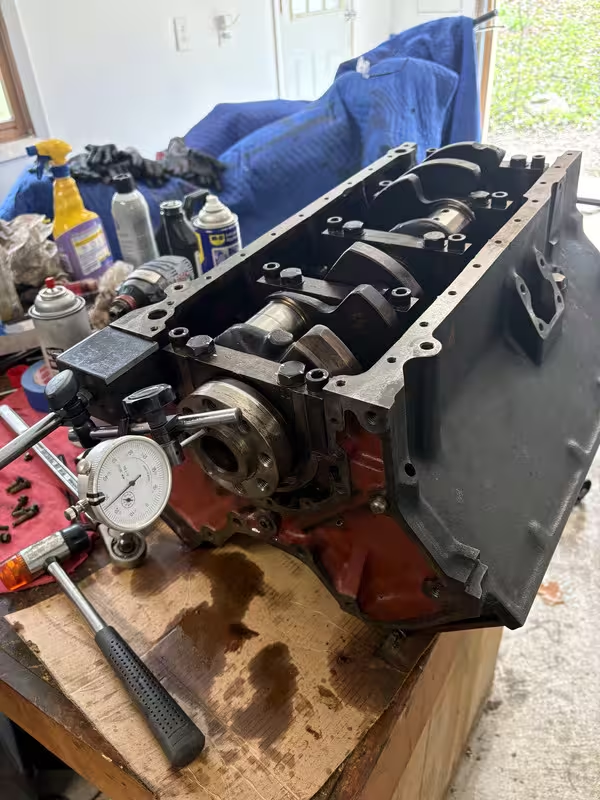
The crank was reinstalled...torqued, and bolts marked..

temp-Imagesr-E8k7.avif


Axial endplay was measured..and was fantastic..

temp-Image06o-HCV.avif


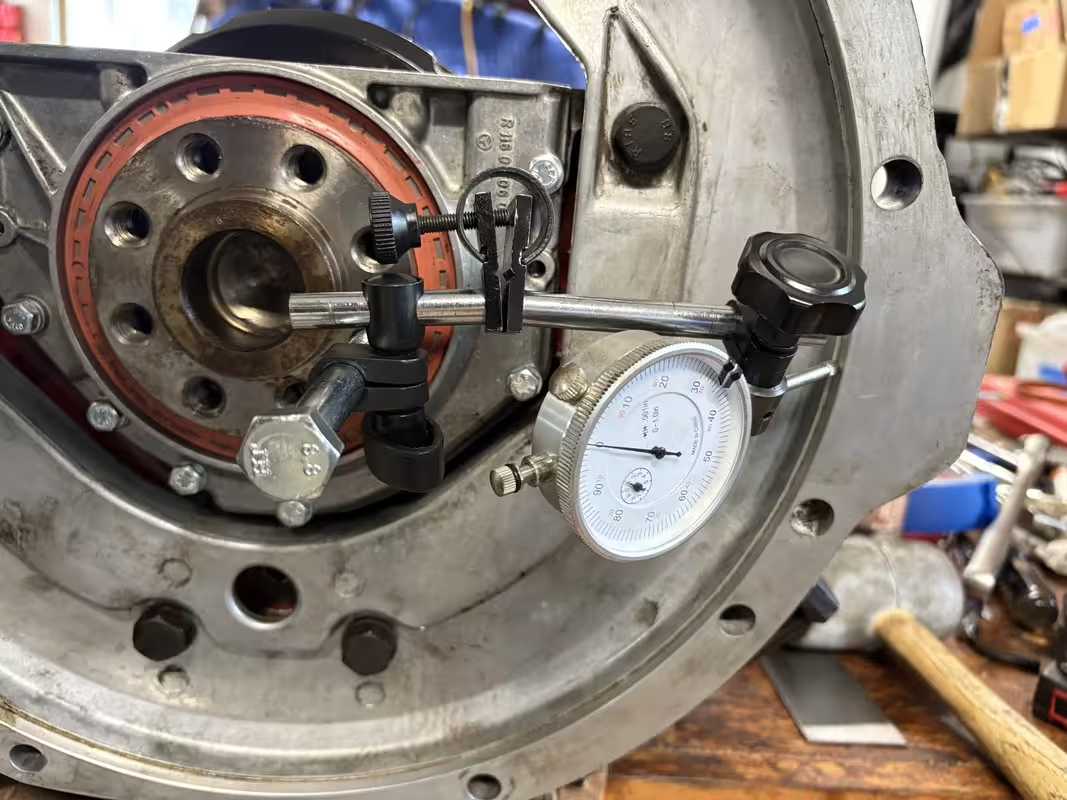
The end cap with a new seal was installed...and the bell housing flange was centered..

temp-Imagev0-FPMv.avif


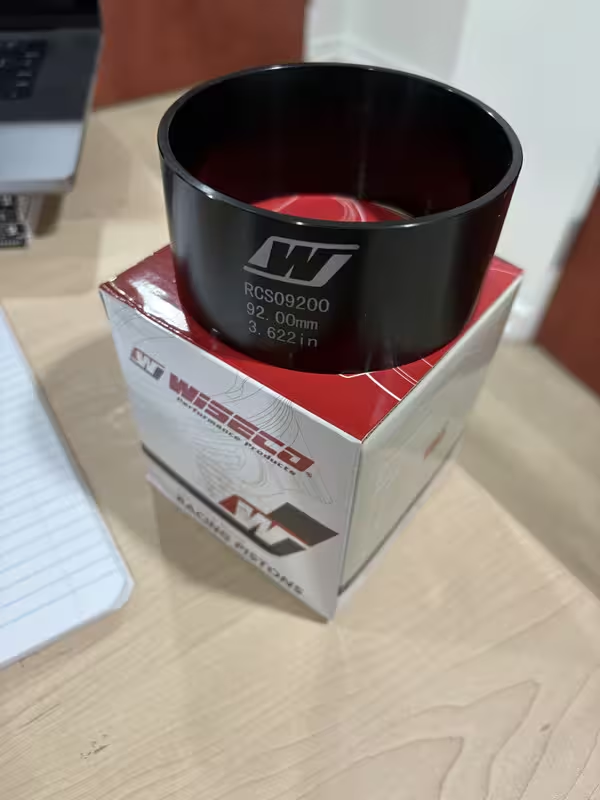
At this point I was feeling brave enough to tackle the rods/pistons... The rings were gapped. They actually came pre-gapped, however I still checked. One was right on the MB listed limit! (#slightly worrying....but pushing on)

Previously, I relied on ring clamps to install the piston into the block. However this was always an epic phaff..so lets try something new...

Enter sleeves....and proper ones too...

temp-Imager58-DGk.avif


I quickly realized that installing the rings by hand was WAY quicker than this useless tool...

temp-Image-KPhvy7.avif


The tool above is a complete waste of time...just insert the end of the ring into the correct groove and delicately spin the ring on...it's fairly simple. Yet another useless tool for the pile....

temp-Image-JFG2-GW.avif


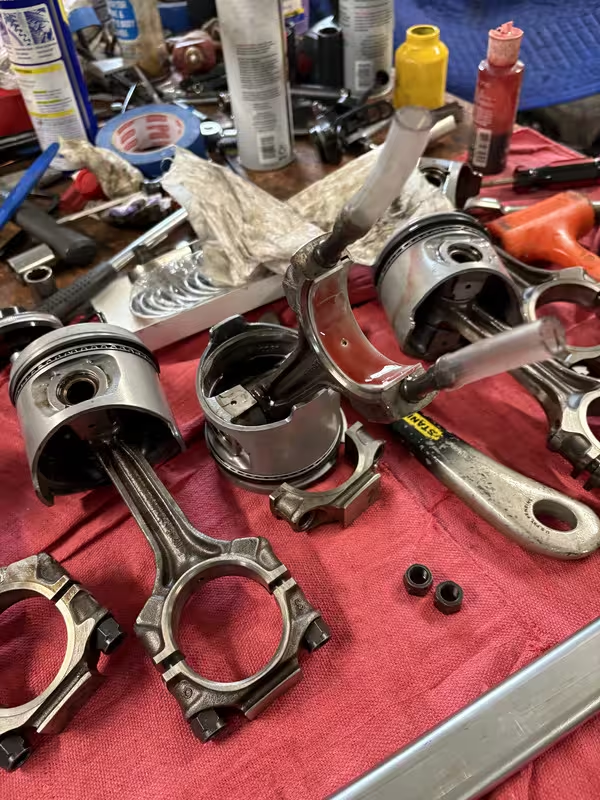
I installed the pistons with liberal amounts of Permatex assembly lube...while protecting the bolts with tubes...This helps stop the scratching of the bore and crankshaft journals.

temp-Image-J8-CEwe.avif


Then shortly there after we have this...

temp-Imagechl-Ct-U.avif

The sleeves are super helpful! However don't be shy here. Insert the piston into the sleeve with ton of oil. Line everything up and then find your favorite plastic hammer. Invert the hammer so you are holding the head and then place the center of the handle on the middle of the piston. Then quickly apply downwards pressure. This swift motion will push the piston down into the bore. I will never use a clamp again. They are expensive and only match one piston size....but they are super handy!

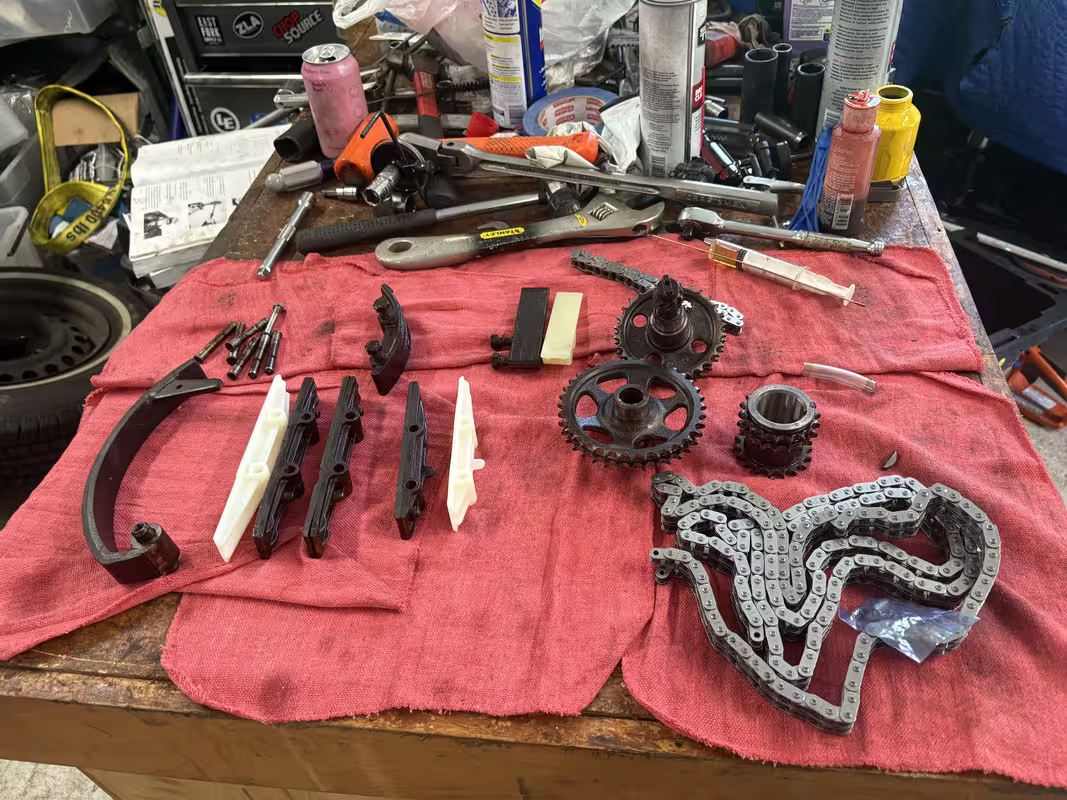
At this point it was time to assess the timing parts.

temp-Imagekdp2-Tu.avif

The chains are new from IWIS. Both timing and oil!.

The car had the original guides, which are metal backed with rubber faces. These were showing heavy wear, along with cracked coverings. The new plastic Febi parts are terrible. Therefore I'm slowly replacing these with Plastic Mercedes parts. There are so many horror stories around plastic parts failing with the M117..

Almost caught up...onwards and till the next time..
 
Last edited:
OP
I

indisguise

Well-known member
Joined
Sep 15, 2019
Messages
103
Location
Rust Belt....
Really quick update, nothing overly exciting but the work on the "German barge" continues.

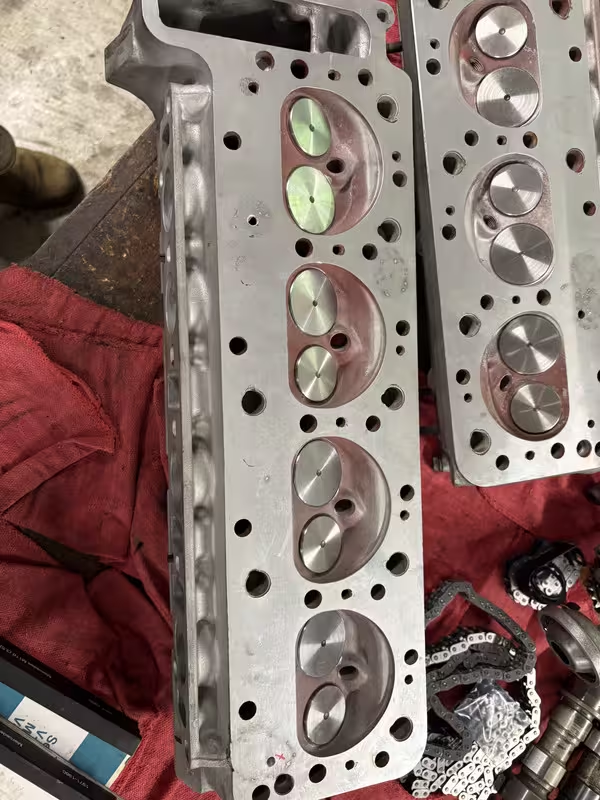
First to tackle those heads...

temp-Image-GP5-RRm.avif


The corrosion in the water jacket was pretty bad. I was going to repair these with epoxy until I realized it was wasted effort.

After removing the valves I noticed:
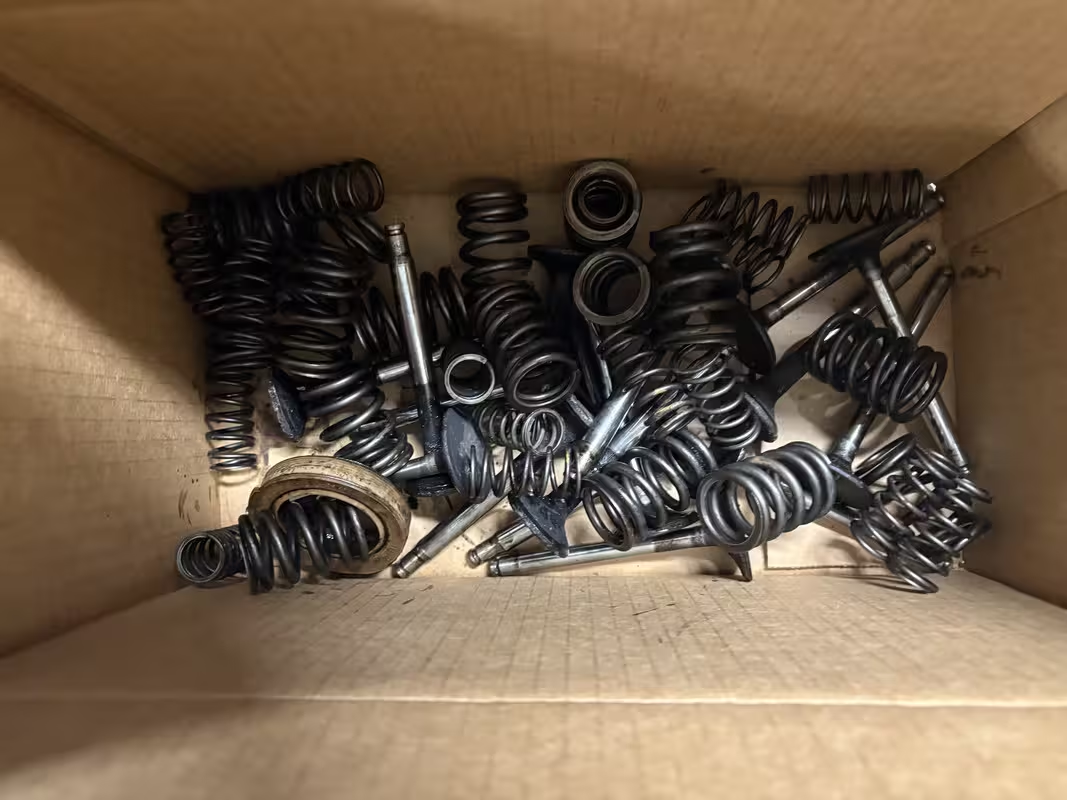
  1. The guides were completely toast, almost paper thin! No wonder it burnt oil. 1-2mm of lateral play.
  2. One valve was slightly bent..
  3. 6 Springs were bent and deformed.
So this was scrap.

temp-Imagej7g7a-O.avif


The volume of warn out parts is pretty crazy at this point and the cost of springs guides and valves was eye watering!

Anyway the heads were shipped to the machinists with new valves, guides, seals and springs...and returned looking alot better.

temp-Imagef-FSIU3.avif


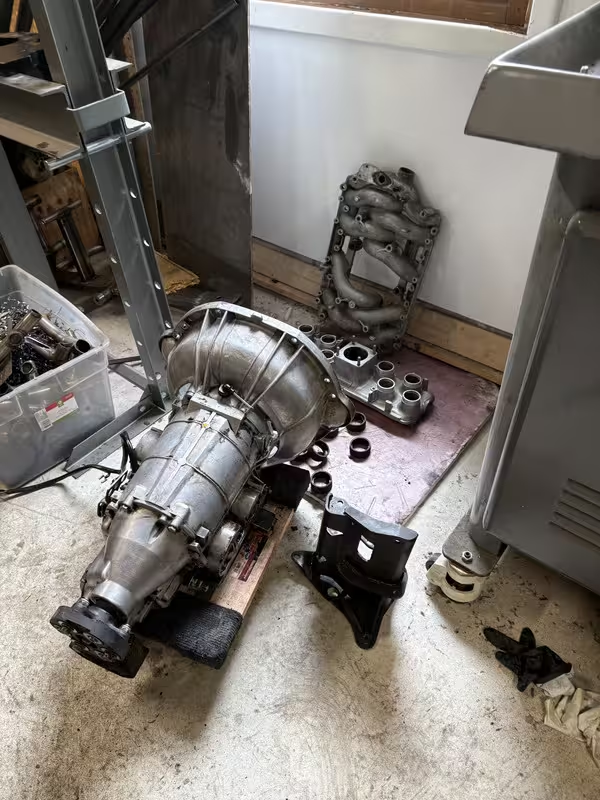
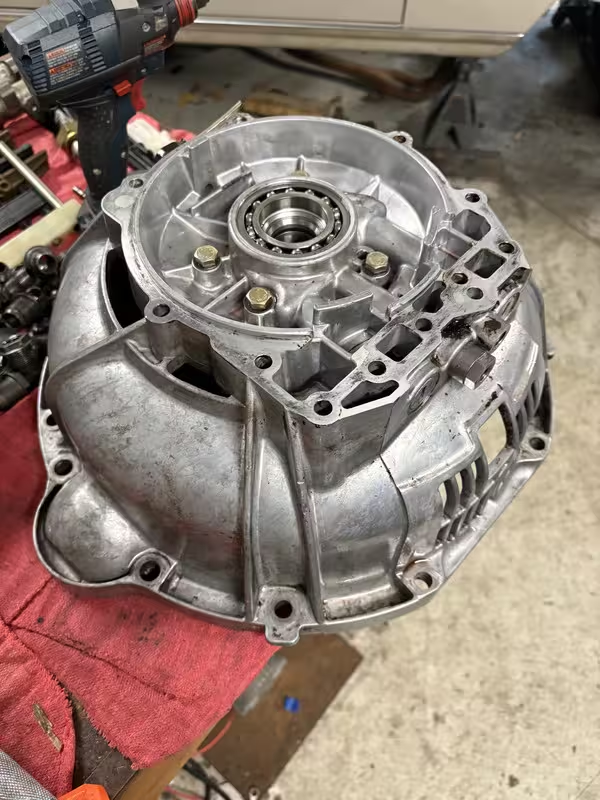
Next step was to tackle the transmission seals, since it was leaking after sitting for extended periods.... The front was pretty self explanatory and was done in pretty short order...Note I initially did this with no manual and just forum articles...

First the unit was cleaned..

temp-Image-P8am-HJ.avif


Then the front seals were done...

temp-Image3r10-Yd.avif


temp-Imageh1-Bq-V5.avif

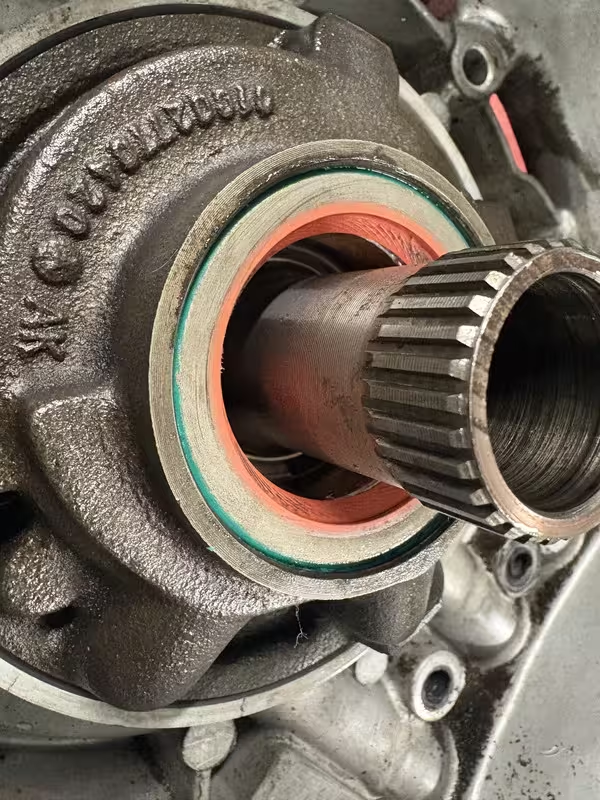
Then onto the tail section.... and this is where things went south quickly... Replacing the seal in the tail section started slowly and painfully:
  • The Dzus fastener was seized on the secondary pump...
  • The locking nut on the output shaft was stuck requiring careful drilling
  • Then finally, just as I was replacing the rear seal a small portion of dirt shot through the bearing into the transmission.
This required removal of the tail section that resulted in some "light persuasion" which is never recommended on a transmission....

The resultant fallout was...
  • A somewhat warn out rear bearing...
  • I broke the Pressure modulator as it was glued in with steel epoxy..a mere $200...
  • I broke the modulator PIN. $60 from overseas...
  • I also broke a spring..
The real lesson learned here was...first get the manual... however hard. I followed some instructions on a forum and they did not remove the secondary pump first. While the is doable...the damage incurred was unfortunate. The cost of the replacement parts was $300 and this could have been avoided! Yes I feel like a "Freddy First year". Hopefully the transmission was not harmed in the process and only time will tell...However there is one upside...I now feel fairly comfortable with the 722.00 transmissions and how they work.

Anyway I will leave you with an engine that is slowly coming together and a lot cleaner!

temp-Imagesa-UFvj.avif


Note the number of missing parts in this engine is shocking and explains some issues seen during the tear down. An order of parts will see the remaining Cam towers in place shortly!...

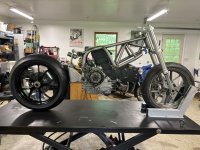
You can see the motorcycle frame covered behind...waiting patiently for all these side projects to be done....
 
Last edited:

yhprum

Well-known member
Joined
Jul 27, 2006
Messages
1,379
Location
Brisbane Australia
Nice job on the an engine rebuild, and doing it right ($$) you won’t be worrying about things like those rod bolts as you're cruising down the road enjoying the view.
 
OP
I

indisguise

Well-known member
Joined
Sep 15, 2019
Messages
103
Location
Rust Belt....
Part 1

Oh boy...it's been forever..... Let me try to update this thread.

Current status in the garage... back to the bike project.

bike.jpg


What about the German barge? well I almost set fire to the thing and walked away....but after emptying my bank account on NOS parts...

Car.jpg

It runs and drives..... and surprisingly well after some tuning....More importantly there is no smoke!

So let's play catchup......

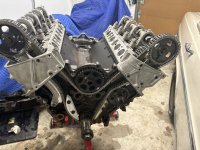
Getting the engine together was "relatively" simple. The engine timing was checked and the decked heads caused some issues. This required offset woodruff keys. The manual was a life saver and the process was fairly simple. There are lots of new parts in this picture, Chain, tensioners, cam sprockets, $$$$$$

Eng1.jpg

Then on with the ancillaries and inlet manifold. The valves were set. Many of the adjusters were replaced...again the house was re-mortgaged.

Eng3.jpg


At this point the final parts were attached in preparation for the installation.

Eng4.jpg

With the gearbox installed its quite the beast!

Eng6jpeg.jpg

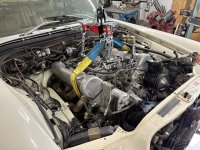
And with some liberal cussing, the unit was installed. Not easy on your own!

in1.jpg

So this was the easy part....the part that follows was the pain...
 
Last edited:
OP
I

indisguise

Well-known member
Joined
Sep 15, 2019
Messages
103
Location
Rust Belt....
Part 2

So when the engine was removed, the mechanical fuel sensor broke....these are filled with ether and act as a closed loop system... There are many YouTube video's on this as a warning...

According the AI overlords..


Vintage Models (Mechanical Capillary Gauges)
  • How it works: The sensor is a physical bulb threaded directly into the cylinder head or coolant passage. As it heats up, a volatile fluid (ether) inside expands, creating pressure that travels through the sealed metal tube directly to the gauge.
  • Common Issue: The capillary tubes are extremely fragile and must never be kinked or cut. Cutting the line releases the fluid, rendering the gauge dead.
  • Repair & Replacement: Original mechanical gauges are difficult to restore or source new. Many owners opt to leave the original dead gauge in the dash (to keep the classic look) and install an aftermarket electrical gauge.

I tired to re-attach the coolant bulb....

Temp1.jpg
Then I tried refilling the ether using several syringes....getting hold of the ether was not easy(for a reason). Sadly after "huffing" about 1/4 of a bottle and almost passing out I realized there were still multiple leaks in the bulb!

Time for a new plan of attack.

So I tried remaking a new bulb...its a little rough...

Temp2.jpg

Temp3.jpg

The grove is for solder to fill....this will help sealing. The internal pin is an interference push fit....

Once this was pressed together and sealed, I again tried pumping ether into the system. This requires an ice bath and numerous syringes... after another 10 attempts....and again almost passing out (again) I decided to give up. This process was miserable.....I was slowly becoming a side story in some Agatha Christie mystery and it was not going to end well!

Mechanical gauges are known for their accuracy and quick response times, however the cost of a new one was completely insane. Therefore a new approach was needed! Time to retrofit an electrical one....

First purchase the gauge from a 1974 W115. Again these are NOS, but around $100 it was worth a shot. Then remove the mechanical one and try to re-insert the electrical one. This required a lot of modifications....

Temp4.jpg

Temp5.jpg

You can tell the difference. But its close!

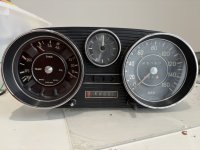
Once this was all "buttoned up" the gauge cluster looked great.

Instrument1.jpg

However this was not the end of the cluster......
 
Last edited:
OP
I

indisguise

Well-known member
Joined
Sep 15, 2019
Messages
103
Location
Rust Belt....
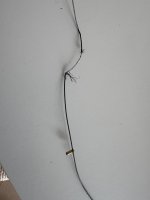
Upon installing the gauge, I noticed the shift indicator here would not sit in Park!

Instrument1.jpg

The gauge came back out and the tiny Bowden cable was removed.. The resultant was this frayed cable which was about to snap...

Ins2.jpg

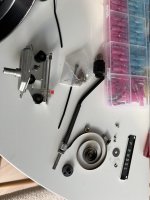
This. part is unobtanium again! It needed to be remade from scratch. Sadly to get this out requires completely dismantling the mechanism which contains a watch spring. This was more like jewelry repair than automotive work!
ins3.jpg

After many hours of sourcing custom brass pins, new braided cable and building spring compressors the gauge cluster was back together.

Ins4jpeg.jpg

All of the cable housing is new, and custom ferules were ordered to make this work. This is all custom.

Luckily it worked like a treat and the gear selector is now perfect. This was not easy!
 
Last edited:
OP
I

indisguise

Well-known member
Joined
Sep 15, 2019
Messages
103
Location
Rust Belt....
Part 3

Then came the exhaust!

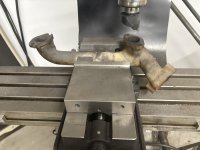
The manifolds were corroded at the mating surface...so onto the mill...
Ex1.jpgAfter some clean up these looked way better.

E2.jpg

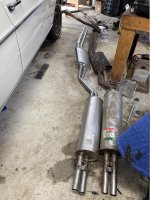
Then I needed to order a new center section from Europe...which was $$$$ ...

E4.jpg

This required a lot of custom welding, and I'm still fine tuning today!

So this brings me to the end of the Mercedes saga. For those willing/thinking of tackling the same exercise I would caution them. The impact on your bank account (and sanity) is considerable. Everything is "no longer available" and hence everything is wildly expensive, if it can be found.

For example...
Second hand AAV = $350
Cold Start Valve = $600
Distributor vacuum cell = $200

Literally everything starts in the $200 territory and then it escalates quickly... TBH the second hand resale of these cars does not equal the sum of the parts....

However on the bright side. It taught me a lot...and along the way the adventure was always entertaining...
 

RoninB4

Well-known member
Joined
Jul 22, 2020
Messages
3,479
Location
Under My House
-A herculean effort made, not sure I would have had the stamina (or bank account) to follow through like you did. The "Barge" looks great and the design is ever so appealing to my eyes. A huge congratulations on getting it back on the road. Looking forward to further adventures in motorcycle frame building.
 
To avoid these ads, REGISTER NOW!
Top Bottom