Cam, I understand your position. My understanding and usage is as follows: Foot/Pounds (ft/lbs.) is the unit of measurement or terminology I use when discussing the torque of a fastener. Pound/Feet (lb/ft.) is the terminology I use when discussing the output of an engine or motor. For some reason my mentor got me hooked on those differences 36+ years ago and they have stuck with me all this time.
Right, wrong or indifferent, when speaking in terms of fastener torque or engine output, those are the vernacular that I utilize.
Completely agree Tim. When we think we know everything and close our minds to learning anything new, we are done, period.
Another reason I love this forum. I have not found anywhere else that brings such a wide and diverse range of backgrounds together in one place and most everyone here wants to learn and improve their skillset. For that I am grateful for everyone who contributes to these discussions.
Tim, I completely agree with everything you said, especially the highlighted segments and if I could make a few comments based on my own experiences.
I learned a long time ago that overlaying sheet metal during panel replacements was not the right way to do it. Not because I was shown incorrectly, or correctly as I wasn't really shown either. I picked up paint and body work by trial and error. I learned the hard way. I was building my wife a new car, well new to us anyways. This was back in 1990, when I bought the wife a wrecked 1989 Ford Thunderbird (yes Justin
@rattle_snake I owned a Ford, several in fact

) I was replacing the left rear quarter panel and if you remember, those were the years when flowing sail panels were first arriving on scene and definitive body line breaks were fading away. I also purchased a donor car for the necessary body panels and as I was grafting the replacement quarter panel onto the car, I stepped or hemmed the edge. Not knowing, I figured it would be easier to weld having a trough to lay the weld down into vs. blowing holes in the panels trying to **** the panels. Also, this is when my welding skill was in its infancy and it was later I decided I really needed to up my game if I were going to play.
The wife wanted her new car black, no other color was considered. I had rebuilt a few vehicles by this time and felt I had this body work thing down. Little did I know I would fail and fail big time. I spent an enormous amount of time getting the panels flat because the color black as you know, shows any and every little flaw. The paint came out perfect, after cutting and buffing I was so pleased with myself that I thought I knew it all. About six months later when washing the car to go out on the town one night, I noticed a vertical line appearing in the paint. Not a crack or even anything that obvious to probably most people, but I noticed it and was hell bent on trying to figure out what it was. Also keep in mind that this was long before the internet and Google searches, so I was dumbfounded at what I was seeing.
That faint line remained there until I sold the car several years later. Never got any worse nor went away, it was just barely visible and only in certain lighting, but it drove me nuts. As I was beginning to build my first street rod, our 1940 Chev Coupe, and was finishing up the chassis and starting on the body, I had been reading all of the high end builds in magazines such as Street Rodder, Rod & Custom, American Rodder, etc. and was seeing a pattern, every one of these high end builds had butted panels, nothing stepped or hemmed over.

During one of my PPG paint seminars that I was attending I got to talking to a few other attendees who owned local body shops. Now most of these guy's focus was on quick in/out insurance jobs, but I did meet a couple of guys who were more into the restoration or street rod scene vs. high production insurance work and we got to talking about techniques we were using and the topic of metal finishing at butted panels came up. This was of specific interest to me as I wanted to learn to do it the way the "professionals" did it.
Upon more conversations with one of these gentleman months after the seminar ended as we continued a working relationship to bounce ideas off of each other, one day I stopped by his shop and we continued the **** vs. stepped seam conversation. It was then that it hit me while we were discussing hammer-welding the seam and how much harder it was to hammer out a MIG weld vs. a TIG weld. First, I realized I needed a TIG welder and secondly it hit me, that hard weld PLUS the double layer is the issue. NOT only because of the initial metal finishing step, but that seam is also going to expand and contract at different rates being multi-layer.
THAT is when the lightbulb came on about the visible seam on the wife's Thunderbird several years earlier.
That is also when I discovered I didn't know everything and if I really wanted to be the best, I had to continue to learn from the best and not be afraid to fail because then it allowed for more learning to take place. I also noticed that is when my mindset changed and I really began to have my skillset explode. I was experimenting with various techniques and behaviors in so many other aspects of my field that I felt my knowledge level jump and more importantly, my thirst for this knowledge became unsatiable. I simply couldn't learn enough to satisfy my craving.
This set my own bar for what I wanted my workmanship and skillset to be, and to be honest, I don't think I've ever reached it yet. I simply cannot achieve the level that I want because my level keeps changing. The more I learn and the better I become, simply continues to raise the bar to a new level.
I think that is what you were trying to state above Tim. That most people don't know what top quality is because they have either never been exposed to it, OR they have never challenged themselves enough to strive for it. For some people good is good enough. For many of us, good is never good enough nor something to strive for as we strive for a much higher standard.
Sorry to go off on a tangent, but those comments above really brought back some moments for me from decades ago that I feel helped to define the work I wanted to perform and the standards I wanted to hold for myself. That being said, please don't take this as bragging because even as far as I feel I have come, I don't think I am even in your ballpark of skills and talent. I just know I am better today than I was several decades ago and it bothers me when I see people who are not progressing and have the good enough is good enough attitude.





 moments.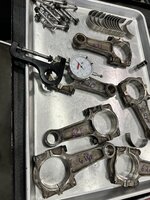


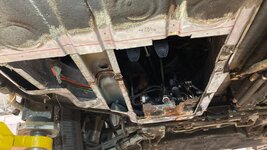


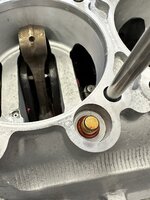


 . Appreciate you sir!
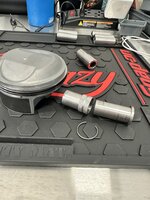


 Ask ten different people you get ten different answers and everyone is right damnit!