
You are using an out of date browser. It may not display this or other websites correctly.
You should upgrade or use an alternative browser.
You should upgrade or use an alternative browser.
The Machine Work Thread
- Thread starter Hephaestus29
- Start date

ez-duzit
Well-known member
Thanks fellas.
JTH--good luck with your purchase. Try to find one with a bunch of tooling, not a bare machine.
JTH--good luck with your purchase. Try to find one with a bunch of tooling, not a bare machine.
Jim Johnstone
Well-known member
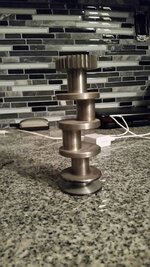
Just found this tucked away. It's one of my first projects from trade school.
ez-duzit
Well-known member
JJ--that should be displayed.
Jim Johnstone
Well-known member
Thanks. The funny thing is I didn't even keep the first die I built during my apprenticeship but I hung onto this little guy. Definitely going to keep it around my shop.JJ--that should be displayed.
OP
Hephaestus29
Well-known member
OP
Hephaestus29
Well-known member

cwh
Well-known member
Looks like a henweigh.
OP
Hephaestus29
Well-known member
you meanLooks like a henweigh.
Like: what's a hen weigh ?
EdT
Well-known member
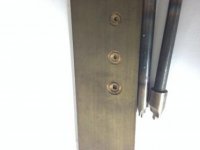
Perhaps trepanning tools for making a seat for an O-ring seal.
cwh
Well-known member
you mean
Like: what's a hen weigh ?
Sorry, couldn't resist....
Jim Johnstone
Well-known member
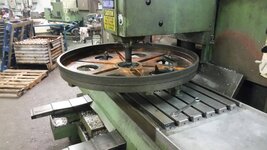
Maybe this doesn't count since it's not in my garage, but today I get to re bore a drive wheel from a bandsaw. This is one monster of a bandsaw apparently.
Jim Johnstone
Well-known member
Yeah we do a lot of repair work for this company. They are a steel foundry/forge. I've heard their lathes/mills etc are absolutely massive.Looks like it would be an awesome band saw!
Sent from my SM-T230NU using Tapatalk
Nor'Easter
Well-known member
I don't consider myself a machinist rather a fabricator with a knee mill... but these are some 6061 intake plates that fit a 6BT Cummins head.

OP
Hephaestus29
Well-known member
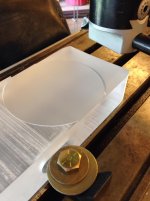
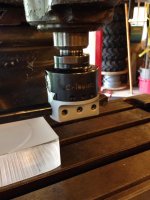
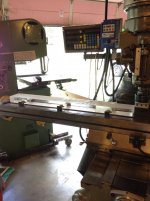
Re: The Machine Work Thread Why is my boring bar double dipping on the backside cut?
So I was trying to use my boring bar "for the first time ever" as a fly cutter.
It was double dipping on the back side of the cut.
Do I just need to break down and get a face mill or what ?
What am I doing wrong ?
So I was trying to use my boring bar "for the first time ever" as a fly cutter.
It was double dipping on the back side of the cut.
Do I just need to break down and get a face mill or what ?
What am I doing wrong ?
Attachments
Jim Johnstone
Well-known member
Normally with a flycutter you want to very slightly tilt the head so the back sweep of the flycutter stays a few thou above the part. Even with a face mill and the head perfectly trammed, it's pretty common for the face mill to still cut a tiny bit on the back sweep.
ez-duzit
Well-known member
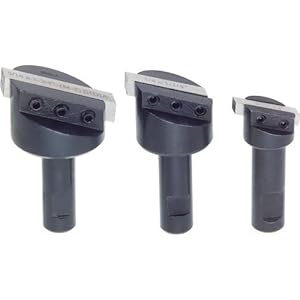
Fly cutters are cheap.
OP
Hephaestus29
Well-known member
Ok thanks Like 5 degrees or ???
OP
Hephaestus29
Well-known member
Fly cutters are cheap.
I've got 3 of those, not quite big enough plus I haven't learned to grind tools yet. I'd rather use an insert at this point.
OP
Hephaestus29
Well-known member
Tilting the head might give you clearance
on the back side but it's going to dish
or concave the piece.
on the back side but it's going to dish
or concave the piece.
Jim Johnstone
Well-known member
Oh god no. Half a degree or less. Literally you only want a thou or two of clearance on the back sweep.Ok thanks Like 5 degrees or ???
Jim Johnstone
Well-known member
If it's setup correctly, it will be an almost immeasurable amount, this is SOP they teach in trade school for flycutting. Besides, if he is already having it cut on the back sweep and is "double cutting" with his current setup, then he is already dishing the part.Tilting the head might give you clearance
on the back side but it's going to dish
or concave the piece.
OP
Hephaestus29
Well-known member
Thanks, I've been playing around trying to
set it up and, yes it looks like about a
half of a degree is going to get me clearance.
set it up and, yes it looks like about a
half of a degree is going to get me clearance.
Leveleer
Well-known member
I enjoyed going through this thread. Lots of interesting skilled people.
Here is a picture I took while playing with some crankshafts I made on my Robodrill.

Frank
Here is a picture I took while playing with some crankshafts I made on my Robodrill.
Frank
An easy way to set this up is to put the indicator you use for tramming your machine into the spindle. Now, bring the machine a thou out of tram by loosening the head bolts until they're just snug and giving the head a few whacks with a rubber mallet.
Re-sweep the table with your indicator to confirm you have a thou tilt at the diameter of your fly cutter and go to town. I usually make the left side of the cutter low when viewed from the front of the machine. That way I don't get showered with chips.
Re-sweep the table with your indicator to confirm you have a thou tilt at the diameter of your fly cutter and go to town. I usually make the left side of the cutter low when viewed from the front of the machine. That way I don't get showered with chips.
OP
Hephaestus29
Well-known member
Thanks everyone, I played around with it
further and yes, less than a half degree is
sufficient. I haven't tried your method yet
John but I will and I appreciate your input.
further and yes, less than a half degree is
sufficient. I haven't tried your method yet
John but I will and I appreciate your input.
Jim Johnstone
Well-known member
Yep tramming indicator is the easiest way.An easy way to set this up is to put the indicator you use for tramming your machine into the spindle. Now, bring the machine a thou out of tram by loosening the head bolts until they're just snug and giving the head a few whacks with a rubber mallet.
Re-sweep the table with your indicator to confirm you have a thou tilt at the diameter of your fly cutter and go to town. I usually make the left side of the cutter low when viewed from the front of the machine. That way I don't get showered with chips.
OP
Hephaestus29
Well-known member
We have some Robo drills at work but they just use them for drilling oil holes in the drive hubs in our department.I enjoyed going through this thread. Lots of interesting skilled people.
Here is a picture I took while playing with some crankshafts I made on my Robodrill.
Frank
What are those for lawn mowers Or ?
Leveleer
Well-known member
Oil free two stage direct drive air compressors.We have some Robo drills at work but they just use them for drilling oil holes in the drive hubs in our department.
What are those for lawn mowers Or ?
OP
Hephaestus29
Well-known member
I've got a Craftsman oil free unit that's been going strong for a good 15 years.
Leveleer
Well-known member
Some might find this interesting:
First machine I ever bought: Hardinge DSMA (purchased 1972)
First CNC machine: Spindle Wizard with 24 position tool changer (1976)
First CNC lathe: Okuma Howa 4PS (1977)
First multispindle screw machine: Acme Gridley RA6 (built 1942 to make 50 caliber bullets) purchased used for 6000 dollars in 1976.
Last multispindle: Guildemeister GM16AC
Last CNC lathe Guildemeister MF65-twin
Frank
First machine I ever bought: Hardinge DSMA (purchased 1972)
First CNC machine: Spindle Wizard with 24 position tool changer (1976)
First CNC lathe: Okuma Howa 4PS (1977)
First multispindle screw machine: Acme Gridley RA6 (built 1942 to make 50 caliber bullets) purchased used for 6000 dollars in 1976.
Last multispindle: Guildemeister GM16AC
Last CNC lathe Guildemeister MF65-twin
Frank
OP
Hephaestus29
Well-known member
Who knows what the torque specs are
after tramming a Bridgeport head?
after tramming a Bridgeport head?
Jim Johnstone
Well-known member
I usually torque it to precisely 3 EGU (elbow grease units).Who knows what the torque specs are
after tramming a Bridgeport head?
OP
Hephaestus29
Well-known member
Yeah, how big of a guy are you?
I'm just 5'6" so it might take more
egu's for me.
I'm just 5'6" so it might take more
egu's for me.
Jim Johnstone
Well-known member
I'm 6'3" so your elbows may be calibrated differently.Yeah, how big of a guy are you?
I'm just 5'6" so it might take more
egu's for me.
OP
Hephaestus29
Well-known member
Any experts here on Hardinge Lathes ?
And please don't tell me to go to yahoo
Hardinge groups, there may be a lot of
knowledgable people there but the site
*****.
I have a Hardinge Chucker I'd like to
get going but I have a couple questions
about it.
And please don't tell me to go to yahoo
Hardinge groups, there may be a lot of
knowledgable people there but the site
*****.
I have a Hardinge Chucker I'd like to
get going but I have a couple questions
about it.
Last edited:
longlivepunk
Well-known member
I feel your pain with the Yahoo groups. Awful format. You might try e-mailing the guy from Tom's Techniques, he has a Hardinge.
Sent from my B15 using Tapatalk
Sent from my B15 using Tapatalk
OP
Hephaestus29
Well-known member
Thanks for the suggestion, I've watched
some of his videos.
some of his videos.