I finally got to put my homebrew System32 track system to the test. If you are not familiar, Festool offers a complete system intended to assist a router to drill precisely 32mm spaced 5mm holes used by many standardized Euro cabinet systems. They sell
special guide rails, otherwise identical to their saw rails, but with a pattern of holes drilled in them. A
LR-32 System kit designed for their routers that utilizes those holes to quickly knock out shelf holes and hinge mounts costs about $500 on top of the new rails you have to buy. That's assuming you already own Festool routers, which I don't and which are not available in Japanese native voltages anyway.
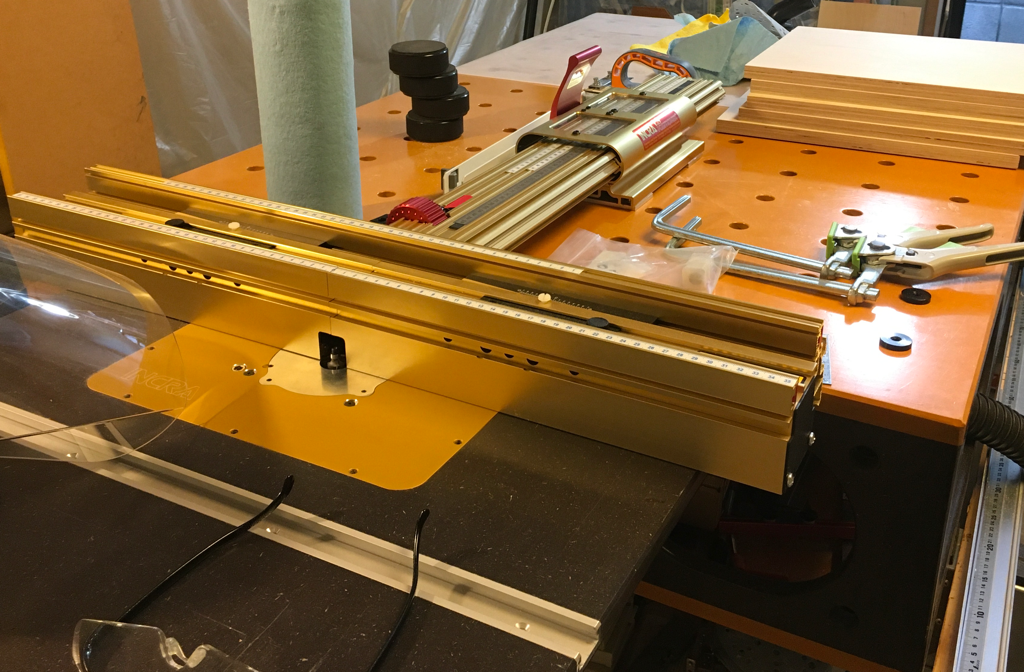
But as I've mentioned before, Makita uses a compatible track profile, and they make a router adaptor for using the guide rail for straight alignment. All I needed was to create some system of 32mm spaced holes and I was in business.
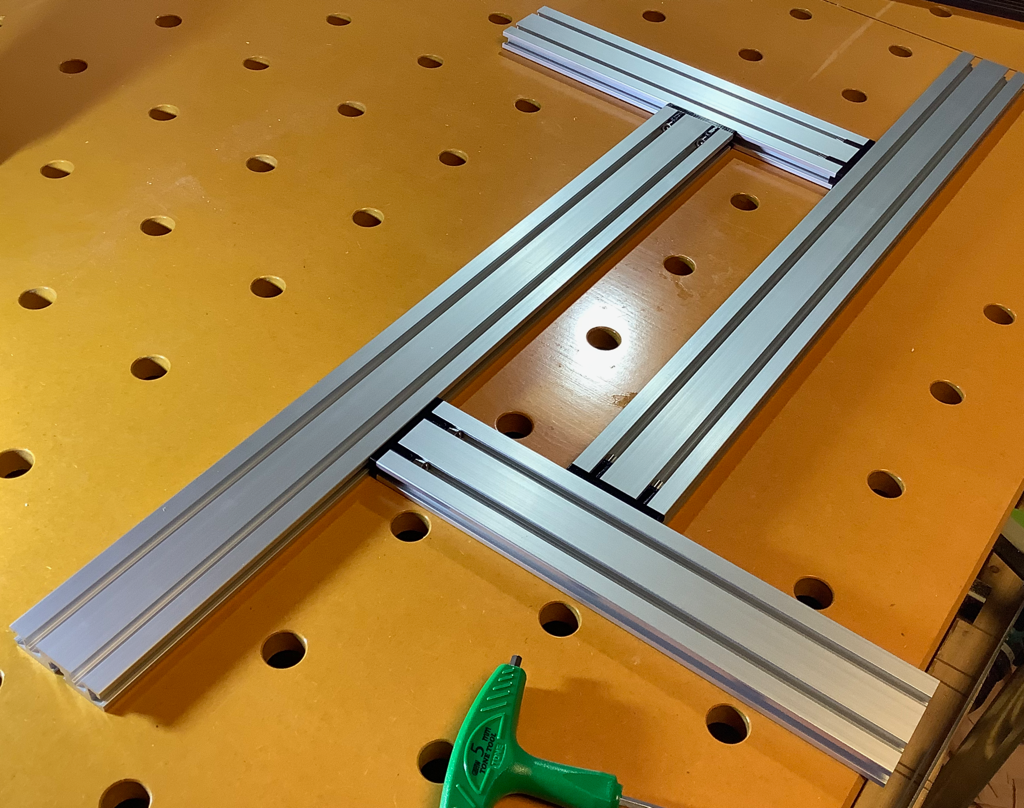
I was not crazy about the Idea of drilling holes in my expensive tracks (at the time Makita had yet to bring their track system here to Japan, it was US/EU only so I just had a few precious and expensive Festool Rails.) I had flown the router adaptor over from the states, and mocking everything up in Fusion 360, I could see that an inexpensive 20mm extrusion could be secured to the back rail of the guide rail, and provide the detents for the spacing.
I found a precision spring loaded
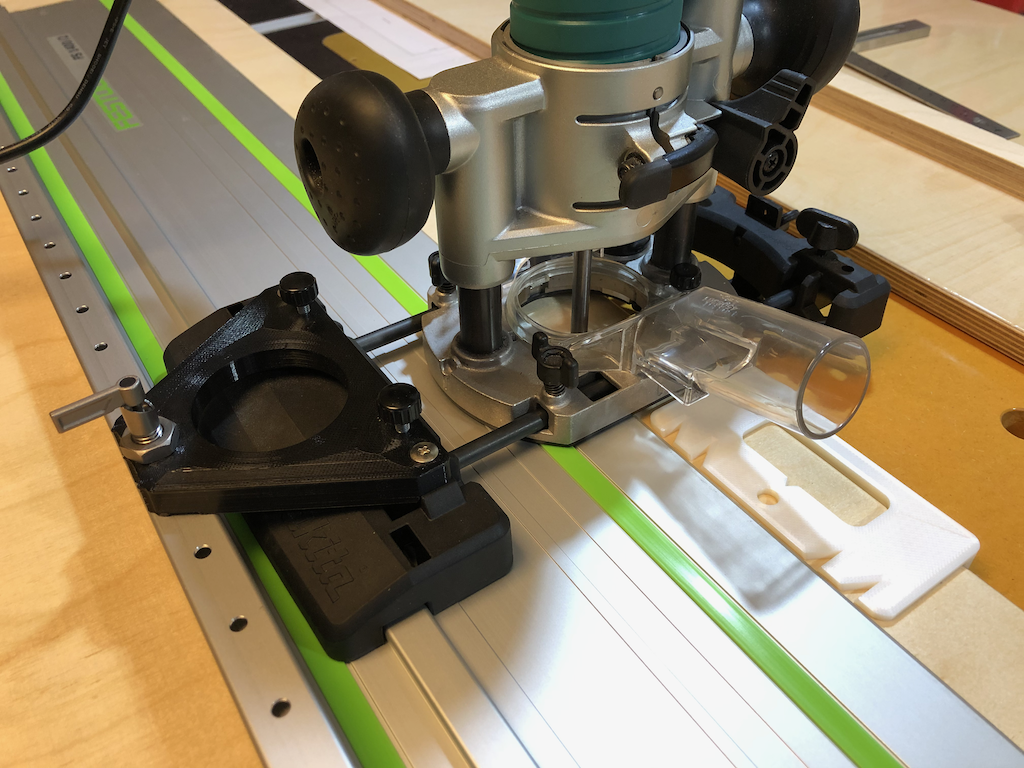
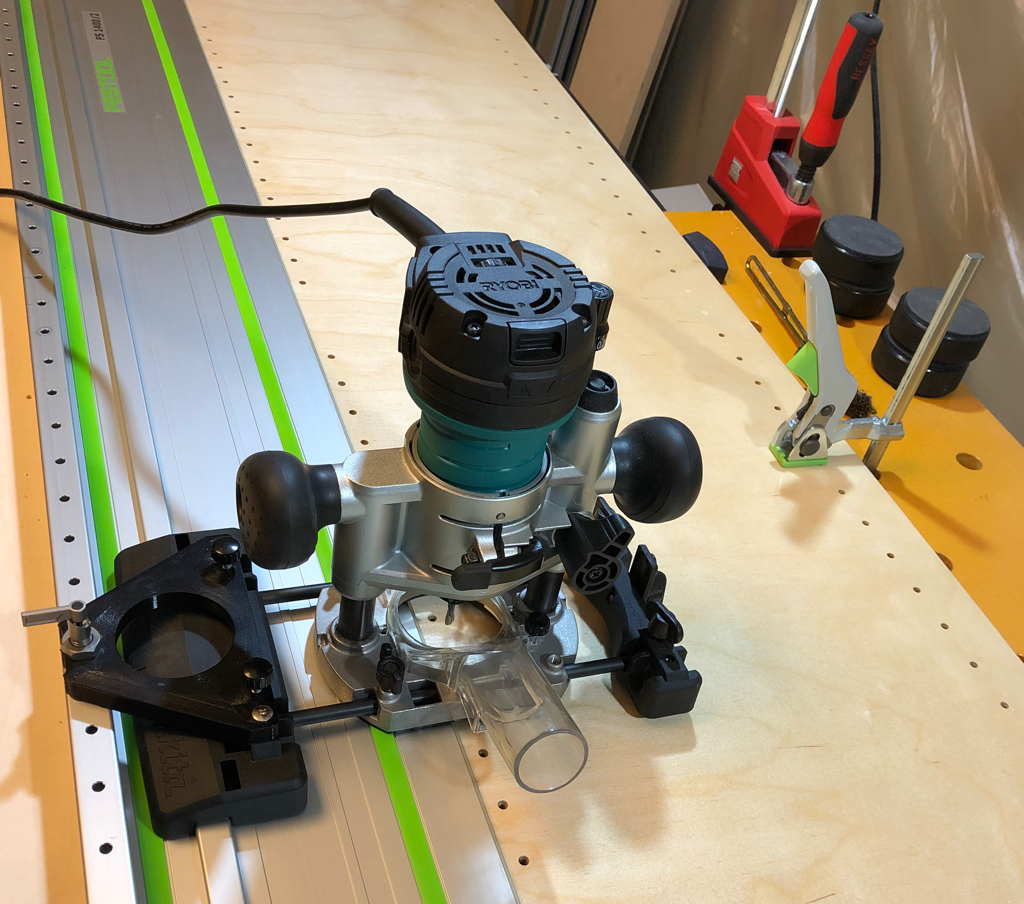
Indexing Plunger and 3d printed an adaptor that screwed to the existing mounting points of the Makita rail mount. That's the black triangular piece with the big round opening seen screwed to the top of the factory Makita guide.
The aluminum profile has 3 sides grooved, and one side flat. I used my mini-mill with a 4.9mm DLC drill bit and carefully drilled 3 holes, clamping it to my desk vice, then releasing and resetting the x-axis vice like an inchworm. I then used a 5mm reamer to get the holes to size, and chamfered them with my
Noga kit.
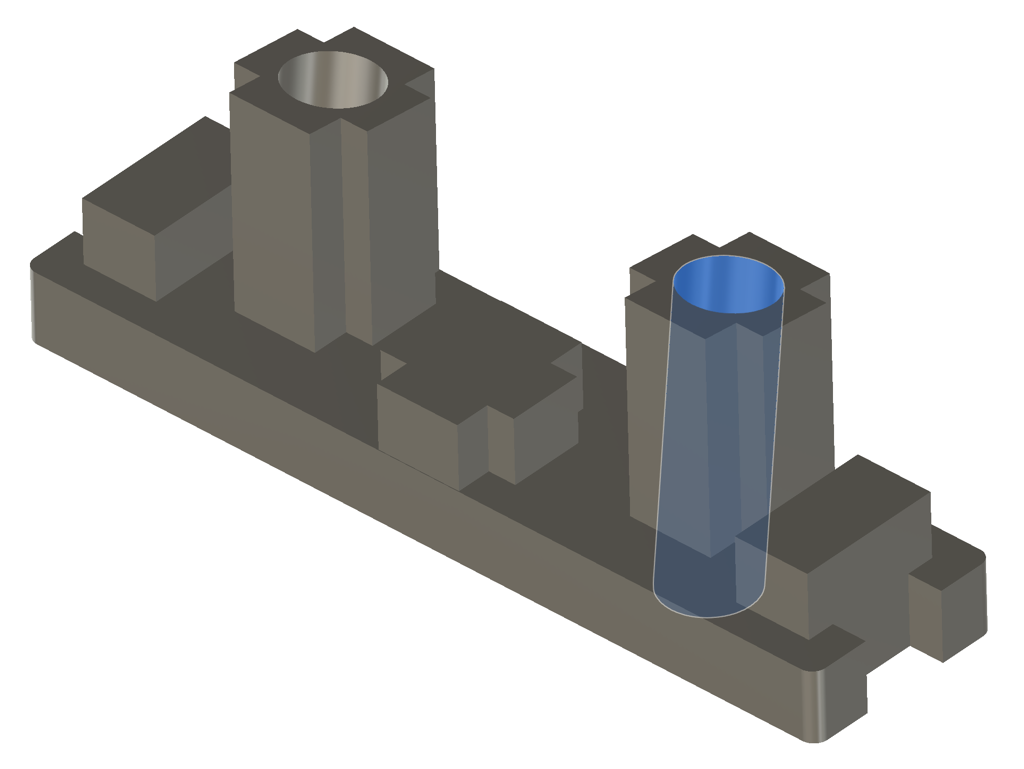
3d printed t-nuts with brass inserts connect the extrusion to the Festool guide rails, the screws are accessed from above with a few through holes drilled in the profile.
The only remaining issue was that my Makita 1801 router was a bit overkill for drilling little 5mm dowel holes. I had a
Ryobi TRE-60v trim router, which is a domestic market product. (The Ryobi name was leased to a different company in the US, they are not the same tools anymore.) But the Makita rail adaptor is designed for the two rail Makita plunge mount so I 3d printed a sleeve adaptor (the grey part) for the slightly smaller diameter Ryobi to fit snugly in the Makita plunge mount, and it works great! As much as I love my Makita tools, when I was shopping for the smaller trim router, the Ryobi just was a better design. Makita have subsequently released a very competitively featured 18v unit, but these high energy drain tools just make more sense to me to be corded. I can't see myself doing routing up on a ladder any time in the future, some things just make more sense as corded.
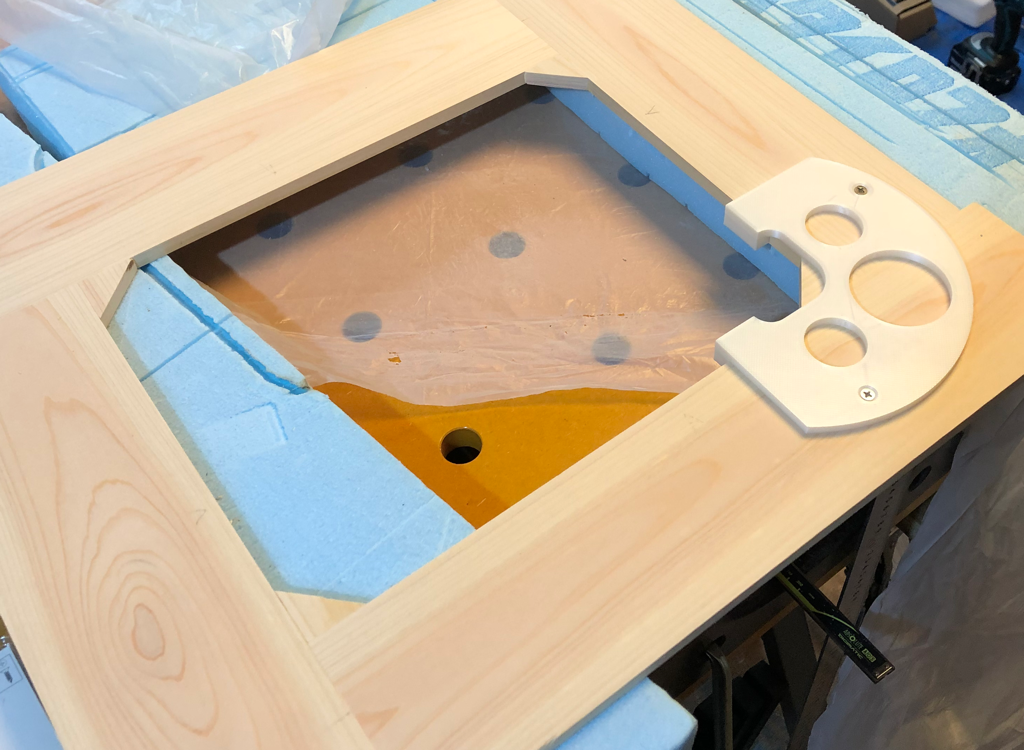
The white plate in the picture above allows me to align the guide rail and detents to the workpiece. I use a 1/4" to 8mm pin (part of a cone shaped guide alignment tool) mounted in the router, and the hole in the guide plate is offset 37mm from the edge and has notches at 16mm increments to achieve standard spacing.
To make the holes I'm using a
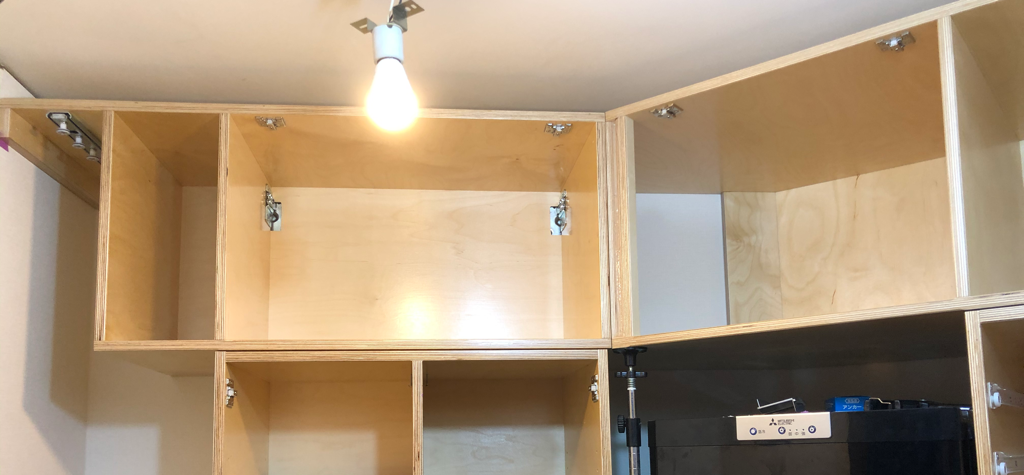
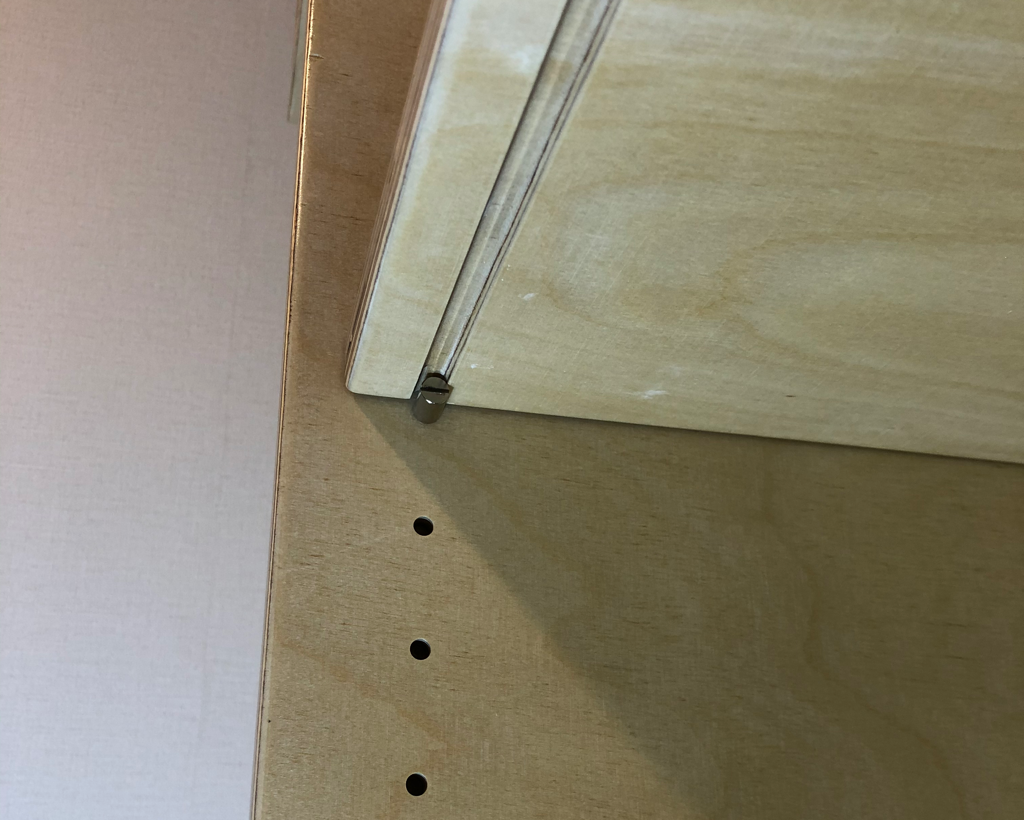
MLCS 5170 5mm downcut carbide bit. Because it is a down cut I need to peck at the holes to keep the burning minimized, but it makes a really clean hole. I made very faint touches to mark the hinge plate locations, I will drill those screw pilot holes by hand today.
Setup is time consuming, to get the rail aligned is not bad, but getting a short rail properly clamped on a longer piece is frustrating, nailing the hole alignment requires patience. I will add that both of these issues would be present using the Festool system, as it is designed to set the offset using an alignment block that mounts to the underside of the rail. That solution requires the rail to slightly overhang the reference edge of the workpiece, which in this instance would require 2 rails joined together (where you need to worry about the join being properly spaced) or one giant rail (more $$$)
The horizontal offset is much easier to dial in since the guide rail offset is not critical as long as it is parallel. The Makita adaptor uses two round rails that the router can traverse so the actual offset can be tuned easily, and the helper template for the critical 37mm spacing in the front makes that easy.
Festool uses a pair of removable, spindly looking arms to get the rail parallel and precision(?) spaced from the front of the workpiece, but I'm not sold on that as part of the solution. I'll continue to use this and update any workflow refinements, I'm always iterating things, I think I can improve the ease of setup. But for now just being thorough with my setup will suffice.
So, the verdict?
The Good:
The Festool system is $600-$700 assuming you own a compatible Festool router. I spent about $50 and can utilize all my existing rails and routers. My precision is really good, the index plunger snicks into place with a satisfying 'click' at every hole, and frees up with a gentle flick of my thumb. It feels solid as a rock, I was able to re-depth a row of under cut holes with perfect alignment and no ovalization.
The Bad:
Time consuming setup. No ability (with big pieces anyway) to just swap in new workpieces and have everything aligned. Festool rails are difficult to clamp on large surfaces (
Gecko may help?)
Rating:
★★★☆


 so that will need cleaning up as well.
 )
)