To avoid these ads, REGISTER NOW!

Tooling organization

OP
L

lilscorpion

Well-known member
Joined
Mar 15, 2010
Messages
3,599
Location
Colorado
like this, i think the stuff i used was king colorcore.
i am heading to my plastic place tomorrow and can ask them too. (i usually buy my full sheets of hdpe there.)

colorcore2.jpg


I found this after looking last night - Ge polymer shapes sells Colorcore (Made by Kings Plastics in Florida), Laird sells Poly Tone made by(Laminations in Ohio or PA), Polymer Industries ( Alabama) sells their "Sign Board", Compression polymers sells Poly Carve but was exiting the product line and surplusing their inventory mid 2006 (probably obsolete now). All seem fairly difficult to get in 3/4" thicknesses and even more difficult to get anything less than full sheets. None available on eBay and Woodcraft/Amazon sells three different colors in 1/2-inch thicknesses in 24x24. I guess do recall seeing it (tan-green-tan) last time I was there but forgot. I did find that one of King's new colors is black-yellow-black which is exactly what I was attempting. 1 sheet would go a long way. May be cost prohibitive but I'm going to call a few places today just out of curiosity. Thanks for the tip!
.
 
Last edited:
To avoid these ads, REGISTER NOW!

ilovevocs

Well-known member
Joined
Jun 26, 2009
Messages
1,966
Location
Toledo, Ohio
I was thinking the same thing about how it's drying. I wasn't able to put it in a sentence though so I'm glad you were able. Actually, today I went to Lowes and looked through the various epoxys and found that gorilla glue had the strongest holding power that was still clear out of all off them so I purchased a stick. I glued up two 24-inches long sections 3-inches wide and they were dry in about 3 hours. Dunno why I never tried an epoxy before, the dry time is way better than the melamine glue even in cold weather (likely because of the chemical reaction when mixing).

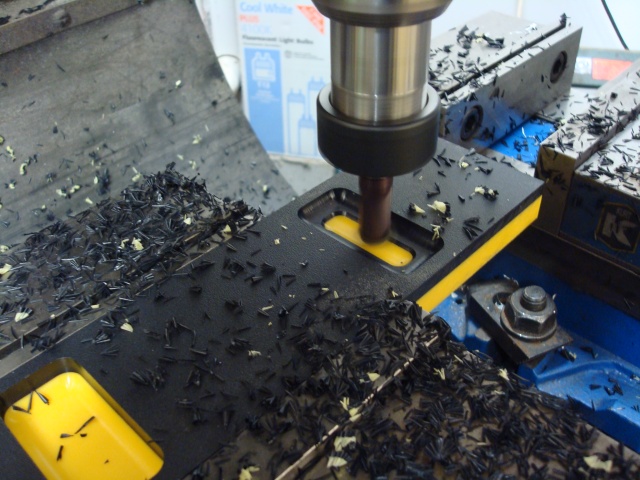
I really was off to a kick-a$$ start. I reduced the depth of cut per pass to .100 and kept the speed where it was (about 2200rpm).

SocketDrawerZC.jpg


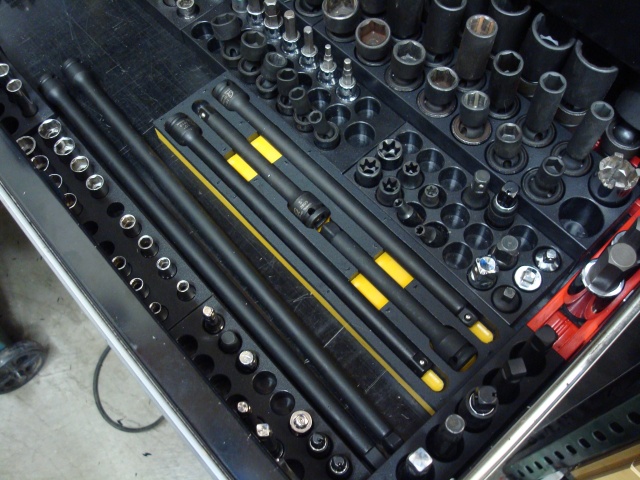
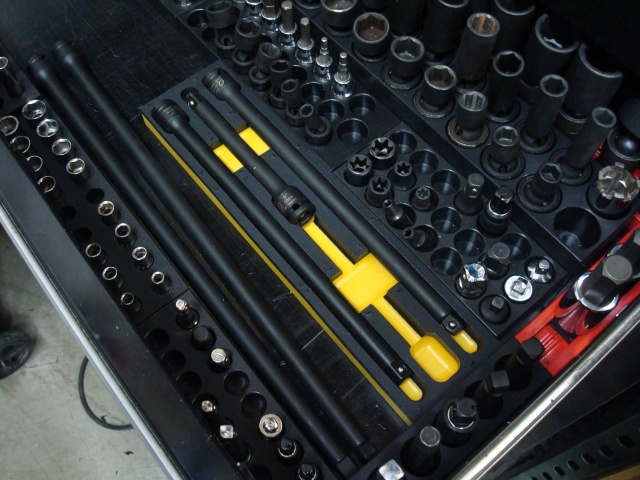
As soon as the cutter had to go deep enough where the 1/4-inch (black) HDPE was fully on the side of the end mill, it broke the top piece loose. It was looking really great too. So for shoots and giggles I decided to finish it no matter what so I could see it. Without any glue left bonding, I threw brads in at strategic locations to ensure it wouldn't shift. The brads did the trick really well however they were needed all over the damn place because of the number of spots where the material get's scarce. I don't like the look of the brads however it does give me an idea of what the finished piece will look like if I can work it out.

SocketDrawerZD.jpg


It really does add another dimension to the drawer and I can totally see how it will bring it to life. Looks neat when a tool is missing too.

SocketDrawerZE.jpg


One of my thoughts was that I might be attempting to do this two layer design on the wrong tray. This tray does have a bunch of really thin pieces that clearly are going to be difficult to hold down. Maybe this would be better for a socket tray or something else where there's much more material left after cutting (and between the pieces).

I have two more I can cut - one that's left over from my melamine glue attempt and the second from this round with the Gorilla Glue. At the recommendation of dladcock (about 10 or so posts earlier) I'm going to try to reverse the cutting direction from conventional to climbing. That may reduce the pressure but I don't know if it will make enough of a difference. I'm also going to try the fastener idea just in the corners to see if I can give the glue some help. Maybe that will be just enough to keep it from breaking loose in the first place. I keep thinking of the double sided tape thing and can't figure out how it would be any stronger than the glues except for one thing (that intrigues me), maybe it will be able to flex slightly and never offer that "break free moment". I may have to try it before i give up. Closer though. :rocker:

Nice work their. This is motivating me to get my Cnc mill operational. It's been sitting idol now for two years. :(
 
OP
L

lilscorpion

Well-known member
Joined
Mar 15, 2010
Messages
3,599
Location
Colorado
Nice work their. This is motivating me to get my Cnc mill operational. It's been sitting idol now for two years. :(

I know how you feel. Mine sat for a full 2 years after my last move. One day I found the motivation to dust it off and now I use it every weekend again. Get after it!! :)
 

paranoid56

Well-known member
Joined
Dec 18, 2008
Messages
1,596
Location
San Diego, Ca
i talked to my plastic place and they said something similar. i would have to get 2 sheets but had some neat colors and could order almost anything. as i was looking at something with green top and black bottom.
 
OP
L

lilscorpion

Well-known member
Joined
Mar 15, 2010
Messages
3,599
Location
Colorado
i talked to my plastic place and they said something similar. i would have to get 2 sheets but had some neat colors and could order almost anything. as i was looking at something with green top and black bottom.

Did they say what the sheet cost would be at 2 sheets? We're you looking at 3/4-inch or 1/2-inch thick?
 

paranoid56

Well-known member
Joined
Dec 18, 2008
Messages
1,596
Location
San Diego, Ca
i was looking at the 3/4" i got there right before closing and had to load up 3 sheets of hdpe for myself. i am talking to them again tomorrow to get more info.
 

cderalow

Well-known member
Joined
Nov 13, 2011
Messages
1,326
Location
Potomac, MD
why not machine the plastic in the desired shapes/forms first, then glue? other than the minor potential for having to hand finish if you don't line the pieces up perfectly?
 

paranoid56

Well-known member
Joined
Dec 18, 2008
Messages
1,596
Location
San Diego, Ca
why not machine the plastic in the desired shapes/forms first, then glue? other than the minor potential for having to hand finish if you don't line the pieces up perfectly?

for me, doing that will take twice the time and the potential for it not being fitted correct. as that would be two machine steps now. i did see they have some HDPE glue.
 
OP
L

lilscorpion

Well-known member
Joined
Mar 15, 2010
Messages
3,599
Location
Colorado
for me, doing that will take twice the time and the potential for it not being fitted correct. as that would be two machine steps now. i did see they have some HDPE glue.

Exactly. More setups is more time. Though I enjoy the process, years of manufacturing parts makes me want to optimize return for effort. If a little expense to get the material pre-glued allows now to cut full speed at full depth of cut, it'll be worth it. A one op, one setup tray may take me 10 minutes now. Two ops, two setups would take more than twice as long and possibly end in double the overall waste risk.
 

ghiaben

New member
Joined
Jul 5, 2009
Messages
3
Hello,
I have just read the entire 15 pages of this thread and as many others have said, I'm really impressed and inspired by your ideas and work. I have a few random questions:

1-I'm interested to see how you keep your stock of wood-metal-plastics. I just tackled an overhead storage area for various wood and other stuff and after reading this whole thread, I'm really curious on how you do it.
2-As others have said, you make owning a milling machine very attractive! I was wondering if you would share other projects you've done with it other than your awesome storage trays.

Thanks again for sharing. It's really entertaining!

Ben
 
OP
L

lilscorpion

Well-known member
Joined
Mar 15, 2010
Messages
3,599
Location
Colorado
Hello,
I have just read the entire 15 pages of this thread and as many others have said, I'm really impressed and inspired by your ideas and work. I have a few random questions:

1-I'm interested to see how you keep your stock of wood-metal-plastics. I just tackled an overhead storage area for various wood and other stuff and after reading this whole thread, I'm really curious on how you do it.

Since I don't have a lot of space, I try to limit the amount of materials I have on hand at any one time and buy specifically for projects if possible. Sometimes deals at larger quantities makes it difficult to buy in small amounts so I stick it where it fits. Larger sheet goods I keep next to the truck length-wise. I've kept wall space so I can store quite a bit here.

materialB.jpg


Any aluminum I have usually gets tucked back in a 'groove' between my chests and my bench.

materialC.jpg


Drops usually get stuck in this drawer which happens to be my go-to when I need a little of something.

materialD.jpg


I have some space above all of my cabnets (but below the shelving that's suspended from the roof. I've been known to tuck larger sheet drops up there until I either forget about them or find them when I'm scouring for "just a little more."

materialE.jpg


Somehow my plastic just took over this drawer. It started with a few drops and then, before I knew it, I was removing other items to add more.

materialA.jpg


One my saw cart there's a gap between the saw cabinet and the drawer cabinet. Thinner wood drops have started to accumulate. Over time they tend to get used up but the pile cycles slowly.

materialF.jpg


Taller stuff is in one corner at the front of the garage. Anything 6' to 11' 6" would go there. If I had more space I'd probably have a rack like I used to have in my shop. Truth is, I just can't give up the space with how little I have. I no longer keep tubing around. In the last garage I used to have 21' lenths of 1" through 2" tubing hanging on a rack that I built but since the move I've not really been doing any tubing work. I imagine that some day I'll bust out the tubing bender again but I haven't been interested for years (nor had a project that would require it).

2-As others have said, you make owning a milling machine very attractive! I was wondering if you would share other projects you've done with it other than your awesome storage trays.

Thanks again for sharing. It's really entertaining!

Ben

I have a mess of projects I've done on the mill, some are more complicated than others. I'll see if I can dig up some pictures. For a stretch I didn't really take many which is a real shame. I built a huge hydraulic press on the mill which is no longer in my possession. That would have been a fun project to share. I'll look for some mill specific ones.

How's the furnace installation coming along? :D
LOL...if I didn't know any better I'd say you're working for my wife. Since it's starting to warm up I've decided that I'll put the heater in this summer for next winter. I actually went down to the hardware store and got what I needed but had problems working around the truck...so the truck's gotta get rolling again. I'm going to take a week off shortly and knock out what's left on the truck. After it's done, the heater is going in.
 
OP
L

lilscorpion

Well-known member
Joined
Mar 15, 2010
Messages
3,599
Location
Colorado
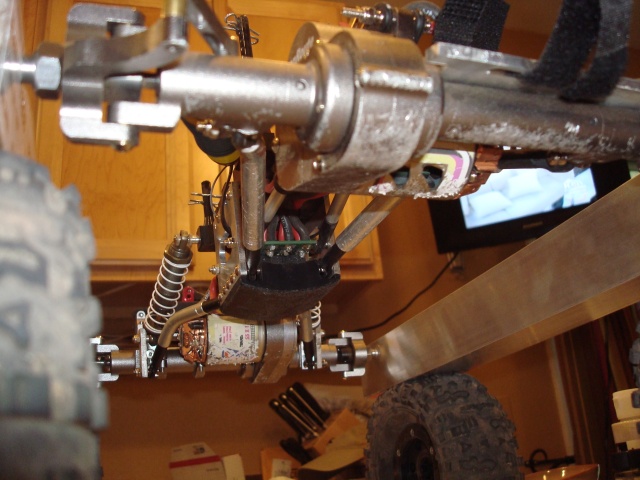
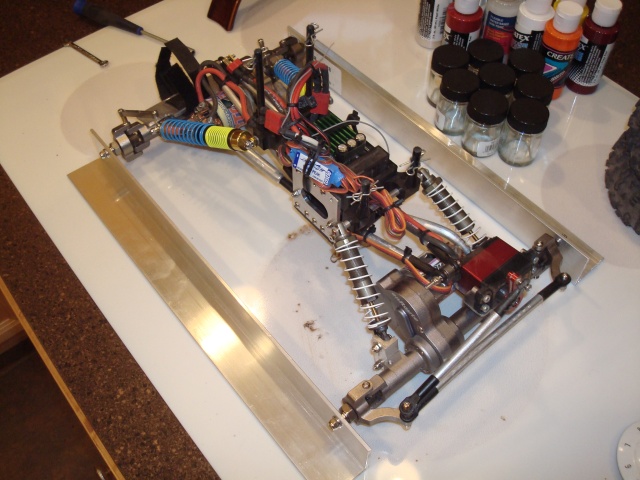
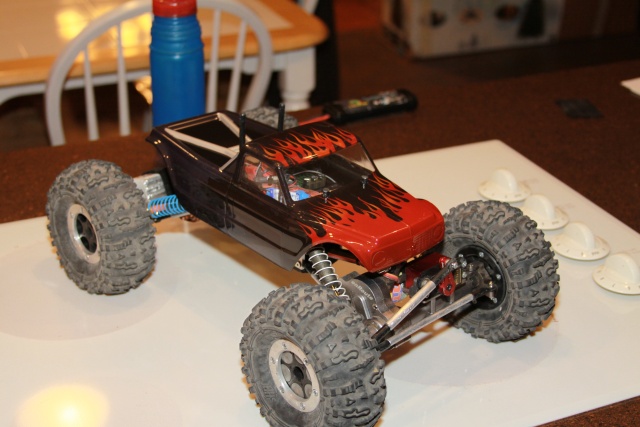
So I looked back for mill projects and ran across these pictures. About 3 years ago my son and I got in to the RC Rock Crawling thing. A couple of the local hobby stores would have rock races on Friday and Saturdays and we'd go down and complete. At the time people mostly bought kids and occasionally someone would try to fabricate one from scratch. Usually a function of saving money more than to really fab one themselves. In my case I figured I could make it exactly as I wanted and save money at the same time.

I started with the skid and by boring a piece of 12" delrin I had on the lathe.

RcChevyB.jpg


I parted it off and then used a sawzall to cut in into chunks.

RcChevyC.jpg


Chucked it up in the vise

RcChevyD.jpg


and machined the sides flat which I'd use for reliefs where I could attache the side plates.

RcChevyE.jpg


Then I machined the side plates out of 1/8-inch aluminum and drilled the holes to match on the skid. I machined a flat square piece of 1-inch thick delrin for the chassis itself and then sank some aluminum pieces of tubing in the holes where the shocks would mount to strengthen it up a little.

RcChevyEE.jpg


The bottom of the skid also had mounts front and rear that I attached control arms to. The natural curve of the skid, and the nature of plastic, allowed it to slide easily along rocks though it did hang down a little.

RcChevyF.jpg


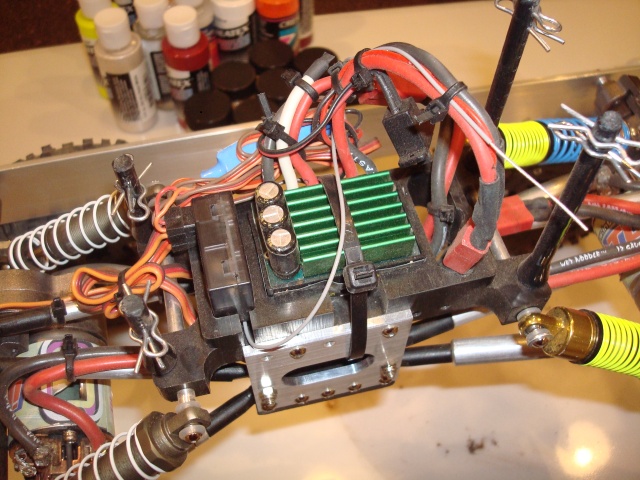
The top part of the chassis was machined to match the electronics that needed to be mounted into it. Everything had it's place and locked nicely to where it needed to be. This picture shows a zip-tie holding in the speed controller however I ended making some small clamps for it a little while later. The wires were a bigger hassle than the electronics themselves.

RcChevyG.jpg


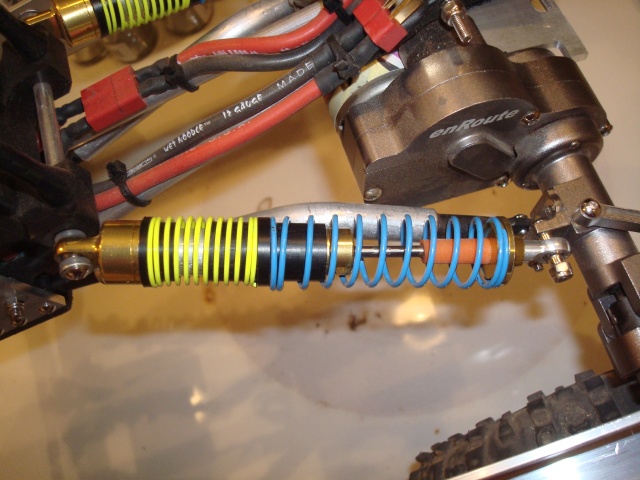
I took a pair of the aluminum shocks I had a machined the threads off the body so I could make little delrin plastic spring retainers that allowed me to use the shock as a dual rate shock. This allowed for some crazy compression setups. The little orange piece on the shock shaft is gas line used as a bump stop so you can adjust the hard stop as well.

RcChevyH.jpg


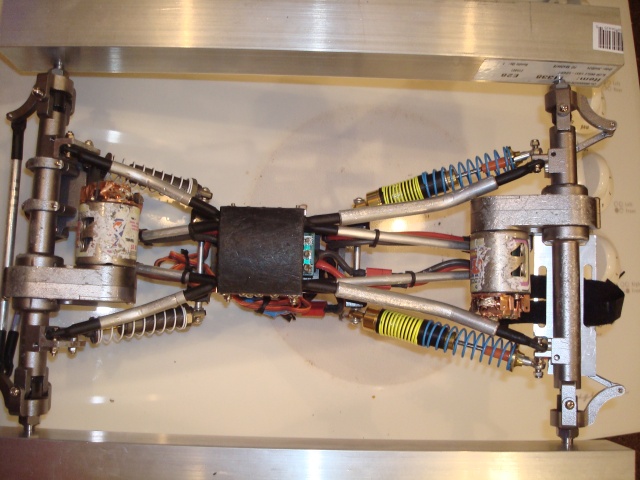
Here's a bottom look at the buggy (after a few races). To the right is a battery plate I machined out of 1/8-inch aluminum. All of the links were tapped on the lathe and then the lowers bent for additional clearance. All of the shock mounts on the axle side were machined on the mill using extremely small aluminum angle.

RcChevyI.jpg


Here you can see a better shot of the front raised shock mounts (axle side) and the chassis from the top. I had to rotate the motors up and to do so I had to do some minimal machine work to the gear housings themselves but it almost didn't count it was so trivial.

RcChevyJ.jpg


Here it is finished with a fresh coat of paint which was incidentally my second airbrush project. I've had a little more practice since then.

RcChevyK.jpg


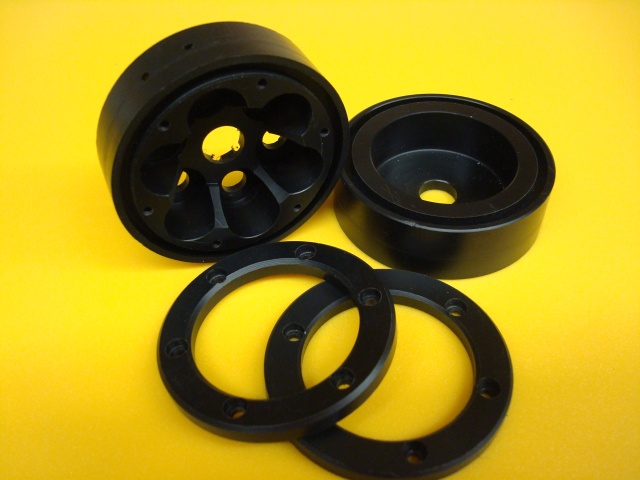
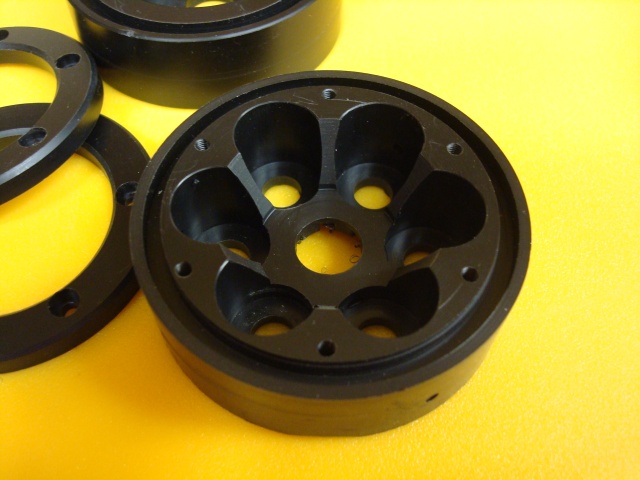
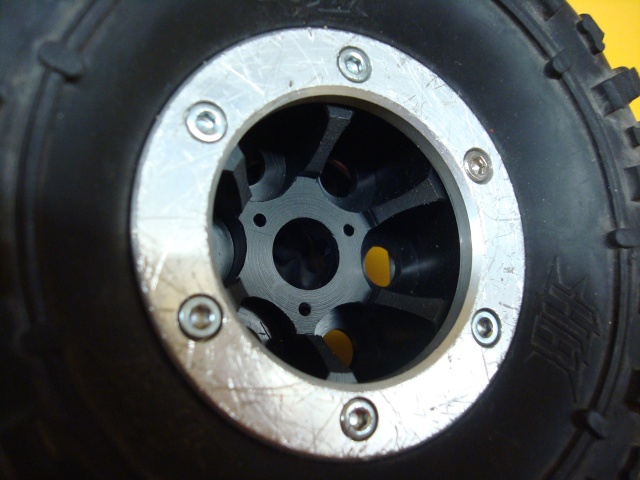
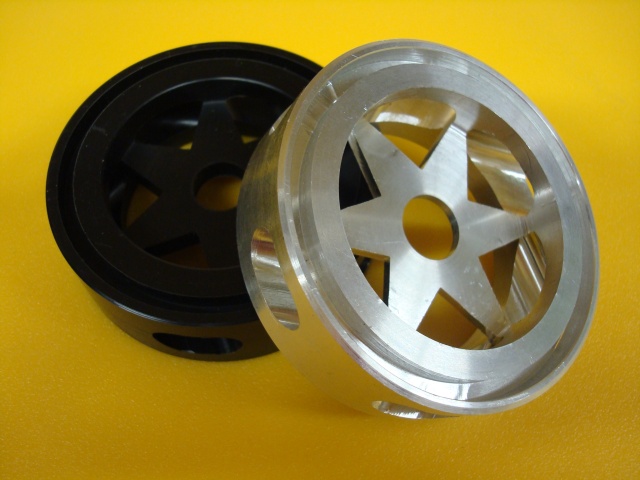
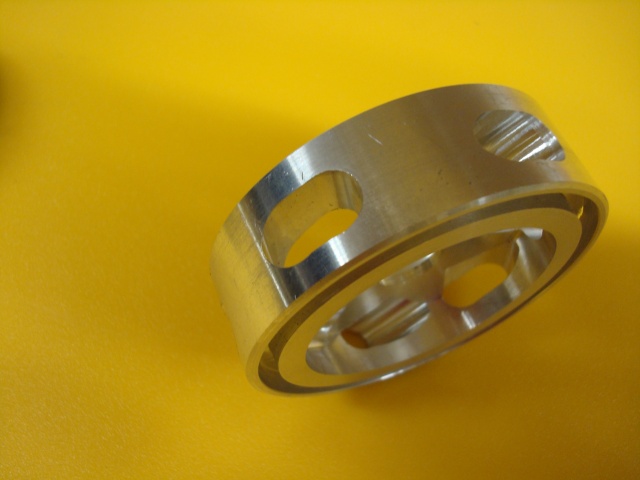
All of the wheels were made using the Lathe and the Mill. The lathe was used to macine the blanks including the tire bead groove. The holes were all drilled/milled on the mill. Couple of ops here so I try to make a bunch of them when I do.

RcChevyL.jpg


The larger holes are not thru-machined so that I can add large steel dowels to the wheels to add weight. Adding weight in the front end helps it climb better because it helps get more weight over the front tires.

RcChevyM.jpg


I machine the beadlock rings out of both aluminum and plastic. I use the plastic on the inside and the aluminum on the outside because it can handle the rash a little better...and adds to the bling factor.

RcChevyN.jpg


I've played around on the mill and made a few different designs in both plastic and full aluminum wheels. These fronts look like 6-spoke.

RcChevyO.jpg


I got the look by off-set machining down into the center of the wheel and then rotating it 60 degrees on the indexing head. Sometimes I can't stop thinking about something so I just have to do one or two to get it out of my head. Don't think I ever made a full set.

RcChevyOO.jpg
 
OP
L

lilscorpion

Well-known member
Joined
Mar 15, 2010
Messages
3,599
Location
Colorado
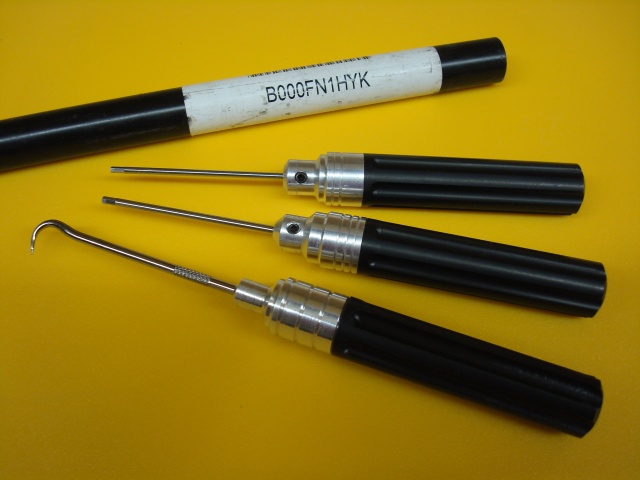
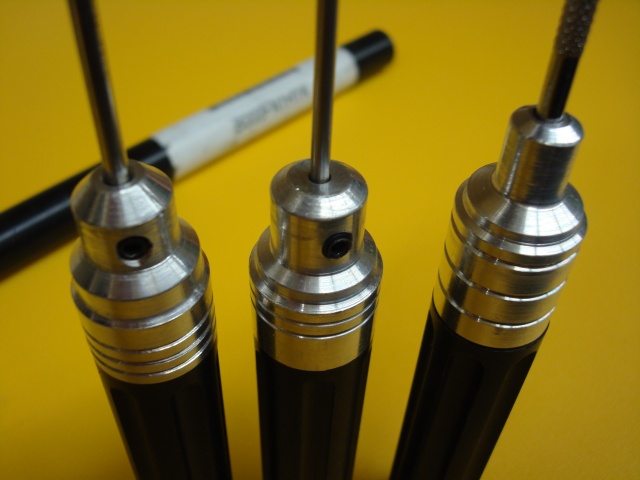
Saw a set of micro-hex screw drivers at one of the RC Rock Races and really wanted a set. I was going to make the handles out of aluminum (that's what everyone else had) but during another project I noticed that the 3/4-inch delrin would be kinda slick. I made one for each of the common hex sizes and then had a third I tapped so I could use some picks I had that had threaded shanks.

DelrinToolsA.jpg


To make then durable I decided to make the heads of the handles out of aluminum so I could tap them and put small set screws in them to retain the shafts.

DelrinToolsAA.jpg


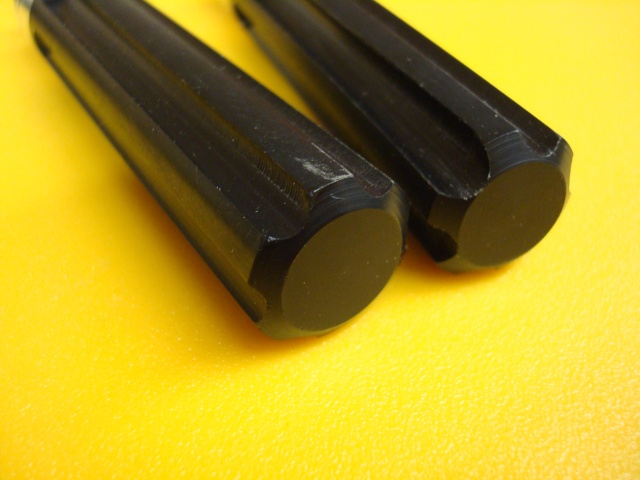
An 1/8-inch ball mill was used to cut the grip into the handles and then tapered them to finish them off. I got a lot of compliments on them but now take them for granted.

DelrinToolsAAA.jpg
 
OP
L

lilscorpion

Well-known member
Joined
Mar 15, 2010
Messages
3,599
Location
Colorado
The mill is super useful for stuff like this. I needed a die holder to hold a goofy die I ended up with in my press-brake. I no longer have the brake nor the tooling that this holder was once made for however I don't have the heart to pitch it and no one would want to buy it so it sits in the drawer more as a trophy.

DieHolder.jpg


Dunno if you have ever put braided steel lines in a hot-rod before or not. About 6 months ago I got the 4L80E installed in my 73 Chevy pickup and used braided lines between the ****** and the radiator. I wanted those cool aluminum line spaces that they sell but am too cheap to buy them. Instead I spent 4 hours making 2 dozen of them for less than $20. No one will likely notice after they're installed but I know.

LineSeparators.jpg
 
OP
L

lilscorpion

Well-known member
Joined
Mar 15, 2010
Messages
3,599
Location
Colorado
I wanted a winch fairlead to use with a synthetic rope I had but I had this idea - I'd mount the fairlead from the back so I wouldn't have to see it on the front of the bumper. Instead, it would be inside. I machined a rectangle in the face of the bumper and them made this on the mill for it.

FairleadA.jpg


Here's a better shot - the exposed part is raised 3/16-inch from the rest of the fairlead so it can fit flush in the face of the bumper. I was told that the 1/2-inch radius was too small however I never ended up having a problem (though to be fair, I only winched on rare occasions).

FairleadB.jpg


The back had machined pockets for the nuts so I wouldn't have to put a wrench on them to get them tight...just a zip with the impact.

FairleadC.jpg


Worked slick and fit perfectly with the 1/2-inch nuts and kept the nut itself away from the synthetic rope on the drum (the real concern really).

FairleadD.jpg


Another thing I've used the mill for is when I'm wanting to space holes quickly an easily. Even if I don't cut the main hole, I'll use it to get the spacing what I call DOBA (Dead-on Balls Accurate). I did this with the DRO before I converted to CNC. I know a few people who hate using their DRO but I really liked mine. Mark hole #1. Zero DRO. Move X-axis 1.250-inch and drill a pilot hole, move it to 2.500 and drill, again to 3.750 and drill...you get the routine. Not CNC speed-wise but the results are the same.

ColletRack.jpg
 
To avoid these ads, REGISTER NOW!
OP
L

lilscorpion

Well-known member
Joined
Mar 15, 2010
Messages
3,599
Location
Colorado
nice, i cant find any of my other pics, but i also have built a few with FJ40 bodys. usually based off the TLT axles.

Nice view! I've found working on the little buggies to be very therapeutic for some reason and when you drive them it's even better. There's nothing like getting them out and running them on real rocks either. There's a great spot up near Red Rocks Colorado where there are these huge formations that are perfect for RC wheeling. Think we're going to dust off the buggies and go back there this summer. Post up some pics of yours if you find them. I like the realistic looking ones (scale). Mine's kinda a freakshow with the MOA's but it climbs good.
 

galute

Well-known member
Joined
Jun 28, 2010
Messages
629
Location
Bald Knob AR
I have fused hundreds of pieces of HDPE pipe together. We always use just heat and high pressure, no glue and you can't pull them apart. I was just wondering if you tried milling a few thousands off of the two mating surface. Then wipe them down with alchahol or acetone to clean them then apply your glue and clamp. You need about 300 psi clamping force. Also would help if you could find a glue that would slightly melt the surfaces kinda the way PVC glue melts PVC pipe. Might work.
 
OP
L

lilscorpion

Well-known member
Joined
Mar 15, 2010
Messages
3,599
Location
Colorado
I have fused hundreds of pieces of HDPE pipe together. We always use just heat and high pressure, no glue and you can't pull them apart. I was just wondering if you tried milling a few thousands off of the two mating surface. Then wipe them down with alchahol or acetone to clean them then apply your glue and clamp. You need about 300 psi clamping force. Also would help if you could find a glue that would slightly melt the surfaces kinda the way PVC glue melts PVC pipe. Might work.

Huh...wonder what PVC glue and primer would do? You're right, if they melted together even slightly, they'd be fused together and become one. I would think I'm getting 300 PSI if not more out of the wood clamps but don't really know.
 

paranoid56

Well-known member
Joined
Dec 18, 2008
Messages
1,596
Location
San Diego, Ca
I have fused hundreds of pieces of HDPE pipe together. We always use just heat and high pressure, no glue and you can't pull them apart. I was just wondering if you tried milling a few thousands off of the two mating surface. Then wipe them down with alchahol or acetone to clean them then apply your glue and clamp. You need about 300 psi clamping force. Also would help if you could find a glue that would slightly melt the surfaces kinda the way PVC glue melts PVC pipe. Might work.

being that you know what you are doing, how would somebody go about doing this in their garage?

scorop, do you by chance do a lot of off roading? rockcrawling?
 

galute

Well-known member
Joined
Jun 28, 2010
Messages
629
Location
Bald Knob AR
This is the way we fuse pipe. We have hydraulic machines for this. All steps are done to the two mating surfaces at the same time.

First clamp the pipes in the machine.
Mill the ends off back to clean smooth surfaces.
wipe them with alchohal or acetone to make sure no oils are left on them.
put a 450 degree hot plate in and heat both surfaces till they begin to form a melted bead around the edges. Takes about a minute.
Remove hot plate and stick the two pieces together and hold under 300 psi till cool. Takes about 15 minutes.
Done, they will not come apart.

You would have to figure out a way to heat the two surfaces evenly then clamp them together instantly and hold them till they cool. They might be a real pain to do in a garage but I'm sure it could be done. That's why I suggested milling the surfaces to get them clean then glueing and clamping them under higher pressure. I'm not sure if that would work but it'd be worth a try.
 
OP
L

lilscorpion

Well-known member
Joined
Mar 15, 2010
Messages
3,599
Location
Colorado
scorop, do you by chance do a lot of off roading? rockcrawling?

Not anymore but I did there for quite a few years. The offloading is what led to the founding of the off-road manufacturing company I opened less than 10 years ago and the primary reason I got into metal fabrication and the associated machines. Now I do what I can to vent my creative juices that get backed up from time to time. The RC thing was a cool hobby because full size suspension design applies.
 
OP
L

lilscorpion

Well-known member
Joined
Mar 15, 2010
Messages
3,599
Location
Colorado
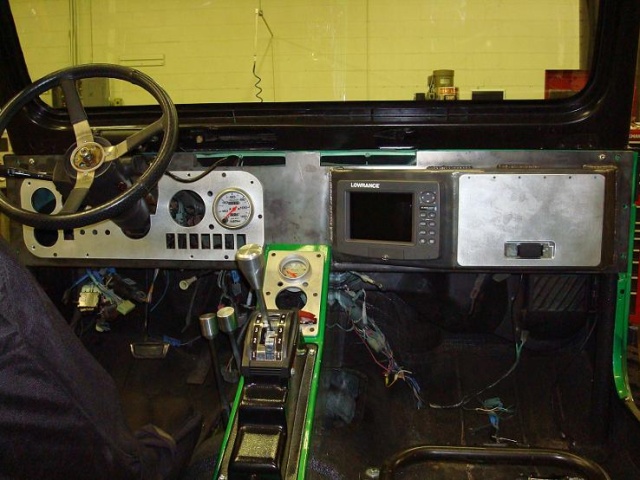
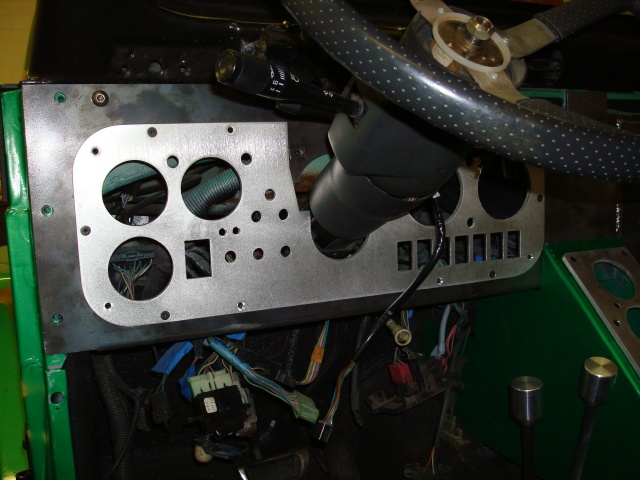
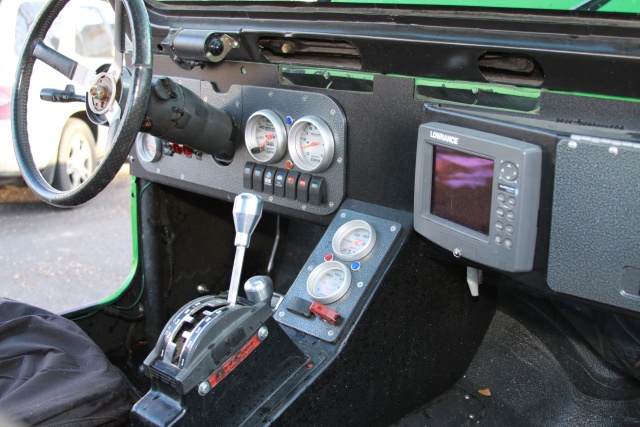
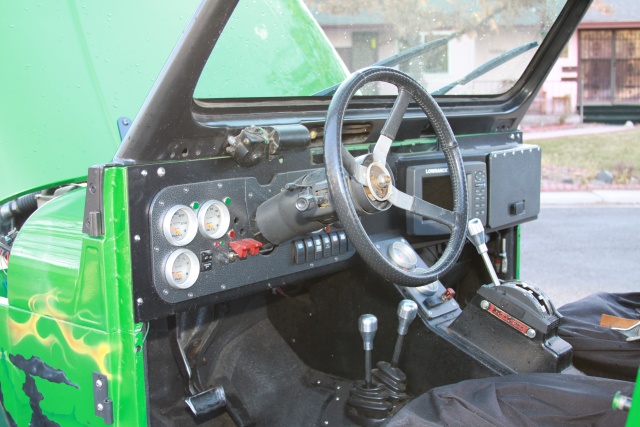
Here's a sample of some fill size fabrication on one of my project jeeps. I wanted a instrument cluster that was a little different than what most typical jeeps had. I made the main panel out of steel but then the gauge clusters out of a 1/4-inch piece of 6061 AL. The glove box retained the factory latching mechanisms so I had to machine it to accommodate them for fitment and depth.

YJDashE.jpg


Both of the gauge clusters (center console and drivers instrument) had to be machined heavily on the back to get everything to fit correctly. I retained the factory headlight switch and added rockers for all accessory control. What started out as a simple gauge cluster turned into a 20-some hour machining project. The rocker switches required 1/8-inch depth, the headlight switch had a goofy mounting bracket, as well as some reliefs on the back of it for clearance of some of the bracing. Because I only made one, I did all of it manually so I wouldn't make any mistakes.

YJDashF.jpg


As with most fabrication projects, in and out many times to get everything just right. Then I had it double powder coated (wrinkle grey with clear over the top).

YJDashD.jpg


And the driver's side view

YJDashC.jpg


Here's one of my favorite pics of all times because of the memory it brings. My son is completely OUT, I'm about to hammer down, and a defective rear output yolk on the atlas gives way. My son woke up after the bang, glanced over at me, and said "Did you break it dad?" Priceless.

YJOCG07.jpg


Broke. The guys at Atlas were quick to ship a replacement and I made the next event a few days later.

YJOCG07B.jpg


There isn't a better wheelin' buddy out there.

YJOCG07C.jpg
 
Last edited:

tinkergeek

Well-known member
Joined
Dec 26, 2012
Messages
107
Really interesting thread, particularly for non-machinists like me. All sorts of ideas came to mind. It sounds like other folks find it fascinating too. Wanted to toss out some stray ideas. The following links might lead interesting places.

While the HDPE material was less expensive than the socket trays, it may still be too expensive for some folks or for experimenting. Maybe some of the following would make it possible for novices to try out projects?

Here are some links from Instructables about how to make your own HDPE material. (No, haven't tried it, but a pretty neat DIY angle.)

Making Blocks out of HDPE milk jugs (used to try out CNC)
http://www.instructables.com/id/Making-Blocks-out-of-HDPE-milk-jugs/

Interesting variation - use bottle tops or other containers for color. It suggests that you should be able to color the HDPE. The varigated example may be useful for toys, etc.

How to recycle HDPE (milk bottles and caps) into usable sheet material
http://www.instructables.com/id/How-to-recycle-HDPE-milk-bottles-and-caps-into-u/

If you haven't heard of Instructables it has many guides to building an at- home CNC even if it is not as industrial strength. Lots of projects for little kids as well as big kids at heart.

Have any machinists have considered making a kiddy version of a bridgeport/milling machine - kind of like starter wheels for their kids or the folks that want to try machining but can't yet afford big machines. Or something like this may already exists...hm HF?

CNC seems to be subtractive in the way machining/milling is. For another approach has anyone tried 3-D printing usng similar materials but an additive approach? DIY 3-D printer plans are also available from Instructables and other sites such as Make Magazine.

Seem to have spun off a few too many topics, guess you can tell we all like this thread for many reasons. Thanks.
 

therealjakeg

Well-known member
Joined
Dec 27, 2008
Messages
202
Location
AZ
HDPE is bonded together best by fusion, both materials must be heated to fuse for a true bond. We use a **** fusion process in the gas industry to connect longer lengths of pipe.
 

k-os

Well-known member
Joined
Dec 29, 2012
Messages
995
Location
WI
put a 450 degree hot plate in and heat both surfaces till they begin to form a melted bead around the edges. Takes about a minute.
Remove hot plate and stick the two pieces together and hold under 300 psi till cool. Takes about 15 minutes.
Done, they will not come apart.

We use this same method of hot-plate welding at work for use in coolant and oil tanks.
 
OP
L

lilscorpion

Well-known member
Joined
Mar 15, 2010
Messages
3,599
Location
Colorado
Really interesting thread, particularly for non-machinists like me. All sorts of ideas came to mind. It sounds like other folks find it fascinating too. Wanted to toss out some stray ideas. The following links might lead interesting places.

While the HDPE material was less expensive than the socket trays, it may still be too expensive for some folks or for experimenting. Maybe some of the following would make it possible for novices to try out projects?

Here are some links from Instructables about how to make your own HDPE material. (No, haven't tried it, but a pretty neat DIY angle.)

Making Blocks out of HDPE milk jugs (used to try out CNC)
http://www.instructables.com/id/Making-Blocks-out-of-HDPE-milk-jugs/

Interesting variation - use bottle tops or other containers for color. It suggests that you should be able to color the HDPE. The varigated example may be useful for toys, etc.

How to recycle HDPE (milk bottles and caps) into usable sheet material
http://www.instructables.com/id/How-to-recycle-HDPE-milk-bottles-and-caps-into-u/

If you haven't heard of Instructables it has many guides to building an at- home CNC even if it is not as industrial strength. Lots of projects for little kids as well as big kids at heart.

Have any machinists have considered making a kiddy version of a bridgeport/milling machine - kind of like starter wheels for their kids or the folks that want to try machining but can't yet afford big machines. Or something like this may already exists...hm HF?

CNC seems to be subtractive in the way machining/milling is. For another approach has anyone tried 3-D printing usng similar materials but an additive approach? DIY 3-D printer plans are also available from Instructables and other sites such as Make Magazine.

Seem to have spun off a few too many topics, guess you can tell we all like this thread for many reasons. Thanks.

Very interesting. I've been on instructables before but never run across those threads. Cool read. The kind of stuff that people come up with. Not sure I could get away with doing it in the foreman grill (meaning I'd never live to tell about it).
 
OP
L

lilscorpion

Well-known member
Joined
Mar 15, 2010
Messages
3,599
Location
Colorado
HDPE is bonded together best by fusion, both materials must be heated to fuse for a true bond. We use a **** fusion process in the gas industry to connect longer lengths of pipe.

What does a hot plate look like? Does plastic get all over it when it melts or does it just get it to the point where it's really warm and not a liquid mess?
 

k-os

Well-known member
Joined
Dec 29, 2012
Messages
995
Location
WI
What does a hot plate look like? Does plastic get all over it when it melts or does it just get it to the point where it's really warm and not a liquid mess?

Usually a teflon sheet is used between the actual hot-plate and the parts.
It doesn't melt them enough to cause them to start drooling, just enough that the two parts can bond on the molecular level and cross-link when they're pressed together.

Here's an over-head image of the typical setup. The middle hot plate heats up and the two parts are moved in to heat the weld joint. Once they're heated the part plates pull away slightly and the middle hot plate is pulled back. The two part plates are then pushed together to bond the parts.
hot-plate-weld-tooling-1.gif


You may be able to do something similar with a propane torch and heating the two pieces before putting them in a press/clamping.
 
OP
L

lilscorpion

Well-known member
Joined
Mar 15, 2010
Messages
3,599
Location
Colorado
Usually a teflon sheet is used between the actual hot-plate and the parts.
It doesn't melt them enough to cause them to start drooling, just enough that the two parts can bond on the molecular level and cross-link when they're pressed together.

Here's an over-head image of the typical setup. The middle hot plate heats up and the two parts are moved in to heat the weld joint. Once they're heated the part plates pull away slightly and the middle hot plate is pulled back. The two part plates are then pushed together to bond the parts.
hot-plate-weld-tooling-1.gif


You may be able to do something similar with a propane torch and heating the two pieces before putting them in a press/clamping.

Interesting, i always assumed that plastics could all be joined in a way similar to PVC but I had no idea it was so high-tech. Kinda cool to know how its actually done. On a small scale, with a little trial and error, I should be able to get close. I probably don't need a perfect bond to do what I'm wanting to anyway. I'll save this idea and give it a crack at some point. Thanks.
 

ghiaben

New member
Joined
Jul 5, 2009
Messages
3
Once again, thanks for sharing all your projects. I'm drooling and fired up to get my garage organized and projects finished!

Ben
 

newbirdhunter

Member
Joined
Feb 1, 2013
Messages
15
Just finished reading all 16 pages and my head is spinning. Thank you lilscorpion for sharing your ideas and skills. I joined GJ specifically to get ideas on organizing my garage (read: hanging the bicycle) and building a workbench (read: building something I can hammer on instead of the kitchen table) but this thread has captivated me. So many great ideas and so many knowledgeable folks on this board. I'm starting to look into buying tools to build cool stuff I never knew I needed. :bounce:
 

Albiemanmike

Well-known member
Joined
Jan 11, 2013
Messages
138
Location
CT.
Great thread and you sir are a man after my own heart! :bowdown: I too am always doing something in the shop but unlike you I do not have the machining tools you have. I have always wanted a nice metal lathe and a mill although I don't have any clue where I would put them......:D But I would figure something out if I were to come across a lathe and or a mill for cheap.

I work a lot on my boat and use Starboard quite often. I have all of the woodworking stuff to include 18" bandsaw, 15" planer, tablesaw, 3 Shopsmith machines, another bandsaw, and other assorted stuff to play with. I researched how to bond Starboard (HDPE) quite intensely myself as well and found that 3M makes a specialized adhesive expressly for use with plastics and HDPE was one of the main goals of this adhesive. It is called 3M Scotch-Weld Structural Plastic Adhesive DP-8005 and comes in two colors translucent and black. From what I have read it is very strong and works wonders on HDPE but it isn't cheap and you have to buy a special applicator gun which mixes the two part adhesive in a special nozzle. If you Google 3M Scotch Weld DP8005 you will find plenty of hits. I would give it a go on your tray joining project and I bet the separation issue will be solved. Much easier than trying to weld the stuff which is probably the best way to join two pieces of HDPE or any plastic for that matter but the tooling to weld plastic is quite expensive as I also researched that as well. Keep up the posts I truly enjoyed reading your thread and it has given me some ideas.

But first I have to get everything together for my DIY compressor aftercooler project. My new to me Devilbiss 80 2 stage compressor is a prodigious water maker and I need to resolve that problem as it really screws up my blast cabinet sessions.
 

Albiemanmike

Well-known member
Joined
Jan 11, 2013
Messages
138
Location
CT.
So there are advantages to being in the dog house!


I've not heard of that? Any special kind or just heavy duty double-sided? I'll get some, slick trick. Im gonna go get some epoxy today so I can pick up a roll while I'm there. Slick trick, thanks for the tip. Would you still use plastic if you cut all the way through it or just for surface machining?

I use a lot of double sided tape for woodworking operations like routing using templates. I found some doublesided duct tape at the local Lowes that is just tenacious stuff. Don't need a lot of it to hold stuff together as i found out. I mean I put the full strip of the stuff down and when I had to take the two pieces apart it was almost impossible but they help like they were welded together. I would even bet that if you used the double sided tape to join the two pieces together like what I use you wouldn't have to do anything else because they would be forever joined.......:eyecrazy:
 
To avoid these ads, REGISTER NOW!
Top Bottom