Hope you had a great Fourth.
Any new updates?
the 4th was good, the following weekend was meh. in my infinite wisdom, I chose to have my back porch's concrete pad replaced. The crew said 1 1/2 days to demo the old one, 1 day for forms, 1 day for pouring/finishing. Then they learned that the back pad was REALLY thick which turned the 1 1/2 days demo into 4 days demo. most of it was more than 6-inches thick. Wish I'd know that, I woulda put a lift in the backyard.

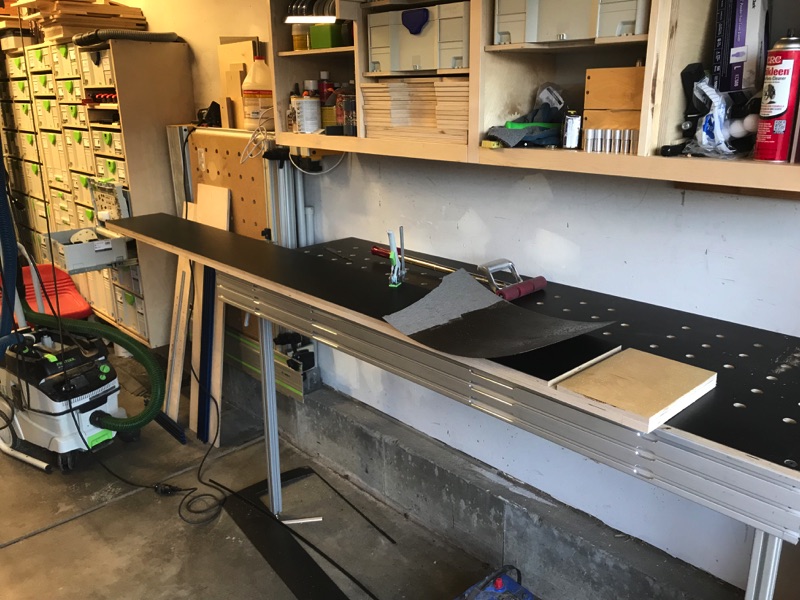
Anyway...The entire weekend was nothing but jack hammers 7am - 5pm. Hardly restful though It did give me some time in the garage with earplugs so I decided to wrap up the machine work on the systainer shelves and drawers...draw-a-thon!
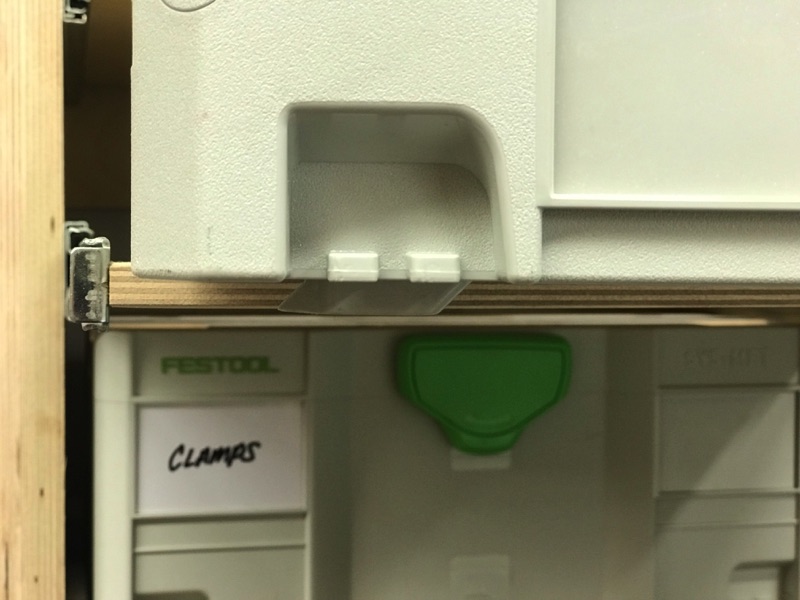
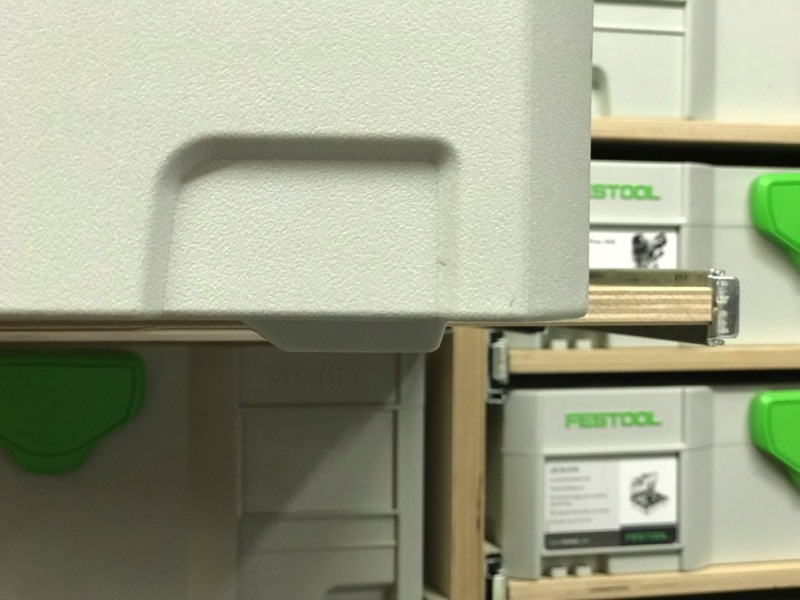
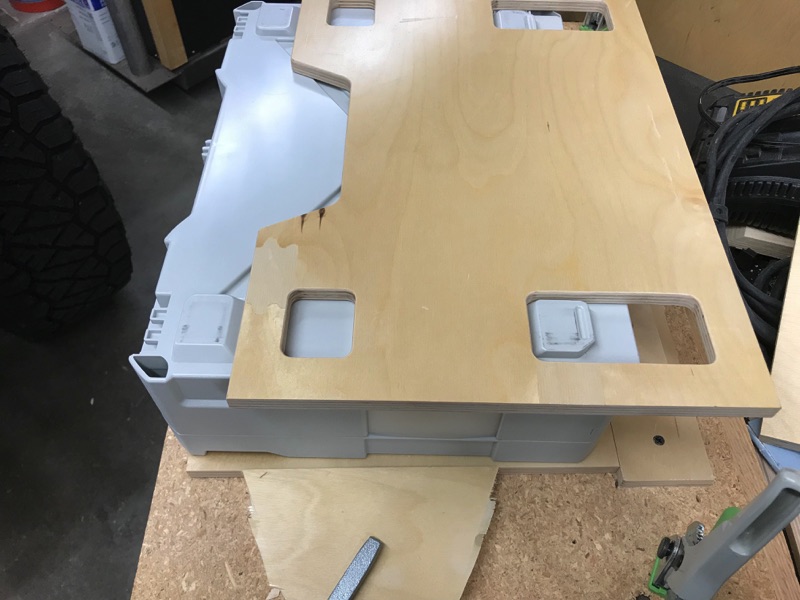
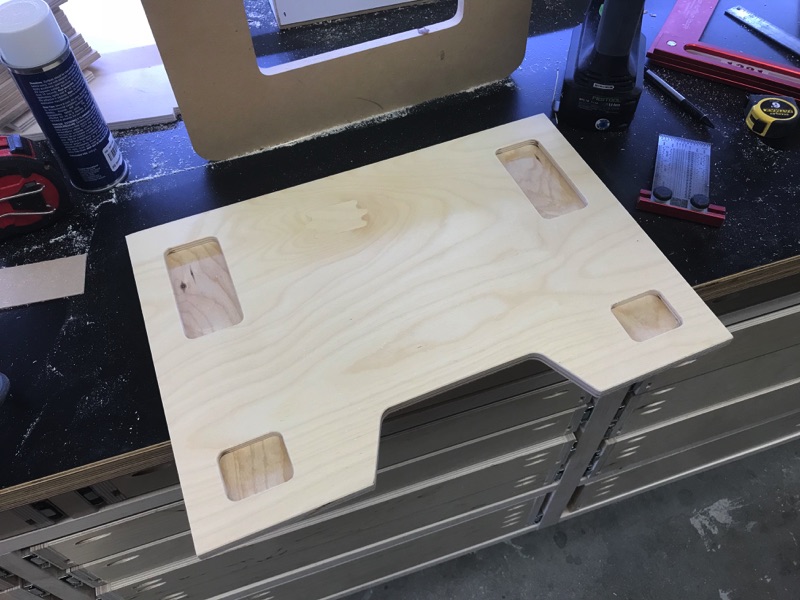
For those of you who have been following along, I've also added cabinets the correct width for the Systainer Midi's which requires a special width shelf and, they have different feet too. As luck would have it, the foot pattern is really just a modification of the smaller t-loc foot pattern.
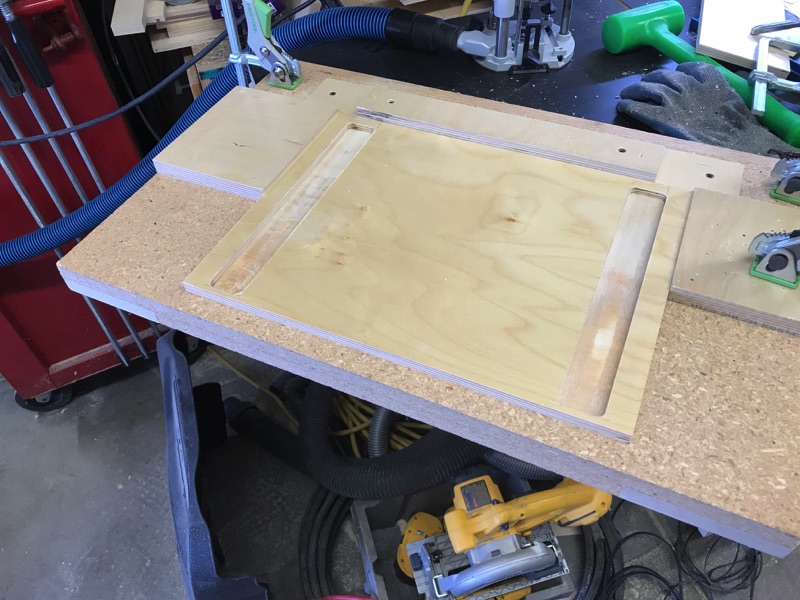
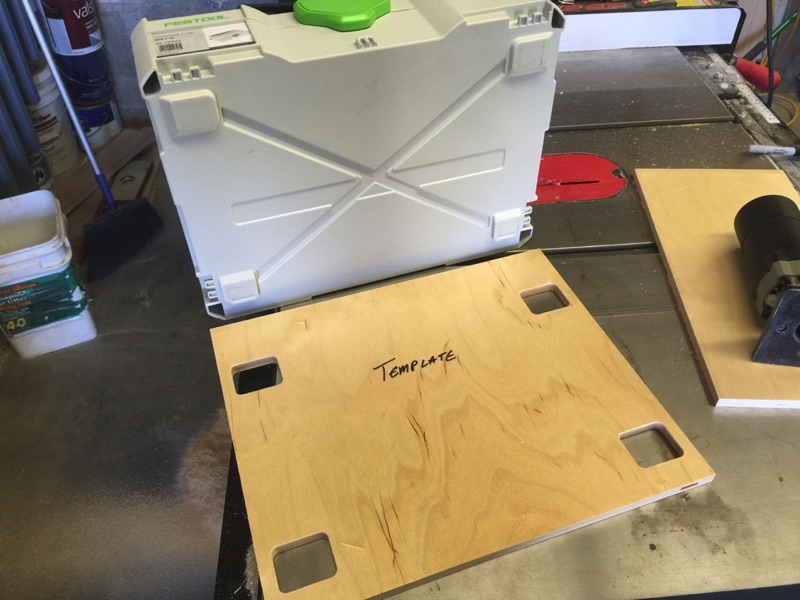
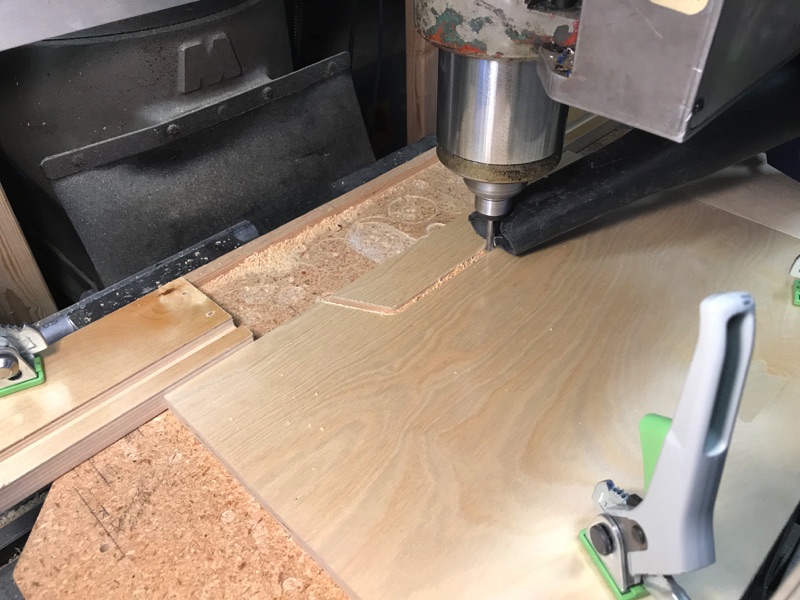
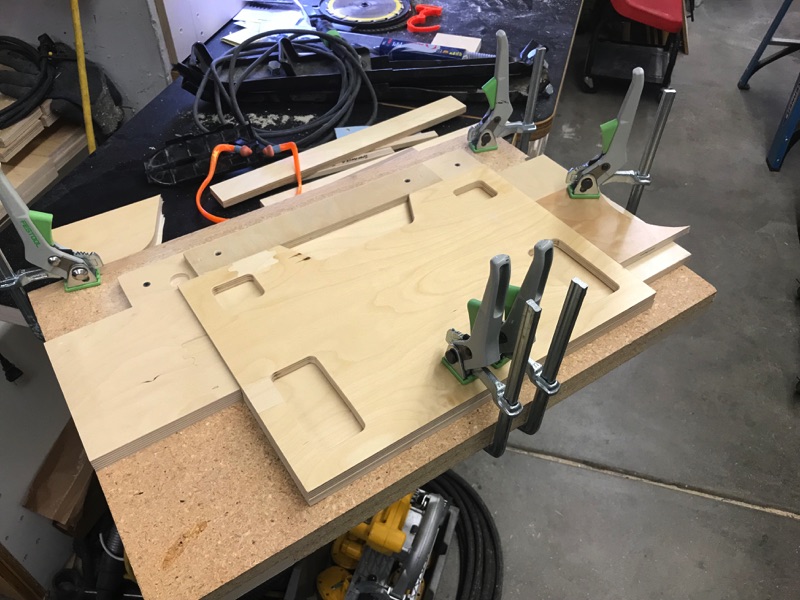
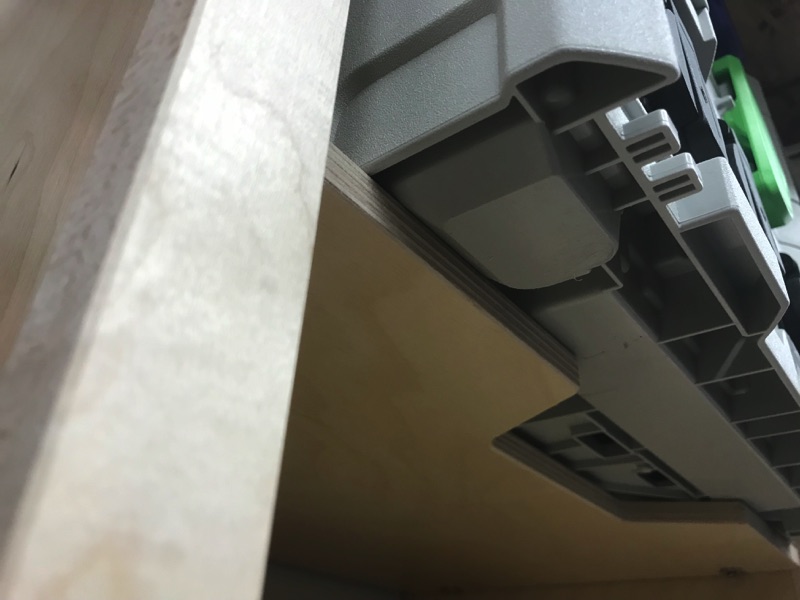
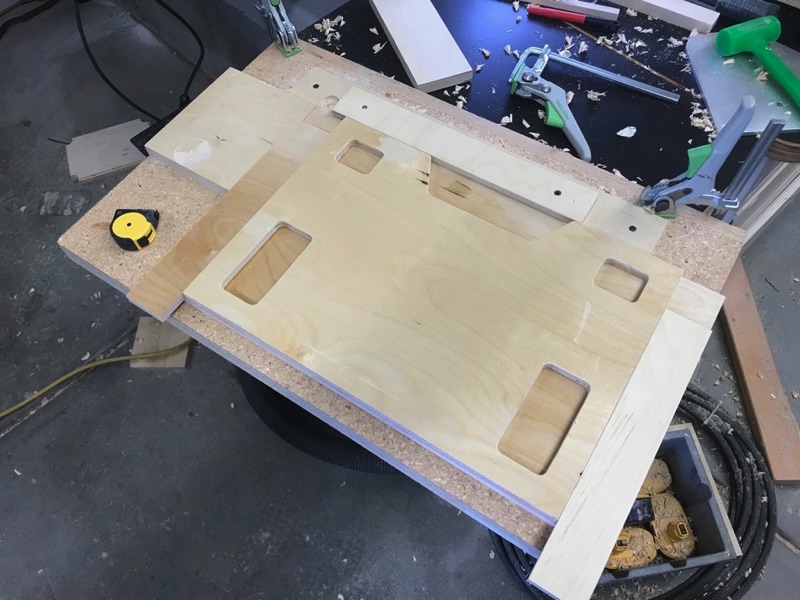
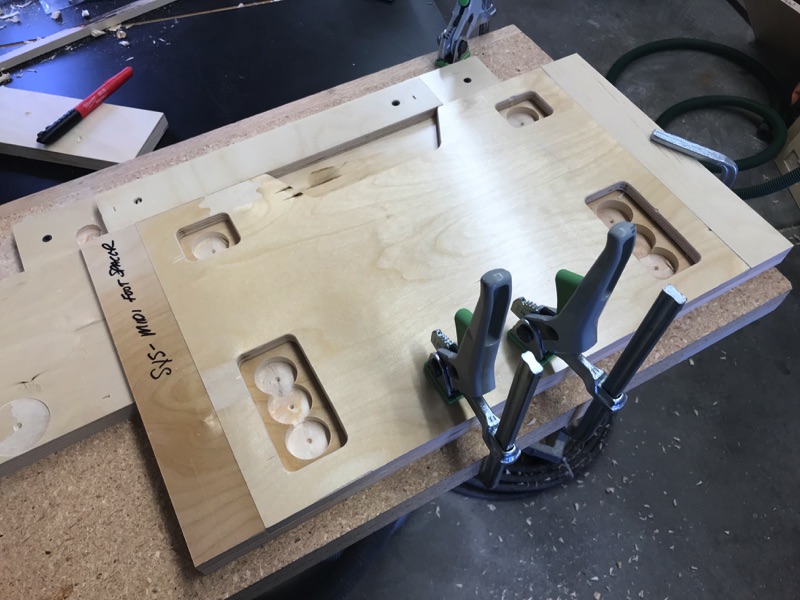
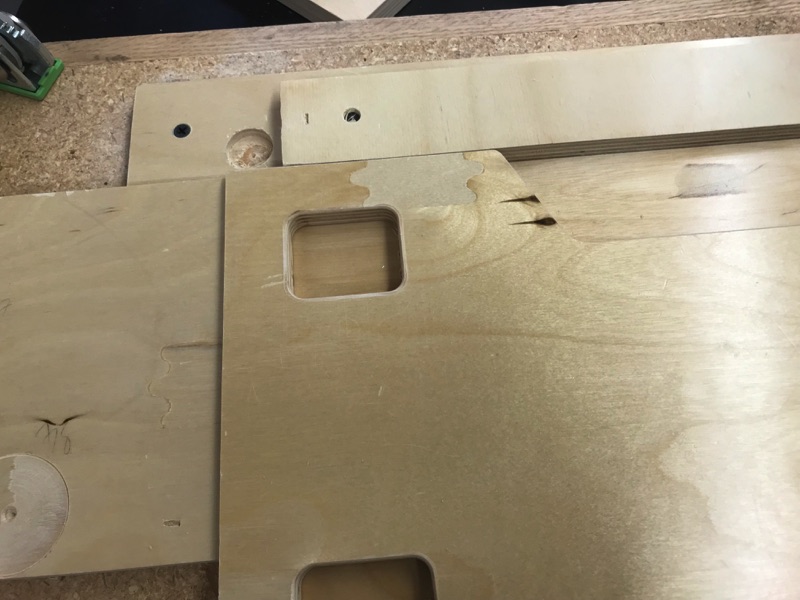
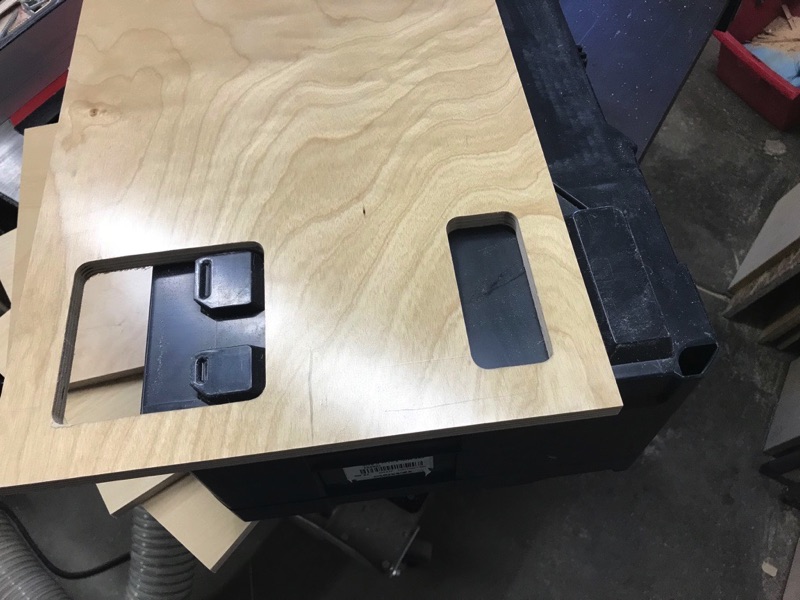
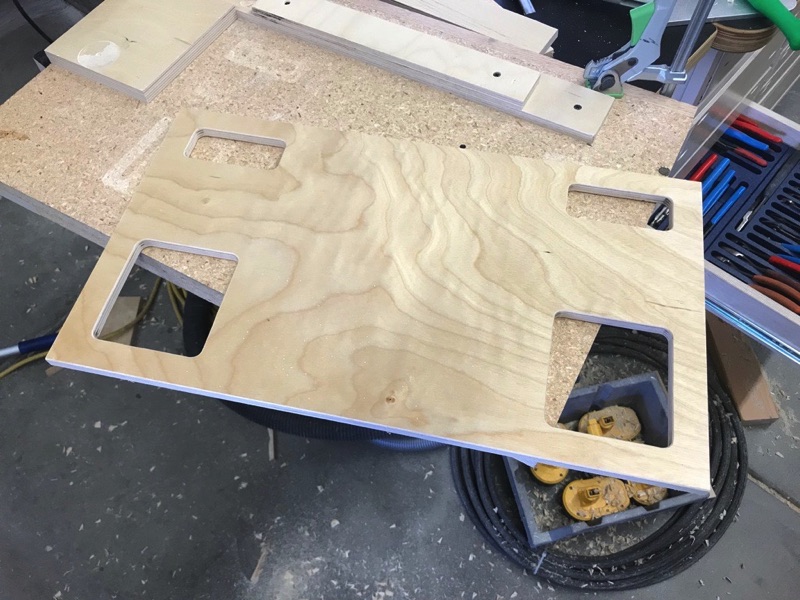
After taking a few measurements, I started by making spacers that centered the existing template (that much was identical between the two sizes. I then cut the pattern into the wider blank.
Here's where it got a little crazy. I then realized that if I slid the template over half the difference of the shelf sizes like so
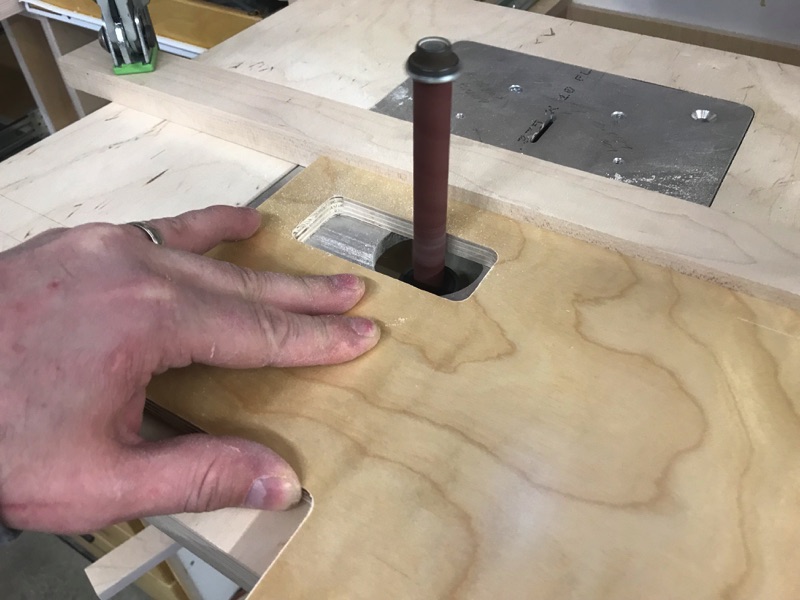
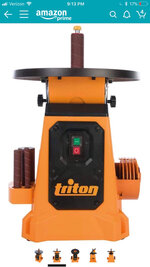
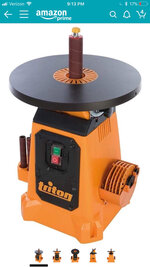
And recut the profile taking a second to clean up the transition between the two cuts on the occulting spindle sander
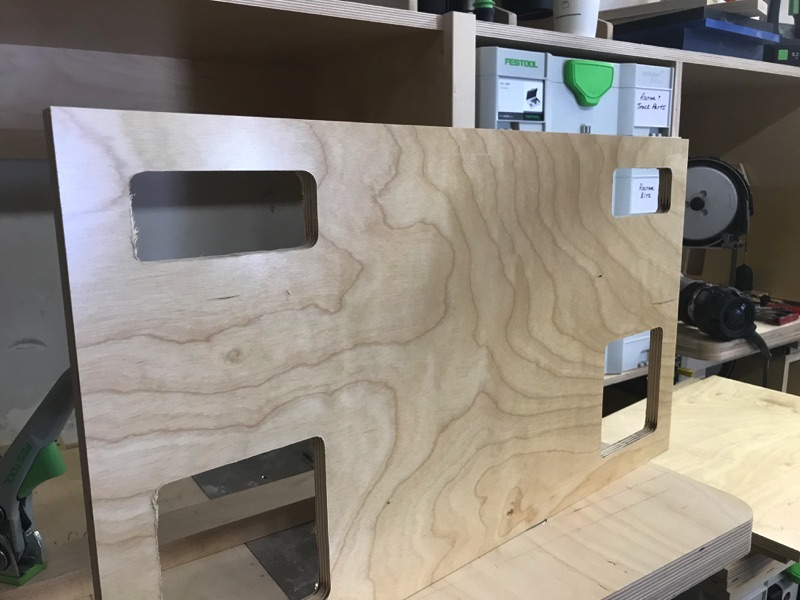
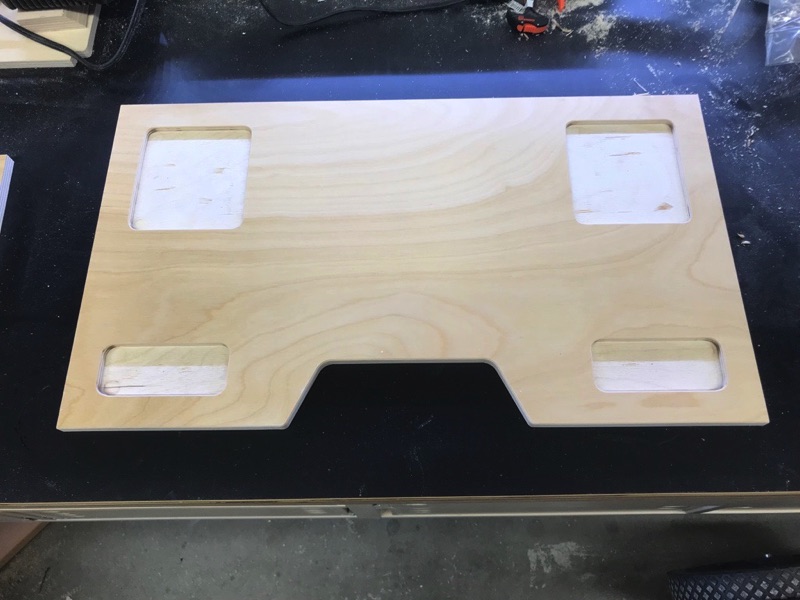
it looked like this
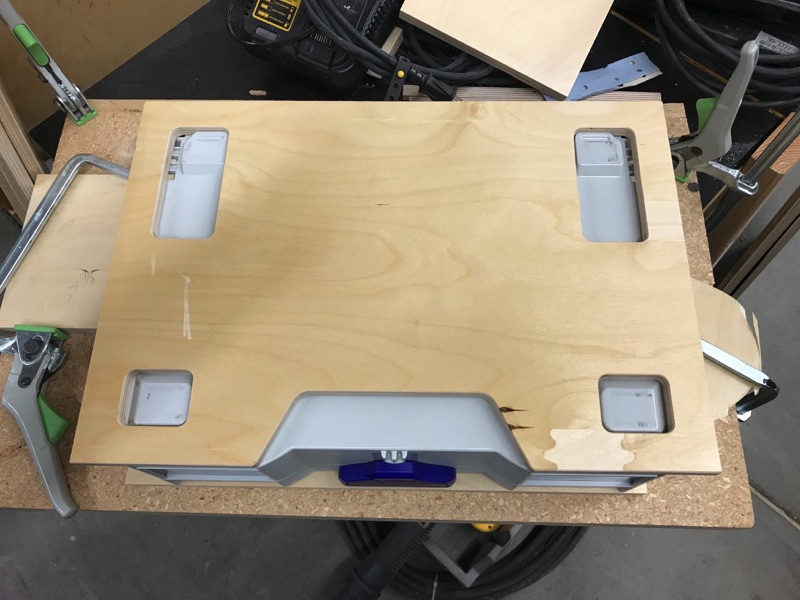
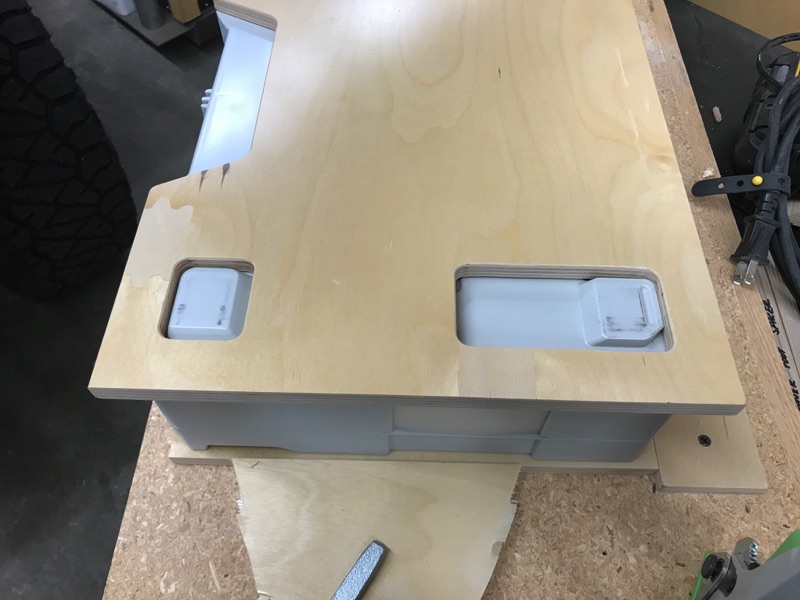
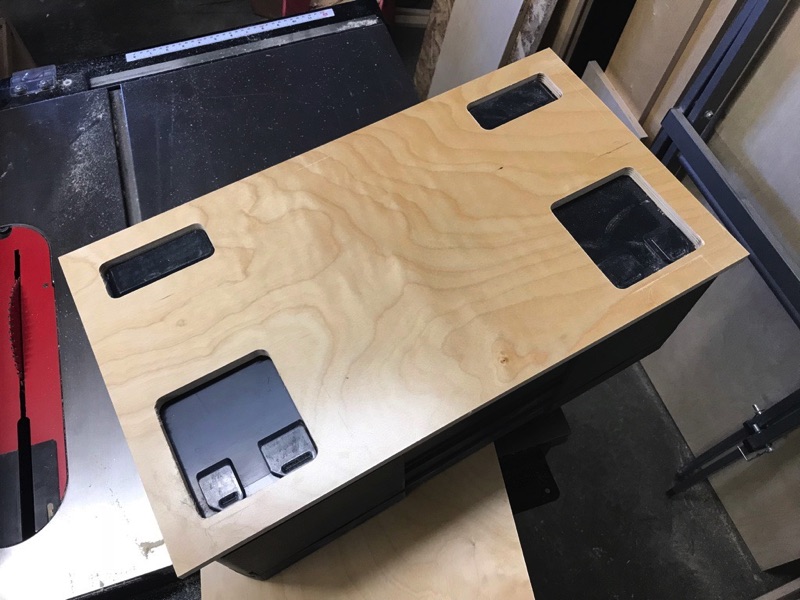
I got a near perfect fit.
And the second position works just like on the standard T-Loc.
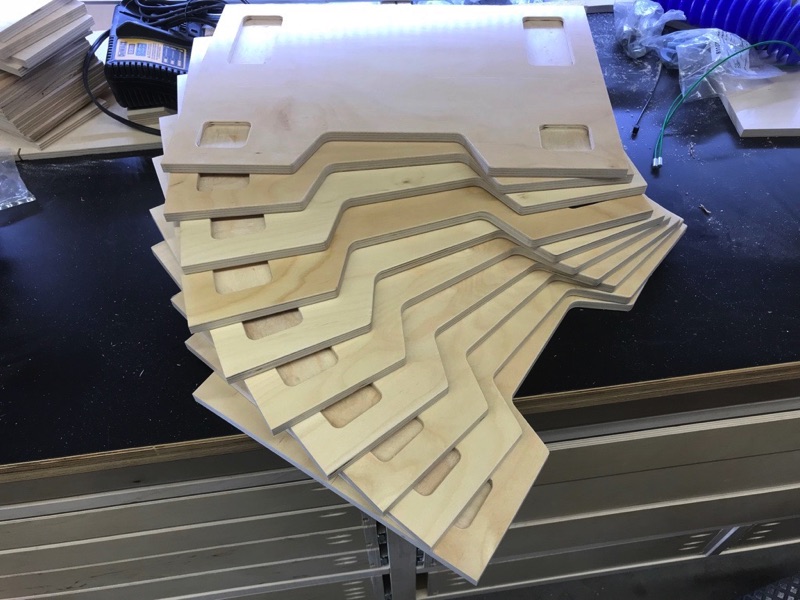
With the template ready, I can now make a few of these. Only really need half a handful.
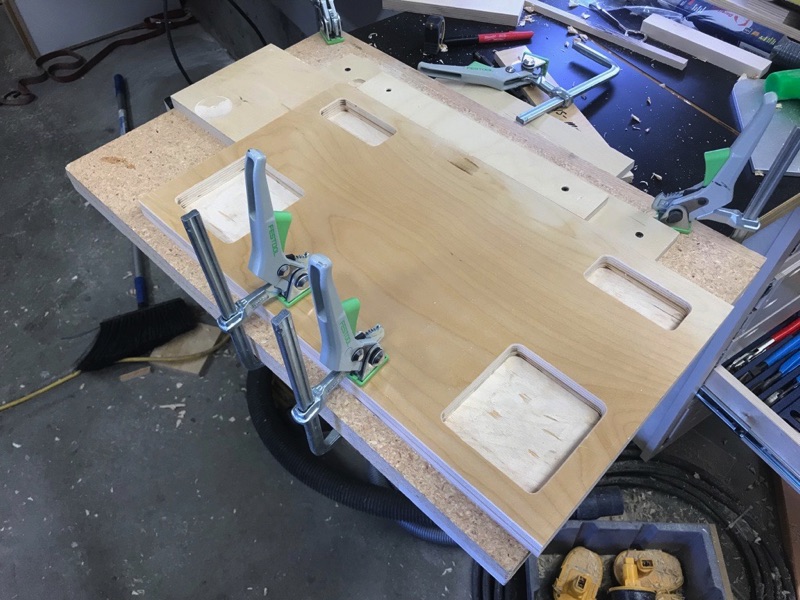
Back in the jig over a fresh blank and trace with the router..
Vola.
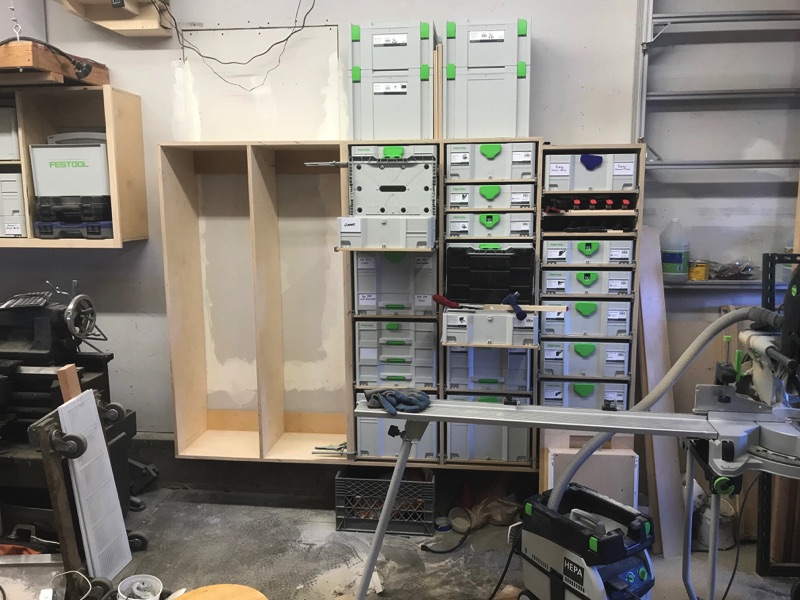
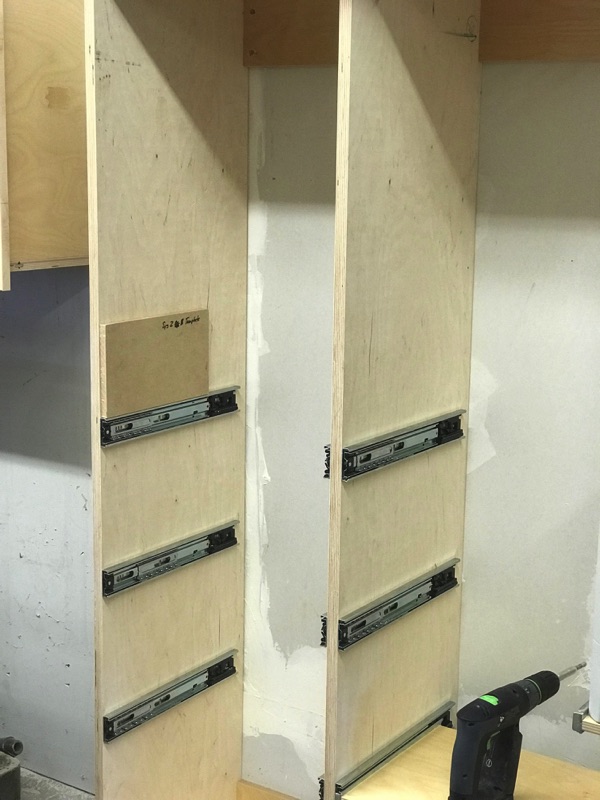
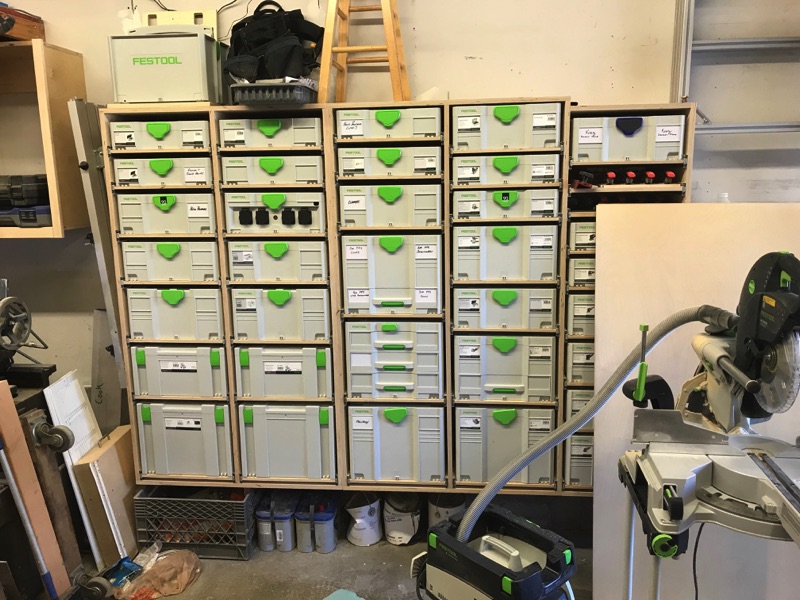
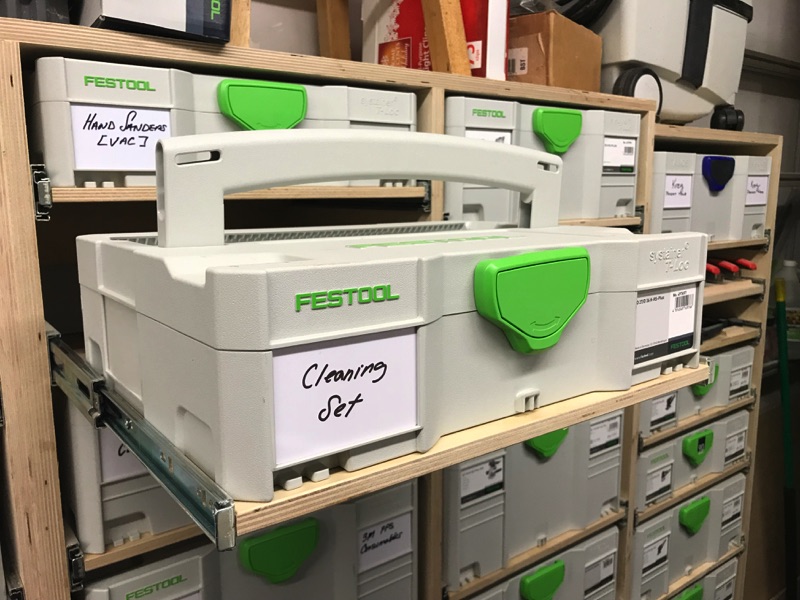
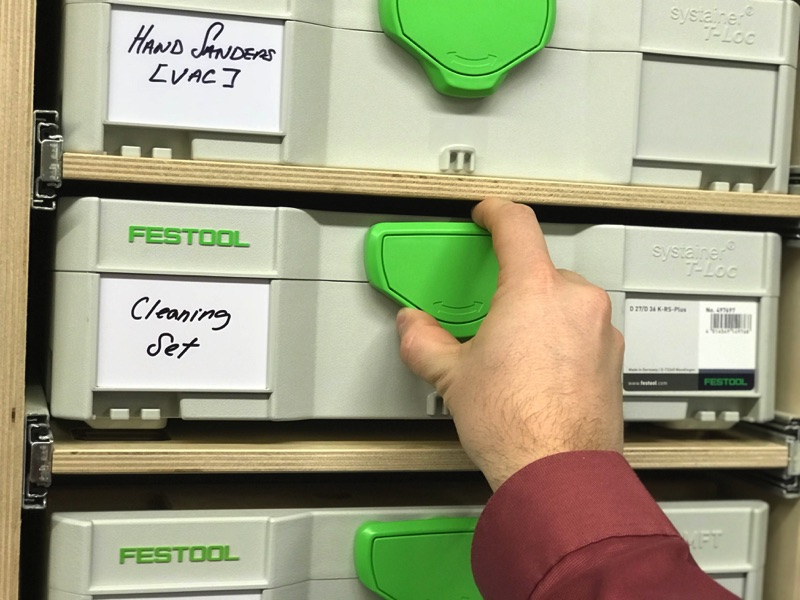
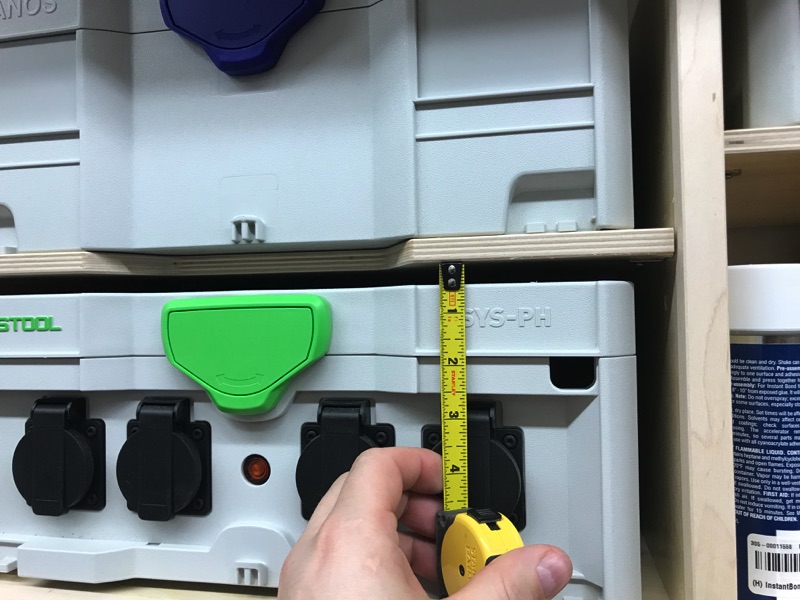
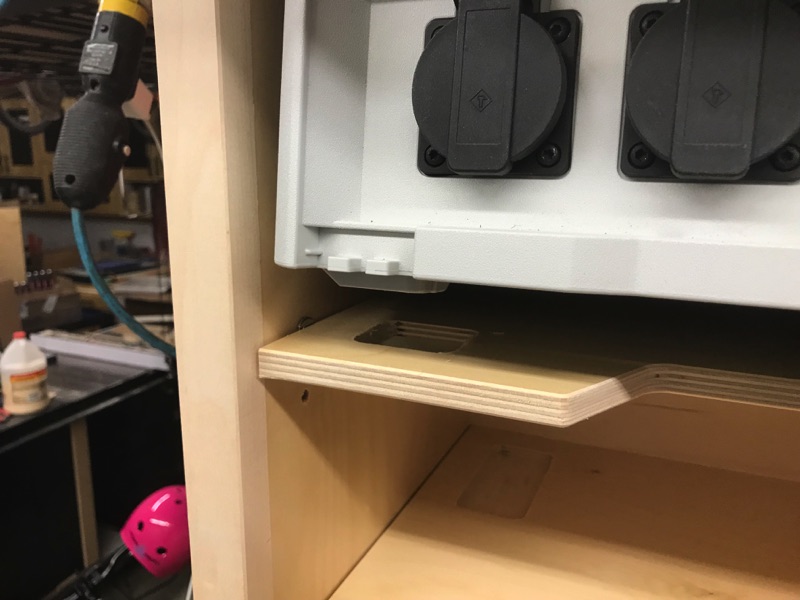
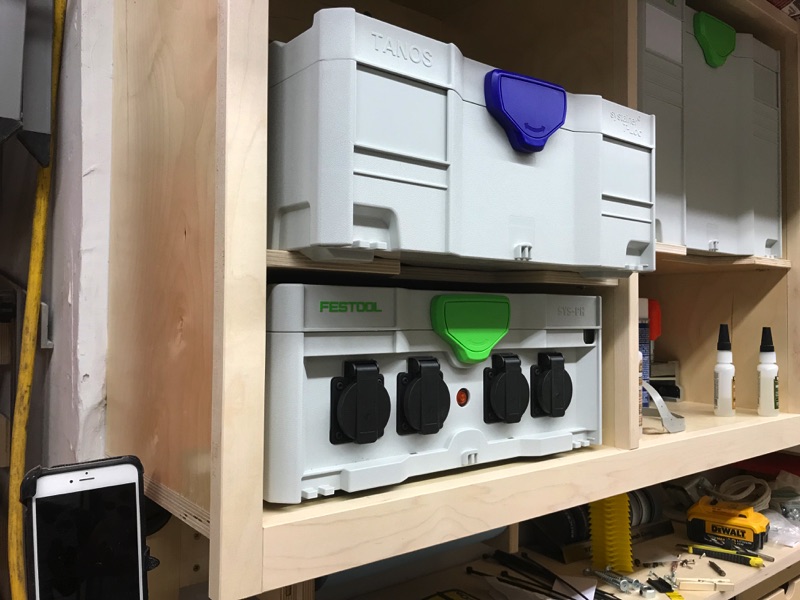
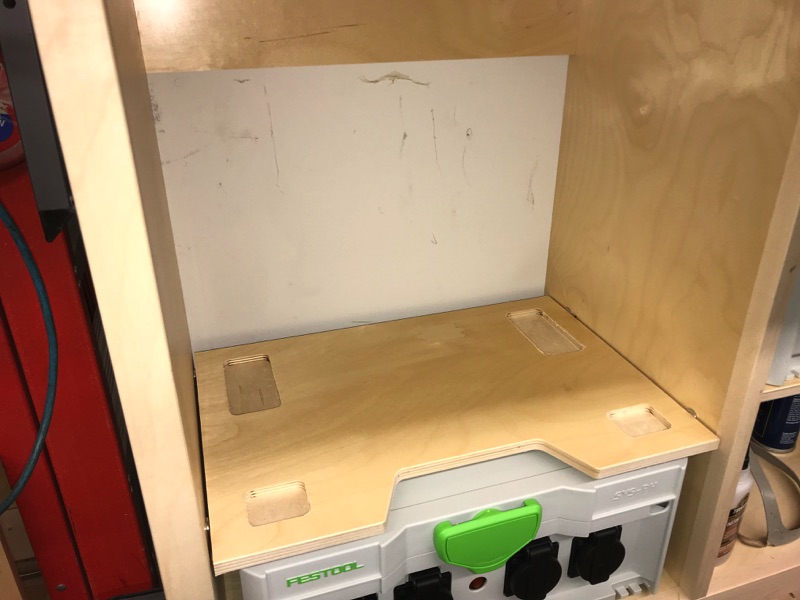
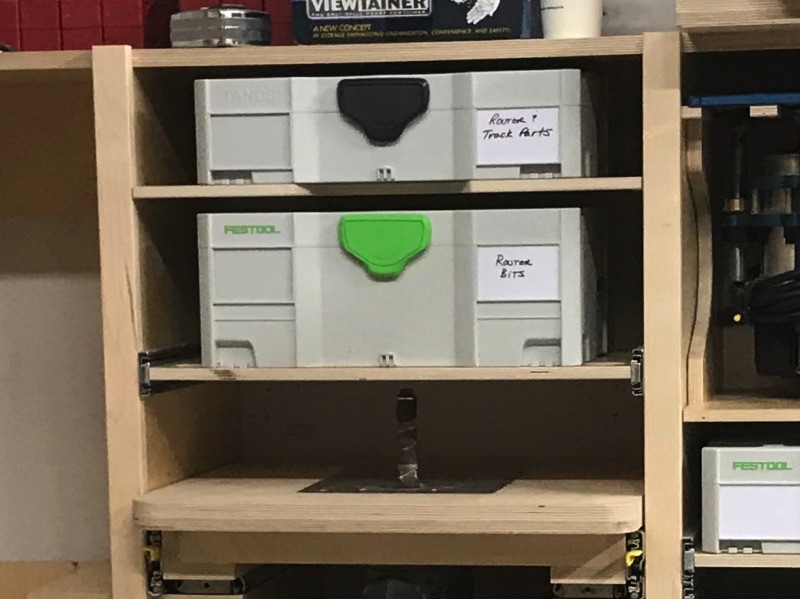
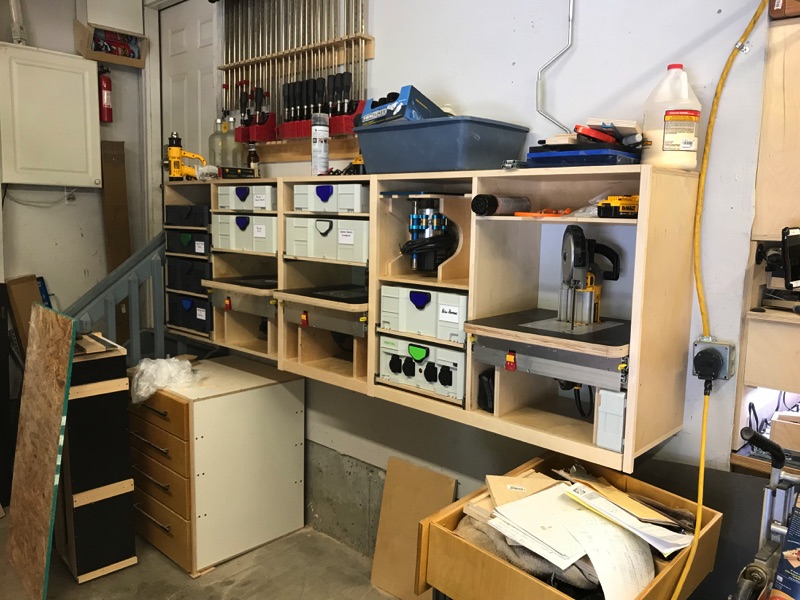
Finally received the backordered pair of drawer slides this week so I can pick up where I left off on the Sys-Port Workstation. Since I've made just a few shelves since then, I figure I'll do the easy stuff first. I start by setting the Systainer Midi shelves. Here's one that's push-release and one that's fixed with the standard sized Systainers to show perspective on the size difference.
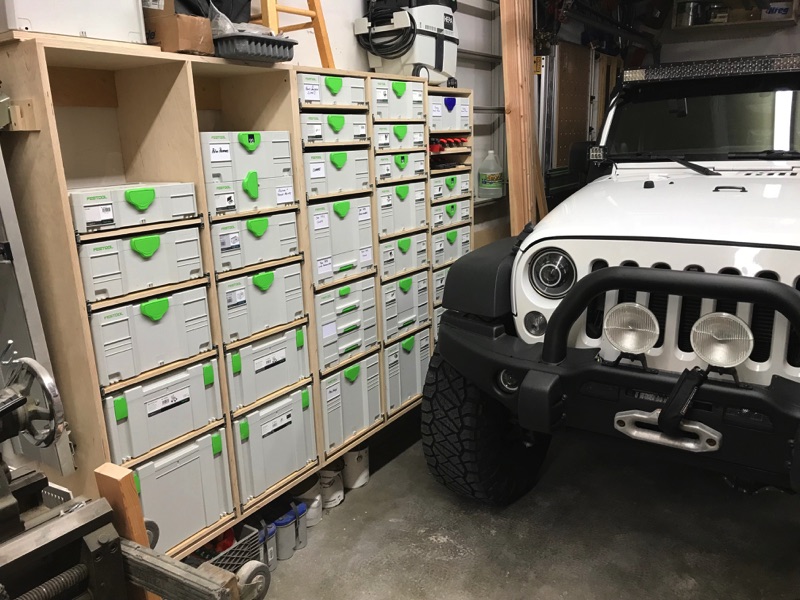
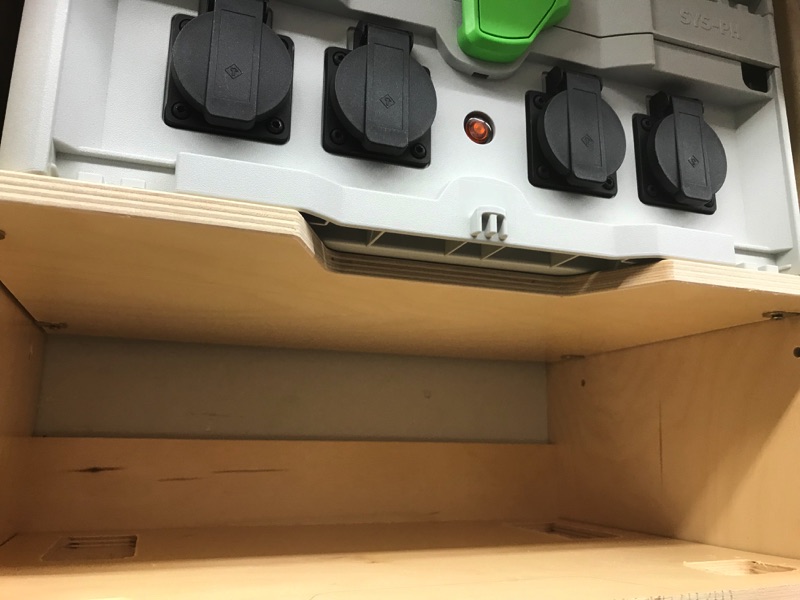
With the shelves in place, I can get a better view of it coming together and it becomes (just a little) more usable.
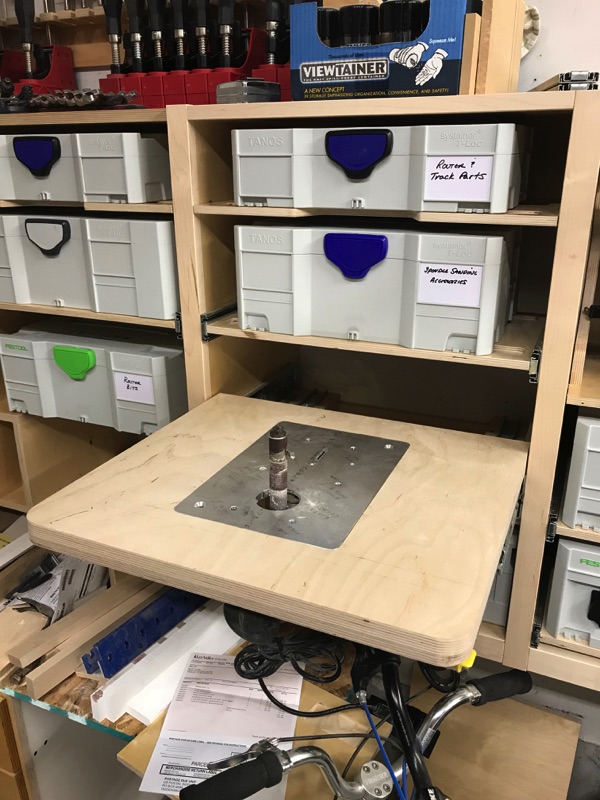
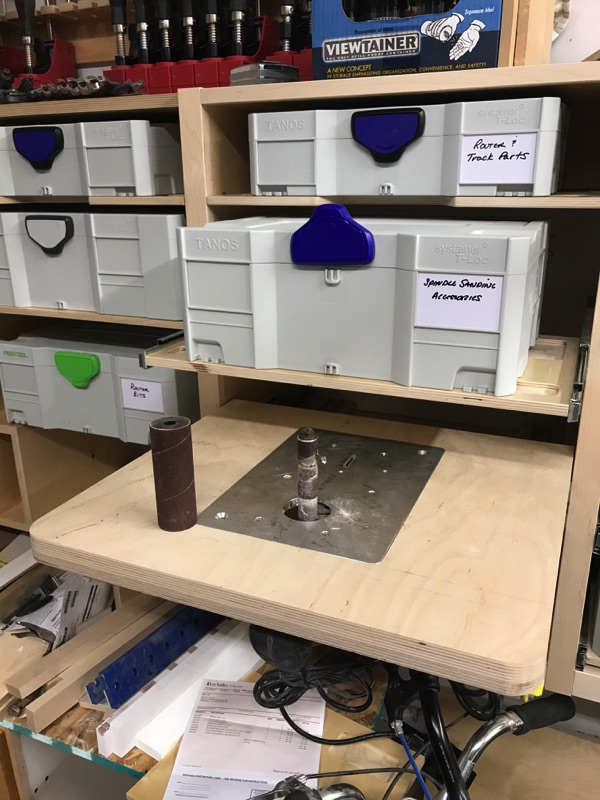
With the shelves in place, I can how show how the accessories can be nearly in the same place as the power tool. In the case of the spindle sander, all of the accessories can be stored right above the sander. Pretend the the sander is in use and I want to refresh the paper.
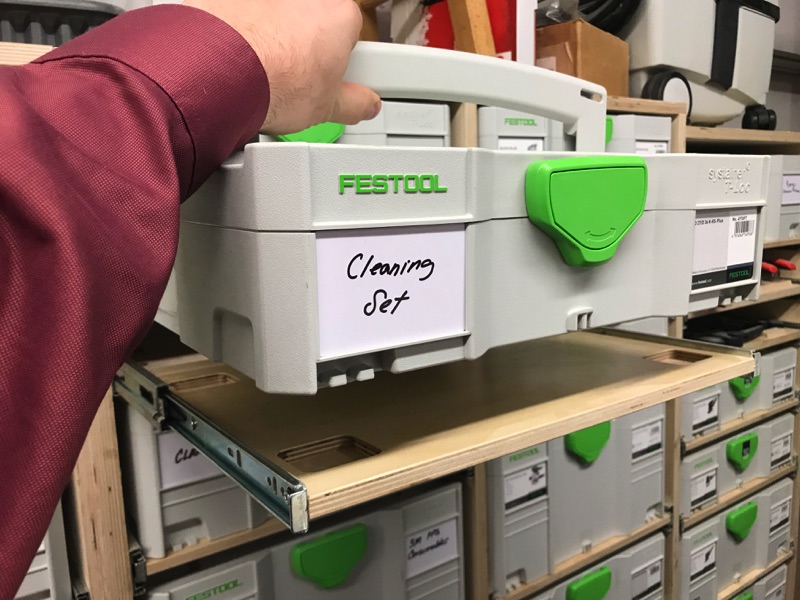
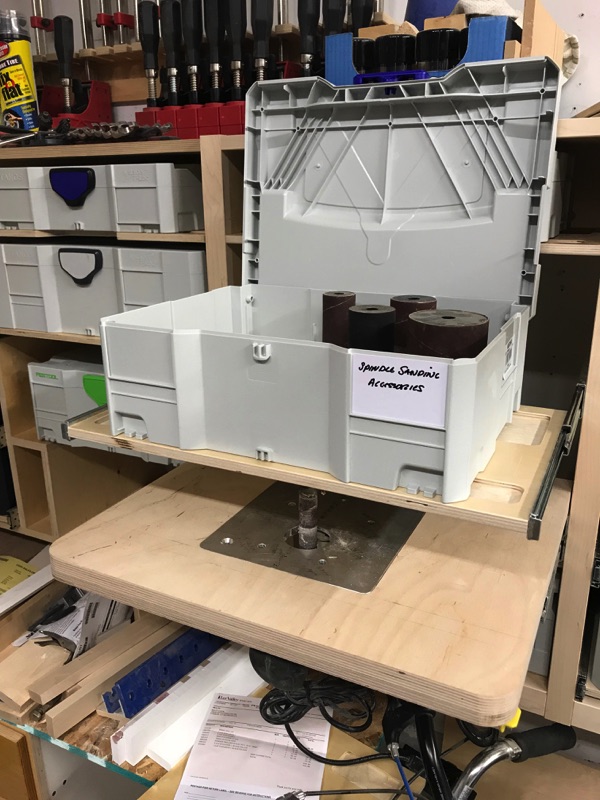
Without putting away the spindle sander, I can slide out the accessories, find the one I want, and remove it and the wrench from the systainer above without having to go anywhere.
Then, half close the systainer, swap in the accessory, and then put it all away.
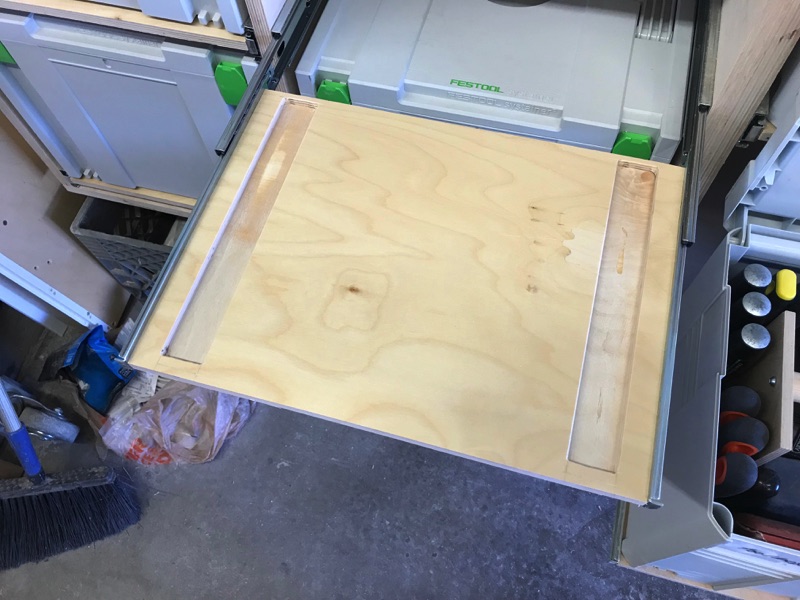
After getting all of the drawer and shelves in place, I finished the 3rd pull out and laminated all three.
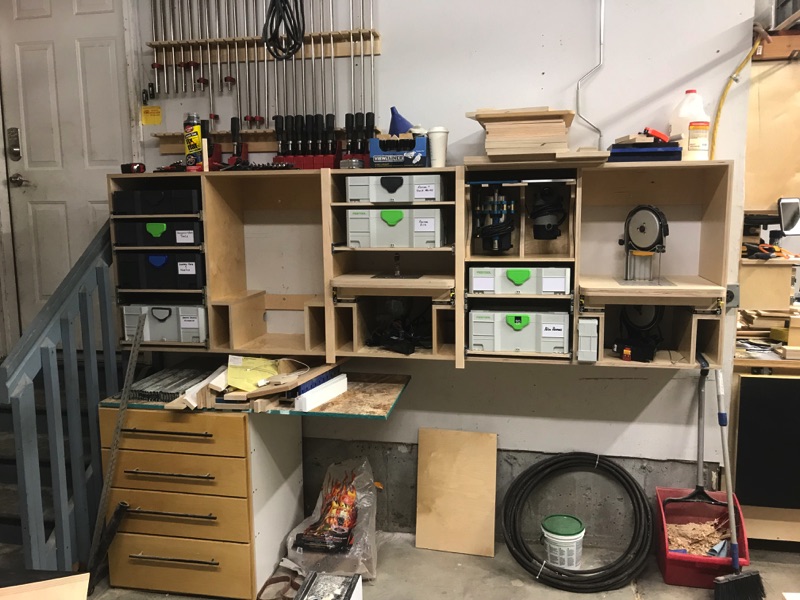
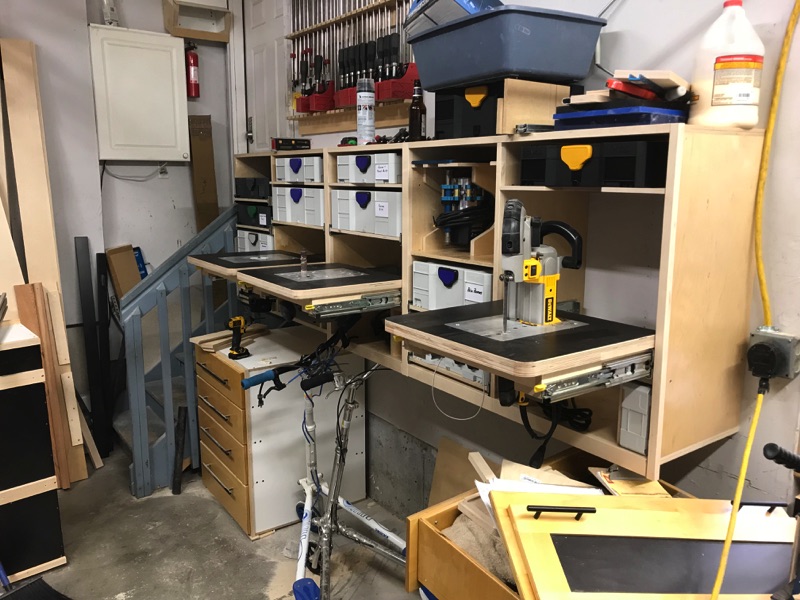
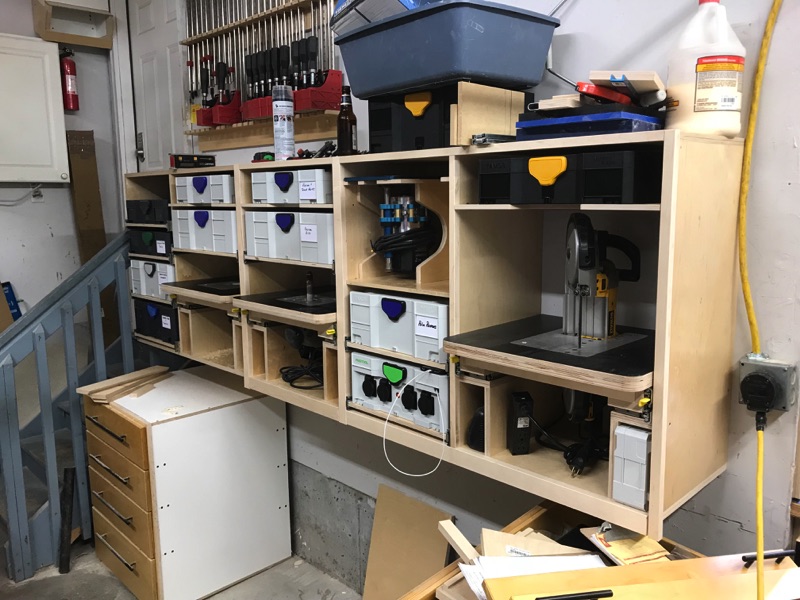
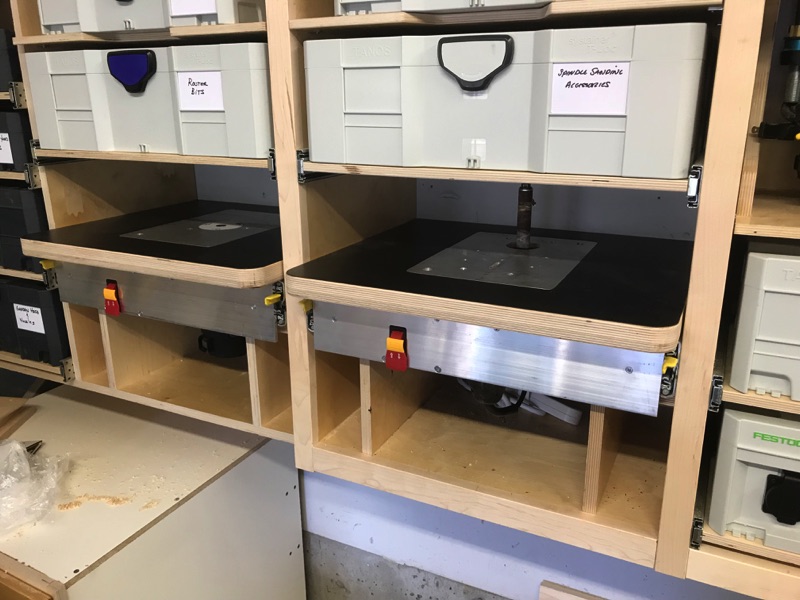
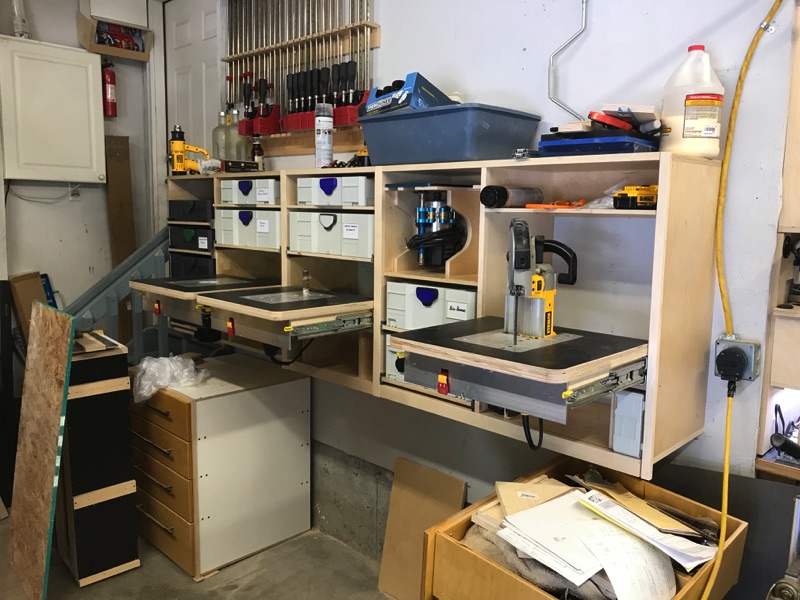
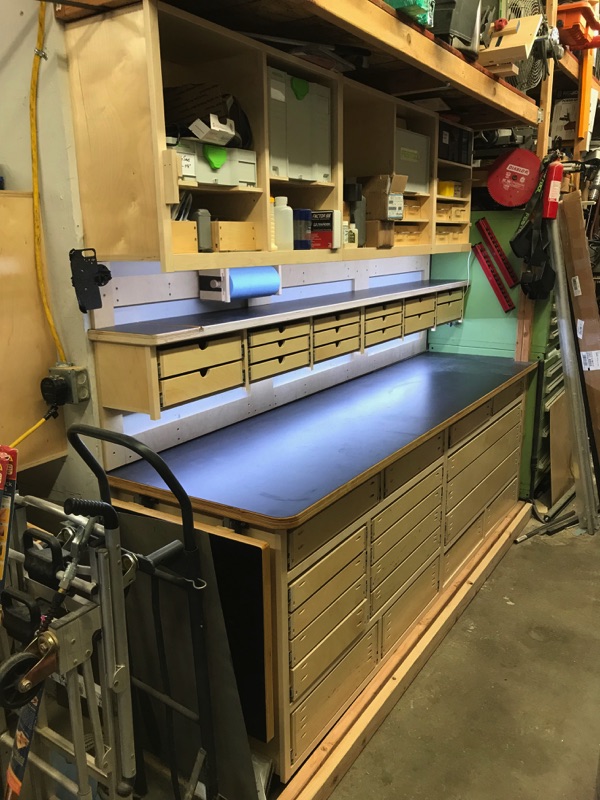
The concept is nearly completed. With the tools tucked away, I now have a fully functioning Sys-Port Workstation.
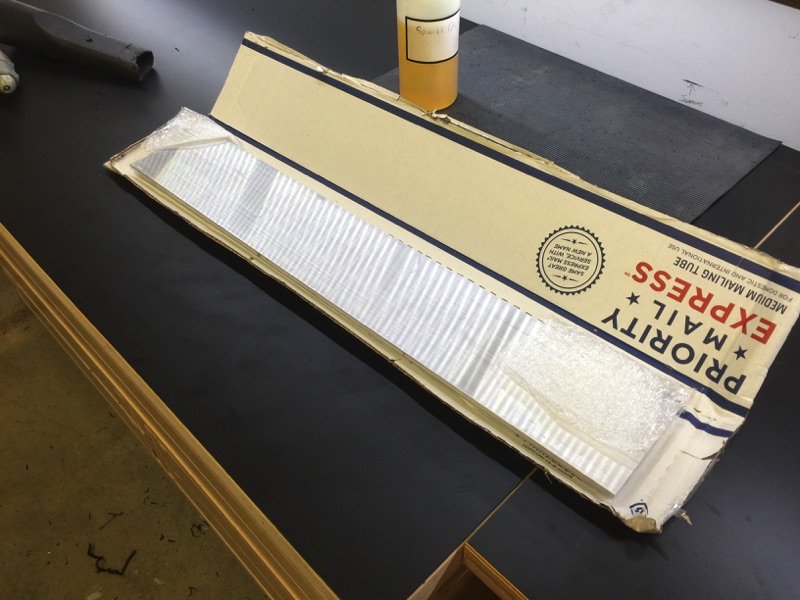
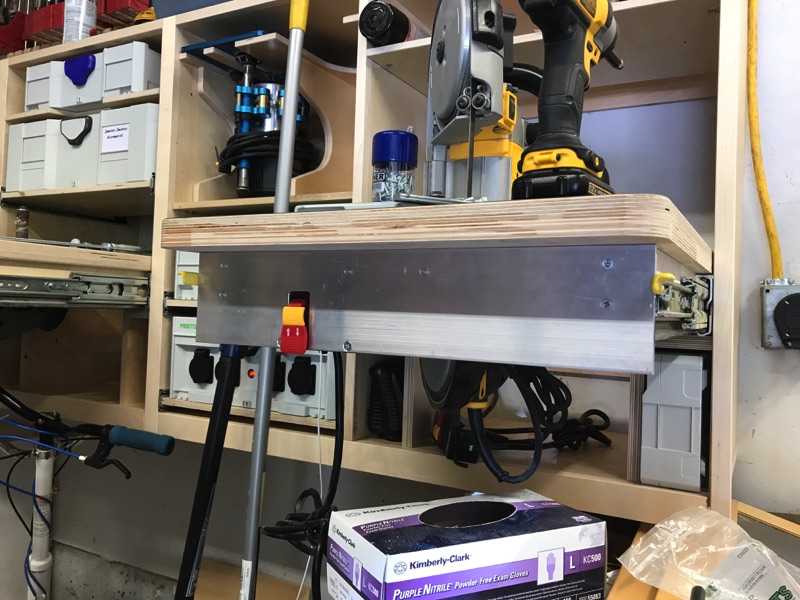
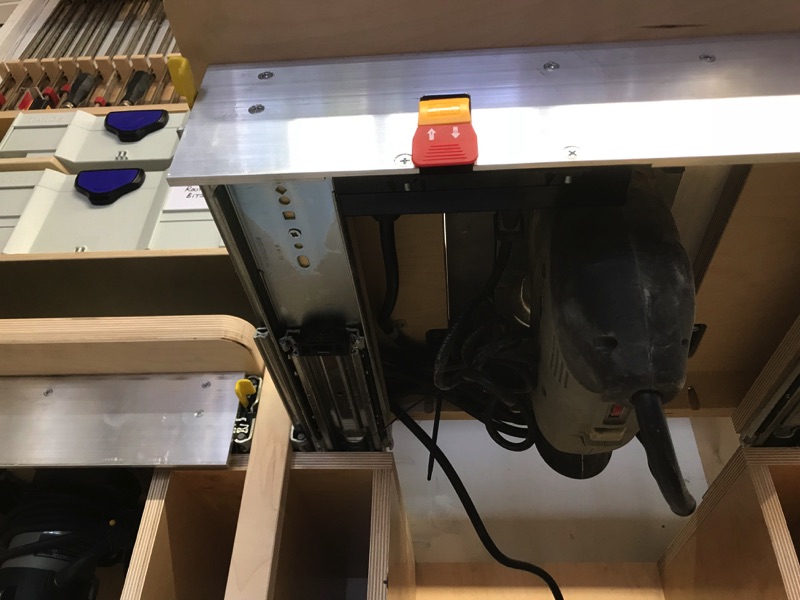
I've been using the Kreg power tool switches for my stationary router table for years so I decided to use the same one for all three of these power tools. It took me a few weeks to figure out exactly how I wanted to mount the switch and I settled on making a faceplate out of 1/4-inch 6160 for each of the slide out tables. I ordered 4. 1 to screw up as a test piece and 3 for the real deal.
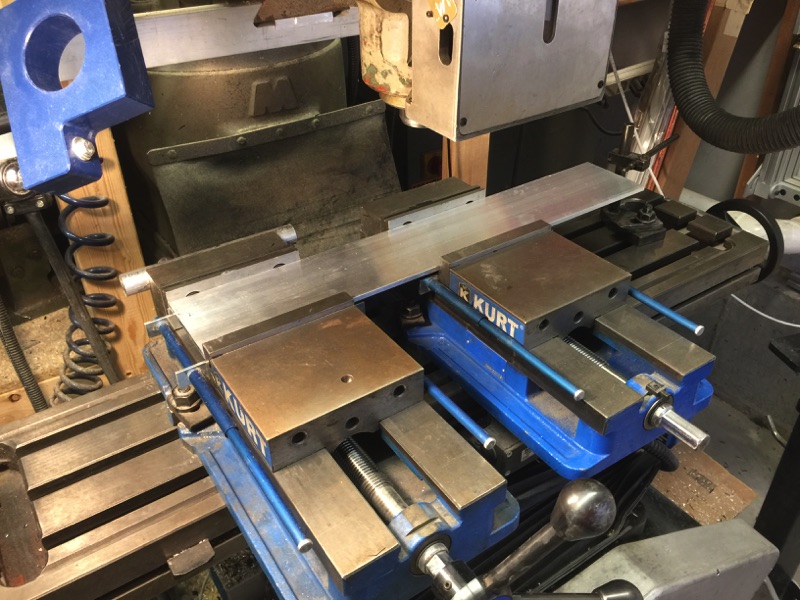
I was trying to hurry so I dropped the plate in, set a stop and got to machining.
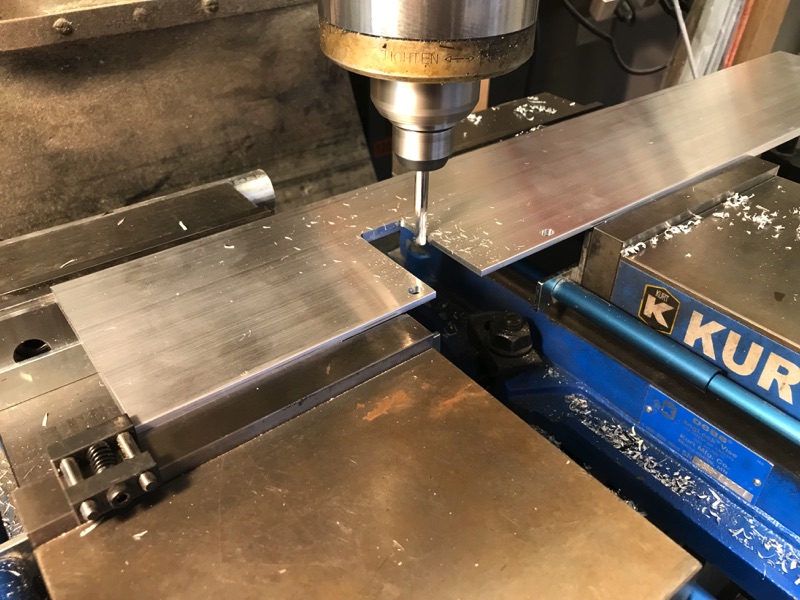
I needed to recess the switch into the plate so that the switch was easy to lift. I machined a pocket the size of the box leaving only about .100 of thickness. I figured I'd do one operation at a time so I banged out all 4 since I had it setup.
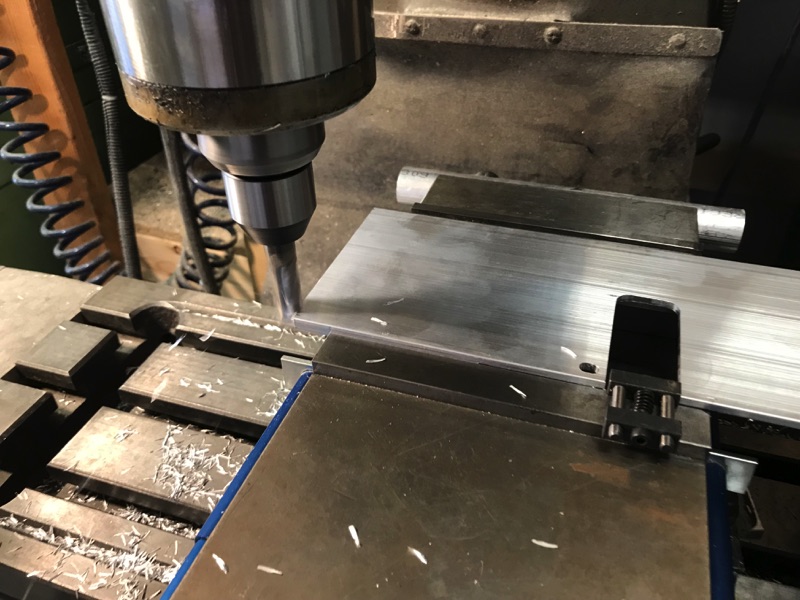
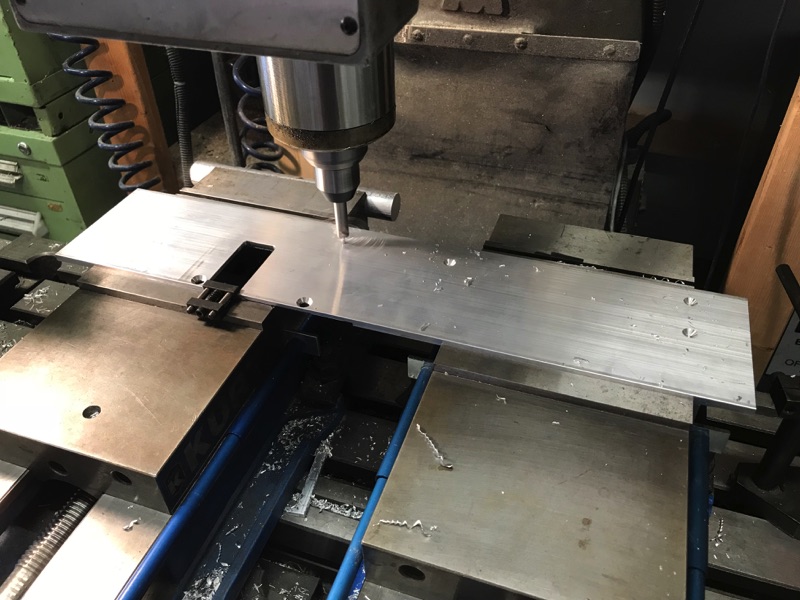
When I went to square the first end, I realized the error in my ways. By cutting the pocket and switch hole first, I realized that I had used the rough cut ends of the blanks to locate them against the stop on the far side making the pockets locate at varying locations in the blanks. Damn it, I always machine a reference edge first, I'm hurrying. After a little putzing around, I realized that I had left enough to either side of the hole to let the hole to become the new reference so I set a vise stop mid-vise so that all parts could not be aligned to it. Then I squared the left edge. Back on track.
There was no need to remove the parts for the rest of the operations so I consolidated them into a single cycle. This is the last step where i countersink the holes for the attaching screws so they sit flush.
and test fitting the first one right off the mill.
And the other 2
A little cable management to get the wires up and out of the way. Had to be creative and figure out how to make the switch wires permanent and the tool's wires temporary.
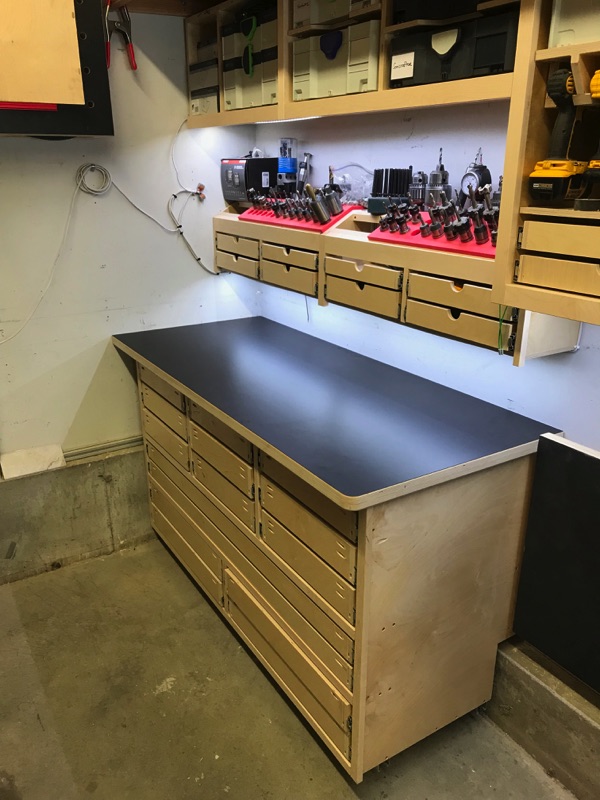
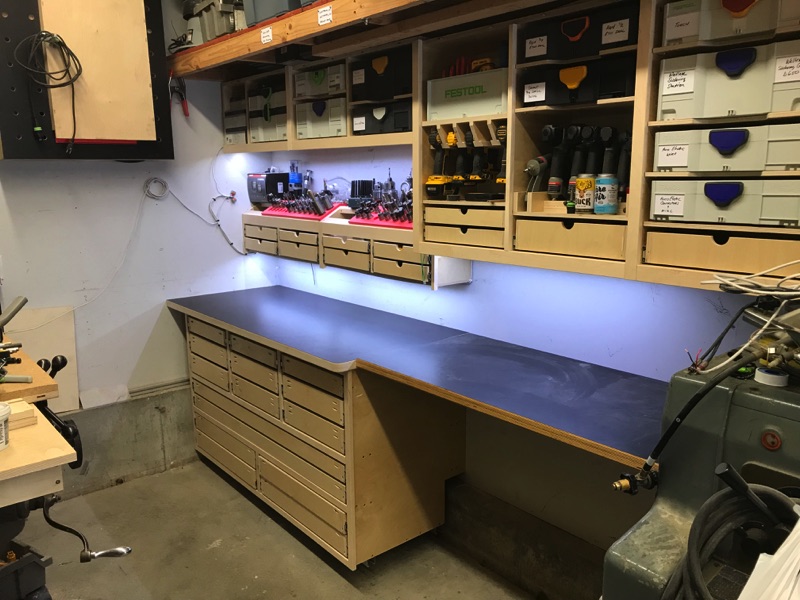
Minus a few trim boards, it's done.