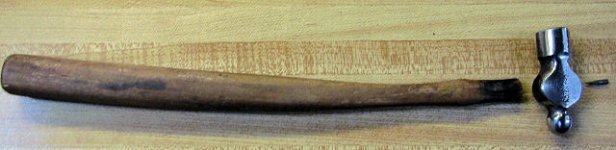
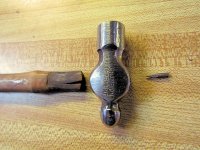
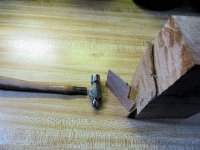
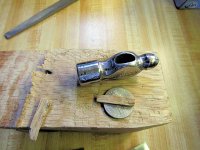
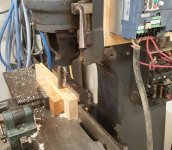
I found a hunk of oak (from a pallet) and managed to cut a big wedge. Without measuring anything, I cut a smaller wedge from the big one.
I mistakenly cut the small wedge to fit the long dimension of the handle and had to split and fit the wedge to the smaller dimension. It's becoming a pretty small piece of wood.
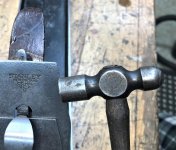
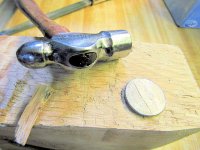
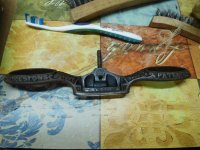
A few taps with tack hammer and the wedge did its job. The head is nice and tight and it should be good for the rest of my life. I did burn the end of the handle and wedge when I buffed the head one last time.
That method of gasket making definitely works. From being a mere youth I was taught that method by my father and used it often. Still do for that matter and not a youth anymore.
Sent from my SM-G930T using Tapatalk
Now that I'm old and have some spending money I buy ready-made gaskets but back in my poverty-stricken youth I used shirt cardboard (is that still a thing?) and a ball pein hammer to tap the holes and edges to fine-tune carburetor gaskets. I also re-used cylinder head gaskets. That required a little steel wool and a coat of axle bearing grease.
My first encounter with a ball pein hammer was in 1952. My mother was a Cub Scout den leader and she got a project from her pack leader. It was a square of copper sheet and a short section of two-or three-inch pipe. You held the copper sheet tight to the pipe and tapped on the copper sheet to form a bowl. Back then smoking cigarettes was good for you and the final result of the project was a shiny ash tray for dad.
Back then, especially during the Korean War, tobacco companies not only advertised everywhere, but had a controlling interest in TV shows. I especially remember Ralph Bellamy and
Man Against Crime. Every episode featured a double-door made of Camel cigarette packs opening. It was either at the beginning of the show or the end. Got this from Wikipedia: "The
R. J. Reynolds Tobacco Company (
Camel cigarettes) sponsored the series, as well as holding a monetary share in the program and a copyright on the series. Mike Barnett was frequently shown smoking a cigarette (and occasionally flashing a pack at the camera), and at the conclusion of the program, Ralph Bellamy would put on reading glasses and read a list of veterans' hospitals and military bases to which "the makers of Camels" was donating cigarettes that week."
It's good they stopped advertising Old Gold cigarettes before I hit puberty. A pack of cigarettes with an apparently naked lady inside was Esquire-esque (
).
Memory is a funny thing -- can't be sure what I had for dinner last night but 1952 is clear as a bell.



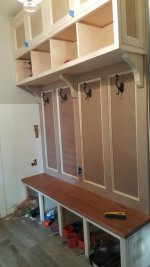

 gorgeous work!