More than a month since my last post doesn't mean no garage activities.
Its been a busy winter out there.
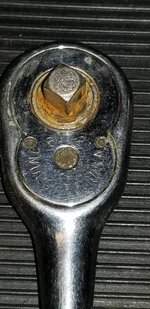
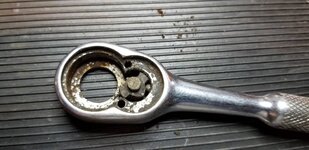
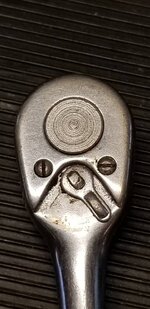
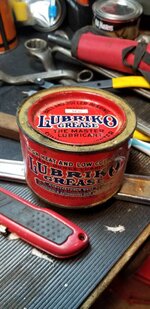
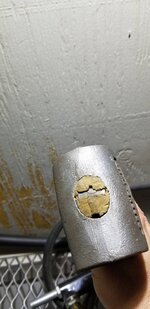
I spent one particularly cold winter Saturday in the heated garage rebuilding an Indestro 6672 1/4" ratchet.

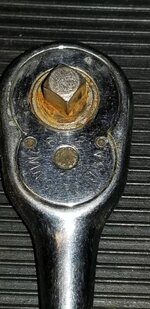

This one was pretty easy to disassemble, and there were no sneaky springs that went sproinging out across the workbench.
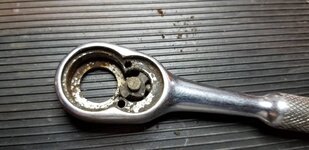

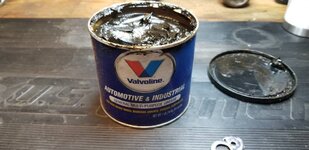
The parts were not worn out, just gummed up with old grease, so I just cleaned and re-lubed everything.
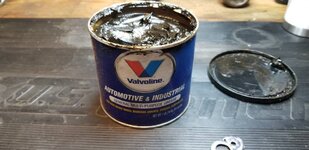
After re-assembly, it definitely worked better, but still not as smoothly as others I have.
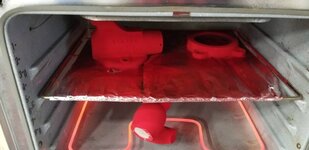
Another long-time goal of mine has been to install a powder coating oven in one of my garages. Over the years, I have saved two different kitchen stoves from rental properties, but never got around to putting them in. However, while home over Christmas, my Dad let me bring back the vintage GE double wall oven he had bought with the same purpose in mind and with the same lack of completion. It has been cluttering up a corner of his shop for several years and now that Parkinson's has deprived him of his shop time, he was happy to see it put to use.
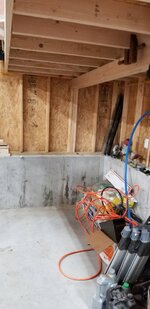
I decided to tuck it into the far end of the storage mezzanine, opposite the entry door.

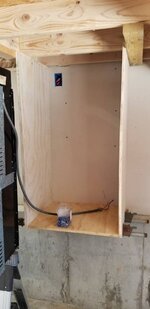
Just like behind the workbench, I insulated and sheetrocked the wall, but not before adding a junction box to the 240V circuit running to the welder outlet. I wanted to keep the floor below clear, so I made a partially hanging box from scrap 3/4" plywood to enclose the built-in wall oven.
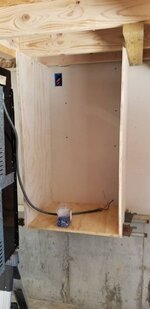
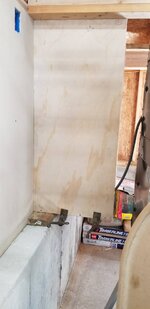

Here's the oven after final install. Note the 2x trim piece on the front--it serves several purposes: 1) my scrap plywood wasn't wide enough to allow the oven to slide all the way in, so I needed to cover the remaining 2 inches, 2) the screw holes on the front face of the oven (that prevent the oven from falling forward out of the hole) were too far in to allow screws to bite into the vertical plywood. So, I spent some time on the table saw shaping a 2x4 to the dimensions needed to fill the gap.
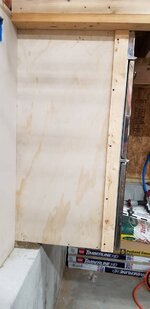

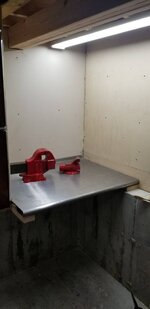
The space to the right of the oven will eventually get turned into a powder coating station. I'll probably use some of the remaining oak boards I have to assemble another butcherblock work surface.
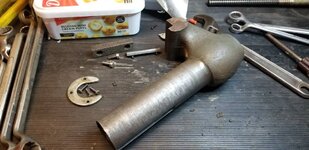
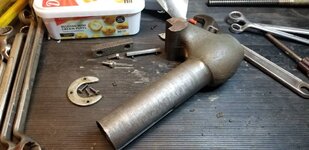
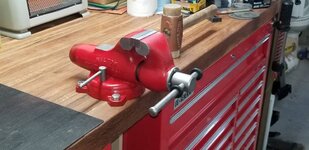
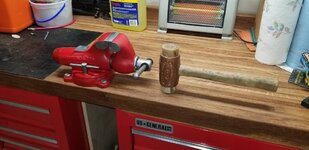
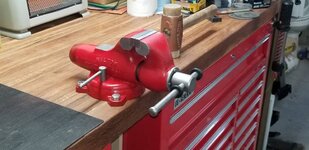
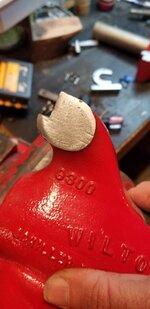
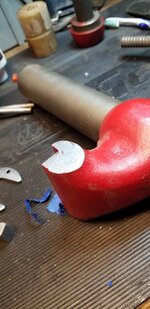
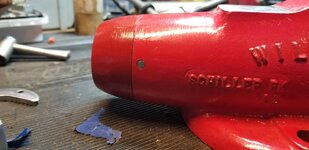
But, being the impatient person I am, I couldn't wait to try out my new equipment. I disassembled this 1978 Wilton bullet vise that will eventually be mounted on the new garage butcherblock bench.


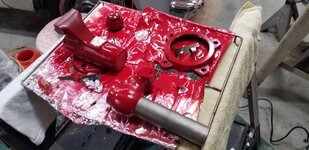
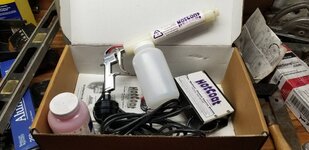
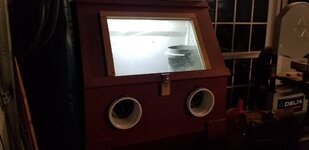
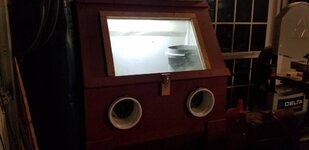
After some bead blasting in the blast cabinet, it was ready to go. I cracked open the yard-sale-found Eastwood powder coating kit I've had for a few years. All of the original receipts were in the box--this kit was bought back in 2006 and never used.

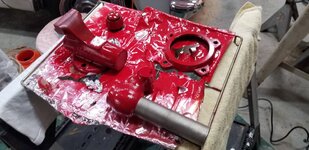
I wrapped the oven grate in aluminum foil and selected Mirror Red from the powders that came with the kit. I sprayed down the parts with degreaser and after letting them dry, hit 'em with the powder gun. It worked okay, but despite Youtube video warnings about the difficulties in getting into tight spaces, I still managed to miss a few key areas under the static portion of the vise. I also had a few areas where the powder didn't stick, probably due to contamination. A recommended technique that I skipped is to bake the part before putting the powder on to drive out any trapped oils. Maybe next time.



Finally, since I put my lift into service, I've been wanting a tool cart to set wrenches and parts on as I work under the car. After haunting Craigslist and looking at carts on Harbor Freight, I recalled that--duh, I already own a Hazet-imitation cart that was tucked under a bench in the other building gathering dust. I pulled it out...and remembered why I had tucked it under there in the first place: one of the latches was broken. Nevertheless, since I had it out, I decided to repair it.
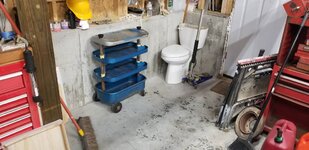
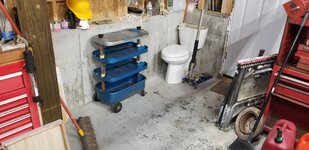
Here's the corner where the cart will live. Of course, the first step was to clean out the junk already there. Oh and no, the toilet is not functional--it was salvaged from another renovation and will eventually go upstairs in old garage as part of an efficiency apartment upgrade.

The problem with the latch is that the cheap sheet metal finger grip had pulled off of the locking pin. That fix was easy: I tapped the sheet metal back onto the pin and swedged the pin metal to re-grip and capture the sheetmetal. I then needed to take the entire bracket off of the shelf to get the clearance to reinstall the repaired part. That task involved drilling out the blind rivets, punching them through, installing the part, re-installing the blind rivets, and the swedging what was left of the ends to capture the bracket again. I was doubtful the repair would work, but so far it is holding.


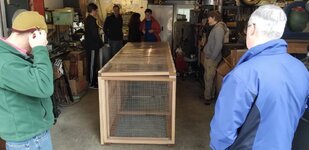
I have more projects underway, to include helping Life Scout finish up his Eagle project that currently occupies a bay in the heated garage. That's part of today's fun.