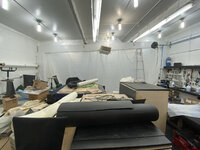
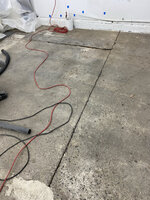
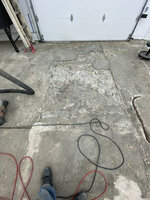
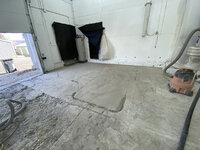
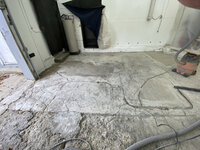
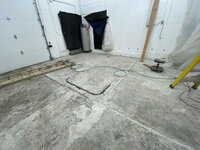
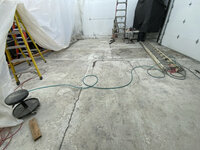
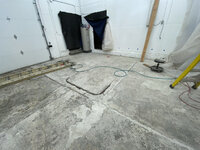
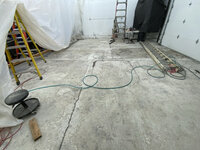
I'm off work for two weeks. I usually plan a big project for this time off. It's a great way to recharge. I like to choose something that's a lot of work, needs to be done and will feel great knowing it's behind me all year. The floor next to the roll up door in the upholstery bay is really, really rough. I didn't put the Lock-Tile down in that area because the floor wasn't flat enough to support it.
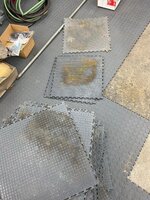
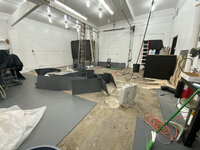
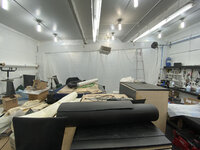
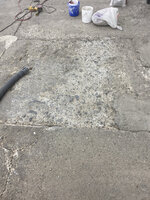
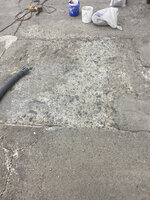
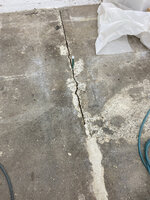
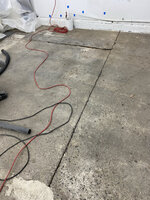
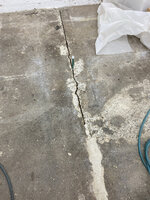
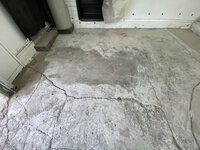
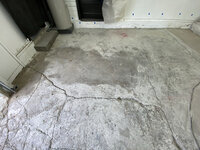
Apparently I hit my head, hard. Because I decided I'd knock out flattening that bit of concrete. I started by pulling up tile to clear the work area. This is some of what I found.

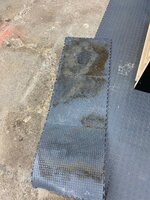

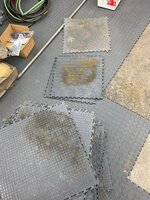

I did a 2' square moisture test where you tape a chunk of plastic sheet to the floor, sealing all of the edges. Remove it 24 hours later and look for moisture. It came up bone dry. I'm getting some moisture, but I don't think it's coming through the slab. Most likely through the cracks in the floor. Not much moisture, but enough for some mold and funk to grow in some of the tiles in the three years since I put the tile down. It's not consistently everywhere and the photos are of the worst spots.
I spent the entirety of yesterday researching, running to town for supplies, talking to a lot of knowledgeable people on the subject and in general putting together a game plan. I need to get this done and the shop back together in a week.. ish.
I deliberated on a lot of different solutions. Epoxy coating the floor is not an option. It would be a TON of work to get it in a condition the epoxy would look even half *** good. I bought some epoxy to seal the existing cracks.
This is $160 in epoxy and associated applicator.

The plan:
- Thoroughly clean and dry the tiles.
- Vee cut the cracks, fill the bottom with epoxy
- Patch the rough concrete with RapidSet self leveler in the cracks and crevices
- RapidSet Cementall to get to a flat surface in the areas I'm patching and filling.
- Rent a proper concrete grinder and grind the entire surface - that half of the shop, with a 18 grit diamond
- Clean thoroughly
- Coat with DRYLOK Floor & Wall Masonry Waterproofer
- Let that cure for a couple days with the heat on rather high
- Lay the tiles back down
I considered a lot of options. There is such a tiny amount of moisture that I don't think the more expensive 2 part, 100% solids epoxy liquid vapor barrier products are necessary. They are about 4 times the cost of the Drylok and at least a week out.
So.. turning the clean shop into a disaster area starts now. I'll empty that half of the bay, 550 sq ft of floor, drop a thick plastic barrier down the middle, mask off what I can't remove, and get to grinding while sucking rubber (full face respirator).
I'm sure this will be awesome when it's done. It's going to be a ton of work though.

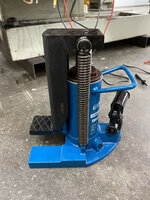


 ) The 7 footer is tough to resist. I always take that one on the road in case something gets shifted and I have to put it back.