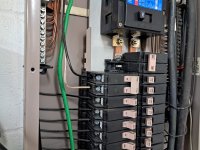
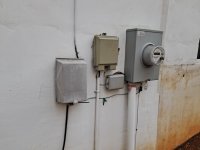
About a year ago, I installed an
Emporia Vue3 energy monitoring system. For 200 bucks and a day or so of planning and installation, I've got current real time second by second (also minute, hour, day, month, year) power draw on 98% of the circuits in my home, expressed in amperage, wattage, $ per kwh, or voltage. While I had already bought a generator
(Westinghouse 9500Dfc) to replace a 35 year old Generac 5KW, I can now run on the generator with pretty good information of what loads, if any, that I'll need to shed while on the generator. I disn't want to sidetrack the thread, but the Emporia, or similar systems is well worth the effort if you're planning an expen$ive generator instillation ( I plan burying about 120 feet of expen$ive copper from the genset location to my house). The Westinghouse is a stopgap solution prior to a more extensive solution..
Another comment - about the drawback of the less expensive non-invertor generators running at fixed speed thusly burning more fuel: just as your car ***** more gas when towing a trailer (e.g. up hill, in a headwind at 100 MPH), a generator engine's power output demands are based on the electrical load, not on RPM. I saw an extreme example of that a few years ago when during an extended (week long) outage a state level data center ran out of diesel because someone's fuel calculations were based on low load monthly gen testing, not real load (LOL, yep it happened). If your generator's a gas hog and in good condition, take a look at the loads you're putting on it.