For HIBALL and for anyone following this.
First let me start by saying that in general, bypasses always bypass to the tank, whether thay are the ram bypasses or any type of speedy lifty bypasses.
Second, these are two separate systems. The main ram will lift as it should even if the speedy system is not working and the speedy lift will lift as it should ( when set correctly) even when the ram isn't working. Understand that when the bypasses are set correctly both systems are working at the same time, all the time, but one bypasses at some point but oil keeps flowing through it. In other words, they are involved but not compromised. All this assuming that you have good seals. Of course, if one of these system bypass is completely open, meaning that it is bypassing a lot of oil, poor performance can be expected from the other system, as too much oil can be redirected to the open system. So we are dealing here with bypass systems sealing correctly.
Third I do not like to call the speedy bypass an "overload", as it is usually refered to, because that gives the (mistaken) impression that you need some overload (heavy weight) to happen before it starts to work. The only overload it needs is to feel just a little weight before it starts bypassing. More to this below.
To fill the space behind the ram with oil when the speedy system is working but the jack has not reached the chassis yet, there is a passage, per the patent, that connects the oil tank to the cylinder and this passage has a check ball or a one-way ball identified as A3. When the handle is pumped, part of the oil goes to the speedy lift and part of it goes to the ram, there is no choice here. Of course, the amount of oil pumped behind the ram is not enough to fill the space behind the ram so here enters into action that check ball A3. The suction created by the ram moving forward draws oil from the oil tank to supply the oil necessary to fill all the space behind the ram. When you stop pumping, the A3 check valve closes and the ram retains the oil behind it.
This works the same way as those false "quick lift" systems that connect the lift arm pivot or shaft to a pedal and when you step on the pedal the arm is raised mechanically and if the release valve was closed beforehand, the arm would stay up. The ram is drawing oil from the oil tank even if you are not pumping oil with the handle.
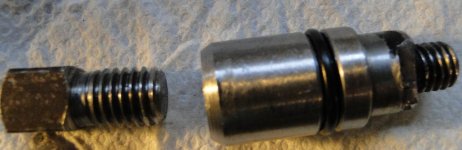
The speedy system is set light because the "changeover" happens the moment the arm touches the car. The only purpose of the speedy lift is to raise the arm quickly and should start bypassing the moment it makes contact with the chassis. At that point the ram, which should have drawn enough oil from the tank to fill the space behind it, keeps lifting as any jack does. If you set this bypass to tight, you run the risk of blowing the o-ring and its back up, at the bottom of the speedy lift tube. This system is not designed to lift any weight apart from the weight of the lift arm itself.
That the lift seems soft is a common problem with jacks having quick lift features because some oil is going back to the oil tank. This means that the bypass valve is openning, and stays open, the whole lenght of the pump action, so at that moment, the jack is loosing some pressure from the pump piston. Because of this, it is unlikely that you are going to have a crisp lift each time you pump, the same way you would have with a non speedy lift jack in good condition. Also, jacks with speedy lift systems usually take a little longer to lift a load because of the oil bypassed to the tank. In other words you have to pump more times. I have heard complaints on how quick the arms lift up to the chassis but then it takes a lot of pumping to lift the car. And this happens with good seals.
Also, another problem with these pump having speedy lift systems is achieving a good air bleed ( or priming of the pump). Sometimes, the soft feel when lifting is increased because these type of pumps have more oil passages and more spaces inside the pump that can trap air. Because of this, these pumps may require a more thorough bleeding procedure than regular non speedy pumps.This may require lifting the jack from the front end a little, while pumping ( release valve open) to help that air move out. Sometimes this works right away other times it does not, so you may have to keep bleeding the pump a bit more.
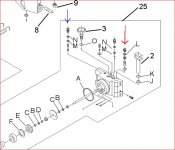
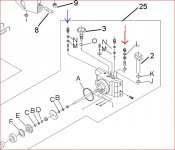
Since the two systems are independent, adjusting the speedy lift one way or another will have no effect on how the main ram works or how soft or crisp the lift feels. Also, because of this independent functioning, you can set the speedy before or after setting the main ram overload. The way to set it then is to back up the bypass, tighten little by little and test, and them stop tightening the bypass threaded plug the moment the lift arm starts lifting fast. You don't need to set it under load/pressure, or any tighter, as the oil going to the speedy lift system to push the ram out fast, or the oil bypassing from it, will not go to the ram to help fill the space behind it or help to achieve a crisper and/or faster lift. Tightening it more thinking that it is going to provide a crisper lift may not work because this speedy bypass has to bypass at some point so you are going to lose some oil pressure and the pump action is going to feel not so crisp.
Since these are simple systems, you can not stop the speedy overload bypass from bypassing all the time after a load is felt by the jack. That would require a more elaborate system of valves to stop sending the oil it sends to the speedy lift and send all the oil flow to the ram.
If the speedy lift feature was strong enough, parts wise, and if there was no bypass of oil to the tank from the speedy bypass, you could have the speedy lift system help lift faster and probably crisper, but unfortunately, it does not work like that.
About the "ligth seat" issue where you think you lose vacuum, if the bypass is closed, and you have a good seal at the seat, even if it is set light, there should be no leakage of any type there, either of oil or of vacuum. If you are having a vacuum leak, or think that it is a vacuum leak, that does not allow to fill the space behind the ram, that problem has to be somewhere else, like for example the oil passage, and its check ball, that supplies extra oil to the ram when the quick lift is working and pushing the ram out fast. Or maybe, the u-cup is not sealing well enough when the ram is going in the forward direction to be able to draw all the oil needed behind the ram. Remember, as I mentioned before, that although the pump piston is sending oil to the ram, it is not sending all it needs when the speedy system is working, so the extra oil needed comes directly from the oil tank by suction by whatever method the pump designer/engineer provided for this. A u-cup not drawing enough oil could be one that even being new, may fit slightly lose in the cylinder and not achieve a good seal when moving forward because of this, even if it seals OK under load.
Also, the speedy system oil pushing out the ram stays inside the space in the ram where the speedy system tube fits because the small o-ring the ram has at its base seals this tube. This o-ring prevents this oil from going behind the ram to fill the space behind the ram. So oil from the speedy system is not used to fill the space behind the ram whether it bypasses or not or even if it leaks because these are two independent systems working together. Of course, if the o-ring is worn and leaking, then you are going to have oil leaking to the space behind the ram but the speedy lift will probably not work at all.
As for a tighter speedy lift bypass setting, a test would have to be performed to find how much weight the speedy system can lift alone, with the main ram overload backed up and bypassing only for this test, before the o-rings sealing it break up. Then the speedy lift could be set somewhat less tight so it bypasses before reaching the point the o-rings break up, specially the botton one at the base of the speedy tube which seems to go first than the top one. Perhaps this way a slightly nicer and faster lift could be achieved without damaging these o-rings. If the o-rings fail sometime latter due to the continued stress on them (fatigue), go back to the lighter setting as this system is really not designed to lift heavy weights, as I mentioned before.
The problem with the patent cutaway drawings is that these show only some of the oil passages but these do not show the bypasses and the oil passages going to them so it is incomplete and therefore confusing.
Mention of the A3 ball is made in the section titled "DETAILED DESCRIPTION OF THE PREFERRED EMBODIMENTS" secong page, second paragraph, I believe.