Interesting, I had never really thought of that before either. The options a VFD opens up for speed control and such were pushing me heavily towards the VFD per machine route. If I used the RPC to power everything, would I still need to size the added VFD to the amp/hp requirements of each machines motor?
American Rotary was one of the RPC places I have been researching and figured I would give them a call and see what they say. I have heard good things across the board about them. I am guessing the motor is old/tired, yes. Electricity and wiring is most certainly not my strong point, so I have been struggling to understand where to begin.
I think the cost of a Phase Perfect setup will keep me from buying one until my final shop is built where all the wood and metal working equipment will fall under the same roof. If I am understanding it correctly, it looks like Phase Perfect is a fully digital conversion from 1PH to 3PH with just a few fans to keep it cool and no actual motor running? Benefits look to include being able to run machines at 100% of stated HP and they are quiet and don't use much energy at idle.
All,
Thanks for the advice. I figure the more questions I ask, the better prepared I am.

The only route that doesn't really provide full power is a static converter (which, honestly, at this point in time, I don't see a point in ever using). That's because it really just gets the motor started and then drops out a leg. So you're only getting two legs to your machine, therefore only 2/3 the power. About the sizing, yes, a VFD would still need to be sized to the motor. Technically, you could run a machine off of a RPC and use a 3ph/3ph VFD if you wanted those benefits. This is done all the time with industrial equipment like blowers, fans, stuff like that (not running on a RPC, but 3ph in and and 3ph out VFD). One benefit of the VFD is providing phase conversion, but majority of cases that's not why they are used.
There are some features that are handy with a VFD, but it's definitely not necessary. Almost any machine tool has some sort of way to control spindle speed. There are a few situations where a VFD does become handy. Say you have an old 1J Bridgeport with only the pulleys. So you have to move the belt to change the speed. A properly wired VFD would let you leave it somewhere on a middle speed setting and get to most speeds just by a potentiometer on the VFD. There are some spindle speed/torque curve drawbacks, but that's the idea. Same goes for like a drill press or a bandsaw. Makes it more possible to find like a nice wood bandsaw like a Rockwell and throw a VFD on it and now you can control the SFM of the blade (something like this may need to be re-pulleyed to get into a more suitable speed range for metal).
On the flip side, say you buy a pimped out 2J variable speed head Bridgeport, power feeds, auto drawbar, etc. IMO, there's literally no benefit to using a VFD. The machine functions perfectly normal on 3 phase power. You can still power tap, instant reverse with the switch via the 3 phase and you have infinite speed control via the head and low speed with back gears. Just provide it 3ph power from a RPC and you are good to go. Same goes with a lot of nice 3ph equipment. They already have the mechanisms in place that a VFD would provide. Some people nerd out and like to think you need infinitely variable speeds, but that's just not the case. I had a 1440 Cadillac lathe. Plenty of power. Just plugged into the RPC and ran like normal. Speeds all easily available via the gearbox. Power carriage feeds and all the normal stuff. Literally no benefit I could think of to run that machine off of a VFD. If you already had a RPC for powering equipment, you'd be leagues ahead buying a DRO and fitting it to the lathe rather than a VFD for giggles...
If you ever want to run anything CNC (a native 3ph CNC), you'd need a RPC, because you would need to provide 3ph to the cabinet and all the electrical distribution is in place in the machine already.
Again, all generalities and there are exceptions to everything obviously. A Phase Perfect is essentially the Ferrari of RPCs. It's just a digital converter. So, it's the same idea as an RPC, but you don't have an idler motor. The other benefit is capacity. Generally with an RPC you want to have your idler motor twice as big as the motor you want to run (but that would also be accounting for FLA). Not hard and fast rule, but generally.
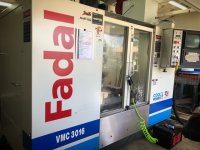
The Phase Perfects are rated at stated HP, ie a 10hp PP will run a 10hp machine or combo of machine no issues. Good example is my Fadal is a 15hp machine and I run it on a 15hp RPC, but I'm not burying it all day every day either. I would technically have more head room with a 10hp Phase Perfect.