To avoid these ads, REGISTER NOW!

Woodworking 101--Tools and Tips

OP
J

jimreed2160

Well-known member
Joined
Aug 7, 2016
Messages
3,589
Location
Tallahassee FL
Mortise and Tenon joint

Time for a tutorial. The mortise and tenon joint is a strong and effective way to join wood at a right angle. It so effective, in fact, that the concept has been around about seven thousand years (!). Today I am making a pattern joint. Doing it right takes thought for design and also takes time to set up your marking tools. But once I have the pattern joint, I can measure directly from it and save lots of time and thinking.

First up is the wood stock. The tenon is one inch thick and the mortice (think table leg) is 2 5/16".

DSCN1156.jpg


For the best strength, I like the tenon thickness to be at least half of the total skirt thickness. That means that the tenon should be 1/2". The mortice is also that thickness. Here I am setting the marking pins.

DSCN1157.jpg


Next, I set the stop for about a 3/8" recess.

DSCN1158.jpg


I marked the mortice with pins and marked the end with chalk.

DSCN1159.jpg


Once the mortice is marked, I move over to the drill press and drill a few holes to remove stock. I find that the mortice machine works better on walnut stock if it does not have to work so hard. I used the DP to punch some 3/8 holes in the mortice.

DSCN1162.jpg


Then it is time to use the hollow chisel mortise machine.

DSCN1163.jpg


DSCN1164.jpg


DSCN1165.jpg


It works best if you skip and leave space between holes.

DSCN1166.jpg


Then you come back around and punch holes between the previous holes. At some point you are done. I finish up with a chisel to knock off high spots and to clean out chips.

DSCN1167.jpg


And then we have a clean hole.

DSCN1170.jpg


Notice the deep hole on the inside end. I like to start there rather than the edge. It provides a place to bury mistakes. In this case, I had set up the stop but then removed a piece of wood under it to set the fence. When I punched the hole, I could tell I went too deep. I corrected the stop and continued. Once the tenon is in place, this mistake will be buried DEEP.

Now it is time to work on the tenon. I always mark my stock so I can keep it oriented properly. Sometimes there are grain issues and sometimes there are size issues. Marking the stock makes fitting error free.

DSCN1172.jpg


Here are the marks for the tenon. Yes, there are two lines. Just cut to the most aggressive one.

DSCN1173.jpg


I like the bandsaw for roughing out tenons and always cut them generously.

DSCN1174.jpg


They are only tenons. If you cut too much you can glue up stock and cut them again. But cutting generously and trimming usually saves time.

And here are out roughed out joint pieces.

DSCN1175.jpg


It is time for me to take a break. I will finish up tomorrow with the trimming and fitting. Thanks for watching.
 
Last edited:
To avoid these ads, REGISTER NOW!

ez-duzit

Well-known member
Joined
Jun 24, 2013
Messages
5,095
Location
Marina del Rey
Jim--good effort on the photos and text.

I've longed for a hollow chisel mortiser. And in fact had bought an expensive one, but returned it the next day after discovering a broken casting.
 

matt stott

Well-known member
Joined
Sep 11, 2013
Messages
147
Location
Boston, USA
Impressive work and shops! Jimreed- thank you for all that info, that turnscrew set is really impressive- I love anything with boxwood handles and that set is proportioned perfectly.

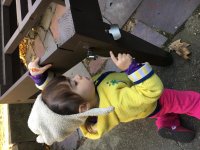
My contribution: a small toy toolkit and some bolts-n-stuff for my 2-year old daughter to play around with. No fine woodworking, or fine toolmaking here, just some stuff to occupy a toddler while I frantically try to accomplish something during my limited shop time. And no- that little carving knife is NOT part of her toolkit.

(she seems to prefer the real tools, though. Can't blame her)

Matt
 

Attachments

  • IMG_5413.jpg
    IMG_5413.jpg
    142.1 KB · Views: 103
  • IMG_5563.jpg
    IMG_5563.jpg
    148.9 KB · Views: 106
  • IMG_5843.jpg
    IMG_5843.jpg
    141.9 KB · Views: 107
  • IMG_5850.jpg
    IMG_5850.jpg
    142.5 KB · Views: 106
OP
J

jimreed2160

Well-known member
Joined
Aug 7, 2016
Messages
3,589
Location
Tallahassee FL
EZ--Just put the mortiser on your Christmas list. Santa may be watching. I have not fired mine up in years, but I really like it. Before I got it, I made the Lonnie Bird Ky cabinet and decided that it needed multiple mortices. That extra strength version has two tenons and two mortices for each piece. And I did it by hand using a big mallet and Stanley #60 **** chisels. Ha! At the time I had a basement shop and sound traveled. I whacked away for two evenings on hard maple and drove my wife to distraction. My hands were a mess for a week. The mortiser came before my next project. After drilling the relief holes, I knocked out the tutorial mortise in less than a minute. Coincidentally, my mortiser also came with a broken casting. Delta sent me a new fence because the one in the box snapped.

Matt--You are a great dad! Keep her going on those ww skills. My granddaughter loves to play in my shop. She is especially intrigued by the "spinny thing" (vise).
 

ez-duzit

Well-known member
Joined
Jun 24, 2013
Messages
5,095
Location
Marina del Rey
Jim--I understand about your hands. At 73, my arthritis sometimes flares up badly, due to the effort and unavoidable abuse that comes with doing hard, physical work.
 

pstemari

Well-known member
Joined
Jan 7, 2012
Messages
903
Location
Seattle
Heh. Hard physical work is a lot better for your joints than sitting in a chair pounding a keyboard.
 

drivesitfar

Well-known member
Joined
Oct 23, 2013
Messages
36,006
Location
Pacific Northwest
PST: i agree that keeping active has more benefits than not, but still age and old wounds don't seem to always care. thankfully i can't say i have issues that prevent me from doing anything and happy to be alive at almost 61.

JIM: so for those of us that don't own a MORTISING machine can we just have SANTA get us some MORTISING BITS to use in our drill presses or maybe even hand drills?

love the tutorials and keep up the great work.

also quit buying vises cause it takes up too much of your WW time. :D
 

turbowoodworker

Well-known member
Joined
Mar 18, 2012
Messages
3,522
Location
Apex NC
Drives,
There are lots of ways to cut a mortise from drilling with brad point and hogging it out with a chisel to the mort machine. That open mortise Jim showed would be easy, easy with a router and straight bit, A little more difficult if closed end mortise but possible with plunge router.

Here is inexpensive drill press attacj
hement for mortises:

http://www.northerntool.com/shop/to...4Rv6Ini9yK3dOT8T9foO-TyPPgf_JVV5LgBoCFsLw_wcB

search mortise attachment if link fails.
 

drivesitfar

Well-known member
Joined
Oct 23, 2013
Messages
36,006
Location
Pacific Northwest
Turbo: i might even own that attachment cause i pick up things i'm not always sure what they are and hope to find out later.

i've seen something similar attached to a drill press or maybe that was something different.

thanks for the 411
 
OP
J

jimreed2160

Well-known member
Joined
Aug 7, 2016
Messages
3,589
Location
Tallahassee FL
EZ & PST--I try to keep my activity level up. My last job required at least some physical activity. Since I retired exercise has been low on my list. Yardwork helps. Shop time helps. I had both carpal tunnel and ulnar nerve surgery bilaterally and am still bothered by the underlying conditions. Add in some arthritis and 67 years of general pounding and here I am. Woodworking keeps me active so that is good. I encourage others to do the same.

Drives--Good points on other ways to make mortices. I love my mortice machine but there are many other ways to punch square holes. Here are some alternatives.

Traditional ww method for mortices
Before the avalanche of power tools, ww made mortices quickly using a brace and bit along with a chisel. Simply mark the joint but add a center line in the waste. Set the point of your bit (1/2 for a 1/2 inch mortice) on the center line and drill adjoining holes to depth in the waste. It is best to leave overlap between holes as with the hollow chisel mortice machine. Make sure the interval has enough wood to engage the screw on your bit. When drilling is complete, just chisel out the waste and square up the hole.

Traditional method using only chisels
Some woodworkers make mortices using a mortice chisel. These heavyweight chisels have squared up sides and cut aggressively. Pounding out mortices with a mortice chisel can be fast if the woodworker is strong and fit. My technique was to start by using a two or three inch bench chisel to make clean cuts to define the edges. Once started, I start the mortise chisel on one end and lift out chips as I move down the cut. The second layer was like the first, using the bench chisel to form the sides. After a few layers, the bench chisel is not necessary and the mortice chisel can just work methodically down the cut.

Power tool method using a drill press
Drill presses can be adapted to use hollow chisels. First you must purchase a fixture to hold the bit. Then you need to adapt your table to accommodate the workpiece and hold it securely. Then set the bit depth and proceed as with a mortice machine.

Power tool method using a router
Use a plunge bit in your router to plunge cut a mortice groove. This cut is easy on a router table but requires a little more setup care when using the router freehand. Proper guides and fixtures make it a safe cut however. When the mortice is made, square up the ends with a chisel.

So there are many ways to "skin the cat" when it comes to mortices. Remember that the mortice hole is used to secure a tenon. There are no bonus points for appearance. In fact, a slightly ragged hole is better for glue. But chopping mortices does give the woodworker experience on making defined and uniform holes in wood. This experience will come in handy when we move on to chopping out dovetails.

The ww should not be intimidated by mortice and tenon joints. They are strong and easy to make. Cut a few and see for yourself.
 

SteveL

Well-known member
Joined
Jan 14, 2005
Messages
760
Location
St. Louis, MO
Any of you have a Fein Turbo II Wet/Dry vac that can share their experiences? I'm in the market for a new vac and have been looking at these and the Festool but really like the Fein option of converting to wet pickup. I have a central dust collection system for the large tools like table saw, band saw, router table etc. but have never had a good portable vac to run with hand held tools like the router or circular saw. The wet feature would come in handy during winter when I get melted snow puddles as my garage is heated.

Main concern is how convenient is it to switch back and forth from dry to wet and does it have enough power to effectively pick up a gallon or two of water? Any other good or bad points would be appreciated. Also, any other brands that you can suggest would be welcomed. Wall mounted would also be a plus.
 

cheechi

Well-known member
Joined
Feb 29, 2012
Messages
4,384
Location
Triad, NC
Jim
what XY vise is that on your DP? what would you recommend to us building up our ww tools who want one also?
 

matt stott

Well-known member
Joined
Sep 11, 2013
Messages
147
Location
Boston, USA
I have the Fein Turbo III, but same idea. I use it mostly for dry pickup, with a hepa filter over the motor. I need it for wet occasionally- spring thaw brings some water into my basement and I had a washing machine blow a hose recently.

It takes about one minute to switch over if you go slowly. I use a paper vac bag inside, which needs to come out. I then pop off the hepa filter (no screws, just a friction fit) and slide on the blue "wet" filter in its place. Picks up gallons of water like a champ.

Downsides: Does not feel anywhere near the quality of the festool vac (which I do not have and have not used). The hose picks up a static charge pretty quickly (unlike the grounded festool hose) and dust and chips stick to it like glue.

Upsides: works like a champion, quiet, adjustable vac levels, cheaper than festool. (I use my fein vac with a festool sander and they play nice together, too)

Any of you have a Fein Turbo II Wet/Dry vac that can share their experiences? I'm in the market for a new vac and have been looking at these and the Festool but really like the Fein option of converting to wet pickup. I have a central dust collection system for the large tools like table saw, band saw, router table etc. but have never had a good portable vac to run with hand held tools like the router or circular saw. The wet feature would come in handy during winter when I get melted snow puddles as my garage is heated.

Main concern is how convenient is it to switch back and forth from dry to wet and does it have enough power to effectively pick up a gallon or two of water? Any other good or bad points would be appreciated. Also, any other brands that you can suggest would be welcomed. Wall mounted would also be a plus.
 

ez-duzit

Well-known member
Joined
Jun 24, 2013
Messages
5,095
Location
Marina del Rey
Well, you're not going to turn a drill press into a milling machine. And there are much better/easier ways to produce slots in wood. But, if you really don't believe me, I'll sell you mine.
 

ztorres

Well-known member
Joined
Sep 22, 2016
Messages
195
Location
Iowa
Well, you're not going to turn a drill press into a milling machine. And there are much better/easier ways to produce slots in wood. But, if you really don't believe me, I'll sell you mine.


Oh I believe you I just wondered what your reasons were.


Zach
 

ez-duzit

Well-known member
Joined
Jun 24, 2013
Messages
5,095
Location
Marina del Rey
Mine just sits on a shelf, taking up storage space.

What use did you have in mind, that you could not find a better way?
 
To avoid these ads, REGISTER NOW!

ez-duzit

Well-known member
Joined
Jun 24, 2013
Messages
5,095
Location
Marina del Rey
It has no purpose in my shop. If I want to cut slots in wood, I use a router (or table router), either against a fence, or in combination with a quickly fabricated template.

On the other hand I regularly use a plain drill press vise.
 

Autonomous

Well-known member
Joined
Dec 26, 2015
Messages
66
Impressive work and shops! Jimreed- thank you for all that info, that turnscrew set is really impressive- I love anything with boxwood handles and that set is proportioned perfectly.

My contribution: a small toy toolkit and some bolts-n-stuff for my 2-year old daughter to play around with. No fine woodworking, or fine toolmaking here, just some stuff to occupy a toddler while I frantically try to accomplish something during my limited shop time. And no- that little carving knife is NOT part of her toolkit.

(she seems to prefer the real tools, though. Can't blame her)

Matt
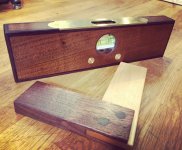
That level and square are gorgeous. Awesome kid, too!
 
OP
J

jimreed2160

Well-known member
Joined
Aug 7, 2016
Messages
3,589
Location
Tallahassee FL
Cheechi--I have the x-y vise on my DP mostly for metalworking but it works great for wood. It would not be my first choice for mortising, nor would the DP. I like the dedicated mortise machine because it is easier to set up and the single lever pinion gear is easier to use than the DP three handled wheel. Sometimes the mortise machine chisel requires a lot of force. Hard maple, for example, can be tough to punch a hole in.

I found my x-y on that on line auction site. It was an inexpensive import. Pretty sloppy for precise metalwork but good for woodworking. When I made pens I used it a lot to drill the blanks. For general woodworking, I use a sacrificial board with a cleat as a table. I just clamp it into the vise and do not have to remove it.

As far as drill presses go, they are very handy to have around the shop. They are also one of those tools that bites very hard. Most ww tools run at high speeds. The low speed of the DP can be deceptive because that low speed is coupled with HIGH torque. Bits can get stuck in the workpiece and sling it around. Hold something the wrong way and you will end up with a broken finger or worse. Safety alone is a good enough reason to mount a vise, x-y or fixed, on your DP.
 

turbowoodworker

Well-known member
Joined
Mar 18, 2012
Messages
3,522
Location
Apex NC
Speaking of pens, anyone into making them much?
I used to make them on occasion but yesterday I got the new Penn State Ind catalogue.

I learned by flipping a few pages that you can not build a pen unless you spend about 2 grand on a special mini lathe, special pen press and lots of fancy consummables. I never knew I couldn't build pens without all that machinery!!!
 
OP
J

jimreed2160

Well-known member
Joined
Aug 7, 2016
Messages
3,589
Location
Tallahassee FL
Jim--how does the X-Y help when drilling pen blanks?

This sounds like a good time for a pen primer. I have turned dozens of pens and even put on pen-a-thons when I worked for Rockler one summer (long story).

Wooden pens turned on a wood lathe are a delight to make and to gift. Pretty exotic woods make impressive writing instruments. For those of us with a desk job, a handmade wooden pen sure helped those interminable meetings go by quicker.

There are a wide variety of pen kits available. I will outline the basic kit for a ballpoint pen.

The kit has two brass tubes which are superglued into the center of the blank. Those go into a mandrel and are turned to size. Finishing is done on the lathe using quick dry ingredients and wax. Pen parts are pressed into the tubes using a small press or vise. One piece holds the cartridge and the other holds the clip. Once finished, the clip piece slides over the writing mechanism. A good turner (me) starting with previously drilled blanks with tubes can turn out a pen in less than five minutes.

To make a simple pen, you need a wood blank that is about 3/4" square by about six inches long. The first order of business is to cut the blanks to size for the specific kit--usually about two inches, but it really needs to be about 1/8" longer than the tube on each end. You drill a 7mm hole through the center of each blank, insert the brass tube with superglue, and let it dry. After drying, you use a sizing tool on an electric drill to even the shoulder around each tube end (there will be four ends to size).

Drilling the hole does not have to be exact but it needs to be close. I found that there was no substitute for a drill press. But the blanks are very small and need to be securely held. I used my x-y vise with a piece of wood underneath the blank. It was easy to dial in. Sometimes I used a handscrew and eyeballed the center. At Rockler, we used one of the fancy DP tables with a fence and clamps.

My last pen was a few years ago and I need to order some finish. My favorite is shellac based and goes bad over time. Then I can do a tutorial on pens. But careful--turning pens can be addictive.
 

ztorres

Well-known member
Joined
Sep 22, 2016
Messages
195
Location
Iowa
Since we are talking about pens and turning, I'll bring up one of my favorite turning catalogs there is. It's called Packard Woodworkers; it has turning supplies, tools, pen kits, and various woodworking projects


Zach
 
OP
J

jimreed2160

Well-known member
Joined
Aug 7, 2016
Messages
3,589
Location
Tallahassee FL
Turbo--Good point about financing a pen turning enterprise. It does require specialized tools--especially a lathe. When I started I already had a (free) lathe but the specialized mandrel cost me a lot because of my oddball Craftsman lathe. I was able to add other tooling as I went along. The special tools did not really improve the product but did make things easier.

We improvised on tools a lot during our pen-a-thons at Rockler because I had about six lathe stations going at once. There are substitutes for most of the specialized pen tools. I will make sure to show alternatives when I do the tutorial.
 

turbowoodworker

Well-known member
Joined
Mar 18, 2012
Messages
3,522
Location
Apex NC
Jim I was being a little facetious about the Penn State Ind catalogue. If you open any wood working magazine these days, they make you feel like you can't possibly do good work unless you buy one of everything on the page.
You and I know you can do very creative things with a sharp chisel and a dull brain.

My lesson of the day: try some WW before you buy anything fancy like one use tools, etc.
 

ztorres

Well-known member
Joined
Sep 22, 2016
Messages
195
Location
Iowa
Jim:
What is a good shoulder plane? What is a good company to go with? I would like to get more into doing things manually, and it's an area I need some tips on. Is it worth spending $150 on one plane?


Zach
 

ez-duzit

Well-known member
Joined
Jun 24, 2013
Messages
5,095
Location
Marina del Rey
z--my 2 regularly used shoulder/rabbet planes are shown immediately to the left of the small green one. They are the 3/4" & 1" wide Stanley's, which are kinda expensive but usable. My biggest criticism of them is that they have sharp edges that dig into your hands. These sharp edges must be stoned down. These are extremely handy and get used often.

The shoulder plane to their left is a Record--perhaps a little nicer than the other 2--but I dropped it on concrete, breaking it in 2. And the welder who tried to repair it misaligned it and welded it anyway! So it is now unusable.

planes-1_zpsea84c6e8.jpg
 

cheechi

Well-known member
Joined
Feb 29, 2012
Messages
4,384
Location
Triad, NC
Jim & EZ

Thanks. I have occasionally wanted to use one as essentially a 'shortcut' to moving things around in the same exact way jim talks about using it. Not to mill, but to help along the way when you take it to the right machine. So basically, like EZ says essentially it isn't the right tool for anything in ww but it can come in handy if you have the right workflow and/or laziness factor.
 
OP
J

jimreed2160

Well-known member
Joined
Aug 7, 2016
Messages
3,589
Location
Tallahassee FL
ZT--Thanks for the lead in for tomorrow on shoulder planes. I was at, or some may say I was dragged to, the mall today with Mrs Claus. Immediately after breakfast, I had to go to the doctor to have my head stitches removed. Did not even have time for coffee. Then it was to the hairdresser for Mrs Claus. And then the maul trip. How can you spend all afternoon in one store? :willy_nil

So I got home in time to heat up some pot pies. You will notice that there was not a whisper about shop time.

So sometime tomorrow I need to get out into the shop with the shoulder planes and trim down that tenon for the sample mortice. I could save you some time and just announce my favorite, but where is the fun in that? Let's just say that I have tried a lot of them and they all have their merits but some stand out.

But who could it be? :dunno:
 

drivesitfar

Well-known member
Joined
Oct 23, 2013
Messages
36,006
Location
Pacific Northwest
JIM: i can see a making a pen tutorial in our future. :dunno: thanks for the lessons and keep up the great posts

ALL: there is a member setting up his shop to do woodworking and he started a thread about how he should set it up so some of you might like to comment and help or maybe you'll pick up a few good ideas and here's the link:

http://www.garagejournal.com/forum/showthread.php?t=347419

another note to a quality project is BJ has started his router table we talked about a few days ago so check out his garage gallery thread and here's the link:

http://www.garagejournal.com/forum/showthread.php?t=185236

hope you all have a great Friday and maybe a cool project planned for the weekend.
 
OP
J

jimreed2160

Well-known member
Joined
Aug 7, 2016
Messages
3,589
Location
Tallahassee FL
Shoulder Plane Roundup
Here is a class photo of my shoulder planes along with a few random rabbets that are good at shoulder work. These planes are made especially for cleaning up tenon faces and tenon shoulders.

DSCN1176.jpg


On the top far left, you will see the offerings from Stanley. There is a #289 skew rabbet.

DSCN1177.jpg


Here is the Stanley family beginning with the #94. It is joined by the #93 and #92.

DSCN1178.jpg


Then we have the Preston family. There is a Record 311, which is copied from the original Preston, the Preston combo, and the Preston baby.

DSCN1179.jpg


Here are two rabbets from Lie Nielsen--the #140 skew rabbet and the low angle rabbet block plane.

DSCN1180.jpg


Here is the Lie Nielsen shoulder plane family--large, medium, and small.

DSCN1182.jpg


Here is a skew rabbet from my collection. There is no maker's name but I made the skewed blade and the wedge so maybe I should stamp my name on it.

DSCN1184.jpg


There was standardization back in ww days of yore. Most shoulder planes were 2 1/4" wide. Here is the skew, the #94, the LN, and the Preston. All are 2 1/4" except for the Preston (2 1/8").

DSCN1186.jpg


All of these planes work well at shaving down a tenon. Remember that the tenon is hidden and a rough surface is actually better for your glue up. Different sizes help because large planes can overwhelm a small tenon.

In the beginning, my favorite was the UK made Stanley #93. It fit my hand well, cut well, and adjusted easily. Once I upgraded to the Lie Nielsens, however, the medium LN became one of my go to planes. Like Goldilocks, the large is too big, the small is too small, but the medium is just right.
 
OP
J

jimreed2160

Well-known member
Joined
Aug 7, 2016
Messages
3,589
Location
Tallahassee FL
Finishing the tenon
I cut the mortise earlier and now it is time to fit the tenon. I always do the joint in this order because the tenon is easier to adjust.

First order of business is to measure the mortice and tenon. This is why woodworkers need calipers. They not only measure, but can also be go-nogo fixtures.

DSCN1190.jpg


I used several of the planes on a test piece of walnut and picked the one that seemed to work best. My surprise here is that I ended up using the LN low angle block rabbet.

DSCN1188.jpg


As you can see, it left a nice finish.

DSCN1191.jpg


I shaved each side and did many test fits. In addition, I beveled the sharp edges of the tenon's end. During each test fit, I noted the tight spots and shaved them a bit. I like my tenons snug but not overly tight. Hand fitting with a mallet blow to seat is about right.

DSCN1192.jpg


DSCN1193.jpg


I have found that each project presents different challenges and tenons are one of those challenges. Planes work differently on different woods and I like to do a few test cuts to find the right one. Here are the top five planes in order.

DSCN1194.jpg


So the winner is the Lie Nielsen low angle block rabbet plane. I was surprised at this result as I would have picked the LN medium shoulder or the #93. I was also surprised that the skew planes did not do so well. They excel at cross grain work, but were outmatched on this tenon by the low angle planes.
 
OP
J

jimreed2160

Well-known member
Joined
Aug 7, 2016
Messages
3,589
Location
Tallahassee FL
Shoulder Plane runner up

When I was putting up the shoulder planes, I found this one that missed the test. I took it back into the shop for a trial run.

DSCN1195.jpg


This plane is stamped, "J J Linton". My guess is that it is a user made plane. He did a really good job. The blade was made from a file.

DSCN1198.jpg


This is a nice little plane and it did a good job on the tenon. It would have placed in the top five at least. Kudos to JJ Linton and his toolmaking skills.
 
OP
J

jimreed2160

Well-known member
Joined
Aug 7, 2016
Messages
3,589
Location
Tallahassee FL
Shop Safety

Every woodworker needs handscrews because they are so handy. When I needed to make a test piece, I picked up some scrap. BUT it was pretty small. I used a woodscrew to present it to the bandsaw and save my fingers.

DSCN1187.jpg
 
To avoid these ads, REGISTER NOW!
Top Bottom