Provincial
Well-known member
Vinegar isn't a bad thing. You just have to keep an eye on it or it can go too far.


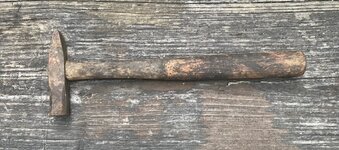


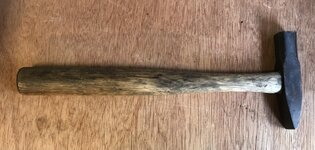
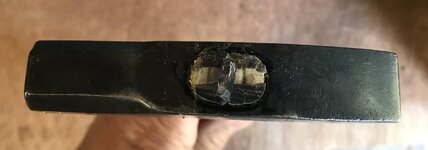
Thanks. I think they are just called cross pein hammersThat came out great, Don.
Is there a specific name for that shape and size of hammer?


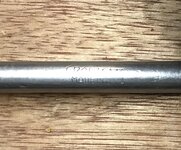


Those came out nice. I need to do that!This thread has fallen into disuse but it seemed the perfect place to post the large quantity of rusty auger bits I’ve found and cleaned up recently. I found a large batch a week ago that I cleaned up and then found another batch on Saturday. All of the more rusty ones spent an overnight in the Evaporust and then were cleaned manually with a hand wire brush. Any that didn’t come reasonably clean we’re finished off with the 3M 220 disc.
Last weeks haul cleaned up.
Saturdays bits before cleaning
A series of after pictures
Irwin bits
Craftsman bits
Long bit
-Don
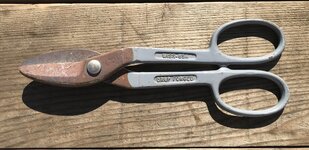
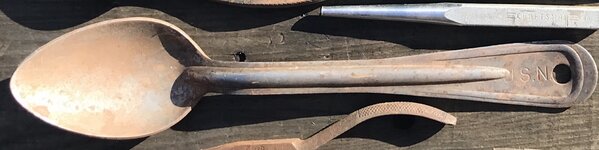
This belt guard is great. Can you even imagine getting that kind of quality and material today. Thanks for bringing it back to life and posting.Speaking of rust removal, using a techique not too far removed from Don's I was able to save the original paint on this belt guard:
to
I soaked it overnight, took a brass wire brush to the more stubborn parts, and polished with Johnsons paste wax. I am pretty happy with the results. It isn't perfect, but what is?





Where can I get the 3M wheels?I haven’t tried that. I’ve been using mine for quite a while and haven’t felt the need to clean them. Any residue left on the polished pieces wipes off with a little brake cleaner.
-Don
$63 in 2021What prices are people paying these days for the 6" radial bristle brushes? I recently set up a 400 grit a friend who was going out of business had given me on one of my old bench lathes, it's great for a pre-polish type finish but what I really need is the red 220. Just don't want to pay $100 for it.
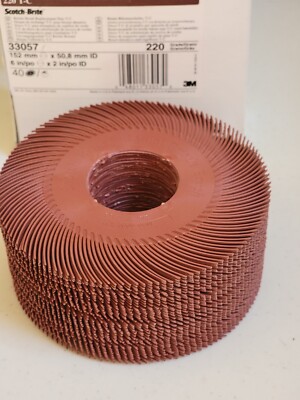
What prices are people paying these days for the 6" radial bristle brushes? I recently set up a 400 grit a friend who was going out of business had given me on one of my old bench lathes, it's great for a pre-polish type finish but what I really need is the red 220. Just don't want to pay $100 for it.
make picklesThanks for all the responses. I'm a fan of electrolysis also. I have a setup outside. Being in New England makes this a little impractical right now. I'll wait until spring. Now what to do with 12 gallons of vinegar.
Great info, thanks, and that is some pretty old metal! And yeah I already have them in all the smaller sizes, I've been using the mini ones on flex shaft rotary tools for years and recently started running the 2" and 3" on die grinders when I added air to the garage. Definitely my favorite abrasive technology. I wonder why these things are marketed as "for occupational use only" and not marketed to DIYers at all, they're much safer than wire wheels and nothing else finishes like them.I just looked, the recent prices have gone sky high but Keep searching and stay patient (if you have the time). You can find them on eBay occasionally pop up for $40 but it may take a while, and when they do they go real fast. The killer deals will always come up after you bought one : ) Just make sure your getting the 6" or 7" diameter wheel size, they also make (mini-me) small ones that can look the same so be careful..
The 220 is definitely the go-to grit for these wheels, I love them; couldn't imagine not having one. The 400 is just the icing, but the 220 does most of the major work and well worth it (both of them are).
If you keep them clean and don't abuse them, they last a long time. When they get dirty, you end up using them much longer each time because they take twice as long to do the same job, and this speeds up their wear.
It's like trying to use sand paper thats loaded up.
I recently purchased 40 discs (8 sets) for #220 grit "33213" scotch-brite replacement wheels (w/o adapter mount) for $35. Last year I passed on 8 #220 wheels complete, new in own boxes on eBay auction for $35 total +ship because I now have so many.
Just be patient, create yourself a saved eBay search watch for "3M 220 33213" with email notification to tell you when a new listing comes up. But there a pain to search for because the searches pull up a lot of other products as well. Also search for Bristle Brush 220, Scotch Brite 220......etc.
If you already have an adapter mount, then this is a killer deal below, its the slightly larger diameter ones (7-5/8") compared to the standard 6" size. When Scotch-Brite wheels spin, it does shrink in size a bit with the centrifugal force, so it's just slightly larger than 6" when spinning.
$24 shipped
PS> d42jeep: Keep up the good work!
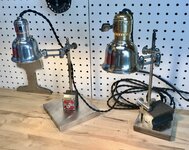
* Here's one example of using the 220 & 400 wheels, both of these Rockwell-Delta retirement lamps were badly pitted like golf balls, all crusty white from the bad kind of electrolysis, one worse than the other. The scotch brite wheels made for quick work, then used a polishing wheel, and then finished them hand rubbing them with fine silverware polish compound. The Hubble lamp sockets were also done with 440. In fact, all the metal pieces and bases in pic were also scotch-Brite'd
That light green is the 1 micron, right? Are you using this setup for polishing, and what's the prep stage you're using before the 400 grit? I've been curious about how that works, do you have any pics of the finish you're getting with 400 + 1 micron? Especially interested in how it looks on soft metals.I haven’t tried that. I’ve been using mine for quite a while and haven’t felt the need to clean them. Any residue left on the polished pieces wipes off with a little brake cleaner.
-Don
Have you ever seen the two-piece center mount with the rings sold on its own? Those refill packs are tempting.
If I had to do it over, I might not order the very fine wheel. It is useful for removing some fine finish defects left after using the 400 wheel but only minimally. I haven’t done many soft metals and don’t have any examples to show. If I need to polish items with more serious finish defects, I generally start with the 220 disc and follow up with the 400. I am currently in the market for another 400 disc for my summer home since I currently only have the 220 disc here. I’ll be waiting until I find one at a fairly reasonable price. I have no interest in trying the 50 or 80 grit. macgee is the disc expert, in my opinion.That light green is the 1 micron, right? Are you using this setup for polishing, and what's the prep stage you're using before the 400 grit? I've been curious about how that works, do you have any pics of the finish you're getting with 400 + 1 micron? Especially interested in how it looks on soft metals.
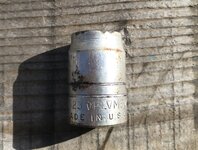


Very helpful, thanks.If I had to do it over, I might not order the very fine wheel. It is useful for removing some fine finish defects left after using the 400 wheel but only minimally. I haven’t done many soft metals and don’t have any examples to show. If I need to polish items with more serious finish defects, I generally start with the 220 disc and follow up with the 400. I am currently in the market for another 400 disc for my summer home since I currently only have the 220 disc here. I’ll be waiting until I find one at a fairly reasonable price. I have no interest in trying the 50 or 80 grit. macgee is the disc expert, in my opinion.
-Don
Waste of potatoes.I never tried this. I've had people tell me it works. It's kind of interesting though. Potatoes
I'm running mine on a 1725 rpm 1/4 hp, and have never had it bog down. But I'm mostly working on pieces smaller than my hand, so not leaning in to it. I've found that pushing harder doesn't really help, because it seems using the tips of the bristles works best.Do you all find the radial bristle brushes work best on 1800 or 3600 rpm motors, and how much power do you like behind them?
 www.garagejournal.com
I'm running mine on a 1725 rpm 1/4 hp, and have never had it bog down. But I'm mostly working on pieces smaller than my hand, so not leaning in to it. I've found that pushing harder doesn't really help, because it seems using the tips of the bristles works best.
rust removal
The Evaporust works much better when knocking the big crud of rust off item first that would take a long time in evaporust to dissolve; also degreasing the items as much a possible before evaporust as the grease will become a stop barrier for the evaporust to get through. I am guessing this is...
I will be upgrading to a 1/2 hp Baldor soon to allow mounting 2 wheels simultaneously.


Isn't this the correct flange? Only thing is it doesn't come with the reducer bushings, but there are a bunch available.Nope, I've tried. Those $0.25 pieces of plastic is the gold for 3M. Without them you have to pay the big bucks for entry for each grit. TBH, buying a new complete wheel is not that expensive after using them so much. I was at a point, that they had become my most used tool in my shop, it was touching everything I was restoring; and after a while it became to point where I had worn down enough wheels, that I had extra adapters. Also had purchased lower rougher grits that I abandoned also giving me spare adapters to use.
I bet there is a way to score the adapters, but I have not found a way.
@macgee and other 6" bristle brush users, do you have any experience with the 80 grit equivalent yellow or 50 grit green wheels? What are your impressions if so? Those two are available on Amazon for $50 if anyone else wants them:
For me, I prefer the slower speed with Bristle Brush wheels but thats just a personal preference I found I like using, but I'v also noticed longer wear with slower rpm. I have about 5 or 6 motor wheel on pedestals, expensive ones & cheap ones, fast and slow, big and small. I am always going to my 1/2HP slow rpm motor with wide armatures using the 3M. All the others are just complimentary, and get me ready to use the 220 & 400. The biggest gain is having wheel set up with lots of elbow space for the wheels, opposite of what stone grinding wheels have. Long, smooth and balanced turning spindles is the key. Put a 220 on that, and you'll never turn back : )Do you all find the radial bristle brushes work best on 1800 or 3600 rpm motors, and how much power do you like behind them? I'm looking for another grinder or buffer to run a couple of them.
This one popped up locally for $75, but the specs look maybe suspect to me, 2hp bench grinder that runs on 110v?
Nice catch, yes that looks correct. But having the correct spacers are also the key of getting a good balanced and non wobbly wheel. I have made some for myself out of aluminum with the lathe. Having the stock plastic bushings really does help. I'm sure those can now also be found reasonably. Thanks for the link.Isn't this the correct flange? Only thing is it doesn't come with the reducer bushings, but there are a bunch available.
Why did you abandon the lower grits, do they remove excessive material even on steel?
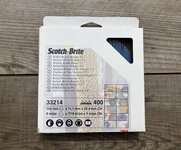
If I had to do it over, I might not order the very fine wheel. It is useful for removing some fine finish defects left after using the 400 wheel but only minimally. I haven’t done many soft metals and don’t have any examples to show. If I need to polish items with more serious finish defects, I generally start with the 220 disc and follow up with the 400. I am currently in the market for another 400 disc for my summer home since I currently only have the 220 disc here. I’ll be waiting until I find one at a fairly reasonable price. I have no interest in trying the 50 or 80 grit. macgee is the disc expert, in my opinion.
-Don