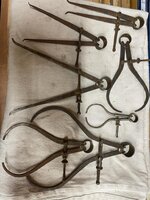
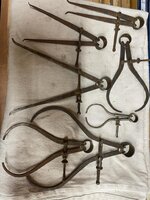
Hold off on turning any of the micrometers please. I have had to rebuild/restore a lot of these and some very recently acquired from a fellow GJ member.
Provincial provided some good info.
Even without rust or even dust on them, most old micrometers that have been sitting for a long time have seized inside by the hardened grease that turns into a hard glue or worse. Any force more than just using your hand softly (no tools) turning can ruin the micrometer threads by stretching the fine threads or by bending the outside thumb dial which happens when applying load trying to turn it. Even trying to turn the micrometer without tools can really harm it. The threads per inch is really fine and very susceptible to damage.
Like what Provincial said, Use a good penetrant like sea foam deep penetrant to help get inside and loosen things up and let them sit for a long time before turning. After letting them sit for a week or month in sea foam, Putting them in the oven to heat up around 150 degrees max will also help soften it up. Then turn, also rubbing alcohol fed into the gaps also helps.
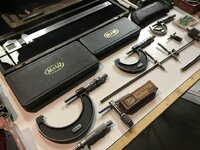
The two bottom micrometers have ratcheting thimbles that will also need to be cleaned out/serviced.
I know this sounds like a lot of work but cowboying it generally doesn't end well, I know the hard way. I was surprised which ones I was able to salvage, although a lot don't make it.
Whether these will be useful micrometers or not will also depend on both anvils and if they have any corrosion pitting on them and if any of the threads have stretched. Lastly, if you use Evaporust there's a really good chance you'll remove the black markings as they're black oxide making it hard to read or you'll need to re-paint them.
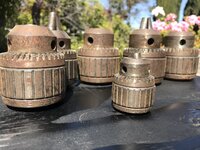
Shiftless is correct, having gage standards will tell if they're still accurate or not after all that work restoring them. Its pretty random which ones can be useful or wall art and you may have a lot of new wall art. I've been able to save ones that are still accurate/repeatable to .0001" and others all over the place no matter what you do, sometimes measuring ok in certain spots which is no good and trash. Some of the ones below came out well but the small one in photo is wall art due to the grease turning into a acidic corrosive type rust inside the threads destroying them in a certain spot when I tried servicing it which is a bummer as the anvils were made with very good carbide and looked new.
Provincial is also correct, having the correct spanner wrench is very important to bring them back to zero.
Good luck with them.
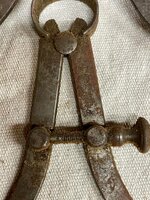
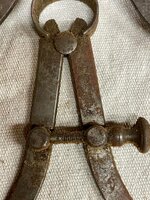
The hand compass's/calipers should come out fine with evaporust and with the radial bristle brush wheel. two days ago I cleaned up this Starrett caliper that looked like yours. They're easy to take apart to make it much easier to clean all the areas. You have a nice set of them.