To avoid these ads, REGISTER NOW!

The Original "Cordless" Drills

Eric Brown

ALLIANCE MEMBER
Joined
Jun 14, 2024
Messages
673
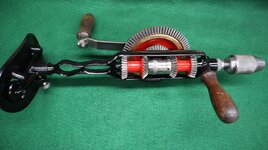
Here is a Millers Falls No. 97 I've been working on. Still need to nickel plate the chuck and some screws. Decided to paint this one, similar to what it was like when new. Trying to locate a replacement decal for the main gear. Have one on order but it's not a match for the original. Also, I painted the idler gears red just to give it some "Pop".

97 Black Right.jpg


97 Black Left.jpg
 
To avoid these ads, REGISTER NOW!

Eric Brown

ALLIANCE MEMBER
Joined
Jun 14, 2024
Messages
673
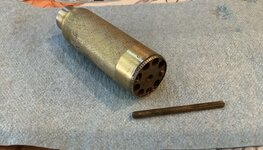
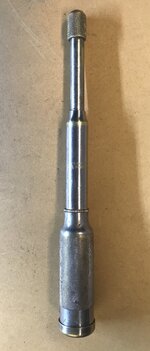
The Yankee drills using a five ratchet selector position have always interested me. How do they work? When I bought a group of Yankee 1555 breast drills, for parts, there was one selector that had obvious damage to the "fingers". Looking online, I could only find warnings that it was difficult to take apart. Decided to try. Figured it out and thought I would share. For the pictures that follow I took a good one apart. Very important to keep things in proper orientation. So in the pictures, the "top" is top when you can read the writing on the shell. I rotated the top to the right in many of the pictures but will refer to either top or bottom. Front has the selector and back is opposite that.

For more information recommend G.O. Leopold's patent #939042 (Nov. 2, 1910). There are other patents, but this one covers most everything.

The selector positions are:

PLAIN
LH RATCHET
RH RATCHET
RH DOUBLE
LOCK

Tip: If moving the selector put your finger into the end and hold up the fingers on the end in the direction you wish to move it. Also, when putting it back into the drill, put the selector halfway between LH Ratchet and RH Ratchet. This will raise all the fingers and allow the idler gears to slip on.

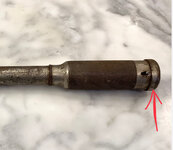
To take apart, lay on bench or put into soft vice with back up. Take a wide flat blade screwdriver and stick it on the piece of metal sticking through. This actually is the key that engages the spindle shaft. With a light mallet, tap the screwdriver until the key moves inward a little bit. It will hit a hard stop, but only needs to clear the thin shell (about .030").
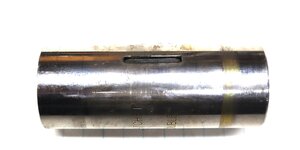
Key pushed in.jpg

The insides should now be able to slide to either the top or bottom direction. I started with the top. Move just enough to expose the fingers and spring.
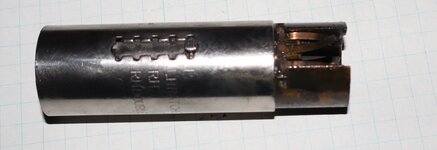
Slide 1.jpg

Remove the spring and then the two fingers, Put them on a paper and keep them in the same orientation on the paper. This is important.

Slide 2.jpg

See which way the fingers are as far as up and down. Now slide the insides to the left end and remove that spring and fingers. Keep them oriented properly.

Slide 4.jpg

Now you can slide the rest of it out, but put a finger inside to hold up the selector. Then allow the selector to drop and remove. Put with the springs and fingers keeping its orientation. It must go back in the same direction.
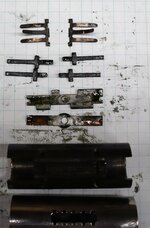
Slide 6.jpg

The selector has a spring on it also. A flat strip. Note which way it is oriented (up/down). The fingers all look the same, but one on the bottom is longer. The selector plate has a wider end at the top.

Thats it. Clean it up and put back together. Last thing is to move the key back into its slot.
I used a 5/16 rod and levered it up. Use the spindle itself to verify it's in proper position.
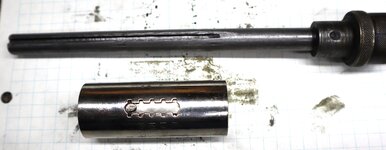
Slide 8.jpg

Additional note about the key. It's sort of like a Chinese puzzle. It pushes down to release the shell and once the shell is removed it could be removed but I don't recommend removing it. They used a punch to pinch into it that keeps it somewhat tight. Removing it may loosen it up, which would add wear and tear to the shaft. Here is a picture of both one in and one out.
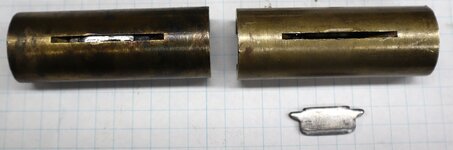
Slide 7.jpg
 

RTM

Well-known member
Joined
May 13, 2019
Messages
13,145
Location
SF Bay Area
The Yankee drills using a five ratchet selector position have always interested me. How do they work? When I bought a group of Yankee 1555 breast drills, for parts, there was one selector that had obvious damage to the "fingers". Looking online, I could only find warnings that it was difficult to take apart.
Ohhhh, some people are going to love you for this. Thanks

Love those drills for their gizmocity. I have two kicking around, fortunately both still work. Friends are not so lucky so I'll be sharing your results with them.
 

Eric Brown

ALLIANCE MEMBER
Joined
Jun 14, 2024
Messages
673
The Yankee drills using a five ratchet selector position have always interested me. How do they work? When I bought a group of Yankee 1555 breast drills, for parts, there was one selector that had obvious damage to the "fingers". Looking online, I could only find warnings that it was difficult to take apart. Decided to try. Figured it out and thought I would share. For the pictures that follow I took a good one apart. Very important to keep things in proper orientation. So in the pictures, the "top" is top when you can read the writing on the shell. I rotated the top to the right in many of the pictures but will refer to either top or bottom. Front has the selector and back is opposite that.

For more information recommend G.O. Leopold's patent #939042 (Nov. 2, 1910). There are other patents, but this one covers most everything.

The selector positions are:

PLAIN
LH RATCHET
RH RATCHET
RH DOUBLE
LOCK

Tip: If moving the selector put your finger into the end and hold up the fingers on the end in the direction you wish to move it. Also, when putting it back into the drill, put the selector halfway between LH Ratchet and RH Ratchet. This will raise all the fingers and allow the idler gears to slip on.

To take apart, lay on bench or put into soft vice with back up. Take a wide flat blade screwdriver and stick it on the piece of metal sticking through. This actually is the key that engages the spindle shaft. With a light mallet, tap the screwdriver until the key moves inward a little bit. It will hit a hard stop, but only needs to clear the thin shell (about .030").

Key pushed in.jpg

The insides should now be able to slide to either the top or bottom direction. I started with the top. Move just enough to expose the fingers and spring.

Slide 1.jpg

Remove the spring and then the two fingers, Put them on a paper and keep them in the same orientation on the paper. This is important.

Slide 2.jpg

See which way the fingers are as far as up and down. Now slide the insides to the left end and remove that spring and fingers. Keep them oriented properly.

Slide 4.jpg

Now you can slide the rest of it out, but put a finger inside to hold up the selector. Then allow the selector to drop and remove. Put with the springs and fingers keeping its orientation. It must go back in the same direction.

Slide 6.jpg

The selector has a spring on it also. A flat strip. Note which way it is oriented (up/down). The fingers all look the same, but one on the bottom is longer. The selector plate has a wider end at the top.

Thats it. Clean it up and put back together. Last thing is to move the key back into its slot.
I used a 5/16 rod and levered it up. Use the spindle itself to verify it's in proper position.

Slide 8.jpg

Additional note about the key. It's sort of like a Chinese puzzle. It pushes down to release the shell and once the shell is removed it could be removed but I don't recommend removing it. They used a punch to pinch into it that keeps it somewhat tight. Removing it may loosen it up, which would add wear and tear to the shaft. Here is a picture of both one in and one out.

Slide 7.jpg
I forgot to mention, there is very little inside this unit that could rust. Most likely it will gum up. Try putting it into a parts cleaner type solvent. Then dry it up and put some fresh lube on it. I would try this before taking apart.
 

Eric Brown

ALLIANCE MEMBER
Joined
Jun 14, 2024
Messages
673
Ohhhh, some people are going to love you for this. Thanks

Love those drills for their gizmocity. I have two kicking around, fortunately both still work. Friends are not so lucky so I'll be sharing your results with them.
Thanks. If they need parts or help, just ask.
 

Mike'smeatshop

Well-known member
Joined
Apr 1, 2023
Messages
1,273
The Yankee drills using a five ratchet selector position have always interested me. How do they work? When I bought a group of Yankee 1555 breast drills, for parts, there was one selector that had obvious damage to the "fingers". Looking online, I could only find warnings that it was difficult to take apart. Decided to try. Figured it out and thought I would share. For the pictures that follow I took a good one apart. Very important to keep things in proper orientation. So in the pictures, the "top" is top when you can read the writing on the shell. I rotated the top to the right in many of the pictures but will refer to either top or bottom. Front has the selector and back is opposite that.

For more information recommend G.O. Leopold's patent #939042 (Nov. 2, 1910). There are other patents, but this one covers most everything.

The selector positions are:

PLAIN
LH RATCHET
RH RATCHET
RH DOUBLE
LOCK

Tip: If moving the selector put your finger into the end and hold up the fingers on the end in the direction you wish to move it. Also, when putting it back into the drill, put the selector halfway between LH Ratchet and RH Ratchet. This will raise all the fingers and allow the idler gears to slip on.

To take apart, lay on bench or put into soft vice with back up. Take a wide flat blade screwdriver and stick it on the piece of metal sticking through. This actually is the key that engages the spindle shaft. With a light mallet, tap the screwdriver until the key moves inward a little bit. It will hit a hard stop, but only needs to clear the thin shell (about .030").

Key pushed in.jpg

The insides should now be able to slide to either the top or bottom direction. I started with the top. Move just enough to expose the fingers and spring.

Slide 1.jpg

Remove the spring and then the two fingers, Put them on a paper and keep them in the same orientation on the paper. This is important.

Slide 2.jpg

See which way the fingers are as far as up and down. Now slide the insides to the left end and remove that spring and fingers. Keep them oriented properly.

Slide 4.jpg

Now you can slide the rest of it out, but put a finger inside to hold up the selector. Then allow the selector to drop and remove. Put with the springs and fingers keeping its orientation. It must go back in the same direction.

Slide 6.jpg

The selector has a spring on it also. A flat strip. Note which way it is oriented (up/down). The fingers all look the same, but one on the bottom is longer. The selector plate has a wider end at the top.

Thats it. Clean it up and put back together. Last thing is to move the key back into its slot.
I used a 5/16 rod and levered it up. Use the spindle itself to verify it's in proper position.

Slide 8.jpg

Additional note about the key. It's sort of like a Chinese puzzle. It pushes down to release the shell and once the shell is removed it could be removed but I don't recommend removing it. They used a punch to pinch into it that keeps it somewhat tight. Removing it may loosen it up, which would add wear and tear to the shaft. Here is a picture of both one in and one out.
Slide 7.jpg
Youd da man. Thanks.
 

TheRealZeus

Well-known member
Joined
Oct 4, 2021
Messages
5,012
Location
CONTINENTAL USA
The Yankee drills using a five ratchet selector position have always interested me. How do they work? When I bought a group of Yankee 1555 breast drills, for parts, there was one selector that had obvious damage to the "fingers". Looking online, I could only find warnings that it was difficult to take apart. Decided to try. Figured it out and thought I would share. For the pictures that follow I took a good one apart. Very important to keep things in proper orientation. So in the pictures, the "top" is top when you can read the writing on the shell. I rotated the top to the right in many of the pictures but will refer to either top or bottom. Front has the selector and back is opposite that.

For more information recommend G.O. Leopold's patent #939042 (Nov. 2, 1910). There are other patents, but this one covers most everything.

The selector positions are:

PLAIN
LH RATCHET
RH RATCHET
RH DOUBLE
LOCK

Tip: If moving the selector put your finger into the end and hold up the fingers on the end in the direction you wish to move it. Also, when putting it back into the drill, put the selector halfway between LH Ratchet and RH Ratchet. This will raise all the fingers and allow the idler gears to slip on.

To take apart, lay on bench or put into soft vice with back up. Take a wide flat blade screwdriver and stick it on the piece of metal sticking through. This actually is the key that engages the spindle shaft. With a light mallet, tap the screwdriver until the key moves inward a little bit. It will hit a hard stop, but only needs to clear the thin shell (about .030").

Key pushed in.jpg

The insides should now be able to slide to either the top or bottom direction. I started with the top. Move just enough to expose the fingers and spring.

Slide 1.jpg

Remove the spring and then the two fingers, Put them on a paper and keep them in the same orientation on the paper. This is important.

Slide 2.jpg

See which way the fingers are as far as up and down. Now slide the insides to the left end and remove that spring and fingers. Keep them oriented properly.

Slide 4.jpg

Now you can slide the rest of it out, but put a finger inside to hold up the selector. Then allow the selector to drop and remove. Put with the springs and fingers keeping its orientation. It must go back in the same direction.

Slide 6.jpg

The selector has a spring on it also. A flat strip. Note which way it is oriented (up/down). The fingers all look the same, but one on the bottom is longer. The selector plate has a wider end at the top.

Thats it. Clean it up and put back together. Last thing is to move the key back into its slot.
I used a 5/16 rod and levered it up. Use the spindle itself to verify it's in proper position.

Slide 8.jpg

Additional note about the key. It's sort of like a Chinese puzzle. It pushes down to release the shell and once the shell is removed it could be removed but I don't recommend removing it. They used a punch to pinch into it that keeps it somewhat tight. Removing it may loosen it up, which would add wear and tear to the shaft. Here is a picture of both one in and one out.

Slide 7.jpg
That is incredible! It must’ve taken a lot of guts to open it up to see how the guts work!
 

Eric Brown

ALLIANCE MEMBER
Joined
Jun 14, 2024
Messages
673
That is incredible! It must’ve taken a lot of guts to open it up to see how the guts work!
Not really. I have many years' experience working with machines and hand tools. I also have a lot of tools. Probably the biggest problem people have is being in a hurry and not paying attention to the details. It also helped that the one I initially took apart was damaged by a previous owner. So, if I did hurt it, no big loss. As it is, that one had two broken fingers and a mangled spring. It's only good for parts now. Always have a plan A, B and C if possible. Ask, "If I mess it up, how can I fix it"?
 

Eric Brown

ALLIANCE MEMBER
Joined
Jun 14, 2024
Messages
673
Double Right Hand was always my favorite. No matter which way you spun the crank, it drilled right hand. What genius to design that mechanism, and cram it into that little bitty barrel.
I agree that it is a cool feature. The Millers Falls No. 97 also adds the ability to always drill left hand. With the three-jaw chuck, that allows you to use left-handed drill bits, which are nice when removing broken screws/bolts. Another feature of the 97 is changing the crank handle position so it becomes a long lever. Adds about 4" of leverage. Good for tight areas.
 

Eric Brown

ALLIANCE MEMBER
Joined
Jun 14, 2024
Messages
673
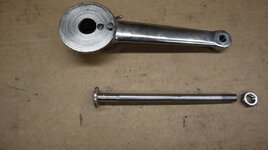
Finally got the handle taken care of. Used a 3/8" stainless carriage bolt. I needed about 5 1/2" of unthreaded under the square. Ordered some from McMaster, but the only thread length they list is minimum threaded. Ordered some long ones and they were all threaded down to about 3" from the square. No good. Finally found some on E-Bay that were 7 1/2" long. Asked, and they verified there was 5 1/2" unthreaded. Got them and here is the process I used. First cut the threaded portion off and chamfered the end.

Bolt 1.jpg


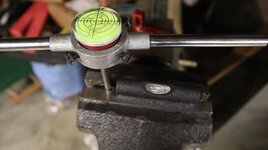
Next was threading. I set the vice up level (it rotates) and then used a square on the bolt. That would make it perpendicular.

Bolt 2.jpg

Bolt 3.jpg

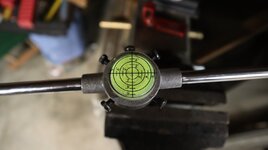
Next was threading. I use a round bubble level with a magnet on the back. Stuck that to the die and held it level while threading for about the first 1/2"

Bolt 4.jpg

After threading I check the length with the jam nut. I needed two extra turns (1/8" with a 3/8-16 die).

Bolt 5.jpg

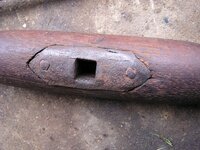
Then I removed the square using a file and 1" belt sander. Thats for the crank handle side. The auxiliary handle on the left of this drill uses a 3/8"-16 right hand thread and the square is left on. It goes into a square mortice hole. No screwdriver slot needed.

Bolt 6.jpg

Next, I cut a screwdriver slot in the head using a Starrett screw slotting blade in my hacksaw (#249A-2, discontinued). Polished the whole bolt. This blade cuts about a 0.050" wide slot.

Comparing the Starrett screw slot blade (top) to a normal blade (bottom)

Bolt 8.jpg

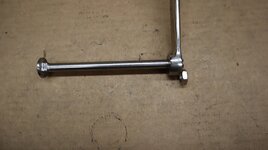
Then I made a walnut handle with a stainless ferrule. Jam nut holds it all tight. Note: Left-handed bolt and jam nut were used to prevent loosening. A right-handed bolt would want to unscrew on the crank side.

Bolt 7.jpg
So I had four total Yankee 1555 drills. The one posted earlier is the only complete one. The rest all had issues. All of them had broken teeth on the two idler gears and also the smaller low speed drive gear. Decided to fix up the good parts and sell them for parts or display. I painted the broken gears gold so it would look good as a display drill (man cave). In the auction I clearly stated it was not a usable drill and would likely jam if used for drilling. I also mentioned the custom walnut handles. Maybe someone has a broken frame and want to fix theirs? Tried really hard to give an honest assessment.

Here are pictures:

Drill 1.jpg

Drill 2.jpg

Drill 3.jpg

Drill 4.jpg

Drill 5.jpg
 

Eric Brown

ALLIANCE MEMBER
Joined
Jun 14, 2024
Messages
673
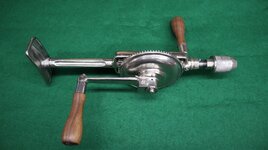
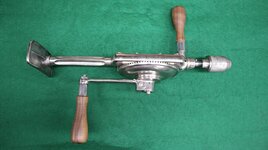
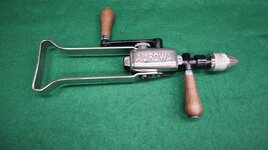
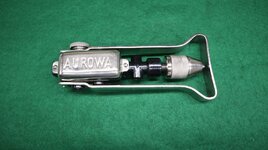
Last few days I've been working on an unusual 2-speed Aurowa hand drill. Searching I have not found this version anywhere.

Here is an ad (they said from the 1950's?) that shows a similar one. Biggest differences are the breast plate and the way the crank handle attaches. The one in the ad has a rod type breastplate and the crank handle goes onto rods sticking out and a thumbscrew secures it to the flats. There is also a slot to hold the spindle from rotating. Searches show most have a round rod with just one flat for the crank handle.


Aurowa ad.jpg

On mine the handle can fold over the main case with the use of a knurled knob on a threaded post sticking out. The crank handle uses a 10mm hex with a spring loaded bearing to hold it in place. It inserts into one of the hex holes that are inside shafts that go through the gears. You change speeds by pulling the handle off and putting into a different hole.

Aurowa 1.jpg

Aurowa 2.jpg

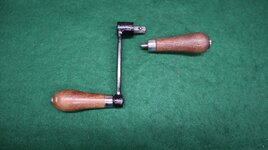
Below is the crank handle and a replacement auxiliary handle I made.

Aurowa 3.jpg

Aurowa 4.jpg

Inside you can see the gears. I need to put grease on when done. Note the ratios are 1:2 and 1:4 (The crank is the first number).

Aurowa 5.jpg

The chuck is a design first used by Goodell Brothers. Three jaws, about 3/8", springs exposed between the jaws. Spindle has 12 bearings.

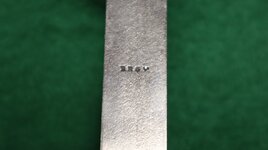
Another interesting thing is on each side of the fold up handle it is marked D.R.G.M. which is a German patent. No numbers are on the drill. No "Made in Germany" either, which was put into law in 1930.

Aurowa 6.jpg

Because of all the details, I think this was made by the manufacturer and not modified later. Could have been produced and not imported but brought over by a worker. Any ideas?
 

TheRealZeus

Well-known member
Joined
Oct 4, 2021
Messages
5,012
Location
CONTINENTAL USA
Last few days I've been working on an unusual 2-speed Aurowa hand drill. Searching I have not found this version anywhere.

Here is an ad (they said from the 1950's?) that shows a similar one. Biggest differences are the breast plate and the way the crank handle attaches. The one in the ad has a rod type breastplate and the crank handle goes onto rods sticking out and a thumbscrew secures it to the flats. There is also a slot to hold the spindle from rotating. Searches show most have a round rod with just one flat for the crank handle.


Aurowa ad.jpg

On mine the handle can fold over the main case with the use of a knurled knob on a threaded post sticking out. The crank handle uses a 10mm hex with a spring loaded bearing to hold it in place. It inserts into one of the hex holes that are inside shafts that go through the gears. You change speeds by pulling the handle off and putting into a different hole.

Aurowa 1.jpg

Aurowa 2.jpg

Below is the crank handle and a replacement auxiliary handle I made.

Aurowa 3.jpg

Aurowa 4.jpg

Inside you can see the gears. I need to put grease on when done. Note the ratios are 1:2 and 1:4 (The crank is the first number).

Aurowa 5.jpg

The chuck is a design first used by Goodell Brothers. Three jaws, about 3/8", springs exposed between the jaws. Spindle has 12 bearings.

Another interesting thing is on each side of the fold up handle it is marked D.R.G.M. which is a German patent. No numbers are on the drill. No "Made in Germany" either, which was put into law in 1930.

Aurowa 6.jpg

Because of all the details, I think this was made by the manufacturer and not modified later. Could have been produced and not imported but brought over by a worker. Any ideas?
IMG_6018.jpeg
IMG_6019.jpeg
Translated ;
29/9 1919. Alb. Urbahn & Comp., Remscheid-Güldenwerth. 18/12 1919.

RO &0 WA

Business operations: Manufacture, import and export of tools and machines for metal and woodworking, as well as accessories. Goods: sealing and padding materials, thermal insulation and insulating materials, asbestos products, wool; Iron, steel, copper and other metals, raw or partially processed, tools for metal and woodworking, in particular files, hammers, anvils, vices, drills, planes, milling cutters, turning tools, machine tools and accessories, machine casting, transmissions , drive belts made of leather, Hans, metal, paper; Lubricants, fats and oils other than those intended for food
 

Eric Brown

ALLIANCE MEMBER
Joined
Jun 14, 2024
Messages
673
IMG_6018.jpeg
IMG_6019.jpeg
Translated ;
29/9 1919. Alb. Urbahn & Comp., Remscheid-Güldenwerth. 18/12 1919.

RO &0 WA

Business operations: Manufacture, import and export of tools and machines for metal and woodworking, as well as accessories. Goods: sealing and padding materials, thermal insulation and insulating materials, asbestos products, wool; Iron, steel, copper and other metals, raw or partially processed, tools for metal and woodworking, in particular files, hammers, anvils, vices, drills, planes, milling cutters, turning tools, machine tools and accessories, machine casting, transmissions , drive belts made of leather, Hans, metal, paper; Lubricants, fats and oils other than those intended for food
Thank you so much for the ad and translation. Did not expect it to be so old.
 

Old tool guy

Well-known member
Joined
Apr 13, 2023
Messages
3,253
Picked up this Craftsman push drill for $1. Seems to be several bits in the handle. Question: what can i soak it in to loosen the innards? It’s really stiff, doesn’t want to move. Evaporust is not a lube. Don’t really want to use motor oil. ATF?

1729368473024.jpeg
 
To avoid these ads, REGISTER NOW!

Eric Brown

ALLIANCE MEMBER
Joined
Jun 14, 2024
Messages
673
Picked up this Craftsman push drill for $1. Seems to be several bits in the handle. Question: what can i soak it in to loosen the innards? It’s really stiff, doesn’t want to move. Evaporust is not a lube. Don’t really want to use motor oil. ATF?

1729368473024.jpeg
While oils can somewhat break down rust, it's easier to use something like PB Blaster. Soak it and let it sit for a while. Then wipe down and re-lube.
 

B Halverson

Well-known member
Joined
Sep 26, 2024
Messages
304
I finally looked at this auger that I had hung up in my garage long enough ago that I can not remember putting it there (could have been hours!), and it turns out to have quite a colorful history. If this article is accurate it is an old tool, and probably uncommon. It bores 1 7/8" holes (almost 50mm). It is in excellent shape for it's age. I sharpened it up a bit and cranked it through a pine board for the fun of it and it was happy to do the job. Read about Joe Allen who left home at the age of EIGHT years to seek his fortune. https://en.wikipedia.org/wiki/Joseph_H._Allen

Allen auger a.jpg

Allen auger b.jpg

Allen auger c.jpg

Allen auger d.jpg
 

B Halverson

Well-known member
Joined
Sep 26, 2024
Messages
304
Nice. Would you mind if I used your pictures in my auger list, giving you credit of course.

No problem. Once I put something up on the internet I consider it in the public domain. I have a collection of these old t-handle augers, I will have to look at them all and see if there is anything else unusual when I get a chance.
 

Old tool guy

Well-known member
Joined
Apr 13, 2023
Messages
3,253
Started working on the drill, it’s a Craftsman 9-4222 BB. Paid $1. Soaked it in evaporust for about 4 hrs and it looks like all the chrome plating has been removed.

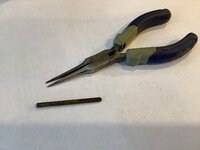
Got a problem. There were 3 points, or bits, in the magazine, one came out easily, two are stuck. I ran it through an ultrasonic cleaner, lots of gunk came out but 2 bits are stuck badly. The hole is too small for anything except this small pliers, but still won’t come out. The holes are blind drilled, no way to push from the other end. Any ideas?

1729780227531.jpeg

1729780260826.jpeg
 

Eric Brown

ALLIANCE MEMBER
Joined
Jun 14, 2024
Messages
673
Inertia. Bang the end on the edge of a board. They may pope out. Could try soaking with PB Blaster too. Use a pick and try to move them side to side to maybe loosen up. Strong magnet put onto a cutoff nail or punch to provide some pull.
 

Old tool guy

Well-known member
Joined
Apr 13, 2023
Messages
3,253
Tried the inertia thing several times, that’s how the first one came out. No movement on the other two. Going to try PB next.
 

Eric Brown

ALLIANCE MEMBER
Joined
Jun 14, 2024
Messages
673
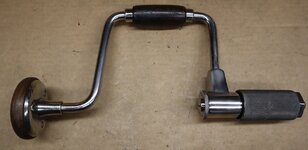
Here are some brace pictures you might find interesting. They are all somewhat related. A Henry Brown, Holt, and Goodell-Pratt.

Starting with the Henry Brown, it is an all-metal brace with a lever type retention of the bit. On the top handle is a medallion which reads "Henry Brown, Patentee, Sheffield". The patent was for a hardened washer that was marketed as "frictionless". This same patent was used on both this brace and the wooden plated braces also sold by Brown. In the picture below are both types of heads. They look identical but are different in how they are attached.

Henry Brown 1.jpg

Henry Brown 2.jpg


The head on the wooden brace is removed by taking off the medallion, which is screwed into the wood. Under that is a slotted nut. It is a right-hand thread. Under that is a washer with a square hole. This washer prevents the head from unscrewing the nut. Once the nut and washer are off, the head slides off its tapered spindle. The hardened washer is between the bottom of the brass head and brace body.

Henry Brown 3.jpg


The metal brace head is attached slightly different. It uses two nuts. The top nut is left hand threaded. The nut under it is a right-hand thread. Looking at the spindle you can that the top nut is a smaller thread, which allows the lower nut to pass over it.

Henry Brown 4.jpg

Next we have the Holt with the split chuck, similar to the Spofford but better.

Holt 1.jpg


Its head is screwed onto the metal below it with a right-hand thread. Unscrewing this you will find a hardened thrust disc.

Holt 2.jpg

Not shown are common higher quality braces which use ball bearings.

Last is a Goodell Pratt 2510 that doesn't reveal anything special about the head.

Goodell 2510 Brace.jpg

However, Removing the retaining washer and then pulling the head off reveals there are six roller bearings with a rounded side profile.

Goodell 2510 Bearings.jpg
 

Old tool guy

Well-known member
Joined
Apr 13, 2023
Messages
3,253
Yep, that’s it. I think it is a clone of the Millers Falls 185, or more likely the 108. Difference being the 185 had little holes near the cap that showed the size of the bit in that slot.
 
Last edited:

B Halverson

Well-known member
Joined
Sep 26, 2024
Messages
304
Several years ago I needed a gate for a vegetable garden relocation project and had fun playing with one of the old augers laying around here for a few mortice/tenon joints. I started with sharpening the auger which may not have had this done in the last 100 years. It was a Snell brand I believe, a very common brand;

gate auger a.jpg

gate auger b.jpg

gate auger c.jpg

gate auger d.jpg

gate auger f.jpg

gate auger e.jpg

gate auger g.jpg

It is holding up okay over the years with a door held together with clenched nails;

Garden gate Huffy.jpg
 

Eric Brown

ALLIANCE MEMBER
Joined
Jun 14, 2024
Messages
673
Appreciate it. I am working on a large update to the list right now.
Click on the Eric Browns Augermaker List on: https://oldtoolheaven.com/auger-bits/auger.html

(Update- I updated the file, will let you know when Randy puts it on his website. Added almost fifty pages. 17MB file.
Lot more to put in).
Heres a link to the latest update. Click on the "Eric Brown's Augermaker list". Still have a lot to put in.


Old tool guy

Well-known member
Joined
Apr 13, 2023
Messages
3,253
I know folks here are reluctant to give advice, like “what I would do is …” but I’m going to ask anyway. I have this H. O. White No 2 brace (probably 1830-1850) that has a top cap problem. Here is a picture from the Sydnas Sloot site that suggests what the cap may have looked like.
I’m guessing the large screw was lost and a previous owner split the top if the shaft and mashed it over like a cotter pin, spreading the tails. When i bent the tails back together, they broke off. So what I’m thinking is to cut off the broken part of the small dia shaft, drill and tap it, and use some kind of screw to hold the cap in place. I don’t have a lathe so i will have to do with whatever the hardware store has. Not trying to get it back to factory condition, but i do need to secure the cap in place.
 

Attachments

  • IMG_5736.jpeg
    IMG_5736.jpeg
    671.5 KB · Views: 7
  • IMG_5737.jpeg
    IMG_5737.jpeg
    713.9 KB · Views: 7
  • IMG_5738.jpeg
    IMG_5738.jpeg
    656.3 KB · Views: 8

Eric Brown

ALLIANCE MEMBER
Joined
Jun 14, 2024
Messages
673
I know folks here are reluctant to give advice, like “what I would do is …” but I’m going to ask anyway. I have this H. O. White No 2 brace (probably 1830-1850) that has a top cap problem. Here is a picture from the Sydnas Sloot site that suggests what the cap may have looked like.
I’m guessing the large screw was lost and a previous owner split the top if the shaft and mashed it over like a cotter pin, spreading the tails. When i bent the tails back together, they broke off. So what I’m thinking is to cut off the broken part of the small dia shaft, drill and tap it, and use some kind of screw to hold the cap in place. I don’t have a lathe so i will have to do with whatever the hardware store has. Not trying to get it back to factory condition, but i do need to secure the cap in place.
Tapping and a screw might work, but it needs to be left hand threaded or it will unscrew during use. Does the top cap have a shoulder inside it? Another option for closing the top would be a push in type cap. If this is all too much for you, I will fix it and only charge shipping. I have left-handed taps and dies. Might be able to thread the stub.
Hopefully you can fix it.
 
To avoid these ads, REGISTER NOW!
Top Bottom